

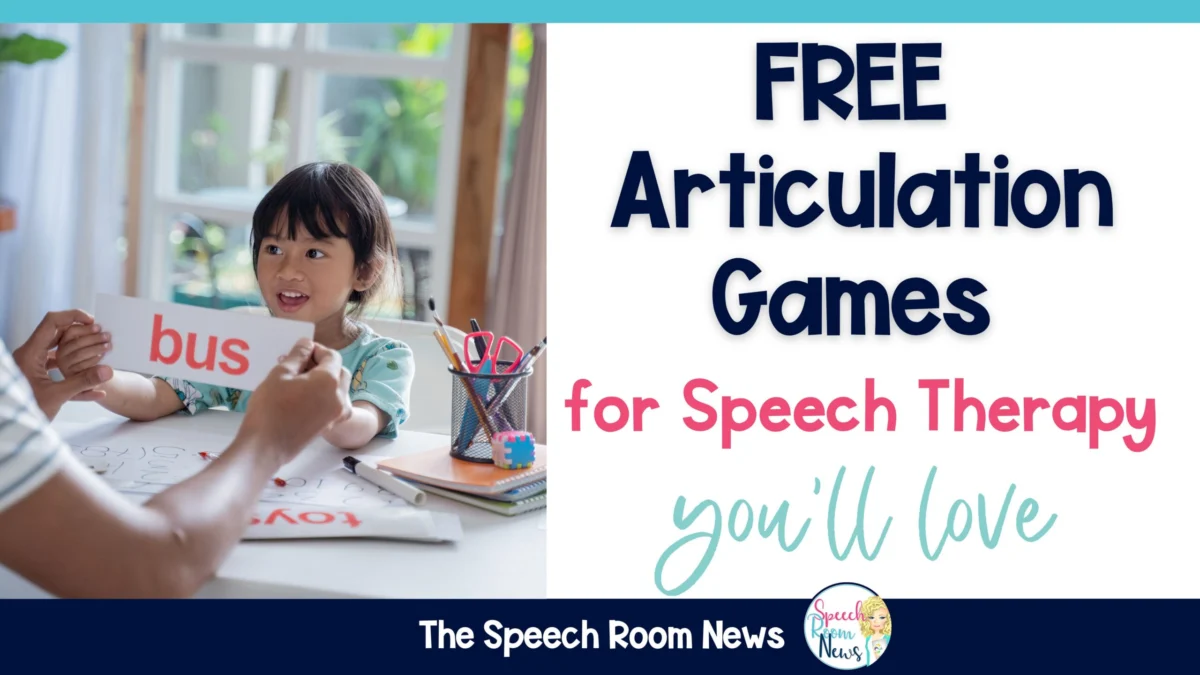
The landscape of speech-language pathology is continually evolving, with a growing emphasis on dynamic, engaging, and accessible therapy methods. At the forefront of this transformation is the strategic incorporation of play into articulation sessions, a pedagogical approach that not only significantly boosts student engagement but also fosters deeper learning and facilitates the critical generalization of language skills into everyday contexts. This shift is particularly evident in the widespread adoption of free articulation games, which are proving to be invaluable resources for Speech-Language Pathologists (SLPs) and families alike, transcending the traditional confines of clinic or classroom to support diverse learning environments—be they virtual, in-person, or hybrid.
The Foundational Role of Articulation Therapy in Development
Articulation therapy is a specialized area within speech-language pathology focused on helping individuals produce speech sounds correctly. Speech sound disorders, which can include articulation disorders (difficulties with the motor production of sounds) and phonological disorders (difficulties with the organization of sounds in a language system), affect millions globally. For children, these disorders can impact their ability to communicate effectively, leading to potential challenges in academic performance, social interactions, and self-esteem. Early intervention is paramount, with studies consistently showing that children who receive timely and appropriate speech therapy demonstrate significant improvements in their communication skills. The goal of articulation therapy is not just to correct individual sounds but to enable fluent, intelligible speech that supports full participation in daily life. Historically, therapy often involved repetitive drills, which, while effective, could be monotonous for young learners. The integration of play-based learning offers a compelling alternative, transforming therapy into an enjoyable experience that inherently encourages more practice and better retention.
Bridging Gaps: The Imperative for Accessible Resources
A significant challenge in speech therapy has always been the cost associated with specialized materials and the need for consistent practice outside of formal sessions. For many families and even school districts, budget constraints can limit access to high-quality, diverse resources. This creates a critical need for free, effective tools that can be easily implemented by SLPs and parents. The past decade, and particularly the acceleration of remote learning due to global events, has underscored the importance of digital accessibility and the ingenuity of the speech therapy community in developing and sharing low-cost or no-cost solutions. These resources not only democratize access to essential practice materials but also empower parents to actively participate in their child’s therapeutic journey, ensuring continuity of practice beyond scheduled sessions. The professional community, recognizing these needs, has increasingly embraced platforms for sharing and collaborating on materials, fostering an ecosystem where innovative, free resources can thrive.
Interactive Online Games: The Digital Frontier of Articulation Practice

The digital age has ushered in a new era for speech therapy, with interactive online games and applications emerging as powerful tools for articulation skill development. These platforms leverage technology to create engaging, dynamic, and often self-correcting learning environments that resonate with today’s tech-savvy generation of learners.
-
ABCya’s "Alphabet BINGO": Tailored for younger students, this game provides an excellent foundation for phonological awareness and letter-sound correspondence. By engaging children in a familiar game format, "Alphabet BINGO" makes the practice of identifying initial sounds and linking them to letters an enjoyable task. The visual and auditory feedback inherent in digital games like this reinforces correct responses, which is crucial for early literacy development and sound discrimination. The repetitive nature, masked by the game’s fun, ensures sufficient trials without boredom.
-
Articulation Station App (Lite Version): This widely recognized application offers a streamlined, free version that serves as a robust starting point for articulation practice. It typically includes several sound options and various interactive activities designed to target specific phonemes at different word positions (initial, medial, final) and levels of complexity (word, phrase, sentence). The app’s intuitive interface and engaging visuals keep students focused, while its portability allows for practice anytime, anywhere. This accessibility is particularly valuable for parents seeking structured home practice.
-
Language Playroom: This dedicated online platform offers a burgeoning collection of free games, currently boasting over 20 articulation-focused activities. What sets Language Playroom apart is its commitment to continuous expansion, with plans to include games for fluency, broader language skills, and social communication. Such comprehensive resources become central hubs for SLPs looking for varied and reliable digital content, ensuring a fresh supply of engaging material.
-
Phoneme Pop: Gamification, where learning objectives are embedded within game mechanics, is highly effective in therapy. "Phoneme Pop" exemplifies this by allowing children to "pop" bubbles containing words with their target sounds. This simple yet satisfying interaction encourages high repetitions of target sounds in a low-pressure, playful context. The immediate gratification of popping a bubble serves as positive reinforcement, driving sustained engagement.
-
Boom Cards: These interactive, self-grading digital task cards have rapidly become a staple in modern speech therapy. Available through platforms like Teachers Pay Teachers and Boom Learning, a vast array of free Boom Card decks cater to various articulation sounds and therapeutic goals. Boom Cards offer incredible versatility, allowing SLPs to assign specific decks for homework, use them during teletherapy sessions, or integrate them into in-person activities on tablets or interactive whiteboards. Their interactive nature, often incorporating drag-and-drop, multiple-choice, or fill-in-the-blank formats, provides immediate feedback, making them highly effective for independent practice and data collection. The collaborative nature of these platforms also allows SLPs to share and adapt materials, fostering a rich community of practice.
The benefits of these online resources extend beyond mere engagement. Research in educational technology suggests that interactive digital tools can enhance learning outcomes by providing personalized feedback, adaptive difficulty levels, and a multimedia approach to instruction. For articulation therapy, this translates to more efficient and effective practice, ultimately leading to faster progress toward speech goals.

Printable Games: Hands-On Engagement for Diverse Learners
While digital tools offer unparalleled convenience, hands-on, printable games remain indispensable in speech therapy. They cater to different learning styles, reduce screen time, and provide tangible materials that can be easily integrated into various therapy settings or sent home for consistent practice. These resources are particularly valued for their versatility and the tactile experience they offer.
-
Whack-a Sound /S/ Self-Checking Articulation Freebie: This game targets a common articulation challenge—the /S/ sound—and cleverly incorporates a self-checking mechanism. Designed for preschool through second grade, it helps children identify the position of the target sound (initial, medial, or final) within a word. This meta-linguistic awareness is critical for solidifying sound production. The "whack-a" format adds a playful, energetic element that keeps young learners eager to participate.
-
Articulation Worksheets from Super Duper Publications: Super Duper Publications is a well-established name in educational resources, and their offerings of free printable worksheets provide structured, traditional practice opportunities. These worksheets often focus on specific sounds or sound patterns, offering a range of activities from simple word repetition to sentence completion. They are excellent for targeted drill work and for providing clear, reproducible homework assignments that reinforce therapy goals.
-
Hot Chocolate Articulation Board Game: Seasonal or themed games, like this winter-themed board game, capitalize on children’s interests to enhance motivation. The beauty of a board game lies in its adaptability: SLPs can pair it with articulation flashcards targeting specific words or sounds. Children earn a turn to roll the dice and move their piece after successfully producing a target word, integrating motor skills, turn-taking, and speech practice into a single activity. This format is also ideal for group therapy, fostering peer interaction and observational learning.
-
100 Trial Challenges by Peachie Speechie: High trial counts are a cornerstone of effective articulation therapy, as consistent repetition helps embed new motor speech patterns. Peachie Speechie’s "100 Trial Challenges" sheets ingeniously combine this necessity with engaging themes and holiday designs. By providing a clear visual representation of progress toward 100 trials, these sheets motivate students to achieve their repetition goals. The thematic variety keeps the practice fresh and allows SLPs to easily integrate therapy into broader classroom or seasonal curricula.
-
Color & Play Ocean Articulation Bingo: Bingo is a classic game format that translates exceptionally well to speech therapy. These ocean-themed bingo cards, pre-filled with target words, can be used in group settings or for one-on-one practice. The "color & play" aspect adds a creative, kinesthetic dimension, allowing children to mark their words by coloring them, which can be particularly soothing and engaging. The competitive yet collaborative nature of bingo makes it an enjoyable way to achieve multiple repetitions of target sounds.

Printable resources play a crucial role in promoting carryover—the ability to use newly learned skills in different environments. By providing physical materials that can be used at home, SLPs empower parents to become active partners in therapy, reinforcing lessons learned in sessions and accelerating progress.
Material-Free Games: Generalization in Everyday Environments
Perhaps the most ingenious and universally accessible articulation games are those that require no materials at all. These "no-prep" activities are perfect for promoting generalization of speech skills into natural, spontaneous communication, and are particularly useful in settings like car rides, waiting rooms, or casual family interactions. They embody the principle that therapy doesn’t have to be confined to a specific room or time; it can be integrated seamlessly into daily life.
-
I Spy: This classic observational game can be easily modified for articulation practice. Instead of simply saying "I spy something green," the SLP or parent can focus on objects that begin with a specific target sound (e.g., "I spy something that starts with /k/"). This encourages the child to actively listen for and produce target sounds in a natural context, developing their auditory discrimination and sound production skills simultaneously.
-
20 Questions: A game that inherently promotes descriptive language and critical thinking, "20 Questions" can be adapted to target specific articulation goals. The child, while asking questions or guessing, has multiple opportunities to produce target sounds in meaningful sentences. For instance, if the target sound is /sh/, they might ask, "Is it a shape?" or "Is it a shiny object?" This encourages the use of target sounds in functional, communicative exchanges.
-
Rhyme Time: Focusing on phonological awareness, "Rhyme Time" involves taking turns saying words that rhyme with a target word. This activity is excellent for younger children and helps reinforce sound patterns and word families. By carefully monitoring the child’s production, the SLP or parent can gently guide them toward correct articulation of each rhyming word.
-
The Alphabet Game: This familiar car game can be transformed into an articulation exercise by having the child say a word that starts with each letter of the alphabet, with a specific focus on accurately producing target sounds that appear within those words. For example, if the target sound is /r/, and the letter is ‘C’, the child might say "Car" or "Crayon," focusing on clear production of any /r/ sounds within those words or selecting words that start with their target sound. This systematic approach ensures practice across a broad range of vocabulary.

These material-free games are crucial for achieving "carryover" of articulation skills. They encourage children to use their developing speech sounds spontaneously and functionally, demonstrating true mastery beyond structured therapy drills. They also empower parents with practical, easy-to-implement strategies for supporting their child’s speech development in everyday situations, fostering a consistent and supportive communication environment.
Broader Impact and Implications for Speech-Language Pathology
The proliferation of free and engaging articulation games signifies a broader positive shift in speech-language pathology, with far-reaching implications:
- Enhanced Accessibility and Equity: By offering high-quality resources at no cost, these games significantly reduce financial barriers to effective therapy. This levels the playing field for families from diverse socioeconomic backgrounds, ensuring that all children have the opportunity to receive the practice they need, regardless of their family’s ability to purchase expensive materials.
- Increased Therapist Efficiency and Innovation: For SLPs, readily available free resources mean less time spent on material creation and more time dedicated to direct therapy, assessment, and individualized treatment planning. This freedom allows therapists to be more creative and responsive to individual student needs, fostering a more dynamic and personalized therapeutic experience. The vibrant community of SLPs sharing resources also promotes continuous innovation in therapy approaches.
- Greater Student Motivation and Engagement: Play is a child’s natural learning modality. Incorporating games transforms therapy from a chore into an enjoyable activity, leading to higher levels of motivation, greater participation, and more consistent practice. This intrinsic motivation is key to long-term success in articulation therapy.
- Empowered Parental Involvement: Free and easy-to-use resources empower parents to actively participate in their child’s therapy. When parents have accessible tools and clear guidance, they can effectively reinforce target sounds and strategies at home, bridging the gap between therapy sessions and daily life. This consistent home practice is a critical factor in accelerating progress and achieving lasting results.
- Adaptability to Diverse Service Delivery Models: The availability of both online and printable resources, alongside no-material games, makes speech therapy highly adaptable to various service delivery models, including in-person, teletherapy, and hybrid approaches. This flexibility ensures continuity of care and practice, even in challenging circumstances.
The movement toward integrating fun, free, and accessible games into articulation therapy represents a significant advancement in speech-language pathology. It underscores a commitment to student-centered approaches, leveraging play to unlock potential and ensure that every child has the opportunity to communicate clearly and confidently. As the field continues to evolve, the innovative use of such resources will undoubtedly remain a cornerstone of effective and equitable speech therapy practices, celebrating the power of play in learning and development.
