


The rapid integration of Artificial Intelligence (AI) into content creation workflows has sparked a significant debate within the influencer and professional communication spheres, prompting a re-evaluation of authenticity, expertise, and the very definition of influence. This discussion gained renewed momentum following a LinkedIn post that boldly declared, "I don’t use AI to write my content." While the author clarified this statement was not a declaration of superiority but rather a point about the primacy of content value, it underscored a growing tension: the distinction between leveraging AI as a tool and allowing it to supplant human thought and experience.
The core of this debate centers on the perceived risk of AI becoming a crutch, diminishing genuine human insight and experience, and ultimately undermining the trust and authority influencers cultivate with their audiences. The analogy of the 1980s music group Milli Vanilli, whose career imploded when it was revealed they lip-synced their hit songs, serves as a stark historical parallel. In that instance, the audience’s disappointment stemmed not from a decline in musical quality, but from a profound breach of authenticity. They felt deceived, having invested their admiration in a perceived talent that was, in fact, fabricated.
This concern is echoed in the professional realm. Imagine a scenario where an audience has consumed years of content—books, courses, articles, and social media posts—from a particular expert. Upon meeting this individual, the audience realizes the voice, ideas, and depth of knowledge presented in person bear little resemblance to the content they have come to trust. This dissonance can lead to feelings of disappointment and a loss of faith, similar to the public’s reaction to Milli Vanilli. The implication is that if AI is generating the core ideas, narratives, and conclusions, the "expert" is no longer demonstrating their own thinking but rather their proficiency in prompt engineering.
The Evolution of Content Creation and the AI Question
The current discourse is not the first time technology has challenged established norms in communication. The advent of the printing press, radio, and television each brought about significant shifts in how information was disseminated and consumed. However, AI represents a qualitative leap, capable of not just transmitting but generating content that mimics human creativity and intellect.
This capability has led to a burgeoning industry of AI-powered writing assistants and content generators. Platforms like Jasper, Copy.ai, and even advanced large language models like ChatGPT are being utilized by professionals across various fields. Data from Statista indicates a significant projected growth in the AI content generation market, with revenue expected to reach billions of dollars in the coming years. This underscores the widespread adoption and perceived utility of these tools.
However, this adoption raises critical questions about intellectual property, originality, and the ethical implications of presenting AI-generated work as one’s own. The challenge lies in navigating this new landscape without sacrificing the human elements that form the bedrock of genuine connection and influence.
Distinguishing Between Augmentation and Replacement
A key distinction emerging from this debate is between using AI to augment human thinking and using AI to replace it. AI can be an invaluable tool for enhancing productivity, refining ideas, and improving clarity. For instance, AI can:
- Organize thoughts: Helping to structure complex ideas into coherent outlines.
- Challenge assumptions: Providing alternative perspectives or data points that might be overlooked.
- Improve clarity: Rephrasing sentences for better readability and conciseness.
- Edit writing: Identifying grammatical errors, suggesting stylistic improvements, and enhancing flow.
In this capacity, AI acts as a sophisticated assistant, much like a trusted friend or a skilled editor. It aids the human creator in processing information and refining their output. This is akin to a musician using a digital audio workstation to perfect their compositions or an artist using digital tools to enhance their paintings. The core creative impulse and intellectual labor remain human.
Conversely, using AI to replace thinking involves outsourcing the fundamental cognitive processes of ideation, critical analysis, and original synthesis. When AI is tasked with generating the core ideas, crafting the narratives, and drawing the conclusions, the human role shifts from creator to curator or, in the most extreme cases, to a mere conduit for AI output. This is where the concern about authenticity and the erosion of genuine expertise arises.
The Principle of Authority and the Erosion of Trust
Dr. Robert Cialdini’s principles of influence, particularly the principle of Authority, are highly relevant here. People are more inclined to trust and be persuaded by individuals who possess demonstrable expertise and credibility. This authority is built on a foundation of genuine knowledge, experience, and a track record of thoughtful contribution.
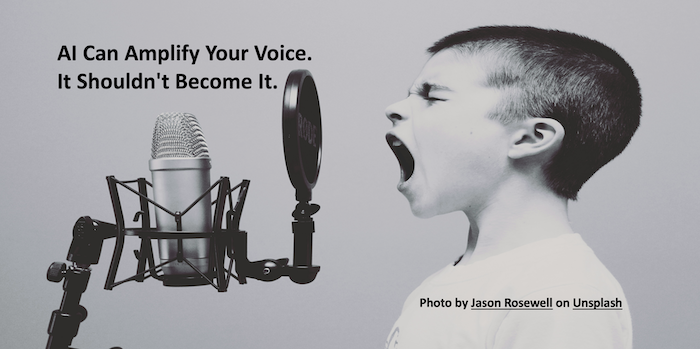
If an influencer’s authority is derived from content largely generated by AI, the perceived authority may be hollow. The expertise being demonstrated is not personal insight or lived experience, but rather the skill in crafting effective prompts for an AI. This distinction is crucial. The stories one has lived, the mistakes one has made, the lessons learned, and the convictions developed are uniquely human and cannot be replicated by an AI that has no lived experience. These are the very elements that imbue a voice with authenticity and make it unique.
The potential consequence is a gradual erosion of trust. Audiences are increasingly savvy and can often detect a lack of genuine substance, even if they cannot pinpoint the exact cause. The feeling of being "fed" AI-generated content, however polished, can lead to a disconnect that undermines an influencer’s long-term credibility.
Broader Implications for the Influencer Economy and Professional Communication
The rise of AI in content creation has significant implications for the influencer economy and the broader landscape of professional communication.
Impact on Influencer Authenticity and Monetization
For influencers, authenticity is their currency. Their ability to connect with and influence their audience is directly tied to the perception of their genuineness. If AI becomes the primary engine behind their content, this perception can be irrevocably damaged. Monetization strategies that rely on brand partnerships and sponsored content could be threatened if brands begin to question the genuine reach and impact of AI-driven content.
The Future of Expertise
The debate also forces a redefinition of what constitutes expertise in the AI era. Will future experts be those who can leverage AI to amplify their existing knowledge, or will the ability to effectively prompt AI become a new form of expertise in itself? The latter scenario risks devaluing deep, experiential knowledge in favor of prompt engineering skills.
Ethical Considerations and Industry Standards
As AI becomes more sophisticated, there is a growing need for ethical guidelines and industry standards regarding AI-generated content. Transparency about the use of AI in content creation will likely become increasingly important. Some platforms are already exploring ways to label AI-generated content, which could provide consumers with greater clarity.
The Human Element as a Differentiator
Ironically, the very capabilities that make AI powerful also highlight the enduring value of human qualities. Empathy, emotional intelligence, lived experience, and the ability to forge genuine personal connections are attributes that AI currently cannot replicate. In an increasingly automated world, these human elements may become even more prized differentiators for influencers and professionals.
Looking Ahead: Collaboration, Not Replacement
The most effective path forward for influencers and professionals appears to be one of collaboration rather than replacement. AI can serve as an invaluable partner, enhancing human capabilities and streamlining workflows. However, it should never supplant the human creator’s unique perspective, experiences, and voice.
Those who will likely benefit most from AI in the coming decade are not those who rely on it most heavily, but rather those who have cultivated deep expertise over years of dedicated effort and then use AI to communicate that expertise more effectively. AI can amplify a voice; it should never become that voice.
The question for every creator, communicator, and influencer to ponder is: Where do you draw the line between using AI as a tool to enhance your message and allowing it to become the author of your expertise and the architect of your influence? The answer to this question will shape the future of personal branding, professional credibility, and the very nature of influence in the digital age.
