


The rapid integration of Artificial Intelligence (AI) into content creation workflows has sparked a critical debate within professional circles, particularly among influencers and thought leaders. This discourse centers on the fundamental question of authenticity and the potential for AI tools to blur the lines between genuine expertise and AI-generated output. The conversation gained renewed momentum following a LinkedIn post that provocatively began with the declaration, "I don’t use AI to write my content." While the author clarified this was not a boast but a statement of principle, it underscored a growing concern: the perceived erosion of genuine authorship and the potential for AI to become a crutch rather than a collaborator.
At its core, the debate hinges on a crucial distinction: the difference between leveraging AI to enhance one’s own thinking and allowing AI to supplant it. While AI can be an invaluable tool for organizing thoughts, challenging assumptions, improving clarity, and refining written expression, its role in genuinely developing original ideas and conveying authentic expertise is where the ethical considerations intensify. The risk lies in a scenario where individuals present AI-generated content as their own, leading to a disconnect between the perceived authority of the creator and the actual source of the ideas.
The Milli Vanilli Precedent: A Cautionary Tale of Inauthenticity
The parallels drawn to the 1980s music phenomenon Milli Vanilli offer a stark illustration of the consequences of such a disconnect. Milli Vanilli achieved meteoric success, winning awards and selling millions of albums, only for their careers to implode when it was revealed that they did not perform the vocals on their hit songs. The issue was not the quality of the music itself, but the fundamental deception regarding its creation. The public felt betrayed, having invested their admiration and trust in a fabricated reality.
This historical event serves as a potent analogy for the current AI debate. If an influencer or thought leader’s published works, whether books, articles, or social media posts, are primarily generated by AI, and their live interactions or public appearances reveal a stark lack of alignment with the presented content, a similar disillusionment can occur. This erosion of trust can have significant repercussions for an individual’s reputation and their ability to genuinely influence others.
Authority and Authenticity in the Age of AI
The principles of influence, as articulated by Dr. Robert Cialdini, highlight the significance of "Authority." Individuals are naturally inclined to place greater trust in those who demonstrate genuine expertise. However, the emergence of AI-generated content challenges the very definition of this expertise. If AI is responsible for formulating ideas, crafting examples, narrating stories, and drawing conclusions, what genuine expertise is the individual truly showcasing? The focus shifts from demonstrating personal knowledge and experience to exhibiting proficiency in prompt engineering. These are fundamentally different skill sets, and conflating them undermines the credibility of perceived authority.
The implication is that the value derived from consuming content is not solely based on the information provided, but also on the trust invested in the person behind those ideas. This trust is built on the foundation of lived experiences, personal insights, and developed convictions – elements that AI, by its nature, cannot replicate. The unique perspectives forged through personal journeys, the lessons learned from mistakes, and the convictions held firm through experience are what imbue an individual’s voice with its distinctive power and authenticity.
The Evolving Landscape of AI Integration
The adoption of AI tools in professional content creation is not inherently negative. Many professionals, including those in the influence and thought leadership space, utilize AI on a daily basis. Its utility can range from assisting in the processing of complex thoughts, much like a dialogue with a trusted colleague, to editing drafts, improving narrative flow, and identifying potential gaps in reasoning. In these capacities, AI functions as a powerful collaborator, augmenting human capabilities.
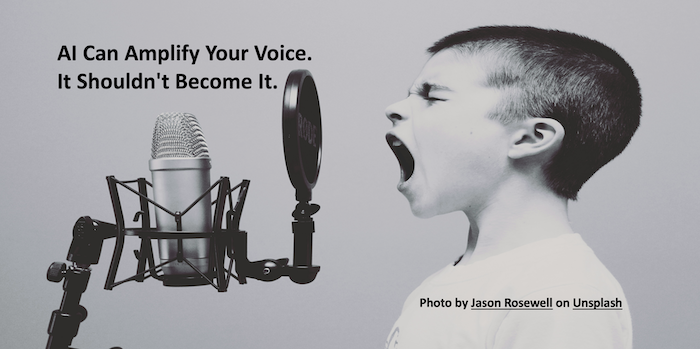
However, the critical distinction remains between using AI as an enhancer and as a substitute. The stories an individual has lived, the challenges they have overcome, and the unique perspectives they have cultivated through years of experience are irreplaceable. These are the cornerstones of authentic influence. AI can amplify a message, but it should never become the voice itself.
Data and Trends in AI Adoption
The acceleration of AI adoption in content creation is supported by a growing body of data. A report by Statista projects that the global AI market size will reach $1.8 trillion by 2030, with significant growth in natural language processing and generative AI applications. This indicates a widespread integration of AI across various industries, including marketing, media, and education.
Furthermore, studies on consumer trust in online content reveal a growing skepticism towards anonymous or unverified sources. A 2023 survey by Edelman found that 65% of consumers globally are concerned about the spread of misinformation, and 56% believe that AI-generated content is less trustworthy than human-generated content. This underscores the increasing importance of transparency and authenticity in building and maintaining credibility.
Implications for the Future of Expertise
The individuals who will ultimately thrive in the coming decade are likely to be those who have cultivated deep, authentic expertise over years of dedicated effort. They will then leverage AI as a sophisticated tool to communicate that expertise more effectively to a wider audience. AI’s role will be to amplify their existing voice, not to create a new one.
The current discourse surrounding AI and content creation necessitates a thoughtful examination of ethical boundaries. The potential for AI to democratize content creation and enhance productivity is undeniable. However, this must be balanced with a commitment to transparency and a clear understanding of where the line is drawn between using AI as a supportive tool and allowing it to become the de facto author of one’s professional identity.
The challenge lies in fostering an environment where AI is recognized as a powerful assistant, capable of augmenting human intellect and creativity, but never as a replacement for the genuine experiences, critical thinking, and unique perspectives that define true expertise. As AI continues its rapid evolution, the ability to discern and uphold authentic authorship will become increasingly paramount in shaping a landscape of trustworthy and impactful communication. The ongoing dialogue serves as a crucial step in navigating this complex terrain, ensuring that technological advancement serves to enhance, rather than diminish, the value of genuine human insight and influence.
