

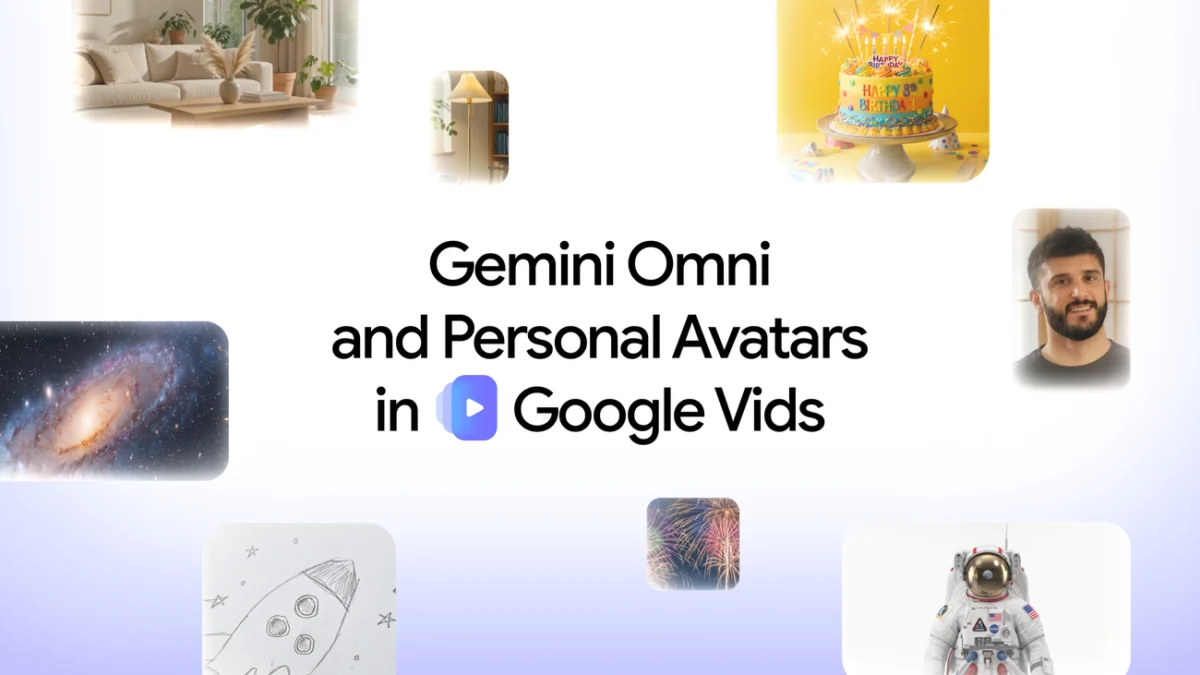
Google has officially announced a significant expansion of its AI-powered video creation platform, Google Vids, by integrating two transformative features: Gemini Omni and personal avatars. These updates are designed to streamline the enterprise video production workflow, moving away from traditional, labor-intensive editing toward a prompt-based, natural language interface. By leveraging Google’s most advanced multimodal models, the company aims to democratize professional-grade video production for corporate communications, training, and marketing, allowing users to generate high-quality content without specialized technical skills or expensive recording equipment.
The introduction of Gemini Omni marks a pivotal shift in how video content is conceptualized and refined within the Google Workspace ecosystem. Unlike previous iterations that focused on static templates or basic clip stitching, Gemini Omni allows for a conversational approach to video editing. Users can now provide a simple text prompt and supplement it with reference materials—such as a photograph or a hand-drawn sketch—to guide the AI in generating a cohesive visual narrative. This multimodal capability ensures that the output aligns closely with the user’s specific creative vision, effectively bridging the gap between an abstract idea and a finished digital product.
The Evolution of Google Vids and the Integration of Gemini Omni
The deployment of Gemini Omni is the latest milestone in a rapid development cycle for Google Vids. Since its initial unveiling, the platform has sought to address the "blank canvas" problem that often stymies corporate content creators. In February, Google integrated Veo 3.1, a video generation model that provided the foundational ability to create short clips from text. However, the new Omni integration goes significantly further by enabling iterative, step-by-step refinements through a "chat-to-edit" interface.
This chat-based functionality allows users to treat the AI as a virtual production assistant. If a generated draft requires adjustments, the user does not need to restart the project or navigate complex timeline layers. Instead, they can issue natural language commands such as "swap the background for a modern office setting," "adjust the lighting to look like sunset," or "add a cinematic blur effect to the background." This granular control over specific elements of the frame represents a major leap in AI video utility, moving the technology from a novelty generator to a functional productivity tool.
Personal Avatars: Eliminating the Barriers to On-Camera Presence
Parallel to the visual generation updates is the launch of personal avatars, a feature designed to solve the logistical challenges of on-camera communication. Producing professional video updates often requires significant time for setup, including lighting, audio recording, and multiple takes to ensure a polished delivery. Personal avatars allow users to create a digital twin that can deliver scripted messages with high fidelity.
The process for creating a personal avatar is streamlined for the enterprise user: an individual uploads a high-resolution selfie and a short audio sample of their voice. The system then generates a digital likeness that mimics the user’s appearance and vocal patterns. Once the avatar is established, the user can simply type a script, and the digital twin will "perform" the content. This is particularly valuable for global teams where updates need to be disseminated quickly, or for executives who need to maintain a personal connection with employees without the scheduling conflicts inherent in traditional video shoots.
Google has implemented strict guardrails for this feature. Personal avatars are tied directly to the user’s Google Account and are strictly limited to the account holder’s likeness. This "self-representation" requirement is a critical security measure intended to prevent the creation of deepfakes or the unauthorized use of another individual’s identity.
Strategic Context and Market Trends in Enterprise Video
The updates to Google Vids arrive at a time when video has become the dominant medium for internal and external corporate communication. According to industry data from market research firms such as Gartner and Forrester, asynchronous video communication is one of the fastest-growing segments in the digital workplace. As hybrid work models become permanent, companies are increasingly relying on video for onboarding, quarterly updates, and technical training.
Data indicates that employees are significantly more likely to engage with video content than with long-form text documents or emails. However, the high cost and time requirements of traditional video production have historically limited its use to high-stakes projects. By reducing the time-to-delivery from days to minutes, Google is positioning Vids as a primary tool for "everyday" video—the kind of content that was previously deemed too expensive or time-consuming to produce.

Furthermore, the integration of Gemini Omni places Google in direct competition with other AI video heavyweights and specialized startups like Synthesia and HeyGen. Google’s competitive advantage lies in its ecosystem; because Vids is integrated with Google Drive, Docs, and Slides, users can pull data and assets directly from their existing workflows, creating a seamless transition from a written proposal to a video presentation.
Safety, Transparency, and the Role of SynthID
As generative AI becomes more sophisticated, concerns regarding digital authenticity have moved to the forefront of the technological discourse. Google has addressed these concerns by incorporating SynthID into every clip generated by Gemini Omni and the personal avatar system. Developed by Google DeepMind, SynthID is a digital watermarking technology that embeds an invisible, tamper-resistant mark into the metadata and the pixels of the video.
This watermark does not compromise the visual quality of the content but allows for verification through specialized tools. In a corporate environment, this transparency is essential for maintaining trust. It ensures that viewers can distinguish between a live-recorded message and one generated by an AI avatar. By making SynthID a standard feature, Google is advocating for a "responsible AI" framework, encouraging users to explore creative boundaries while providing the tools necessary for content provenance.
Chronology of Development
The journey of Google Vids reflects the broader acceleration of AI research within Google. The following timeline illustrates the platform’s rapid maturation:
- April 2024: Google Vids is first introduced at the Google Cloud Next conference as an AI-powered video app for work, designed to sit alongside Docs, Sheets, and Slides.
- June 2024: The platform enters a limited testing phase with selected Workspace Labs users, gathering feedback on the initial "Help me create" features.
- February 2025: Google rolls out Veo 3.1, significantly improving the resolution and consistency of AI-generated clips within the platform.
- Present: The deployment of Gemini Omni and personal avatars marks the transition of Vids from a generative experiment to a robust, multimodal editing suite capable of professional-grade output.
Technical Requirements and Regional Availability
The new features are not yet available to all users. Access is currently tiered to ensure stability and to comply with regional regulatory environments. Gemini Omni and personal avatars are available to subscribers of Google AI Pro and Ultra, as well as Google Workspace business customers.
The personal avatar feature carries additional restrictions. Users must be 18 years or older to create an avatar, and the service is currently limited to specific geographical regions. These regional limitations are often dictated by local biometric data laws and AI safety regulations, which vary significantly between the North American, European, and Asian markets.
Broader Implications for the Future of Work
The enrichment of Google Vids with Gemini Omni and avatars suggests a future where "video literacy" is as fundamental as "writing literacy" in the professional world. As these tools become more pervasive, the barrier to entry for high-production-value storytelling will continue to decline.
For human resources departments, this means the ability to create personalized onboarding videos for every new hire. For sales teams, it means sending tailored video pitches to dozens of clients in the time it currently takes to write one. For technical teams, it means generating step-by-step visual guides directly from software documentation.
Analysis of these updates suggests that Google is betting on a "human-in-the-loop" model. While the AI handles the heavy lifting of rendering, lighting, and animation, the human user remains the director, providing the prompts, the sketches, and the final editorial approval. This partnership between human creativity and machine efficiency is likely to define the next decade of digital productivity.
By providing a platform that is both powerful enough for professional use and simple enough for everyday tasks, Google is attempting to standardize AI video in the same way it standardized cloud-based document collaboration. As Gemini Omni continues to learn from user interactions, the fluidity and accuracy of prompt-based editing are expected to improve, further narrowing the gap between imagination and digital reality.
