

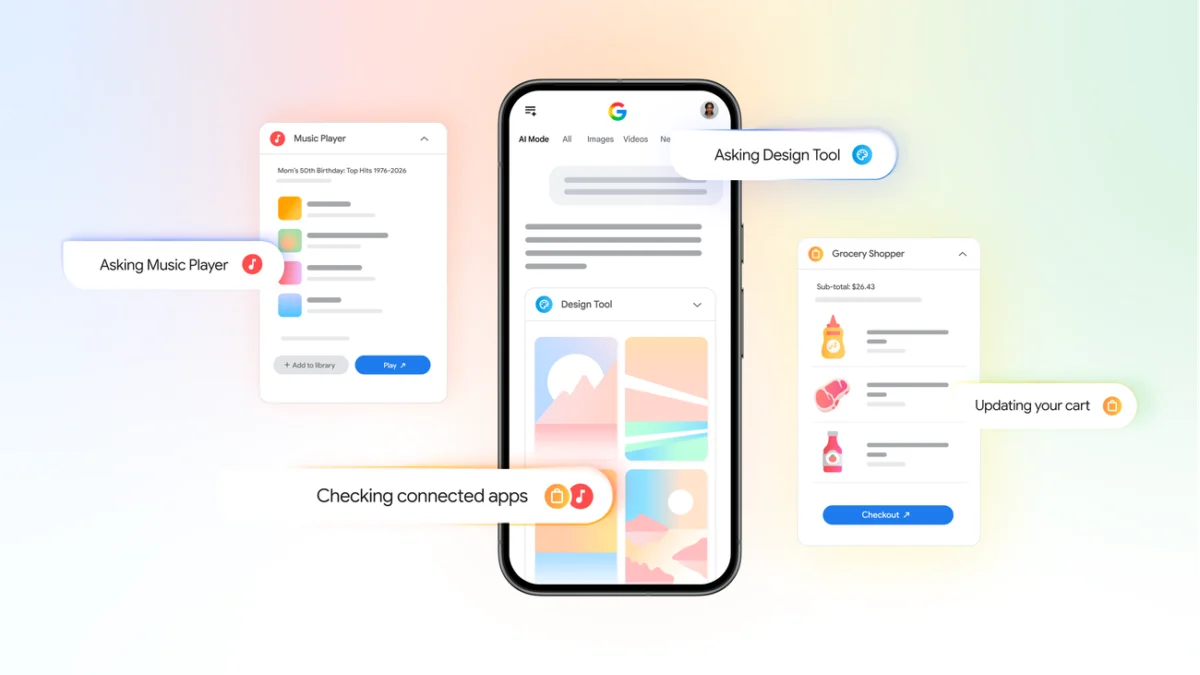
Google has officially begun the rollout of a significant update to its search ecosystem, enabling users to link and interact with third-party applications directly within the platform’s AI-powered interface. This development, led by Senior Product Manager Chips Mistry and Engineering Lead Biharck Araújo, marks a pivotal shift in the evolution of Google Search from a tool primarily focused on information retrieval to a comprehensive "action engine" capable of executing complex tasks across various digital services. Starting this week for users in the United States, the integration allows for a seamless bridge between Google’s AI Mode and popular platforms such as Instacart, Canva, and YouTube Music, signaling a new era of interoperability in the search landscape.
The introduction of "Connected Apps" within Search follows the successful implementation of similar features in the Gemini standalone application. By bringing these capabilities into the core Search experience, Google is attempting to streamline user workflows and reduce the "app fatigue" associated with switching between multiple tabs and programs to complete a single objective. The initiative is part of a broader strategy to transform Search into a personalized intelligence hub that understands not just what a user wants to know, but what they want to accomplish.
A New Paradigm: From Information to Action
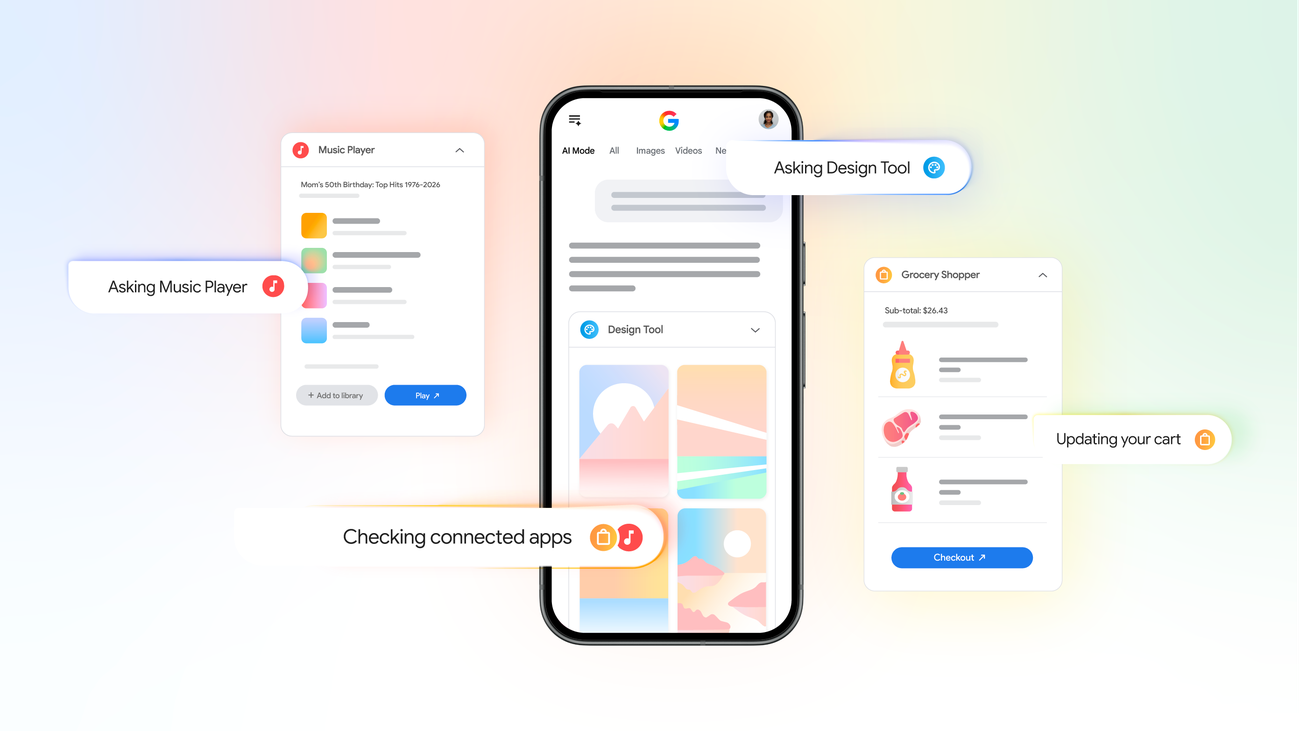
The cornerstone of this update is the ability for users to maintain the continuity of their tasks without leaving the Search interface. In practical terms, this means that a query no longer ends with a list of blue links or a brief AI summary; it ends with a completed transaction or a created asset. For instance, a user planning a social gathering can utilize AI Mode to generate a comprehensive grocery list based on specific recipes or dietary preferences. Through the new Instacart integration, those items can be transferred directly into a digital shopping cart, allowing for a near-instant transition to checkout.
Similarly, the integration with Canva addresses the needs of the creative and professional sectors. When users search for design inspiration or specific templates—such as a flyer for a local event or a presentation slide—AI Mode can now surface relevant Canva templates directly within the search results. This allows users to jump-straight into the editing process, bypassing the initial hurdle of searching within the Canva platform itself.
For entertainment, the YouTube Music connection enables a more fluid curation experience. Users can ask the AI to build a soundtrack for specific moods or occasions, such as a "90s grunge workout" or a "lo-fi study session." The AI-generated playlist can then be saved immediately to the user’s YouTube Music library, ready for playback across any of their connected devices. These integrations represent a significant technical milestone in how Large Language Models (LLMs) interact with external APIs to perform real-world actions.
Chronology of Google’s AI Evolution
The journey toward Connected Apps in Search has been a multi-year endeavor, characterized by rapid iterations and the rebranding of Google’s AI efforts. To understand the significance of this week’s rollout, one must look at the timeline of Google’s recent innovations:
- May 2023: Google introduces the Search Generative Experience (SGE) at its annual I/O conference, marking the first major step toward integrating generative AI into the search bar.
- December 2023: The launch of Gemini, Google’s most capable AI model, provides the underlying architecture for more sophisticated reasoning and task management.
- February 2024: Google rebrands its AI chatbot from Bard to Gemini and introduces Gemini Extensions, allowing the AI to access information from Google Workspace, Maps, and YouTube.
- May 2024: At Google I/O 2024, the company previews "AI Overviews" and the concept of a more proactive Search experience that can plan trips and organize schedules.
- Current Phase: The rollout of third-party "Connected Apps" represents the expansion of this ecosystem beyond Google’s own first-party services, inviting external developers into the AI Mode environment.
This timeline demonstrates a clear trajectory: Google is moving away from being a mere gateway to the internet and toward becoming the operating system for the internet itself.
Supporting Data and Market Context
The move to integrate apps directly into Search is backed by compelling market data regarding user behavior and the competitive landscape of the AI industry. According to recent industry reports, the average smartphone user spends nearly 90% of their mobile time within apps, yet the friction of moving between those apps often leads to abandoned tasks. In the e-commerce sector specifically, studies have shown that every additional "click" required to complete a purchase can reduce conversion rates by as much as 10% to 15%. By integrating Instacart directly into the search flow, Google is effectively shortening the "path to purchase," a move that is highly attractive to retail partners.
Furthermore, the competitive pressure from other AI entities cannot be overstated. OpenAI has previously explored the "plugin" model for ChatGPT, and Microsoft has heavily integrated Copilot across its Bing search engine and Windows ecosystem. Apple is also preparing to launch "Apple Intelligence," which promises deep integration between Siri and third-party apps via "App Intents." Google’s massive search market share—which consistently remains above 90% globally—gives it a unique advantage in this race, as it already serves as the primary starting point for most online journeys.
Technical Infrastructure and Security Protocols
A primary concern for both users and developers in this new ecosystem is the security and privacy of data. Google has emphasized that the linking of services is entirely opt-in and "securely" managed. When a user connects an app like Instacart or Canva, they are granting Google’s AI the permission to pass specific parameters to those services to perform actions on their behalf.
The underlying technology relies on a sophisticated orchestration layer that translates natural language prompts into structured data that third-party APIs can understand. For example, if a user asks for "ingredients for a spicy margarita," the AI must identify the necessary items (tequila, lime, agave, jalapeño), format them into a list, and then communicate with the Instacart API to find those specific products in a store near the user. This requires not only linguistic understanding but also real-time data processing and robust authentication protocols to ensure that personal information remains protected during the exchange.
Broader Implications for the Web and SEO
The transition to an action-oriented search engine carries profound implications for the broader web ecosystem, particularly for digital marketers and content creators. Traditionally, Search Engine Optimization (SEO) has been focused on driving traffic to a website. However, as Google enables users to complete tasks within the search interface, the traditional "click-through" may become less common for certain types of queries.
This shift toward "zero-click" searches has been a topic of intense debate within the tech community. While it offers undeniable convenience for the end-user, it raises questions about the future of the open web. If a user can find a recipe, build a list, and buy the ingredients all within Google, the original food blog that provided the recipe may see a decline in direct traffic. Google’s strategy appears to involve a shift from being a traffic referrer to being a platform facilitator, where the value is found in the transaction and the utility rather than the page view.
Industry analysts suggest that this will force businesses to rethink their digital presence. Companies may need to prioritize API integrations and "discoverability" within AI models over traditional keyword-based SEO. For partners like Canva and Instacart, the trade-off is clear: they may lose some direct site visits, but they gain access to a highly motivated user base at the exact moment of intent.
Future Outlook and Expansion Plans
While the current rollout is limited to a selection of partners and restricted to the United States, Google has confirmed that this is only the beginning. The company is actively working with a diverse range of partners to expand the library of connected apps. Future integrations could potentially include travel booking services, financial management tools, and project management platforms.
The ultimate goal is a "Personal Intelligence" that is contextually aware and capable of cross-platform coordination. Imagine a scenario where a user says, "I’m going to a wedding in Chicago next month; help me get ready." The AI could theoretically check the user’s calendar for the dates, search for flights, book a hotel via a connected travel app, find a tuxedo rental via a retail partner, and create a "Chicago travel" playlist on YouTube Music—all through a single conversational thread.
As Google continues to refine these features, the focus will likely remain on balancing user convenience with the complex ethical and technical challenges of AI-driven automation. For now, the introduction of Connected Apps in Search stands as a bold statement of intent, signaling that the future of search is not just about finding answers, but about getting things done.
