

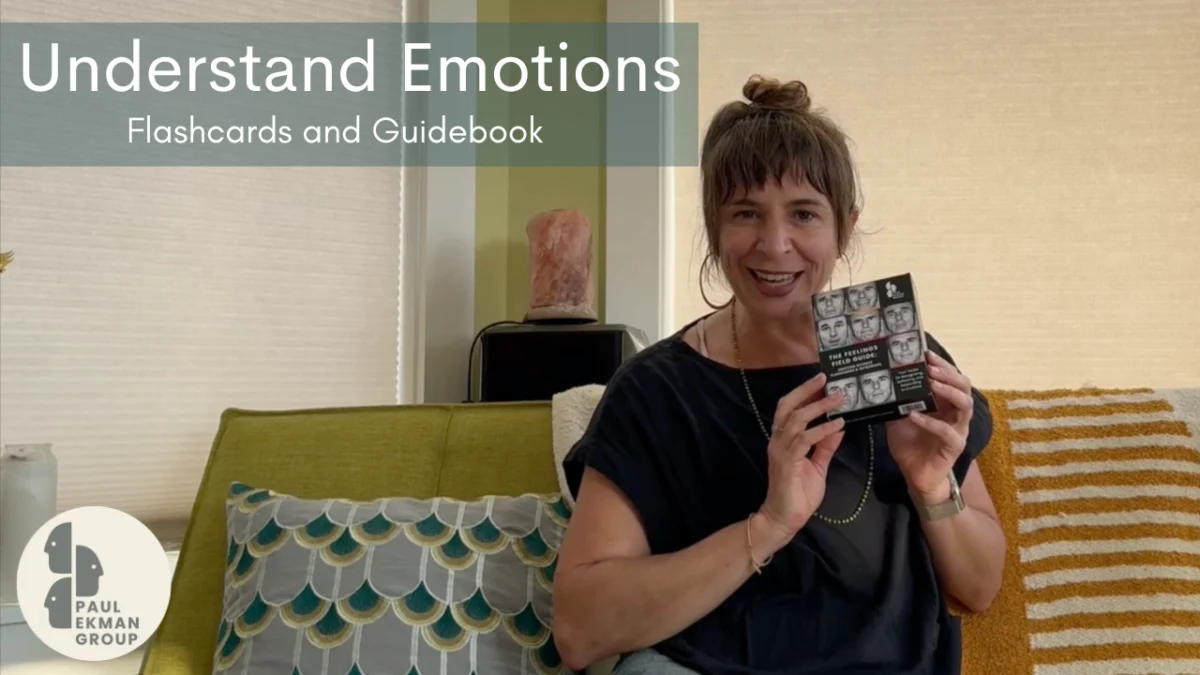
The complex landscape of human emotions, often perceived as abstract and elusive, is now being made more accessible through a scientifically developed tool. "The Feelings Field Guide," a creation of renowned emotion researchers Drs. Paul and Eve Ekman, aims to translate over five decades of behavioral science into actionable skills for everyday life. This comprehensive toolkit, comprising 92 emotion flashcards and a scientific guidebook, is designed to enhance emotional awareness and non-verbal communication, offering a tangible method for identifying universal facial expressions and fostering constructive responses.
The genesis of "The Feelings Field Guide" stems from the groundbreaking work of Dr. Paul Ekman, a pioneer in the study of emotions and their physiological and behavioral manifestations. His research, beginning in the 1960s, established the existence of universal facial expressions for a core set of emotions, a finding that revolutionized the field of psychology and has since been replicated across diverse cultures. This extensive body of work, meticulously gathered and analyzed over half a century, forms the bedrock of the Field Guide, transforming abstract scientific knowledge into a practical resource.
What Exactly is "The Feelings Field Guide"?
At its core, "The Feelings Field Guide" is a meticulously crafted educational instrument. It comprises a substantial collection of 92 flashcards, each depicting a specific emotion through its universal facial expression. Accompanying these visual aids is a detailed scientific guidebook that elucidates the underlying research and provides practical guidance for users. The dual nature of the toolkit—visual and informational—is central to its pedagogical approach, catering to different learning styles and promoting a deeper understanding of emotional cues.
The methodology behind the Field Guide is rooted in recognizing the seven universal emotions identified by Dr. Ekman’s research: happiness, sadness, anger, fear, surprise, disgust, and contempt. These emotions, according to the scientific consensus, are expressed through distinct and recognizable facial muscle movements that are consistent across human populations, regardless of cultural background. The Field Guide leverages this universal language of facial expressions, providing users with the tools to decode these subtle yet powerful signals in themselves and others.
Dr. Eve Ekman, continuing her father’s legacy, plays a pivotal role in the dissemination of this research. In introductory materials, she often highlights the core principles of the Field Guide, emphasizing the scientific validity of recognizing these fundamental emotional expressions. The accompanying video content, designed to illustrate the practical application of the guide, offers a visual demonstration of how to interpret facial cues and connect them to specific emotional states. This approach moves beyond mere identification, aiming to foster genuine emotional literacy.
From Scientific Insight to Everyday Application
The transition from complex scientific theory to a user-friendly tool is a hallmark of "The Feelings Field Guide." The researchers have intentionally bridged the gap between academic study and practical utility, making sophisticated emotional intelligence accessible to a broad audience. The guide is not merely about recognizing emotions but about understanding what to do with that awareness. This emphasis on actionable insights distinguishes it from purely academic resources.
The physical components of the Field Guide are designed for tactile engagement and repeated use. While specific contents of the box may vary slightly, the core elements consistently include:
- Emotion Flashcards: A comprehensive set of 92 cards, each showcasing a universal facial expression. These are intended to be studied individually or used in interactive exercises.
- Scientific Guidebook: A detailed manual that explains the science behind each emotion, its evolutionary basis, and how to interpret the subtle nuances of facial expressions. It also offers practical strategies for responding constructively to observed emotions.
- Reflection Exercises: Integrated within the guidebook or as separate components, these exercises encourage users to apply their newfound knowledge to real-life scenarios, fostering self-awareness and empathy.
The emphasis is on moving from passive observation to active engagement. The guide encourages users to not only identify an emotion but also to consider its potential causes and implications, and to formulate appropriate responses. This holistic approach is crucial for developing robust emotional intelligence.
Designed for Adaptability and Personal Growth
A key feature of "The Feelings Field Guide" is its inherent flexibility. Recognizing that individuals learn and interact with information in diverse ways, the creators have designed the toolkit to be adaptable to various needs and contexts. Users are encouraged to find the approach that best suits their learning style and objectives. Potential uses include:
- Self-Quizzing: Individuals can use the expression cards to test their own recognition skills, reinforcing learning through repetition and self-assessment.
- Focused Study: Users can choose to concentrate on one emotion at a time, delving deeply into its characteristics and expressions before moving on to others. This methodical approach can be particularly beneficial for those new to the subject.
- Scenario-Based Learning: The guide can be used to analyze hypothetical or real-life situations, prompting users to identify the emotions at play and consider potential responses.
- Group Activities: The flashcards and guidebook can be incorporated into workshops or group discussions, facilitating shared learning and the exchange of perspectives.
The absence of a prescribed "right" way to use the guide underscores its user-centric design. The goal is not rigid adherence to a curriculum but the cultivation of practical, transferable skills. Whether used by parents seeking to better understand their children, professionals aiming to improve interpersonal dynamics, or individuals simply striving for greater self-awareness, the Field Guide offers a personalized pathway to emotional literacy.
Testimonials Highlight Practical Impact
The efficacy of "The Feelings Field Guide" is further validated by testimonials from individuals who have incorporated it into their lives. These accounts offer compelling evidence of its real-world applicability.
Mark B., a parent grappling with a son experiencing anxiety and social regression, found the guide to be an invaluable tool for initiating discussions about emotions. He highlights the confidence instilled by the scientific pedigree of the work, stating, "Knowing that this science was practically pioneered by Dr. Ekman gave me a very high degree of confidence in the validity of this product." His experience underscores the guide’s potential to bridge communication gaps within families, particularly when dealing with complex emotional challenges.
Simon B., working in information security and data protection, emphasizes the professional benefits of enhanced emotional intelligence. He notes, "The Field Guide is a great tool to have and I recommend it to anyone interested in understanding micro-expressions and emotions… Working in information security and data protection, understanding micro-expressions and emotions has helped me understand colleagues, customers and suppliers better and improved my interactions with people. These are great skills to have as a security professional, especially in determining what people really feel compared to what they are saying." This perspective highlights the strategic advantage of accurately reading emotional cues in professional settings, enabling more effective communication and negotiation, and potentially revealing discrepancies between verbal statements and underlying feelings.
The significance of these testimonials lies in their demonstration of how a scientifically grounded tool can translate into tangible improvements in personal relationships and professional effectiveness. They showcase the guide’s ability to empower individuals with practical skills that have immediate and measurable impact.
The Underlying Importance of Emotional Understanding
Emotions are not merely fleeting feelings; they are fundamental drivers of human cognition, communication, and decision-making. They shape our perceptions, influence our choices, and form the basis of our social interactions. When we fail to accurately interpret emotions—whether in ourselves or in others—the consequences can range from minor misunderstandings to significant conflicts, strained relationships, and missed opportunities for connection and growth.
The ability to recognize and respond effectively to emotions, often referred to as emotional intelligence, is increasingly recognized as a critical life skill. Research consistently demonstrates a strong correlation between high emotional intelligence and success in various life domains. For instance, a study published in the Journal of Personality and Social Psychology by Brackett et al. (2010) found that emotional intelligence was a significant predictor of academic success and social well-being among adolescents. Similarly, Goleman’s seminal work, "Emotional Intelligence," published in 1995, highlighted its importance in leadership and professional achievement, suggesting that it can be more critical than IQ in determining career success.
By equipping individuals with the tools to decipher emotional signals, "The Feelings Field Guide" aims to foster several key benefits:
- Improved Self-Awareness: Understanding one’s own emotional states allows for better self-regulation and more informed decision-making.
- Enhanced Empathy: The ability to recognize emotions in others cultivates a deeper capacity for understanding and compassion, leading to stronger interpersonal bonds.
- More Effective Communication: Accurately reading emotional cues facilitates clearer and more constructive dialogue, reducing misunderstandings and conflict.
- Stronger Relationships: By fostering empathy and improving communication, the guide helps build and maintain healthier, more fulfilling relationships.
- Increased Resilience: The capacity to navigate challenging emotional situations with greater skill contributes to overall psychological resilience.
The guide is therefore positioned not just as an educational product, but as a catalyst for personal development and improved human interaction. Its grounding in robust scientific research provides a reliable foundation for building these essential skills in a way that is both practical and sustainable.
Frequently Asked Questions Address Key Distinctions
The creators of "The Feelings Field Guide" anticipate common questions regarding its uniqueness and application.
How is this different from other emotion flashcards?
A primary differentiator lies in the scientific rigor underpinning the Field Guide. While many emotion flashcards offer a basic labeling of feelings, "The Feelings Field Guide" is uniquely grounded in the Facial Action Coding System (FACS). Developed by Dr. Paul Ekman and Wallace Friesen, FACS is a comprehensive, anatomically based system for describing all observable facial movements. By adhering to FACS, the guide ensures that the expressions depicted are not arbitrary representations but are scientifically validated and universally recognizable. This scientific accuracy provides a distinct advantage in learning and applying emotional recognition skills.
Is there a digital version?
While "The Feelings Field Guide" is primarily a physical, tactile tool designed to promote hands-on learning, it is often complemented by digital resources. For individuals seeking a more in-depth and performance-based mastery of emotion recognition, the accompanying "Micro-expression Training Tools" offer a digital platform for certified training. These digital tools leverage the same scientific principles but provide interactive exercises and assessments designed for advanced learning and skill development.
In conclusion, "The Feelings Field Guide" represents a significant advancement in making complex emotional science accessible and applicable. By translating decades of research into a tangible and flexible toolkit, Drs. Paul and Eve Ekman are empowering individuals to navigate the intricacies of human emotion with greater confidence and skill, fostering better communication, stronger relationships, and enhanced personal well-being.
