

Ten years ago, the Atlas of Emotions was introduced to the world, marking a significant milestone in the scientific and public understanding of human feelings. This ambitious project, born from a unique convergence of scientific rigor, contemplative wisdom, and artistic design, aimed to demystify the complex landscape of emotions. The Atlas, a collaborative endeavor spearheaded by the renowned emotion scientist Dr. Paul Ekman, his daughter Dr. Eve Ekman, and His Holiness the 14th Dalai Lama, has since become a widely recognized framework for emotional awareness, permeating classrooms, therapy sessions, research laboratories, and everyday dialogues across the globe. Its enduring impact, a decade after its inception, continues to unfold, demonstrating the profound need for accessible tools to navigate our inner emotional lives.
A Decade of Discovery: The Genesis of the Atlas of Emotions
The journey to create the Atlas of Emotions began with a fundamental question: what are the universal building blocks of human emotion? Dr. Paul Ekman, a pioneer in the study of facial expressions and their relation to emotions, embarked on an extensive survey of nearly 250 emotion scientists. This groundbreaking research, detailed in his own publications, aimed to establish a consensus on the nature of universal emotions. The findings confirmed a significant degree of agreement, identifying core emotions that transcend cultural boundaries. This scientific bedrock provided the essential foundation upon which the Atlas would be built.
However, mapping emotions was not solely a scientific pursuit. The project embraced an interdisciplinary approach, integrating rigorous psychological research with the nuanced insights of contemplative traditions and the power of graphic design. The involvement of His Holiness the Dalai Lama brought a profound ethical and philosophical dimension, emphasizing the importance of emotional intelligence and compassion in fostering individual well-being and global harmony. Dr. Eve Ekman, bringing her expertise in psychology and her deep understanding of her father’s work, played a crucial role in translating complex scientific concepts into an accessible and engaging format.
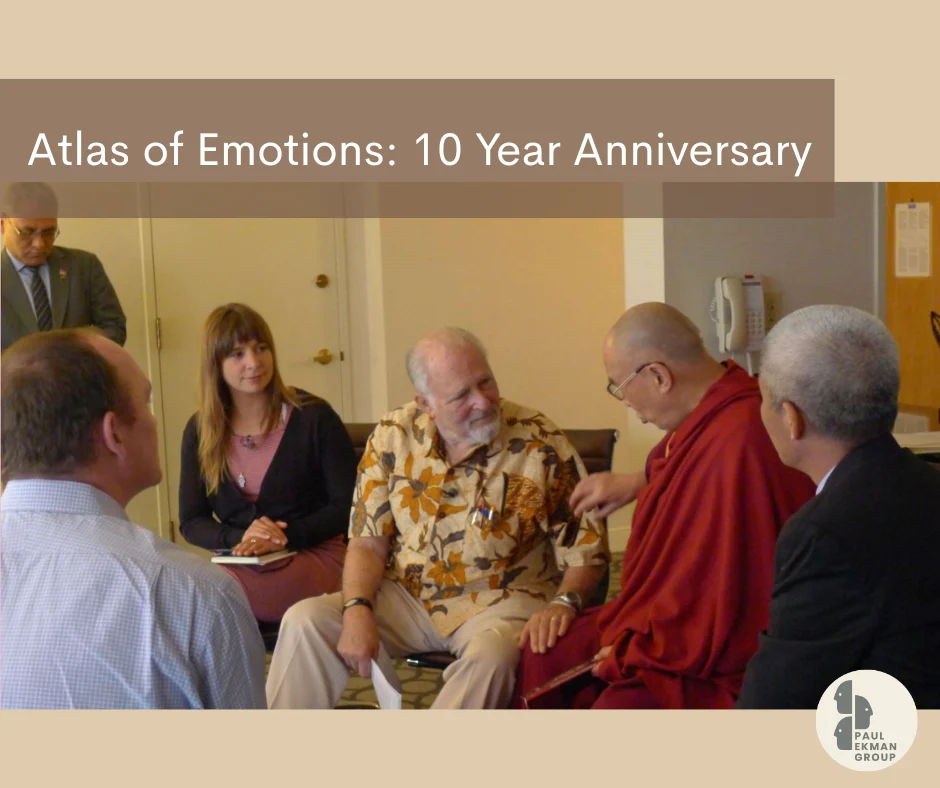
A rare glimpse into the collaborative spirit that defined the Atlas’s development has been recently unveiled. Never-before-seen footage from a working meeting between Dr. Paul Ekman, Dr. Eve Ekman, and His Holiness the Dalai Lama showcases the iterative process of refining the Atlas. This video captures the essence of their inquiry: a shared commitment to understanding emotions not just as academic subjects, but as fundamental aspects of the human experience that can be cultivated for greater peace and understanding. The footage highlights the dynamic exchange of ideas, the careful consideration of the emotional spectrum, and the dedication to creating a resource that was both scientifically accurate and deeply meaningful.
From Concept to Global Recognition: The Atlas’s Trajectory
Launched in 2016, the Atlas of Emotions immediately captured international attention. Its innovative approach to visualizing and explaining emotions resonated with a public eager for tools to better understand themselves and others. Major news outlets, including The New York Times, recognized the Atlas’s potential, publishing articles that highlighted its unique methodology and its accessibility to a broad audience. The New York Times article, published on May 7, 2016, specifically lauded the project’s ability to translate complex psychological theories into a public-friendly format, emphasizing its collaboration with the Dalai Lama as a key element in its broad appeal.
This early recognition served as a catalyst for widespread adoption. Over the past decade, the Atlas has become an integral part of various educational and therapeutic settings. Its interactive online platform allows users to explore the nuances of different emotions, understand their triggers and consequences, and learn strategies for managing them effectively. The framework has been instrumental in:
- Educational Initiatives: The Atlas has been incorporated into curricula in schools and universities worldwide, providing students with foundational knowledge in emotional literacy. Educators have found it to be a valuable tool for fostering self-awareness, empathy, and conflict resolution skills among young learners. Data from educational institutions utilizing the Atlas consistently points to improved student engagement in social-emotional learning activities.
- Therapeutic Practices: Mental health professionals have leveraged the Atlas to assist clients in identifying, articulating, and processing their emotions. Its visual and conceptual framework offers a shared language for discussing complex feelings, aiding in the development of therapeutic interventions and enhancing the client-therapist relationship. Anecdotal evidence from therapy practices suggests a reduction in emotional distress and an increase in adaptive coping mechanisms among patients who engage with the Atlas.
- Research and Development: Academic researchers have employed the Atlas as a tool for studying emotional responses, cross-cultural variations in emotional expression, and the impact of emotional regulation strategies. Its scientifically grounded structure provides a standardized lexicon for emotional research, facilitating more consistent and comparable findings across studies.
- Personal Growth and Well-being: Beyond formal settings, individuals have independently used the Atlas for personal development, seeking to enhance their emotional intelligence, improve interpersonal relationships, and cultivate greater mindfulness and resilience. Online forums and user testimonials reveal a significant impact on individuals’ ability to navigate daily challenges with greater emotional equanimity.
The consistent engagement and positive feedback from these diverse user groups underscore the Atlas’s effectiveness in demystifying emotions and promoting emotional well-being on a global scale.
Charting the Future: Evolution and Expansion
As the Atlas of Emotions commemorates its tenth anniversary, the focus shifts towards its future evolution and continued impact. The creators are not only celebrating the achievements of the past decade but are also actively seeking to enhance and expand the reach of this vital resource.
To foster ongoing dialogue and gather valuable insights, the project is inviting its users to share their experiences. A dedicated feedback form has been established to collect information on how individuals and institutions have utilized the Atlas, what they have learned from it, and what changes it has facilitated in their lives or practices. This user-generated data is crucial for informing the next phase of development, ensuring that future iterations of the Atlas remain relevant, effective, and responsive to evolving needs. The prompt, "How have you used the Atlas of Emotions? What has it helped you see, understand, or change?" directly solicits this qualitative data, which is invaluable for understanding the real-world application and impact of the framework.
Looking ahead, significant developments are on the horizon. Updates to the online, interactive Atlas of Emotions are planned, promising enhanced features and an even more intuitive user experience. These updates are expected to incorporate new research findings and user-driven suggestions, further solidifying its position as a leading resource for emotional literacy.
Furthermore, Dr. Eve Ekman is currently developing an "Atlas of Emotions" book, slated for release in 2027. This forthcoming publication is anticipated to offer a more in-depth exploration of the concepts presented in the online Atlas, delving deeper into the scientific underpinnings, philosophical implications, and practical applications of emotional understanding. The book will likely provide expanded narratives, case studies, and new frameworks for engaging with the emotional landscape that profoundly shapes human lives. This initiative signifies a commitment to reaching new audiences and providing a comprehensive, tangible resource that complements the digital platform. Individuals interested in receiving notifications about the book’s release are encouraged to join the dedicated announcement list.
The ten-year anniversary of the Atlas of Emotions is more than a retrospective; it is a testament to the enduring power of collaboration, scientific inquiry, and the universal human quest for emotional understanding. As it embarks on its next decade, the Atlas is poised to continue its vital work, empowering individuals and communities to navigate the complexities of their inner worlds with greater clarity, compassion, and resilience. The ongoing development and expansion of this framework suggest a promising future for emotional intelligence education and its profound impact on global well-being.
