

The perennial question from sales professionals echoes in industry forums and training sessions: "What is the single most potent principle of influence in sales?" While the dynamic nature of each client interaction necessitates a multifaceted approach, extensive research and practical application point to the principle of consistency as a frequently underestimated, yet profoundly powerful, driver of successful sales outcomes. This principle, deeply rooted in social psychology and championed by leading experts, hinges on a seemingly counterintuitive strategy: the best salespeople often talk the least.
For decades, the traditional image of a salesperson might have conjured up images of relentless pitchmen, bombarding prospects with features, benefits, and urgent offers. However, a more nuanced understanding, forged through over twenty years of studying sales dynamics, consumer behavior, and academic research, consistently reveals a different paradigm. Top-performing sales professionals dedicate significantly more time to asking probing questions and actively listening than to delivering monologues. Industry benchmarks suggest that highly effective salespeople engage in speaking for only 25% to 30% of the interaction, reserving the majority of the time to thoroughly understand the client’s unique needs, desires, and challenges.
The Psychological Underpinnings of Consistency in Sales
Dr. Robert Cialdini, a preeminent figure in social psychology and author of the seminal work "Influence: The Psychology of Persuasion," outlines several key principles of influence. Among these, the principle of consistency holds particular sway in the sales arena. This principle posits that individuals experience both internal psychological pressure and external social pressure to behave in accordance with their prior statements and actions. Humans possess a fundamental desire to be perceived as consistent and reliable. This internal drive, coupled with the societal expectation that individuals should honor their commitments, creates a strong inclination to follow through on what has been previously expressed or agreed upon. In essence, people are intrinsically motivated to align their subsequent actions with their spoken words and declared values. This inherent human tendency has profound implications for the art and science of selling.
From Information Gathering to Value Alignment
The efficacy of questions in sales transcends mere data collection. Skilled salespeople deploy questions as strategic tools to guide clients through a process of self-discovery. These inquiries are designed not just to extract information, but to help customers articulate and clarify their most pressing goals, their most significant challenges, their highest priorities, and their desired ultimate outcomes. Once these needs and aspirations are clearly articulated by the client, the salesperson’s role transforms into demonstrating how their product or service offers a direct and logical alignment with these very priorities the client has just identified.
This approach is encapsulated by the widely cited maxim: "People don’t resist their own values." When a proposed solution resonates with a client’s deeply held beliefs, aspirations, or stated needs, it feels less like an imposition and more like a natural progression. This is where the principle of consistency truly shines.
The "Store X" vs. "Store Y" Analogy: Navigating the Sales Journey
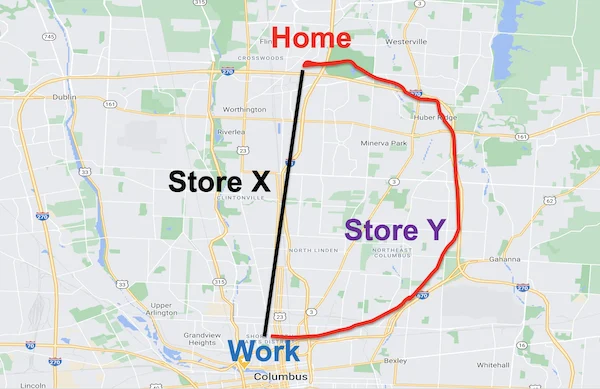
To illustrate this concept, consider a practical analogy. Imagine an individual who commutes approximately 15 miles to work daily, following a familiar route. If a family member calls and requests that they pick up batteries and bug spray on their way home, the feasibility of this request hinges significantly on its convenience.

If a particular store, let’s call it "Store X," stocks these items and is conveniently located just a minute or two off the usual commute path, the request is likely to be met with an easy "yes." The reason is straightforward: Store X is already integrated into the individual’s established route. The act of stopping there aligns seamlessly with their existing plan and requires minimal deviation from their established pattern.
However, the scenario changes dramatically if the requested items are only available at "Store Y," which is several miles off the direct route, potentially adding 20 minutes or more to the journey. In this instance, the individual might hesitate. The hesitation is not necessarily born from a lack of willingness to help but from the significant inconvenience. It requires a deliberate departure from the easy, predictable path, demanding extra time and effort.
This analogy directly parallels many sales conversations. When salespeople invest time in asking thoughtful, insightful questions early in the engagement, they empower clients to verbalize their objectives, overcome their obstacles, establish their priorities, and define their ideal results. The salesperson then has the crucial advantage of presenting their offering as a direct pathway to achieving these very outcomes that the client has explicitly stated they desire. This makes the purchase decision feel akin to stopping at Store X – it’s already on the client’s chosen route, a natural extension of their own articulated needs.
Conversely, when sales professionals bypass or insufficiently explore the discovery phase, they often find themselves in a position of having to persuade clients to embark on an entirely different, and often more challenging, journey. This leads to prolonged explanations, persistent convincing, defensive maneuvers, and the arduous task of overcoming objections. This occurs because the salesperson failed to establish, from the outset, the client’s intended destination. This is the "Store Y" scenario – it is more difficult, time-consuming, and often feels like overt selling, which many consumers find off-putting.
The renowned sales authority Jeffrey Gitomer astutely observed, "People don’t like to be sold, but they love to buy." This statement underscores the core of effective sales strategy. The most successful sales interactions do not involve pressuring individuals towards a destination they never initially envisioned. Instead, they guide clients toward outcomes that they themselves have identified as significant and desirable.
The Strategic Advantage of Consistent Questioning
This is precisely why the principle of consistency is so potent. When clients articulate what is most important to them, and the salesperson can then genuinely and credibly connect their solution to those stated priorities, the decision to move forward feels natural and logical. It is consistent with what the client has already expressed they want and need. This alignment reduces perceived risk and fosters a sense of trust and understanding.
Therefore, a critical question for any sales professional to consider is: "Are my sales questions leading customers toward their desired ‘Store X,’ or am I inadvertently forcing them towards the inconvenient ‘Store Y’?" The answer to this question can illuminate the underlying reasons why some sales conversations flow effortlessly and lead to swift agreements, while others devolve into protracted struggles and ultimately fail to close.

The Broader Implications for Sales Strategy
The implications of prioritizing consistency in sales extend beyond individual transactions. For organizations, fostering a sales culture that emphasizes deep client understanding through effective questioning can lead to:
- Increased Customer Loyalty: When clients feel genuinely understood and that their needs are being met consistently with their stated priorities, they are more likely to develop long-term loyalty. This reduces customer churn and enhances lifetime value.
- Improved Sales Forecasting: A sales process driven by clearly defined client needs and a demonstrable alignment with solutions results in a more predictable sales pipeline. Deals are less likely to falter due to misaligned expectations.
- Enhanced Brand Reputation: Sales teams that are perceived as consultative partners rather than aggressive vendors build a stronger, more positive brand reputation in the market. This can attract more qualified leads and create a competitive advantage.
- Higher Sales Team Morale: Sales professionals who are equipped with the skills to effectively uncover client needs and demonstrate value often experience greater job satisfaction and reduced burnout. The process becomes less about overcoming resistance and more about facilitating mutually beneficial outcomes.
While a thorough knowledge of one’s product and competitive landscape remains foundational, the strategic deployment of the right questions is paramount. The most efficient and effective path to a sale is often paved by empowering clients to lead the way, by helping them articulate their own journey and then demonstrating how your offering seamlessly aligns with the route they have already chosen. This is the essence of influence through consistency – building on what the client already believes and wants.
Expert Insights and Background
This perspective aligns with the extensive work of Brian Ahearn, Chief Influence Officer at Influence PEOPLE and a faculty member at the Cialdini Institute. Ahearn, personally trained and endorsed by Dr. Robert Cialdini, has dedicated his career to helping individuals and organizations ethically apply the principles of influence to achieve greater success. His research and practical applications consistently highlight the power of understanding and leveraging psychological principles in communication and persuasion.
Ahearn’s publications, including "Influence PEOPLE," "Persuasive Selling," and "Influenced from Above," delve into the science behind effective influence, emphasizing that genuine understanding of the other party is the bedrock of successful persuasion. His numerous LinkedIn Learning courses and TEDx Talk on pre-suasion, which has garnered over a million views, further underscore the significant impact of psychological insights on professional outcomes.
The concept of consistency in sales is not merely theoretical; it is a practical framework that, when applied diligently, can transform the sales process from a confrontational battle of wills into a collaborative journey toward shared success. By focusing on asking the right questions, actively listening, and demonstrating how solutions align with pre-established client values, sales professionals can unlock a more consistent, ethical, and ultimately, more profitable approach to their craft. The path to closing a sale is often the path the customer has already charted for themselves.
