

The art of voiceover, a profession that lends its voice to everything from animated characters and corporate explainer videos to audiobooks and national advertising campaigns, hinges on a crucial element: natural, engaging delivery. Yet, a subtle but significant impediment, known within the industry as "blocking," can undermine even the most talented performers, leading to disengaged audiences and ineffective communication. This phenomenon, often a hallmark of less experienced voice actors, disrupts the intended flow of dialogue, creating an unnatural, staccato rhythm that forces listeners to strain for comprehension. Understanding the mechanics of blocking, its underlying causes, and its detrimental effects is paramount for any professional aiming to achieve impactful and resonant voiceover performances.
At its core, voiceover flow is the seamless, natural progression of spoken language, mirroring the ebb and flow of genuine human conversation. When a voiceover artist delivers dialogue with good flow, the listener experiences an effortless journey through the narrative or message. This natural cadence is not merely about speed; it encompasses the strategic use of pace, pauses, and subtle vocal inflections to convey meaning, emotion, and intent. The goal is to create an auditory experience that is both pleasing to the ear and readily digestible, ensuring that the message is not only heard but understood and absorbed. This inherent human quality in delivery is vital across all genres of voiceover, from the nuanced characterizations in animation to the clear, concise explanations required for e-learning modules or the persuasive tones of corporate marketing. The ability to inject appropriate "humanization" – the subtle imperfections and rhythms that characterize natural speech – is often the difference between a voice that connects and one that merely broadcasts.
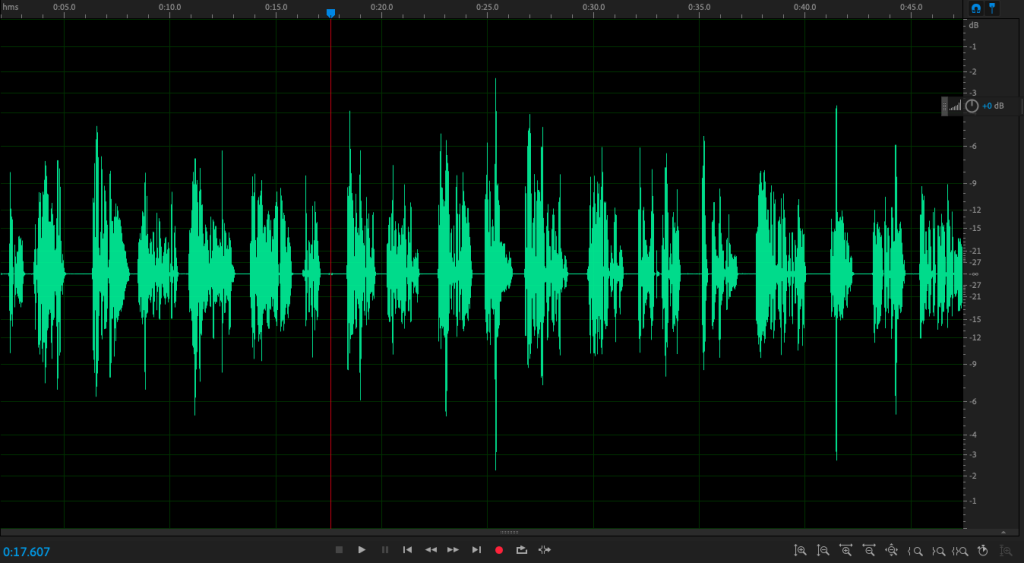
"Blocking," conversely, is the antithesis of this natural flow. It is characterized by an unnatural, disjointed delivery, visually represented in audio editing software as distinct, isolated "blocks" of waveform. These abrupt separations indicate unnatural pauses or a lack of seamless transition between words and phrases. When such audio is played back, it sounds "staccato" or fragmented, compelling the listener to actively anticipate the next segment of speech rather than being carried along by it. This creates a cognitive burden, detracting from the message’s impact and potentially leading to listener fatigue or disinterest. In essence, blocking forces the audience to work harder to process information, a direct contravention of the voiceover artist’s objective to communicate clearly and engagingly.
The visual representation of blocking in audio waveforms starkly contrasts with the ideal. Where blocked audio appears as distinct, separated spikes, effective voiceover dialogue often exhibits a more continuous, "hairy caterpillar" like waveform. This visual metaphor signifies the presence of subtle variations in amplitude and frequency, indicative of natural breath control, slight hesitations, and the nuanced rhythm of human speech. This organic texture, when heard, translates into a delivery that feels alive, authentic, and captivating, allowing the listener to effortlessly follow the narrative and connect with the spoken word. The difference is not merely aesthetic; it reflects a fundamental distinction in how information is processed and perceived by the audience.
The prevalence of blocking is often observed among newcomers to the voiceover industry. This is frequently attributed to a combination of factors, including an over-reliance on reading scripts verbatim without fully internalizing the content, a lack of awareness regarding the nuances of spoken rhythm, and an unconscious tendency to insert excessive or inappropriate pauses. Some performers may also fall prey to the misconception that slowing down their delivery automatically equates to clarity, inadvertently creating artificial breaks rather than natural pacing. Furthermore, the pressure to deliver a "perfect" take, devoid of any perceived flaws, can lead to an overly cautious and segmented performance. The digital editing process itself can sometimes exacerbate these tendencies if not handled with a deep understanding of vocal performance.

Conversely, the opposite extreme of blocking is an equally detrimental issue: an over-edited, overly compressed, or excessively fast-paced delivery. This scenario, often seen in time-sensitive advertising, where a lengthy script is forced into a truncated time slot, leaves the listener overwhelmed with information and with insufficient time to process it. The result is a message that is ultimately lost, leaving the audience with no clear understanding of what was communicated. This "information overload" is as ineffective as blocking, albeit for diametrically opposed reasons – one starves the listener of continuity, the other bombards them with an indigestible volume.
However, it is crucial to recognize that "blocking," or a deliberately staccato delivery, is not always a deficiency. In specific artistic contexts, a performer might consciously choose to employ a fragmented or disjointed delivery to achieve a particular effect. For instance, portraying a character experiencing extreme stress, confusion, or speech impediments might necessitate a delivery that deviates from a smooth, natural flow. Similarly, certain experimental audio dramas or avant-garde performances might intentionally utilize fragmented speech patterns to evoke a specific emotional or thematic response. The critical distinction lies in intent. When a voiceover artist intentionally employs a non-traditional delivery for artistic effect, it is a controlled artistic choice. In contrast, blocking as an unintentional flaw arises from a lack of awareness or control over vocal delivery.
The good news for aspiring and established voiceover artists alike is that overcoming blocking is an achievable goal, primarily requiring awareness and a commitment to practice. The foundational step involves actively listening to and analyzing natural human conversation. Recording personal interactions (with consent) or observing conversations in public spaces can provide invaluable insights into the rhythm, pacing, and pauses that characterize authentic speech. A key technique involves practicing reading aloud with a focus on maintaining a continuous, connected vocal line, even when encountering punctuation that might suggest a full stop. This practice encourages the performer to internalize the flow of sentences rather than simply reacting to individual words. Incorporating natural breaths at appropriate points, rather than holding breath for extended periods or taking abrupt gasps, is also vital. Furthermore, understanding the script’s underlying meaning and emotional intent allows for more organic pacing and the natural placement of pauses for emphasis or reflection, rather than arbitrary breaks. Engaging in dialogue with a scene partner, even if simulated, can also help develop a more responsive and flowing delivery.
The implications of mastering voiceover flow extend far beyond individual performances. In the broader media landscape, the ability to deliver clear, engaging, and natural-sounding dialogue is a cornerstone of effective communication. The proliferation of digital content, from streaming services and podcasts to online educational platforms and virtual reality experiences, has amplified the demand for high-quality voiceover work. Businesses and content creators increasingly rely on skilled voice actors to convey brand identity, educate audiences, and evoke emotional responses. A voiceover artist who can consistently deliver with excellent flow not only enhances the perceived quality of the content but also contributes significantly to its overall effectiveness and success in reaching and engaging its target audience. Industry analysts suggest that the global voiceover market is projected to continue its upward trajectory, driven by the insatiable demand for localized content and the growing importance of audio in the digital ecosystem. Professionals who can consistently overcome obstacles like blocking are therefore poised for greater success in this expanding field.
In conclusion, "blocking" represents a significant hurdle in the pursuit of professional voiceover excellence. It is a manifestation of an unnatural delivery that detracts from clarity and engagement. By understanding its causes, recognizing its visual and auditory indicators, and diligently practicing techniques that foster natural speech patterns, voiceover artists can effectively eliminate this impediment. The ultimate goal is not merely to avoid blocking, but to cultivate a dynamic and responsive vocal delivery that serves the narrative, captivates the listener, and ensures the message is not only heard but profoundly felt and understood. As the voiceover industry continues to evolve and expand, the mastery of natural, flowing delivery will remain an indispensable skill for those seeking to make their mark and connect with audiences in a meaningful way.
