


The persistent and often detrimental issue of mouth clicks in voiceover recordings is a challenge that plagues professionals across the industry. While many might dismiss these unwanted sounds as an unavoidable byproduct of speech, akin to dealing with one’s physical appearance, industry experts and seasoned voice artists emphasize that this is a misconception. The vast majority of individuals experiencing excessive mouth noise do not possess physiological impediments; rather, they are often unaware of the fundamental techniques that can mitigate or eliminate these clicks at the source, thereby saving valuable time and resources in post-production. This article delves into the causes, consequences, and, most importantly, the actionable strategies for achieving pristine, click-free voiceover recordings, a critical skill for sustained success in a competitive field.
Mouth clicks, also colloquially known as "clicky mouth," "dry mouth," or simply "mouth noise," are auditory artifacts that manifest as distinct popping or clicking sounds within an audio recording. These noises can occur before, during, or immediately after spoken words. While nearly all humans produce some degree of mouth noise during typical conversation, these sounds are often unconsciously filtered out by the listener’s brain. However, in the controlled environment of a recording studio, and amplified by the technical processes of audio production, these subtle noises can become highly pronounced and distracting. The implications for voiceover artists are significant; a prevalence of mouth clicks can be a primary reason for disqualification in auditions and can severely impact an artist’s likelihood of being rehired for subsequent projects.
A stark illustration of this impact was shared by a seasoned voiceover director who recounted re-recording an entire five-hour session with a new artist because the original performer’s excessive mouth clicks rendered the audio unusable. The cost and time associated with editing out these clicks would have exceeded the expense of hiring a replacement, underscoring the tangible financial and professional consequences of this issue. "The detrimental effect mouth clicks can have is profound," the director noted, highlighting the crucial need for artists to address this problem proactively.
The Science Behind Mouth Clicks: Hydration and Saliva Dynamics
At its core, the phenomenon of mouth clicks is intrinsically linked to the moisture levels within the oral cavity. The tongue, teeth, and saliva interact during speech, and when the mouth is insufficiently hydrated, the saliva becomes thicker and stickier. This altered saliva consistency increases the likelihood of the tongue adhering to the palate or teeth, resulting in the characteristic popping or clicking sounds.
Dehydration: A Primary Culprit
Dehydration is widely recognized as a major contributor to increased mouth noise. Habits such as smoking and excessive consumption of caffeinated beverages, like coffee, are known dehydrators. Both cigarettes and caffeine act as diuretics, actively drawing water from the body. This reduction in overall body water directly impacts the mouth’s lubrication, leading to a drier, stickier environment conducive to click formation. The simple physiological chain is evident: less water in the body means less water available for saliva production, resulting in a less fluid and more adhesive saliva, which in turn causes mouth clicks.

However, the issue of hydration is not as straightforward as one might assume. Ironically, over-hydration, or more accurately, the manner in which individuals attempt to combat dehydration, can also contribute to mouth clicks. Voiceover artists who realize they are dehydrated often resort to gulping large quantities of water in a short period. While this may seem like a solution, having an excess of water in the mouth can also disrupt the natural mechanics of speech. The presence of a significant volume of water can cause the tongue to create similar noises as it moves, much like a dry mouth. This creates a paradoxical situation where both insufficient and excessive immediate hydration can lead to increased mouth clicks.
The Amplification Effect: Recording and Post-Production Processes
A critical factor that elevates the problem of mouth clicks from a minor annoyance to a significant professional hurdle is how they are treated during the recording and post-production phases of audio engineering. While we may not consciously notice mouth clicks in everyday conversation, the professional audio workflow inherently amplifies them.
The primary culprits are the processes of audio compression and normalization, which are standard practices in voiceover production. Compression is an audio processing technique that reduces the dynamic range of a signal – essentially, it lessens the difference between the loudest and quietest parts of the audio. Imagine a waveform being squeezed by a vice; the peaks are brought down, and the valleys are brought up.
This process has a dual effect. Firstly, it makes the overall audio signal quieter. To compensate for this reduction in volume, engineers often employ normalization or a simple volume increase to bring the recording back to an audible level. Secondly, and crucially for the mouth click issue, compression effectively raises the perceived loudness of all sounds within the dynamic range, including those subtle clicks that were previously masked by the louder speech.
Illustrative Waveform Analysis
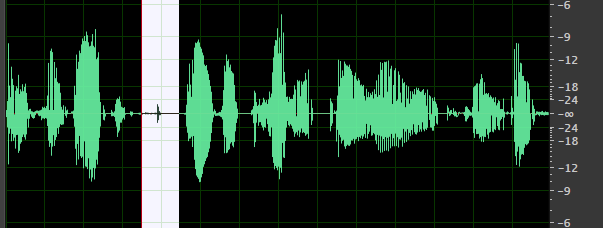
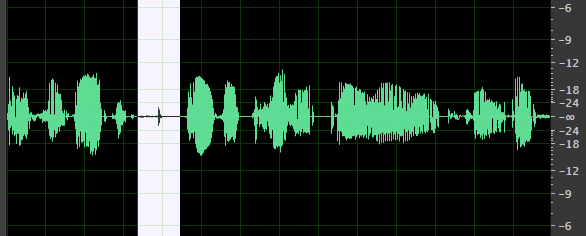
To understand this amplification, consider the visual representation of an audio waveform. Before compression, a mouth click might appear as a sharp, relatively small peak within the larger waveform of spoken words. After compression, the surrounding speech waveform is reduced in amplitude, while the click, though its absolute amplitude may remain similar, becomes significantly larger relative to the rest of the audio. When the entire waveform is then normalized to an audible level, the previously minor click emerges as a much louder, more intrusive sound.
This amplification effect means that every single mouth click produced during the recording session is magnified in the final product. Therefore, the imperative for voiceover artists is to address and minimize these clicks at their origin, rather than relying on time-consuming and often imperfect post-production editing. While editing out clicks is technically feasible, it is a laborious and frustrating task. The goal, therefore, must be to achieve a clean recording from the outset.

Strategic Solutions: Proactive Techniques for Click-Free Recordings
Given the understanding of the causes and amplification of mouth clicks, voiceover professionals can adopt a multi-faceted approach to mitigate and eliminate them. These strategies focus on optimizing physiological conditions, refining recording techniques, and maintaining consistent vocal health.
Step 1: Prioritizing Proactive Hydration
The cornerstone of preventing mouth clicks lies in achieving and maintaining optimal hydration. As established, a lack of hydration leads to dry, sticky saliva, which is a primary cause of mouth noise. However, the timing and method of hydration are critical.
The Two-Hour Rule: Gulping down a large volume of water immediately before a session is ineffective. The body requires time to process and distribute water efficiently. Experts recommend starting a consistent hydration regimen at least two hours prior to a recording session. This allows the body to adequately absorb and utilize the water, ensuring consistent saliva production throughout the session.
Water: The Sole Solution: It is imperative to distinguish between hydration and mere fluid intake. Beverages like Coca-Cola, coffee, tea, and even dairy products can have dehydrating effects due to their diuretic properties. When referring to hydration in this context, it strictly means consuming plain water. A common pitfall is mistaking the consumption of sugary or caffeinated drinks for adequate hydration. For instance, a voice artist consuming two liters of Coca-Cola daily might still experience dehydration because the beverage actively contributes to water loss.
Hydration for Vocal Health: Beyond preventing mouth clicks, proper hydration is vital for vocal cord health. The vocal cords are delicate mucous membranes that vibrate at high speeds during speech. Dehydration leads to reduced lubrication, increasing friction between the cords, which can result in hoarseness, a deeper vocal tone, and discomfort. This is akin to the vocal wear experienced by individuals who have overused their voices without adequate rest or lubrication.
Pre-Session Hydration: For early morning sessions, it is advisable to begin hydrating the night before. Overnight, the body naturally loses water, and a morning hydration effort alone may not be sufficient to achieve optimal levels before a session. Consistent hydration throughout the day and ensuring adequate intake the preceding evening are key.
Step 2: Optimizing Microphone Placement and Vocal Projection
The physical relationship between the voiceover artist and the microphone, coupled with the volume of vocal projection, plays a significant role in managing mouth noise. This is often referred to as "placement and projection."
The Inverse Relationship: Consider the extreme scenarios: shouting from a distance versus whispering in close proximity. When shouting from afar, the volume of the spoken word is high relative to any incidental mouth noise, making the clicks imperceptible. Conversely, whispering into a microphone at very close range, even if the overall volume is low, will make any mouth clicks far more noticeable because they are closer to the microphone.
Microphone Technique: In a professional recording environment, the input gain of the microphone must be set at an appropriate level, avoiding clipping (distortion) and maintaining a healthy signal-to-noise ratio.
- Close Proximity & Low Projection: If an artist is positioned very close to the microphone (e.g., three inches) and speaks softly, the input gain will need to be increased significantly to achieve a usable recording level. This amplifies not only the dialogue but also the ambient noise and any mouth clicks, making them comparatively louder.
- Distant Placement & Higher Projection: Conversely, if an artist maintains a greater distance from the microphone (e.g., seven to eight inches) and projects their voice slightly louder than normal conversational volume, the input gain can be set lower. This results in the dialogue being robustly recorded, while the noise floor and mouth clicks are comparatively quieter.
The overarching principle is to "back off the mic and project more" to minimize the relative loudness of mouth clicks. For specific commercial styles that utilize close-mic techniques and the "proximity effect" (a low-frequency boost that occurs when a sound source is very close to a directional microphone), artists must accept that increased post-production editing for mouth clicks will be necessary. This is a trade-off for achieving a particular sonic quality.
Step 3: Consistent Sipping During Sessions
Even with meticulous pre-session hydration, the act of speaking for extended periods inevitably leads to dehydration. As voiceover artists engage their vocal cords and articulate words, they naturally lose moisture, leading to a reduction in saliva and an increase in mouth click frequency.
The Professional’s Habit: A hallmark of a professional voiceover artist is the consistent presence and use of a water bottle during recording sessions. This practice ensures that the mouth remains adequately lubricated throughout the duration of the work. The body’s capacity for water absorption is finite, so continuous, small sips are far more effective than infrequent large gulps.
Routine Hydration: Voiceover directors often advise artists to take sips of water every 10-15 lines of dialogue. While this may necessitate more frequent breaks for restroom visits, the benefit of maintaining a click-free vocal delivery far outweighs this minor inconvenience. In modern, air-conditioned studio environments, which can be inherently drying, this continuous hydration is particularly crucial. Failure to do so will inevitably lead to a noticeable increase in clickiness as the session progresses.
Step 4: Re-evaluating the "Green Apple Myth"
A widely circulated piece of advice for combating mouth clicks involves consuming tart foods, most notably half a green apple. The theory is that the citric acid in such foods cleanses the mouth, neutralizing the sticky saliva. While there is a kernel of truth in that acidic substances can temporarily alter saliva consistency, relying on this as a primary solution is misguided and often ineffective for professional voiceover work.
Temporary Fix, Not a Solution: While a tart fruit might offer a fleeting improvement, it is not a sustainable or reliable method for consistent click-free performance. The underlying physiological factors – hydration levels, microphone technique, and consistent sipping – are the true determinants of vocal clarity. Relying on a green apple is akin to treating a symptom rather than the root cause.
The Exception: Severe Hangover: The only scenario where a green apple or similar acidic food might offer significant, albeit temporary, relief is in cases of severe dehydration due to a hangover. However, for the professional voiceover artist aiming for consistent, high-quality output, the focus must remain on the fundamental principles outlined in steps 1 through 3. For those experiencing the after-effects of a night out, the advice is often a stark reminder that professional responsibilities require diligent self-care, and in such extreme cases, the artist may be "on their own" to manage the consequences.
By diligently implementing these strategies – prioritizing proactive and consistent hydration, mastering microphone placement and projection, and maintaining a continuous sipping routine during sessions – voiceover artists can significantly reduce and often eliminate the problem of mouth clicks. This not only enhances the quality of their recordings but also streamlines the post-production process, ultimately contributing to greater professional efficiency and client satisfaction. The ability to deliver clean, crisp audio is not merely a technical skill but a fundamental aspect of professional excellence in the voiceover industry.
