

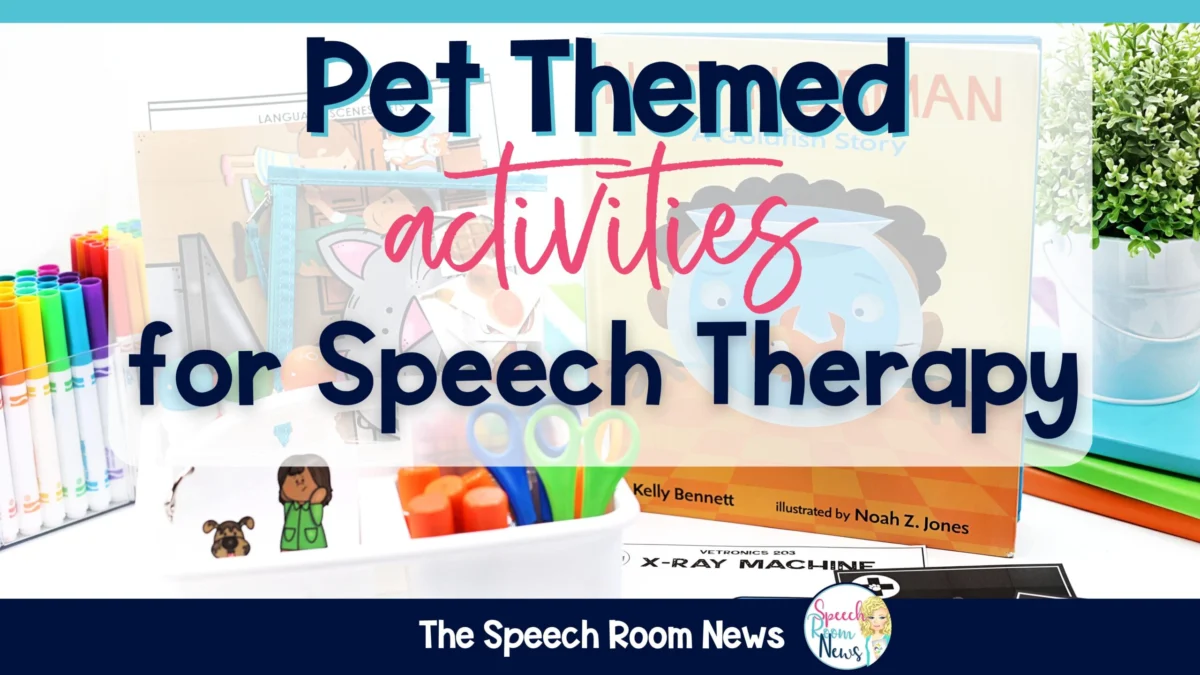
The integration of thematic units into speech and language therapy sessions is increasingly recognized as a highly effective pedagogical approach, offering significant benefits for both practitioners and students. By organizing therapeutic activities around engaging and relatable concepts, speech-language pathologists (SLPs) can foster deeper engagement, facilitate skill generalization, and streamline lesson planning. Among the diverse range of themes available, a "pets theme" stands out for its universal appeal, versatility, and rich potential to address a broad spectrum of communication goals across various developmental stages. This approach not only makes therapy more enjoyable for young learners but also provides a structured, multi-modal environment conducive to sustained learning and progress.
The Foundational Benefits of Thematic Speech Therapy
The adoption of year-round, non-holiday themes in speech and language therapy is rooted in sound educational and psychological principles. Unlike holiday-specific materials that have limited usability, evergreen themes like "pets," "transportation," or "farm animals" can be revisited multiple times throughout the year, maximizing resource utility and offering substantial cost savings for therapists. This reusability is a key factor in efficient practice management, allowing SLPs to invest in high-quality materials that yield continuous returns.
Beyond economic advantages, thematic instruction significantly enhances the therapeutic process by:

- Increasing Engagement and Motivation: Children, particularly preschoolers, respond enthusiastically to familiar and interesting topics. A pet theme, for instance, taps into a child’s natural curiosity and affection for animals, transforming therapy into an exciting, play-based experience rather than a series of isolated drills. This heightened engagement is crucial for sustained attention and active participation, directly impacting learning outcomes.
- Facilitating Contextual Learning: Thematic units provide a natural context for introducing and practicing new vocabulary, grammatical structures, and communication functions. When language targets are embedded within a cohesive theme, children can more easily connect new information to existing knowledge, strengthening comprehension and recall. For example, discussing pet care responsibilities within a "pets theme" naturally introduces verbs like "feed," "walk," "groom," and nouns like "leash," "bowl," "vet."
- Promoting Skill Generalization: Learning within a thematic framework helps children generalize newly acquired speech and language skills to various contexts. A child practicing articulation of the /d/ sound might encounter it in words like "dog," "dig," and "dot" across different pet-themed activities (books, songs, games). This consistent exposure in varied yet related contexts supports the transfer of skills from the therapy room to everyday situations.
- Streamlining Preparation Time: For busy SLPs, pre-planned thematic kits or curated collections of resources are invaluable time-savers. Having a ready-made suite of activities—from books and songs to games and crafts—eliminates the need for extensive daily preparation, allowing therapists to dedicate more time to direct intervention and individualized student support. A well-designed theme kit can provide a structured curriculum for an entire month, offering consistency and progression.
Research in early childhood education consistently demonstrates that thematic units contribute to improved learning outcomes, particularly in language development. A 2018 study published in the Journal of Speech, Language, and Hearing Research highlighted the efficacy of play-based interventions in promoting expressive and receptive language skills in preschool children with communication disorders, a methodology inherently supported by thematic approaches. Similarly, the American Speech-Language-Hearing Association (ASHA) advocates for naturalistic, child-centered interventions that align well with the principles of thematic learning.
The "Pets Theme": A Deep Dive into Therapeutic Potential
The "pets theme" is particularly potent for speech and language therapy due to its inherent relatability and the wealth of associated vocabulary and concepts. Most children have encountered pets, either personally or through media, making the topic immediately accessible and motivating. This familiarity provides a strong foundation upon which to build complex language skills.
Targeting Diverse Speech and Language Goals:
A well-executed pets theme can simultaneously address a wide array of therapeutic objectives:

- Articulation: Children can practice specific phonemes through animal sounds (e.g., /b/ for "bark," /m/ for "meow"), animal names (e.g., "dog," "cat," "fish," "bird"), and related vocabulary (e.g., "collar," "food," "cage"). The repetitive nature of many pet-themed songs and games offers ample opportunities for high-frequency practice.
- Vocabulary Development: The theme naturally introduces a rich lexicon, including:
- Nouns: Specific animals (dog, cat, hamster, fish, parrot), pet accessories (leash, collar, bowl, bed, cage, toy), care items (food, water, brush, shampoo), and related professions (vet, groomer).
- Verbs: Actions associated with pets (feed, walk, pet, groom, play, bark, meow, purr, swim, fly, fetch).
- Adjectives: Describing pets (fluffy, soft, fast, slow, big, small, friendly, playful, colorful).
- Prepositions: Spatial concepts related to pets (in the cage, on the mat, under the bed, next to the owner).
- Sentence Structure and Grammar: Therapists can target various grammatical forms by constructing sentences about pets: "The dog is eating." "The cat has soft fur." "She walked the dog yesterday." "The fish swims quickly."
- Narrative Skills: Creating stories about pets, role-playing a vet visit, or describing a pet’s day encourages sequencing, character development, problem-solving, and the use of temporal words.
- Social and Pragmatic Skills: Discussions about caring for pets foster empathy and understanding of responsibility. Role-playing scenarios (e.g., "vet clinic") provide opportunities for turn-taking, asking and answering questions, making requests, and expressing emotions. Sharing personal experiences about pets can enhance conversational skills.
- Concepts: Basic concepts like big/small, fast/slow, colors, numbers (how many pets?), and opposites (clean/dirty, loud/quiet) are easily integrated.
Multi-Modal Activities for a Comprehensive Pet Theme:
To maximize the therapeutic impact, a pet theme should incorporate a variety of learning modalities, appealing to different learning styles and reinforcing concepts through diverse sensory experiences.
1. Literacy Integration: Engaging Storybooks
Storybooks are cornerstone resources in speech therapy, offering rich language models and opportunities for comprehension and narrative development. For a pet theme, several titles stand out:
- "Not Norman" by Kelly Bennett: This humorous story about a boy who initially resents his goldfish, Norman, but eventually grows to appreciate him, is excellent for discussing emotions, perspective-taking, and the concept of unique value. SLPs can target vocabulary related to fish care, descriptive words for pets, and narrative sequencing as the boy tries to trade Norman. The story also opens discussions about different types of pets and their specific needs.
- "Some Pets" by Angela DiTerlizzi: With its vibrant illustrations and diverse portrayal of children and their animal companions, this book is ideal for introducing a wide range of pet types and the joys of pet ownership. It promotes vocabulary expansion, identification of animal characteristics, and can be used to discuss similarities and differences among pets. The repetitive nature can aid in reinforcing target sounds and words.
- "Lola Gets a Cat" by Anna McQuinn: Lola’s journey from dreaming of a cat to realizing the responsibilities of pet ownership provides a realistic perspective. This book is valuable for teaching cause and effect, problem-solving, and sequencing. It also offers a platform to discuss the verbs and nouns associated with pet care, as Lola practices with a stuffed animal before getting a real cat.
An Interactive Vocabulary Book about Pets, often available as a printable or digital resource, can complement these stories by explicitly targeting core vocabulary, animal identification, and actions, often using visual aids that enhance understanding for emergent readers and learners with language delays. Such books often align with other hands-on activities, like a "Critter Vet Clinic."

2. Auditory Engagement: Pet-Themed Songs
Songs are powerful tools for language acquisition, leveraging rhythm, melody, and repetition to embed vocabulary and grammatical structures. Pet-themed songs are particularly effective for young learners due to their simple lyrics and engaging animal sounds.
- "I Have a Pet": This song can introduce various animal names and sounds, encouraging imitation and early articulation practice.
- "Do You Have a Pet?": Ideal for practicing question-answering, descriptive language, and personal narratives as children share about their own pets (or imaginary ones).
- "I Love Dogs": Focuses on specific animal characteristics and actions, reinforcing verbs and adjectives related to dogs.
- "Wag Your Tail": Encourages action words and gross motor imitation, connecting language to physical movement.
These songs enhance phonological awareness, auditory memory, and the development of rhythm and intonation patterns crucial for fluent speech.
3. Interactive Games and Digital Tools:
Gamified learning is highly motivating and provides structured opportunities for skill practice.

- "Color and Play Pets Bingo": This versatile game can target numerous goals. Children can identify pets by name, describe their colors or characteristics, practice following directions ("find the red cat"), and take turns. Bingo boards can be customized to include target articulation sounds or specific vocabulary items, making it adaptable to various therapy goals. The visual nature aids comprehension, while the element of chance keeps children engaged.
- "Feed the Dog Articulation Boom Cards": Digital platforms like Boom Cards offer interactive, self-correcting activities that are particularly effective for articulation therapy. In a "Feed the Dog" game, students "feed" the dog digital representations of words containing their target speech sounds. The immediate auditory feedback (a "crunch" sound) reinforces correct production, making practice enjoyable and highly motivating. This format is also excellent for teletherapy sessions, providing a dynamic virtual environment.
4. Hands-On Learning: Toys and Crafts
Tactile and manipulative activities enhance fine motor skills, problem-solving, and provide concrete experiences for language learning.
- "Critter Clinic Toy Vet Set": This highly engaging toy set, featuring small animal figures, doors to open/close, and veterinary tools, is a goldmine for language therapy.
- Vocabulary: Medical terms (stethoscope, syringe, bandage, thermometer), animal body parts, descriptive words (sick, healthy, injured).
- Verbs: Examine, treat, heal, care for, give.
- Narrative and Social Skills: Role-playing a vet visit encourages sequencing of events, turn-taking, asking/answering questions ("What’s wrong with your pet?"), and problem-solving. It also allows for the practice of empathy and understanding different roles.
- Concepts: Big/small animals, inside/outside the clinic, colors of tools.
- "Hape Family Pet Houses": These miniature pet houses with small animal figures and accessories are perfect for imaginative play and targeting spatial concepts.
- Prepositions: "The dog is in the house," "The cat is on the roof," "The bird is next to the cage."
- Descriptive Language: Describing the pets, their houses, and their actions.
- Narrative Play: Creating stories about the pets’ daily lives, fostering sequencing and creative expression.
- "Clifford the Big Red Dog Craft": Craft activities, like creating a paper plate Clifford, integrate fine motor skill development with thematic learning. This craft can be paired with reading Clifford books, enhancing literacy connections. Children practice following multi-step directions, identifying colors, and describing the finished product, all while reinforcing pet-related vocabulary.
5. Sensory Play: A Multi-Sensory Experience
Sensory bins offer a rich, multi-sensory environment for language exploration and tactile learning.
- Pet-Themed Sensory Bin: Fill a bin with rice or dried beans, adding small plastic or stuffed animal pets, mini pet accessories (bowls, bones, balls), and scoops/containers.
- Descriptive Language: Children can describe what they see, feel, and hear. "I see a fluffy brown dog." "This rice feels smooth." "I hear the scoop clinking."
- Vocabulary: Identifying the hidden pets and accessories.
- Following Directions: "Find the dog," "Put the bone in the bowl."
- Inferencing: Using clues to find hidden items, such as "I see a pointy black ear" to identify a dog.
The Therapist’s Advantage: Efficiency and Comprehensive Support

The value of a structured, comprehensive pet-themed kit for SLPs cannot be overstated. A kit that includes therapy printables, interactive play resources, circle time lessons, parent handouts, crafts, and book companions provides an entire month’s worth of carefully planned activities. This level of organization not only saves precious preparation time but also ensures consistency and progression in therapeutic goals. Parent handouts extend learning opportunities into the home, fostering greater family involvement and reinforcing skills outside of therapy sessions. Such kits empower SLPs to deliver high-quality, engaging, and effective interventions without the burden of constant material creation.
Broader Impact and Future Trends
The shift towards thematic, play-based interventions in speech therapy reflects a broader understanding of child development and learning. This approach aligns with modern educational philosophies that prioritize active, experiential learning over rote memorization. The implications extend beyond immediate therapeutic gains:
- Enhanced Home-School Connection: Thematic units provide common ground for communication between therapists, educators, and parents, facilitating a unified approach to a child’s developmental support.
- Preparation for School: By engaging in structured play and theme-based learning, children develop pre-literacy skills, social competencies, and attention spans that are crucial for success in formal schooling.
- Holistic Development: The integration of fine motor activities, sensory exploration, and social interaction within a language-rich theme supports a child’s overall cognitive, emotional, and physical development.
In conclusion, the "pets theme" exemplifies the profound impact that thoughtfully designed thematic units can have on speech and language therapy. By harnessing the universal appeal of animals and integrating a diverse range of multi-modal activities, SLPs can create a dynamic, engaging, and highly effective learning environment. This approach not only optimizes therapeutic outcomes by fostering engagement and facilitating skill generalization but also streamlines the therapist’s workflow, reinforcing the importance of strategic resource utilization in modern speech-language pathology practice. The sustained benefits for both children and practitioners underscore the enduring value of thematic learning in addressing communication challenges.
