

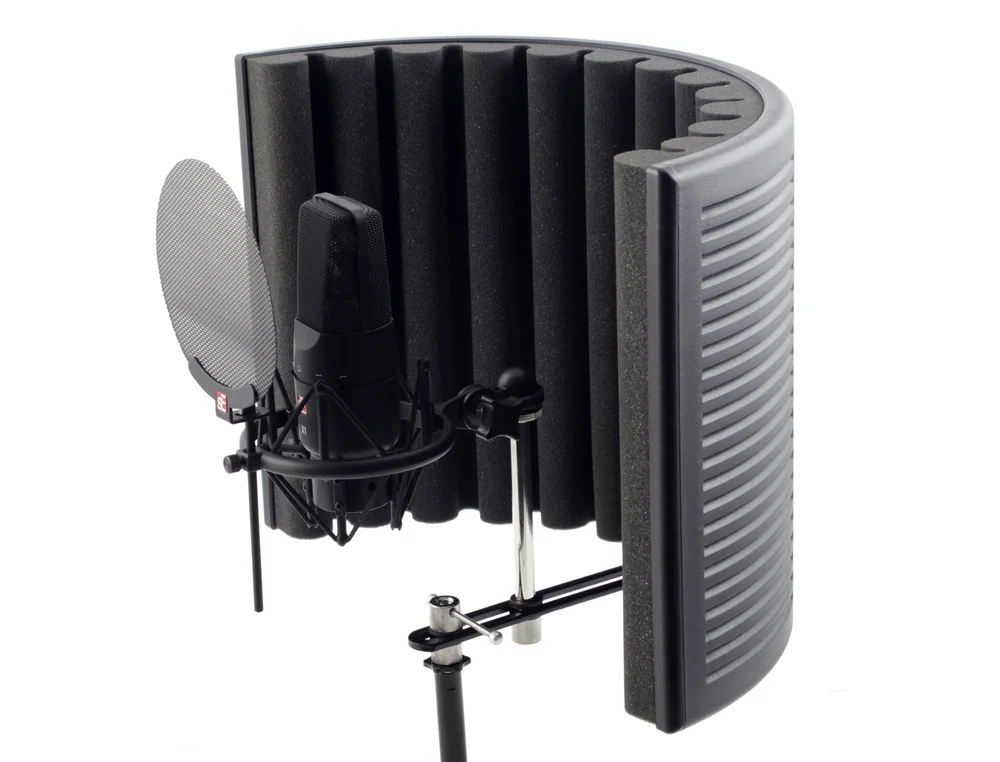
The persistent question of whether a sound reflection filter is a necessary component for a home recording studio is a frequent inquiry within professional audio mentoring circles. This article aims to provide a definitive answer by dissecting the fundamental principles of home studio acoustics, microphone technology, and their interplay. Understanding these core concepts is crucial for any aspiring or established audio professional seeking to optimize their recording environment.
The Genesis of the Home Recording Studio
At its heart, a home recording studio is conceived as a controlled acoustic environment. Its primary objectives are to achieve a stable and repeatable recording space, rigorously prevent unwanted sound ingress from external sources and egress of internal sounds, and critically, to minimize the detrimental effects of sound reflections within the recording area. These reflections, often referred to as reverberations or room tone, can significantly degrade the clarity and professional quality of audio recordings, particularly for voice-over work and vocal performances. The ultimate goal is to capture the purest possible sound source – the voice – directly into the microphone, free from the coloration and distortion introduced by the recording space. Achieving this often necessitates the construction of a dedicated recording booth, a purpose-built studio, or the careful adaptation of an existing domestic space, such as a room in a house or a garage, into a functional recording area.

Addressing Unwanted Sound Reflections: Techniques and Misconceptions
The challenge of mitigating unwanted sound reflections is met through various acoustic treatment strategies, all sharing a common purpose: to either absorb sound waves or prevent them from reflecting back towards the microphone. This principle can be illustrated by contrasting the behavior of different surfaces. Hard, flat surfaces, such as bare walls or glass, readily reflect sound waves. Conversely, soft, porous materials like thick curtains and duvets are designed to absorb sound energy, dissipating it rather than reflecting it. Similarly, while glass is a notorious sound reflector, acoustic foam tiles are engineered to absorb and diffuse sound. Even everyday objects can demonstrate these principles; a television or computer monitor will reflect sound, whereas a cat, with its dense fur, will not. (It is imperative to note that the humorous suggestion of lining a recording booth with cats is not a viable or ethical acoustic solution and would constitute animal cruelty.)
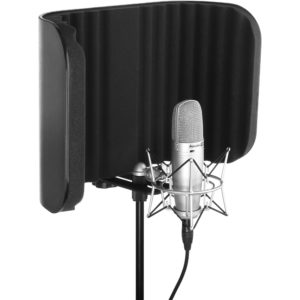
In the pursuit of cleaner recordings, many individuals turn to commercially available sound reflection filters. These devices typically consist of a curved, multi-layered baffle designed to be positioned around the microphone. Popular models from manufacturers such as Auray and sE Electronics are frequently showcased in marketing materials, often depicting the microphone situated centrally within the filter’s aperture. The inherent design suggests a capacity to block ambient sound and absorb reflections emanating from behind and to the sides of the microphone.
However, a critical examination of how microphones capture sound reveals a significant limitation of these reflection filters. The marketing premise, that these units effectively filter out unwanted reflections and thereby create an acoustically "sweet" recording environment, is, in fact, not entirely accurate. While they appear to offer a solution, their actual efficacy is considerably less than often assumed.

The Decisive Factor: Microphone Polar Pickup Patterns
The core of this discussion lies in understanding the directional characteristics of microphones, specifically their polar pickup patterns. Modern microphones are designed with varying degrees of directionality, meaning they are more sensitive to sound arriving from certain directions than others. These patterns dictate the area or space from which a microphone will capture audio, relative to its front, typically indicated by a logo or marking on the microphone body.
The most common polar pickup patterns include:
- Omnidirectional: This pattern captures sound equally from all directions, creating a 360-degree sphere of sensitivity. While this captures a full, natural sound, it also picks up a significant amount of room ambiance and noise.
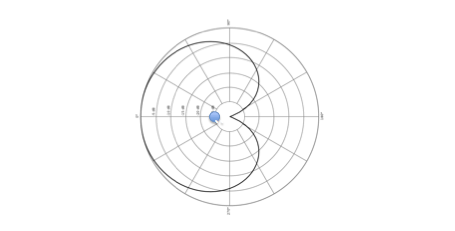
- Cardioid: This is the most prevalent pattern for voice recording. It is most sensitive to sound arriving from the front and progressively less sensitive to sounds from the sides, with significant rejection of sound from the rear. This directional focus is crucial for isolating the desired audio source.
- Figure-of-Eight (Bidirectional): This pattern is equally sensitive to sound arriving from both the front and the rear, while rejecting sound from the sides. This pattern is often used for specific stereo recording techniques or for capturing two sources simultaneously.
- Subcardioid and Hypercardioid: These are variations of the cardioid pattern, offering slightly wider or narrower pickup angles, respectively, with varying degrees of side and rear rejection.
Some high-end microphones, such as the widely respected Neumann U87, feature switchable polar patterns, allowing users to select between omnidirectional, figure-of-eight, and cardioid modes to suit different recording scenarios. For voice-over artists and vocalists, the cardioid pattern is overwhelmingly favored. Its ability to restrict the pickup area significantly reduces the capture of unwanted room reflections and ambient noise, leading to cleaner, more focused recordings. In contrast, an omnidirectional setting would indiscriminately capture a much larger portion of the recording space’s acoustic characteristics, resulting in a noisier and less controlled sound.
Visualizing the Cardioid Pickup Pattern
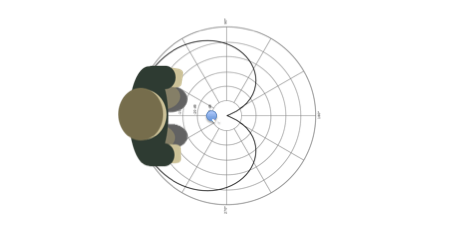
To fully grasp the implications for reflection filters, it is essential to visualize the cardioid pickup pattern. When viewed from above (a top-down, plan view), the pattern resembles a heart shape, hence its name derived from the Greek word "kardia" meaning heart. The microphone itself is represented as a central circle, with the front of the microphone indicated by a small dot. This diagram illustrates that the microphone’s primary sensitivity is concentrated in a frontal lobe, tapering off towards the sides and rear.
When a voice artist is positioned in front of the microphone, they fall within this "bubble" of sensitivity. The cardioid pattern ensures that the microphone predominantly captures the direct sound from the artist’s voice, while minimizing the pickup of sound from other directions. It is important to understand that this pattern exists in three dimensions. From a side view, the pickup area can be imagined as a slightly flattened, heart-shaped beanbag. This three-dimensional sensitivity allows for some flexibility in the performer’s position – slight adjustments to the left, right, high, or low will still result in effective sound capture, as long as the performer remains within this primary pickup zone.
The Reality of Sound Reflections and Reflection Filters
Now, let’s introduce the concept of sound reflections into these visualizations. Sound waves, emanating from the voice artist, travel outwards. Upon encountering the surfaces of the recording environment – walls, ceiling, furniture – these waves reflect back into the room. These reflected sounds then travel towards the microphone from various angles.
When we overlay the cardioid pickup pattern onto a scenario with incoming sound reflections, a crucial observation emerges. Even though reflections may be arriving from all directions, the cardioid pattern’s inherent rejection of sound from the sides and particularly the rear significantly attenuates their impact on the recording. The microphone is primarily "listening" to the direct sound from the front.
Now, let’s consider the addition of a commercial sound reflection filter. These filters are typically positioned behind and to the sides of the microphone, forming a partial enclosure. However, when viewed in conjunction with the microphone’s pickup pattern, it becomes evident that the reflection filter is, in large part, filtering out sound that the microphone’s cardioid pattern is already designed to reject. The filter is essentially attempting to block reflections that the microphone is already largely ignoring.
The crucial insight is that a reflection filter’s effectiveness is severely limited by the microphone’s directional characteristics. While it might absorb some residual sound energy that might otherwise bounce off the immediate surroundings and enter the microphone’s less-rejected side lobes, its impact on the overall acoustic treatment of the space is minimal. Extensive testing, comparing recordings made with and without such filters, consistently reveals a negligible difference in the final audio quality, especially when the microphone is already set to a cardioid pattern in a reasonably treated space.
The Verdict: Do You Need a Reflection Filter?
The definitive answer, based on an understanding of microphone physics and acoustic principles, is no, you likely do not need a sound reflection filter for your home studio. For the vast majority of home studio setups, particularly those utilizing directional microphones in cardioid mode, these filters represent a financial outlay that yields little to no tangible improvement in recording quality. They are, in essence, a costly accessory that does not address the fundamental acoustic challenges of a recording space.
Why Then the Popularity of Reflection Filters?
The persistent popularity of reflection filters can be attributed to several factors, primarily stemming from a lack of comprehensive technical understanding among less experienced audio practitioners. Inexperienced voice-over artists, or those with limited technical studio knowledge, often purchase these filters because they observe other professionals using them, are influenced by marketing materials that showcase them prominently, or receive advice from individuals who themselves may not fully grasp their limitations. The visual presence of a reflection filter can create a perception of professional setup, leading to an assumption of efficacy. However, the reality is that they are largely a placebo for acoustic treatment, offering little actual benefit. While they do not actively harm the recording process, they also do not contribute to its improvement, making them an inefficient use of resources.
Effective Strategies for High-Quality Recordings
If a reflection filter is not the solution, what are the effective methods for achieving high-quality recordings in a home studio environment? The truth, though perhaps less appealing than a simple accessory, is that superior audio results are achieved through diligent acoustic treatment of the recording space itself. This involves creating an environment that minimizes unwanted sound reflections and external noise.
This can be accomplished through various means:
- Dedicated Vocal Booths: These are purpose-built enclosures designed with specific acoustic materials to absorb and diffuse sound, creating an isolated and acoustically controlled recording environment.
- DIY Acoustic Solutions: Creative individuals can construct their own acoustic treatment solutions, using materials like thick blankets, moving blankets, or custom-built panels filled with sound-absorbing insulation. The goal is to create a space where sound waves are absorbed rather than reflected.
- Room Adaptation: Carefully selecting and treating a room within a home can also yield excellent results. This might involve strategically placing absorbent materials like bass traps, acoustic panels, and diffusers on walls and at reflection points. The key is to create a controlled acoustic environment, avoiding untreated spaces like bare offices or kitchens, which are notorious for problematic reflections.
A comprehensive approach to acoustic treatment is an investment in time, effort, and, to some extent, capital. However, it is this fundamental acoustic control that directly impacts the clarity, depth, and professional polish of any audio recording. For an in-depth exploration of how to effectively establish such a recording space, resources like dedicated "How to Build a Home Studio" webinars and courses are invaluable. These educational tools provide practical guidance on acoustic principles, material selection, and construction techniques necessary to optimize any home recording setup.
Ultimately, the pursuit of professional-sounding audio recordings in a home studio environment hinges on understanding and implementing effective acoustic treatment. While the allure of quick fixes like reflection filters is understandable, focusing on the foundational principles of sound control will yield far more significant and lasting improvements to your audio productions.
