

Sales professionals frequently grapple with a fundamental question: "What is the most potent principle of influence in the realm of sales?" While the dynamics of each sales interaction are undeniably unique, extensive research and decades of observation point to a singular, often overlooked, principle as the most impactful: consistency. This principle, deeply rooted in human psychology, suggests that individuals are predisposed to act in alignment with their prior statements and behaviors. For top-tier salespeople, mastering this principle translates into a strategic approach that prioritizes listening and insightful questioning over relentless talking.
The Quiet Power of the Consultative Approach
Contrary to traditional sales archetypes that often feature verbose pitches filled with features, benefits, and special offers, the most effective salespeople are characterized by their restraint in speaking. This counterintuitive observation is supported by a substantial body of sales research. Industry experts and studies consistently indicate that highly successful sales representatives allocate only about 25% to 30% of their conversation time to speaking. The remaining 70% to 75% is dedicated to actively listening and, crucially, uncovering the core needs, desires, and challenges of the prospective customer.
This emphasis on listening and questioning is not merely about information gathering; it’s a deliberate strategy rooted in Dr. Robert Cialdini’s foundational principles of influence. Cialdini, a renowned social psychologist and author of "Influence: The Psychology of Persuasion," identified consistency as a powerful driver of human behavior. The principle posits that individuals experience both internal psychological pressure and external social pressure to behave in ways that are congruent with their previous commitments, statements, and actions. Humans inherently desire to perceive themselves as reliable and consistent, and society generally views such individuals more favorably. This intrinsic motivation to align actions with words has profound implications for the sales process.
The "Store X" vs. "Store Y" Analogy: Navigating the Customer’s Path
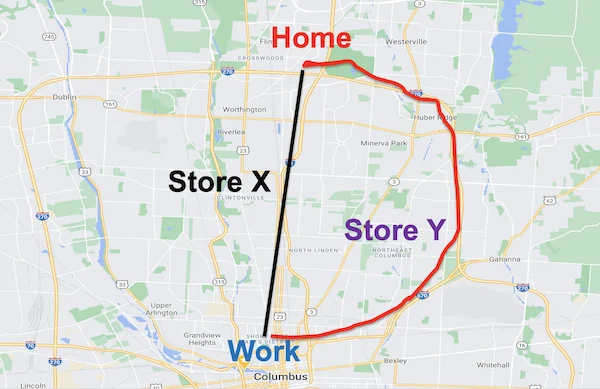
To illustrate this principle’s practical application, consider a common scenario: an individual driving home from work. Suppose their commute takes them past a familiar route. If a request comes in to pick up a few items, say batteries and bug spray, the ease of fulfilling that request hinges on convenience. If a store stocked with these items is located just a minute or two off the usual route, the decision to stop is almost automatic. This is akin to visiting "Store X" – it’s already on the customer’s established path.
However, the situation changes dramatically if the only available items are at a store located several miles out of the way, potentially adding significant time and effort to the journey. In this "Store Y" scenario, the individual might hesitate, not necessarily due to a lack of willingness to help, but because the request demands a deviation from their predictable and convenient routine. This deviation requires extra effort and disrupts their established flow, making the task feel burdensome.

This analogy directly mirrors the dynamics of many sales conversations. When salespeople engage in thoughtful, probing questions early in the sales cycle, they empower customers to articulate their goals, identify their pain points, and define their desired outcomes. Once these needs are clearly established and vocalized by the customer, the salesperson can then effectively demonstrate how their product or service directly aligns with these previously stated priorities. This creates a seamless transition, making the purchase decision feel like a natural extension of the customer’s own expressed needs – the equivalent of stopping at "Store X."
Conversely, when sales professionals bypass or inadequately conduct the discovery process, they often find themselves attempting to persuade customers to embark on a different, less convenient path. This leads to arduous sales cycles characterized by extensive explanations, constant persuasion, defensive positioning, and the constant need to overcome objections. This is because the salesperson failed to establish a shared understanding of the customer’s desired destination, forcing them to navigate the challenging terrain of "Store Y." As sales guru Jeffrey Gitomer famously stated, "People don’t like to be sold, but they love to buy." The latter is facilitated when the purchase feels like a logical progression of their own expressed desires, not an imposition.
The Role of Questioning in Establishing Consistency
The art of asking questions in sales goes far beyond mere data collection. Effective salespeople leverage questions as a tool to guide customers towards self-discovery and clarity regarding their own needs and priorities. By asking questions that encourage introspection and articulation, salespeople facilitate a process where customers essentially "sell themselves" on their own requirements. When a customer states a need or expresses a desire, they are establishing a commitment to that idea.
A salesperson’s subsequent ability to connect their offering to these articulated needs creates a powerful alignment. The purchase then becomes a natural act of consistency for the customer, reinforcing their self-perception as someone who follows through on their stated intentions. This aligns perfectly with the core tenet of Cialdini’s principle: people are motivated to be and appear consistent.
For instance, if a prospect articulates a significant challenge related to operational efficiency and expresses a desire for a solution that can streamline their workflow, a salesperson who can then demonstrate how their software directly addresses this specific workflow bottleneck is leveraging the principle of consistency. The prospect, having already stated the importance of efficiency, is psychologically inclined to favor a solution that fulfills that stated priority.
Supporting Data and Expert Analysis
The effectiveness of this consultative, question-driven approach is supported by various studies and industry observations. A report by the Business-to-Business (B2B) market research firm Gong.io, which analyzed millions of sales calls, found that top-performing sales representatives spent significantly more time asking questions than their lower-performing counterparts. Their analysis indicated that the most successful reps asked an average of 7.1 questions per call, compared to 4.5 questions for average performers. This reinforces the notion that active listening and insightful questioning are not just soft skills but critical drivers of sales outcomes.

Furthermore, research into consumer psychology consistently highlights the importance of perceived autonomy and alignment with personal values. When individuals feel that a decision is a result of their own exploration and aligns with their deeply held beliefs or stated goals, they exhibit greater commitment and satisfaction. This psychological phenomenon underscores why the "Store X" scenario feels so natural and desirable to consumers.
Implications for Sales Strategy and Training
The implications of prioritizing consistency through skillful questioning are far-reaching for sales organizations:
- Enhanced Customer Relationships: By focusing on understanding and validating customer needs, salespeople build trust and rapport, fostering stronger, long-term relationships.
- Reduced Sales Cycles: When the solution is directly aligned with pre-established customer needs, the path to purchase is shorter and more efficient, minimizing time spent on overcoming resistance.
- Increased Close Rates: Customers who feel understood and whose needs are met are more likely to make a purchase decision.
- Higher Customer Satisfaction and Loyalty: When a purchase is a natural outcome of a customer’s own expressed desires, satisfaction levels tend to be higher, leading to increased loyalty and repeat business.
- Improved Sales Training: Sales training programs can be reoriented to emphasize active listening, advanced questioning techniques, and the psychological underpinnings of the consistency principle, equipping reps with more effective influence strategies.
The Ethical Dimension of Influence
It is crucial to note that the principle of consistency, when applied ethically, is a tool for genuine value creation. It is not about manipulation but about facilitating informed decisions that genuinely benefit the customer. When salespeople use questions to help customers uncover their own needs and then present solutions that authentically meet those needs, they are acting as trusted advisors. This approach is fundamentally different from deceptive tactics that exploit psychological biases. Brian Ahearn, Chief Influence Officer at Influence PEOPLE and a Cialdini Method Certified Trainer, emphasizes this ethical application. His work, including his book "Influence PEOPLE" and his training at the Cialdini Institute, focuses on leveraging psychological principles for positive outcomes. Ahearn’s expertise, honed through direct training by Dr. Cialdini himself, underscores the importance of using influence responsibly to foster mutually beneficial agreements.
Conclusion: The Art of the Right Question
In the complex landscape of modern sales, the ability to ask the right questions is not merely a skill but a strategic imperative. It is the key to unlocking the powerful principle of consistency, enabling salespeople to guide prospects towards solutions that are already on their chosen path. By prioritizing listening and insightful inquiry, sales professionals can transform their interactions from arduous battles of persuasion into collaborative journeys of problem-solving. The ultimate goal is to help customers achieve their desired outcomes, making the act of buying feel natural and effortless. The question for every sales professional to ponder remains: are your sales conversations leading customers toward "Store X" or forcing them down the more challenging route of "Store Y"? The answer often lies in the quality and intent of the questions you ask.
