

The global resale market is undergoing a seismic shift as digital integration transforms traditional second-hand shopping into a high-tech scavenger hunt. In 2026, search interest for terms such as “vintage” and “how to thrift” has reached unprecedented heights, signaling a fundamental change in consumer behavior that prioritizes sustainability, individuality, and value. As the circular economy matures, Google has introduced a suite of artificial intelligence tools designed to bridge the gap between the physical chaos of a thrift store and the precision of modern e-commerce. By leveraging multimodal AI, computer vision, and generative search, the technology giant is providing consumers with the means to identify, value, and locate rare items with a level of expertise previously reserved for professional curators.
The Evolution of the Second-Hand Market: A Digital Chronology
The journey of thrifting from a niche, budget-conscious activity to a dominant retail force has been accelerated by technological milestones. In the early 2000s, the first wave of digital thrifting was characterized by peer-to-peer marketplaces like eBay and Craigslist, which brought local garage sales to a global audience. The 2010s saw the rise of specialized social commerce platforms such as Depop and Poshmark, which gamified the selling process and aligned second-hand fashion with influencer culture.

By 2024, the integration of basic image recognition allowed users to perform reverse-image searches, though these tools often struggled with the unique, unbranded nature of vintage goods. The current era, defined by the 2026 landscape, represents the third wave: the AI-augmented era. Here, the challenge is no longer just finding "a shirt," but identifying the specific era, fabric composition, and market value of a garment without a visible tag. Google’s latest updates to Search and Lens are specifically engineered to address these nuances, catering to a market that is projected to reach $350 billion globally by 2028.
1. Navigating Complexity with AI Mode in Search
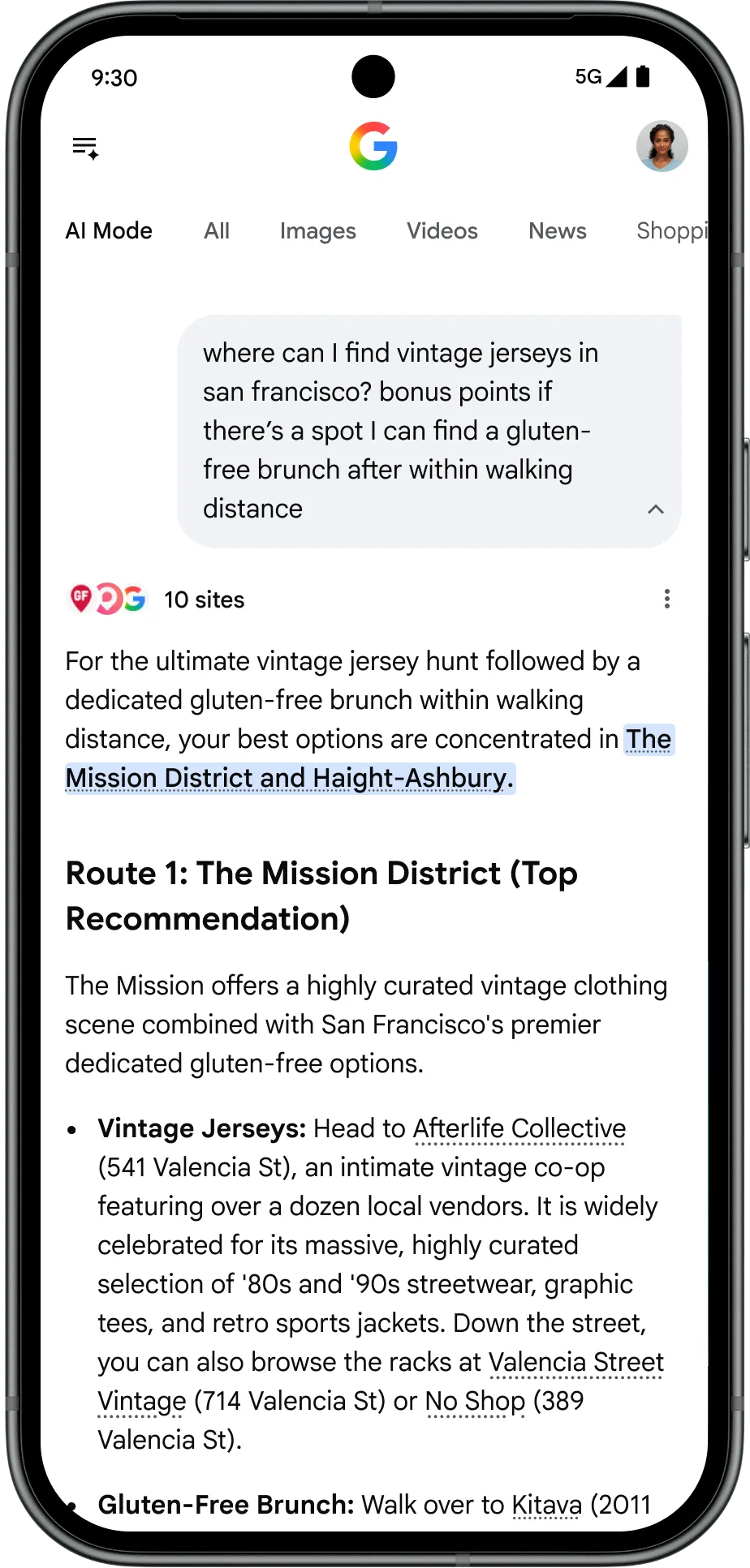
One of the primary barriers to successful thrifting is the logistical complexity of planning a "thrift run." Unlike traditional malls, vintage shops are often scattered across diverse neighborhoods and vary significantly in inventory specialization. Google’s AI Mode in Search has evolved to handle multi-layered, hyper-specific queries that combine logistical planning with personal preferences.
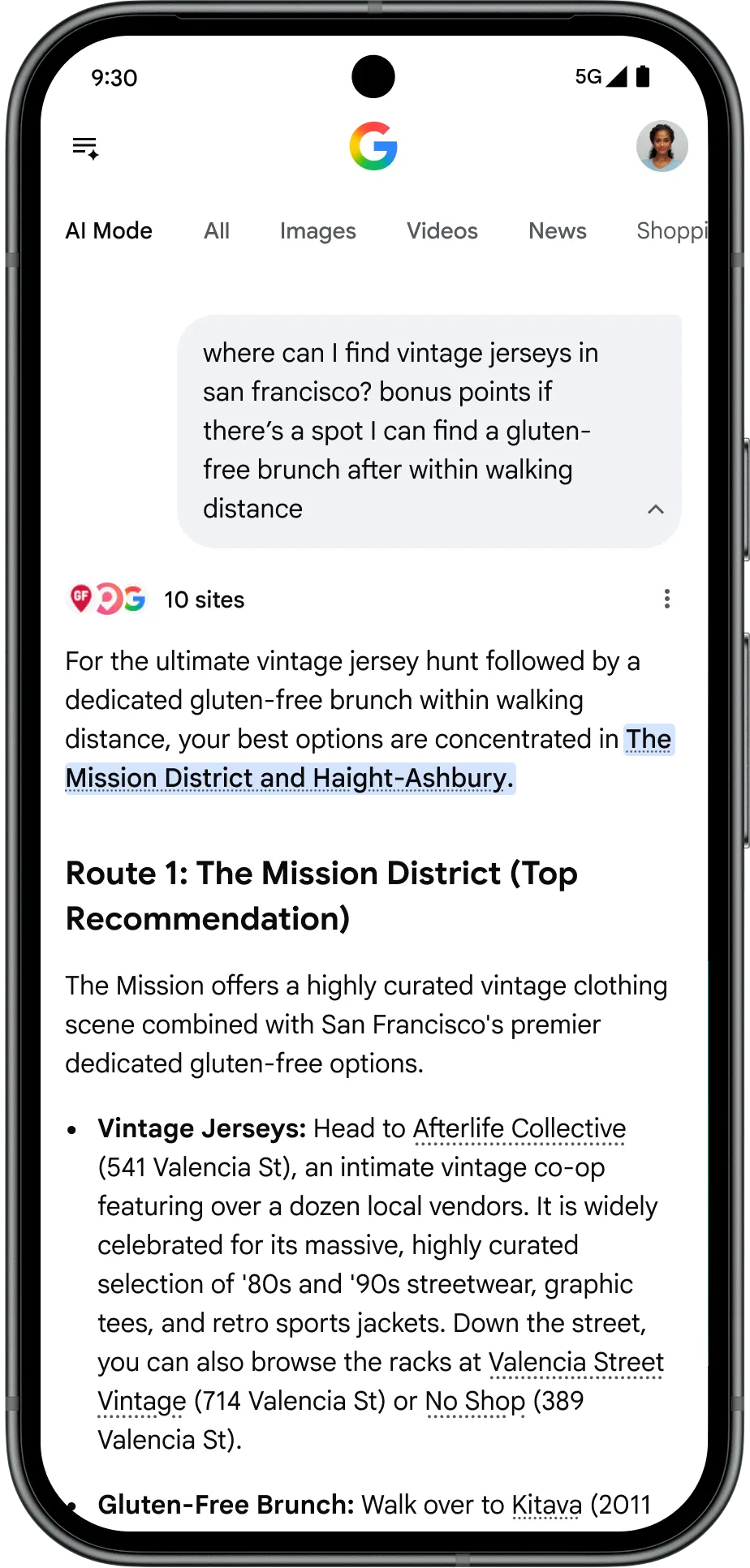
For instance, a user seeking a 1990s-era sports jersey in a city like San Francisco can now input a prompt that accounts for geographic proximity and lifestyle needs: “Where can I find vintage jerseys in San Francisco? Bonus points if there’s a spot I can find a gluten-free brunch after within walking distance.”

The generative AI processes these disparate requirements—retail inventory patterns, restaurant menus, and pedestrian navigation data—to produce a curated itinerary. This tool moves beyond simple keyword matching, utilizing large language models (LLMs) to understand the "intent" behind the search. For the consumer, this reduces the "search friction" that often makes physical thrifting feel overwhelming compared to the convenience of fast-fashion websites.
2. Real-Time Identification via Google Lens
In the physical environment of a thrift store, information is often scarce. Tags may be missing, and brand names may be defunct. Google Lens serves as a digital appraiser, utilizing computer vision to analyze the physical characteristics of an object. When a shopper encounters a "hidden gem," they can use Lens to snap a photo and receive an immediate breakdown of the item’s likely origins.
The 2026 iterations of Lens have become particularly adept at identifying "era-specific" design cues. If a user scans a crocodile-embossed leather bag, the AI analyzes the silhouette, hardware style, and texture to suggest whether the piece originates from the 1980s or 1990s. Beyond identification, the tool provides a crucial data point for the modern thrifter: estimated resale value. By aggregating listing prices from across the web, Lens allows shoppers to determine if an item is priced fairly or if it represents a significant investment opportunity. This democratization of expert knowledge empowers casual shoppers to make informed decisions in real-time, effectively leveling the playing field between novice buyers and professional vintage dealers.

3. Seamless Discovery with Circle to Search
The inspiration for vintage shopping often occurs outside of a retail environment—frequently while consuming digital content. Circle to Search, a feature integrated into the Android ecosystem, allows for frictionless discovery without switching applications. If a user sees a specific style of "vintage jersey" or "thrifted heels" on a social media feed or in a video, they can simply long-press the home button and circle the item on their screen.
This action triggers a search that identifies similar items available across various resale platforms. The technology has been refined to recognize "vibe" and "aesthetic" rather than just exact matches. Following the initial search, users can refine the results with natural language, asking questions such as, “What are similar styles with a ’90s vibe?” This iterative process allows consumers to build a wardrobe based on specific historical aesthetics, responding to the 2026 trend where "eclectic grandpa" and "retro-sportswear" styles have seen a 190% spike in search interest.
4. Mitigating "Shopper’s Remorse" with Virtual Try-On
A significant deterrent in the second-hand market is the lack of standardized sizing. A "Large" shirt from 1974 does not correspond to a "Large" shirt in 2026. Furthermore, many vintage boutiques have restrictive return policies. To combat this, Google has expanded its Virtual Try-On (VTO) capabilities.

By utilizing generative AI to drape clothing over a user-uploaded photo, VTO allows shoppers to visualize how a "funky vintage jacket" might actually fit their frame. This process involves sophisticated "diffusion" models that can simulate how different fabrics—from stiff denim to flowing silk—interact with human proportions. By bringing the dressing room into the digital space, Google is addressing the primary pain point of online vintage shopping: fit uncertainty. This technological intervention is expected to reduce return rates in the resale sector, which have historically been higher than in primary retail due to sizing inconsistencies.
5. Facilitating the Circular Economy: The Resale Loop
The final pillar of Google’s thrifting strategy focuses on the "sell" side of the circular economy. Sustainability experts agree that for the resale market to be truly effective, the barrier to entry for sellers must be lowered. Many consumers have valuable items sitting in their closets but lack the expertise to list them effectively.
Google Lens now functions as a pre-listing tool. By photographing an item from their own closet, a user can ask, “Could I resell this?” or “What kind of stores buy items like this?” The AI analyzes the item’s condition and current market demand to suggest the best platforms for resale—whether it be a high-end consignment shop for a designer bag or a local buy-sell-trade store for contemporary streetwear. This functionality encourages a "one-in, one-out" philosophy, helping consumers clear space for new finds while ensuring that pre-loved goods do not end up in landfills.

Supporting Data and Market Trends
The push for these tools is backed by significant shifts in consumer data. According to industry reports released in early 2026, Gen Z and Millennial consumers now allocate nearly 40% of their total fashion budget to second-hand items. The "vintage desk" search spike of +190% further indicates that the thrifting trend has moved beyond apparel into home décor and furniture, driven by a desire for high-quality materials (like solid wood) that are often unaffordable in the new-goods market.
Market analysts suggest that the "gamification" of thrifting through AI tools is a response to "fast-fashion fatigue." Consumers are increasingly wary of the environmental impact of ultra-fast-fashion giants and are turning to AI to help them navigate the more sustainable, albeit more difficult, world of vintage shopping.
Analyst Perspectives and Broader Implications
Tech analysts view Google’s integration of AI into the thrifting experience as a strategic move to maintain dominance in the "discovery" phase of the shopping journey. By providing tools that work in both physical and digital spaces, Google is positioning itself as the indispensable intermediary of the circular economy.
"The challenge with vintage has always been the ‘information asymmetry’ between the seller and the buyer," says Marcus Thorne, a senior retail analyst. "Google’s AI tools are effectively curing that asymmetry. When you can walk into a Goodwill and know within thirty seconds that a vase is a mid-century Italian piece worth $200, the entire value proposition of thrifting changes. It’s no longer just about saving money; it’s about asset acquisition."
Furthermore, the environmental implications are profound. By making second-hand shopping as easy as buying new, these tools directly support global sustainability goals. The reduction in carbon footprints associated with extending the life of a single garment by just nine months is estimated to be around 20-30%.
As we move further into 2026, the distinction between "online" and "offline" shopping continues to blur. With AI as a constant companion, the modern thrifter is no longer just a hobbyist—they are a data-empowered participant in a global movement toward more conscious, curated, and clever consumption. Whether it is finding a 90s jersey or valuing a vintage desk, the future of shopping is old, and it is powered by the most advanced technology available.
