

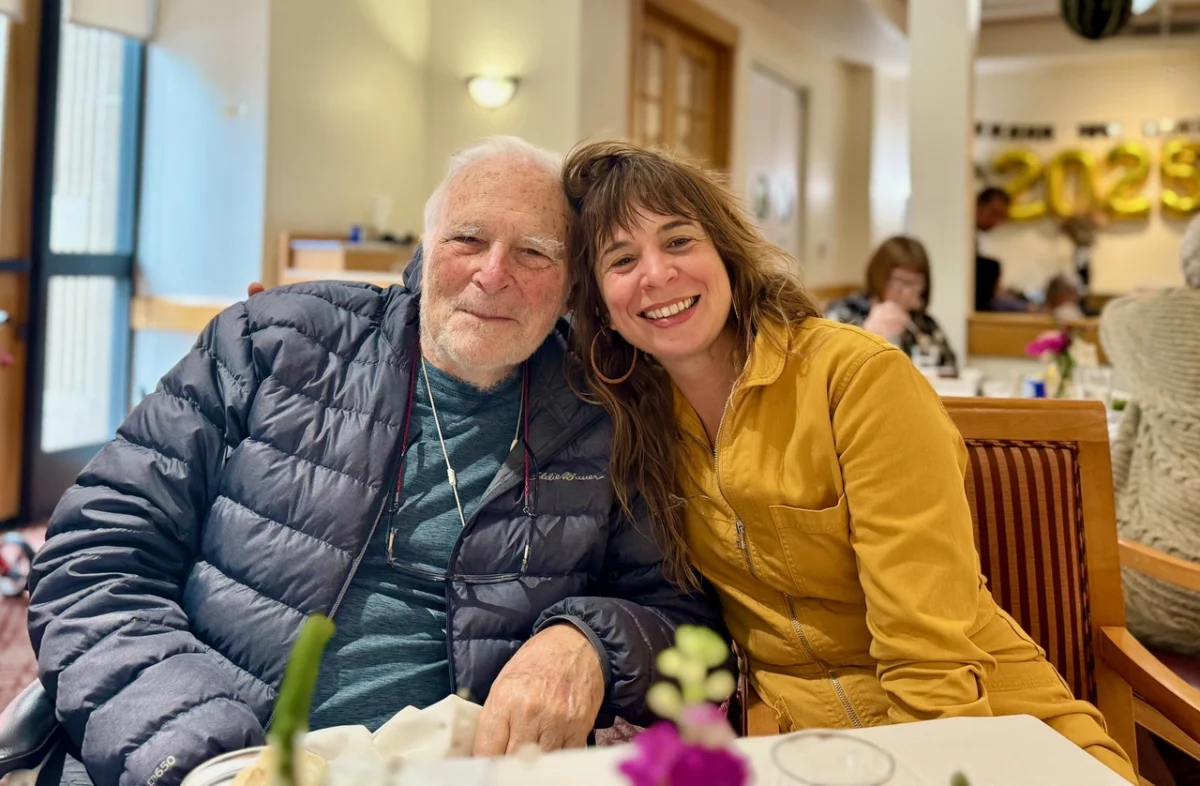
The passing of Dr. Paul Ekman, a towering figure in the study of human emotion and a pioneer in the field of psychology, marks the end of an era. His daughter, Eve Ekman, a clinical social worker and collaborator, has shared a deeply personal and comprehensive reflection on her father’s life, work, and enduring legacy, offering a nuanced perspective that goes beyond professional accolades to encompass profound personal transformation and a lifelong commitment to reducing human suffering. While his scientific contributions are widely recognized, this account illuminates the personal journey that fueled his groundbreaking research and shaped his later life.
A Father’s Enduring Influence and Childhood Scars
Eve Ekman’s tribute paints a vivid portrait of her father not just as a renowned scientist, but as a devoted family man. She describes him as an "awesome and loving dad, husband, and friend—with a huge heart, great humor, and an indelible hunger for life." This warmth and deep connection were, in part, a deliberate response to his own childhood experiences. "He overcame profound trauma and loss as a child, experiences that shaped his research on human emotion and echoed through his heart for a lifetime," she reveals. This personal history instilled in him a powerful drive to be the kind of parent he himself had lacked, a commitment he pursued with unwavering dedication.
His role as a father was characterized by presence, curiosity, love, and support. Beyond his children, he cultivated deep friendships and collaborative relationships, demonstrating "fierce loyalty and genuine delight" in all aspects of life. His teachings extended beyond the theoretical, encompassing essential life skills such as maintaining emotional vulnerability, rigorous critical thinking, the importance of service, a deep appreciation for music, and even the practical mastery of parallel parking on challenging San Francisco hills. His 41-year marriage to his wife, a distinguished academic at UC Berkeley, was a testament to mutual admiration and support, a partnership that continued to inspire him until her death in 2020.
The Dharamsala Turning Point: A Shift in Perspective
A pivotal moment in Dr. Ekman’s life and career occurred in 2000 during a historic meeting in Dharamsala, India. This gathering brought together Dr. Ekman, the Dalai Lama, and a distinguished circle of scientists and contemplatives to explore the nature of "Destructive Emotions." For Dr. Ekman, this encounter was more than an academic exchange; it was a profound personal revelation that fundamentally altered his understanding of himself and the world.
While many of his colleagues were aware of his earlier struggles with anger, fewer understood the depth of his subsequent transformation. The Dharamsala meeting offered him an "unmistakable, embodied sense of what it might feel like to live with less reactivity and anger." He frequently spoke of this experience, acknowledging its ineffable nature but recognizing its significant impact. The Dalai Lama’s aspiration, as articulated by Eve Ekman, was to share the tools of Buddhist practice to alleviate suffering by fostering emotional understanding, cultivating a calm mind, and promoting kindness—a message that deeply resonated with Dr. Ekman.
Bridging Science and Contemplation: Cultivating Emotional Balance
Driven by his personal transformation and a scientist’s innate curiosity, Dr. Ekman channeled this experience into his research and his desire to help others achieve similar emotional freedom. This led to a remarkable integration of his decades of empirical work with the ancient contemplative traditions he came to deeply respect.
This period saw the development of "Cultivating Emotional Balance" (CEB), an evidence-based training program co-created by Dr. Ekman and Alan Wallace. Grounded in Dr. Ekman’s scientific expertise and the contemplative insights gained from the Dharamsala meeting, CEB aims to equip individuals with the understanding and tools to manage their emotions, reduce suffering, and foster compassion. Eve Ekman, drawing on her background as a clinical social worker in a level-one trauma center, played a crucial role in supporting and teaching CEB, ensuring its practical application and global reach. The program has since been offered worldwide, impacting countless lives.
Another significant collaborative project born from this synthesis is the "Atlas of Emotions." Commissioned by the Dalai Lama in 2016, this free online resource provides a comprehensive vocabulary for understanding and articulating the complexities of our emotional lives. Set to relaunch for its ten-year anniversary, the Atlas of Emotions reflects Dr. Ekman’s core conviction: that greater emotional literacy is a pathway to reducing personal and collective suffering.
Addressing Scientific Discourse and Misrepresentation
Eve Ekman’s reflection also addresses what she perceives as a misrepresentation of her father’s work in a recent New York Times obituary. She expresses concern that the obituary framed his contributions through the lens of "controversy," by centering "a single scientist’s opinion" rather than acknowledging the vast body of peer-reviewed research that has validated and expanded upon his foundational findings.
Dr. Ekman, she emphasizes, welcomed scientific debate and disagreement, viewing it as an integral part of the scientific process. However, she argues that presenting his life’s work through the prism of a singular critique, rather than the hundreds of studies and dozens of research labs that have built upon his work, distorts both his scientific impact and the broader field of emotion research. This selective focus, she contends, overlooks the significant advancements his work has made in global understanding of human emotion, with applications spanning psychology, neuroscience, medicine, anthropology, national security, animation, and everyday life.
A Life Dedicated to Service and Human Connection
Dr. Paul Ekman’s life was a testament to the principle of science in the service of humanity. His meticulous research was complemented by a genuine desire to foster self-understanding and reduce suffering. He exemplified this commitment not only through his academic pursuits but also through his personal journey of healing and growth.
Eve Ekman highlights his capacity for vulnerability, his dedication to repairing relationships, and his evolution into a man characterized by joy, open-heartedness, and generosity. He maintained deep and meaningful connections with loved ones until the very end of his life, demonstrating a profound capacity for human connection.
A Complex, Imperfect, and Enduring Legacy
The narrative of Paul Ekman, as presented by his daughter, is one of a multifaceted individual: a scientist of immense influence, a survivor who rebuilt his life from painful beginnings, a man who underwent visible and profound personal change, and a collaborator who masterfully bridged ancient wisdom with modern scientific inquiry.
"He was complicated and imperfect, like all of us," Eve Ekman acknowledges, underscoring the universality of the human experience. Yet, she concludes with a powerful affirmation of his core qualities: kindness, bravery, humor, endless curiosity, and an unwavering commitment to improving the world. This is the "fuller picture" she hopes will be remembered alongside his scientific achievements—a story of profound personal transformation interwoven with a lifelong dedication to understanding emotion and expanding compassion. It is a narrative of a human being who never ceased learning, both about the world and about how to love well.
The outpouring of well wishes from near and far serves as a testament to the widespread impact of Dr. Ekman and his work. His legacy, rooted in both rigorous scientific inquiry and a deeply personal journey of emotional growth, continues to inspire and inform efforts to foster greater understanding, resilience, and compassion in the world.
