

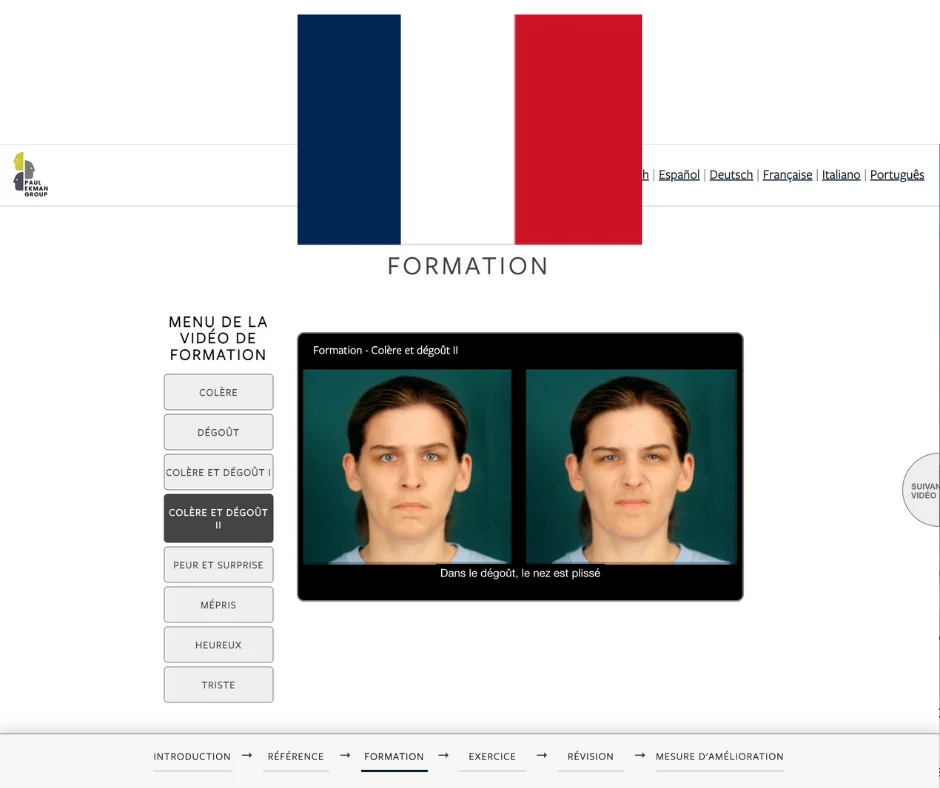
The Paul Ekman Group (PEG) has announced a significant expansion of its online micro-expression training tools, making its acclaimed scientific approach to emotional intelligence more accessible to a global audience. The latest rollout includes full translations into French, Italian, and German, building upon existing offerings in Spanish and Portuguese. This strategic initiative aims to democratize the understanding and application of micro-expression analysis, a critical skill for professionals across numerous fields and for individuals seeking deeper self-awareness and interpersonal understanding.
The expansion signifies a commitment by PEG to bridge linguistic barriers in the pursuit of universal emotional literacy. The micro-expression training modules, which have seen widespread adoption in over 230 countries, are now available in seven languages, catering to a significantly larger segment of the international community. This move is expected to bolster PEG’s mission to empower individuals and organizations with the tools to better understand themselves and others through enhanced emotional intelligence.
A Legacy of Emotional Science
The foundation of Paul Ekman Group’s work is rooted in the pioneering research of Dr. Paul Ekman, a renowned psychologist and expert in emotions and their expression. Dr. Ekman’s groundbreaking work, particularly his studies on the universality of facial expressions across cultures, laid the groundwork for the development of micro-expression training. Micro-expressions are fleeting, involuntary facial movements that reveal a person’s true emotional state, often occurring before an individual can consciously mask their feelings. Their detection and interpretation are crucial for accurate emotional assessment, providing insights that can be invaluable in professional settings and personal relationships.
The development of these online training tools represents a modern application of decades of rigorous scientific research. The core of PEG’s offering lies in its seven key online training tools, designed to equip users with the ability to identify subtle facial cues associated with basic human emotions. These tools, available in various training packages, have been meticulously translated to ensure that the nuances of Dr. Ekman’s methodology are preserved.
Bridging the Language Divide: A Strategic Expansion
The decision to introduce French, Italian, and German translations is a direct response to growing international demand and a strategic effort to cater to major European markets where interest in emotional intelligence and behavioral analysis is high. This expansion is not merely about translation; it involves adapting the pedagogical approach and content to resonate with the cultural contexts of these new language groups.
"Our mission at Paul Ekman Group is to help people understand themselves and others better by developing their emotional awareness skills," stated a spokesperson for the organization. "With these new translations, we are making the learning of micro-expressions more accessible for individuals, educators, professionals, and organizations across Europe and beyond – in their native language."
The online platform is designed for intuitive navigation, with users prompted to select their preferred language at the commencement of each course. This user-centric approach ensures a seamless learning experience, allowing participants to focus on mastering the complexities of micro-expression recognition without the impediment of language barriers.
The Significance of Micro-Expression Mastery
The implications of mastering micro-expression recognition are far-reaching. In high-stakes professions such as law enforcement, intelligence gathering, and negotiation, the ability to discern genuine emotions can be critical for safety, decision-making, and achieving favorable outcomes. For instance, law enforcement officers can utilize this skill to assess potential threats, de-escalate tense situations, and build trust during interrogations.
Beyond security-related fields, the benefits extend to the corporate world. Human resource professionals can leverage micro-expression analysis to improve hiring processes, assess candidate suitability, and foster better workplace dynamics. Executives and managers can enhance their leadership effectiveness by understanding the emotional states of their teams, leading to more empathetic and effective communication. Therapists and counselors can gain deeper insights into their clients’ underlying emotions, facilitating more targeted and effective therapeutic interventions.
In personal relationships, the ability to read micro-expressions can foster greater empathy, reduce misunderstandings, and strengthen bonds. By recognizing the subtle emotional signals of loved ones, individuals can respond with greater sensitivity and understanding, leading to healthier and more fulfilling connections. The training aims to cultivate qualities such as empathy, precision, and clarity – cornerstones of emotional intelligence.
Data-Driven Impact and Global Reach
The Paul Ekman Group’s commitment to global accessibility is underscored by the vast reach of its existing resources. With materials already utilized in over 230 countries, the introduction of new languages represents a significant step towards fulfilling the organization’s vision of making emotional intelligence skills universally attainable.
While specific user numbers for each language are proprietary, the general trend in online education suggests a strong correlation between language accessibility and user engagement. Markets with substantial native speaker populations, such as France, Italy, and Germany, are expected to see a significant uplift in participation. The inclusion of these languages also complements the existing Spanish and Portuguese offerings, effectively covering a significant portion of the Romance and Germanic language families, which are spoken by hundreds of millions worldwide.
The decision to expand into these specific languages was likely informed by market research indicating high demand and a strong existing interest in psychology, human behavior, and professional development within these regions. The European Union, for example, has a collective population of over 450 million people, and the German, French, and Italian languages alone represent a substantial segment of this demographic.
A Chronology of Expansion
While the exact timeline for the development and release of each translated module is not publicly detailed, this recent announcement follows a pattern of strategic growth for the Paul Ekman Group. The initial release of online training tools, likely in English, would have been followed by the introduction of Spanish and Portuguese. This latest expansion into French, Italian, and German represents the next phase of their global outreach strategy.
The process of translating and adapting such specialized content requires significant investment in linguistic expertise, subject matter review, and platform integration. It is probable that this multi-language rollout has been in development for an extended period, involving close collaboration between PEG’s research and development teams and professional translation services specializing in technical and scientific content.
The "Prochainement" (Coming Soon) section of their announcement suggests an ongoing commitment to further expansion. The invitation for users to suggest new languages indicates a dynamic approach to market responsiveness, allowing PEG to prioritize future translations based on community demand. This could involve a phased rollout of additional languages in the coming months and years, potentially including Mandarin, Japanese, Arabic, and other widely spoken languages.
Broader Implications and Analysis
The expansion of micro-expression training into more languages has several significant implications:
- Democratization of Expertise: By removing language as a barrier, PEG is making advanced psychological insights accessible to a wider demographic. This is particularly important for individuals who may not have had the opportunity to access such training previously due to linguistic limitations.
- Enhanced Cross-Cultural Communication: As global interactions become more frequent, understanding the nuances of emotional expression across different linguistic and cultural backgrounds becomes increasingly vital. While micro-expressions are considered universal, their contextual interpretation can be influenced by culture. Having localized training materials can aid in this understanding.
- Professional Development and Skill Enhancement: The availability of these tools in multiple languages will undoubtedly boost professional development in Europe and beyond. Professionals in fields ranging from customer service to international relations can benefit from improved emotional intelligence.
- Academic and Research Advancement: Increased accessibility may also lead to greater engagement from academics and researchers in these new linguistic regions, potentially fostering new studies and applications of micro-expression analysis.
The success of this initiative will likely be measured by user adoption rates, course completion statistics, and anecdotal evidence of practical application. The Paul Ekman Group’s long-standing reputation for scientific rigor provides a strong foundation for trust and credibility in these new markets.
Future Outlook and User Engagement
The announcement concludes with an invitation for users to explore the newly translated training tools and a forward-looking statement about future language additions. The call to action, "Discover our training tools now!" and the proactive engagement for language suggestions, highlights PEG’s commitment to a user-driven expansion strategy.
"We are working actively to expand our offerings to other languages," the announcement states. "If you would like us to add a new language, please let us know here." This collaborative approach ensures that PEG remains attuned to the evolving needs of its global community.
The future of emotional intelligence training appears increasingly globalized and accessible. As technology continues to facilitate the dissemination of knowledge, organizations like the Paul Ekman Group are at the forefront of making complex scientific concepts understandable and applicable to people from all walks of life, regardless of their native tongue. Their continued efforts in localization are a testament to the universal importance of understanding human emotions in an interconnected world.
