

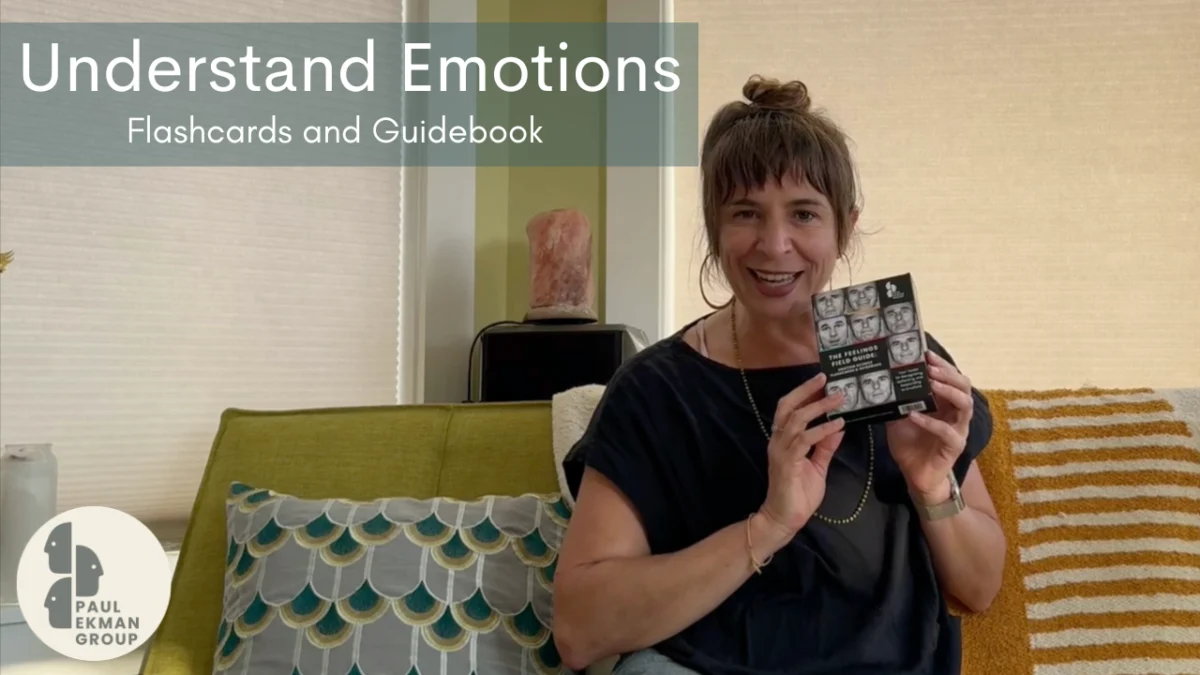
In a world increasingly reliant on digital interactions, the nuanced art of understanding human emotions and non-verbal communication remains a cornerstone of effective personal and professional relationships. To address this, Drs. Paul and Eve Ekman, pioneers in the scientific study of emotions and facial expressions, have introduced "The Feelings Field Guide," a comprehensive, science-backed tool designed to translate over five decades of behavioral research into accessible, everyday skills. This innovative guide aims to equip individuals with the ability to identify universal facial expressions and respond constructively, a capability proving invaluable across diverse scenarios, from parenting to high-stakes business negotiations.
Unveiling the Science Behind Emotional Intelligence
At its core, "The Feelings Field Guide" is a meticulously crafted toolkit comprising 92 emotion flashcards and an accompanying scientific guidebook. This ensemble is engineered to cultivate enhanced emotional awareness and sharpen non-verbal communication skills. The foundation of the guide rests on the groundbreaking work of Dr. Paul Ekman, whose research, beginning in the mid-20th century, identified seven universal emotions that manifest through distinct facial expressions recognizable across all human cultures: happiness, sadness, anger, fear, surprise, disgust, and contempt.
Dr. Eve Ekman, continuing this legacy, explains the methodology behind the Field Guide in an introductory video. The guide meticulously details the subtle muscular movements of the face that correspond to these core emotions. By studying these expressions, users can develop a more precise understanding of what others are feeling, even when words may be misleading or absent. This scientific rigor ensures that the tool is not merely illustrative but grounded in empirical evidence, providing a reliable pathway to emotional literacy.
From Research Insights to Practical Application
The genesis of "The Feelings Field Guide" lies in over 50 years of dedicated research into the intricate relationship between emotions and facial expressions. Drs. Paul and Eve Ekman have successfully bridged the gap between complex scientific findings and practical, actionable knowledge. Their aim is to democratize the understanding of emotions, making it a skill accessible to everyone, regardless of their background in psychology or behavioral science.
The physical guide contains a wealth of information, including a scientific guidebook that delves into the nuances of each emotion and its associated facial markers. This is complemented by 92 high-quality flashcards, each depicting a specific emotion or micro-expression. These cards serve as a tactile learning tool, allowing users to actively engage with the material. The guide emphasizes that recognizing emotions is only the first step; the true value lies in knowing how to respond to that awareness effectively. This focus on application distinguishes the Field Guide from purely academic resources.
A Flexible and Adaptable Learning Experience
Recognizing that learning styles and needs vary, "The Feelings Field Guide" has been designed with inherent flexibility. Users are encouraged to explore the guide in ways that best suit their individual learning journeys. This adaptability means the guide can be integrated into various personal and professional development strategies.
Potential uses include:
- Self-Quizzing: Utilizing the expression cards to test one’s ability to identify emotions quickly and accurately.
- Focused Study: Concentrating on mastering one emotion at a time, exploring its variations and contexts.
- Reflective Exercises: Engaging with the prompts and scenarios within the guidebook to deepen understanding and develop personal insights.
- Group Learning: Facilitating discussions and practice sessions with family, friends, or colleagues to enhance collective emotional intelligence.
The absence of a prescribed "right" way to use the guide empowers individuals to tailor their learning experience, maximizing its utility and personal impact. This user-centric approach ensures that the guide remains relevant and effective for a wide spectrum of learners.
Testimonials: Real-World Impact of Emotional Understanding
The efficacy of "The Feelings Field Guide" is underscored by testimonials from individuals who have integrated its principles into their lives. Mark B., a parent without a formal scientific background, found the guide to be an invaluable tool for communicating with his son who struggles with anxiety and social regression. He states, "I have always been fascinated by the science of emotions and how it can be used by a layman such as myself. I have no formal scientific background in behavioral sciences or psychology but I do have a son who has issues with anxiety and social regression. I appreciate that ‘The Feelings Field Guide’ deck turned out to be an effective tool to use in discussing emotions with my son. Knowing that this science was practically pioneered by Dr. Ekman gave me a very high degree of confidence in the validity of this product."
Simon B., working in information security and data protection, highlights the professional advantages gained from using the Field Guide. He elaborates, "The Field Guide is a great tool to have and I recommend it to anyone interested in understanding micro-expressions and emotions… Working in information security and data protection, understanding micro-expressions and emotions has helped me understand colleagues, customers and suppliers better and improved my interactions with people. These are great skills to have as a security professional, especially in determining what people really feel compared to what they are saying." These accounts illustrate the tangible benefits of improved emotional awareness in both personal relationships and professional environments.
The Profound Significance of Emotional Literacy
Emotions are not merely ephemeral feelings; they are powerful forces that profoundly shape human thought processes, communication patterns, and decision-making. Often, their influence operates below conscious awareness, leading to misinterpretations that can result in misunderstandings, interpersonal conflicts, and missed opportunities for connection and collaboration. Conversely, cultivating the ability to accurately recognize and respond to emotions unlocks significant advantages.
When individuals enhance their emotional literacy, they gain:
- Improved Communication: The ability to convey messages more effectively and to understand the unspoken messages of others.
- Stronger Relationships: Deeper connections built on empathy, trust, and mutual understanding.
- Enhanced Conflict Resolution: Skills to de-escalate tension and find constructive solutions to disagreements.
- Increased Empathy: A greater capacity to understand and share the feelings of others.
- Better Decision-Making: The ability to consider emotional factors alongside rational ones for more balanced outcomes.
- Greater Self-Awareness: A clearer understanding of one’s own emotional states and their impact.
"The Feelings Field Guide" is strategically designed to foster these crucial skills in a manner that is both scientifically grounded and consistently applicable. It provides a repeatable framework for developing emotional intelligence, moving beyond theoretical knowledge to practical mastery.
Addressing Common Inquiries
How is this different from other emotion flashcards?
A critical distinction of "The Feelings Field Guide" lies in its scientific authenticity. While many emotion flashcards offer simple labels, this guide is uniquely rooted in the Facial Action Coding System (FACS). FACS is a comprehensive system developed by Dr. Paul Ekman and Wallace V. Friesen that dissects human facial expressions into their fundamental components, known as Action Units (AUs). Each AU corresponds to the movement of a specific muscle or muscle group in the face. By meticulously cataloging these movements, FACS provides an objective, universal method for describing all visually discernible facial activity. The flashcards within "The Feelings Field Guide" accurately represent these FACS-coded expressions, ensuring that users are learning scientifically validated and universally recognized emotional cues, rather than subjective interpretations. This scientific backing differentiates it significantly from generic flashcard sets.
Is there a digital version?
While "The Feelings Field Guide" is presented as a physical, tactile tool designed for hands-on learning and interactive practice, its principles and applications are often complemented by digital resources. For individuals seeking a more advanced, performance-based mastery of emotion recognition, the guide is frequently paired with Dr. Ekman’s "Micro-expression Training Tools" (METT). These digital programs offer a rigorous, scientifically validated approach to learning to identify fleeting, involuntary facial expressions that betray true emotions. The combination of the tactile Field Guide and digital training tools provides a multifaceted pathway to comprehensive emotional intelligence development.
The Broader Context: The Science of Emotions and its Evolution
Dr. Paul Ekman’s pioneering work in the 1960s and 70s challenged prevailing anthropological and psychological theories that suggested emotions and their expressions were culturally determined. Through extensive cross-cultural studies, notably in Papua New Guinea, he provided compelling evidence for the universality of certain facial expressions associated with core emotions. This research laid the groundwork for the development of FACS and subsequent advancements in understanding emotional behavior.
The current introduction of "The Feelings Field Guide" represents a maturation of this research, moving from fundamental discovery to practical application. In an era where social media and remote work can sometimes create a disconnect in face-to-face communication, the ability to accurately read emotions is arguably more critical than ever. The guide’s emphasis on recognizing both universal expressions and the subtle nuances of micro-expressions addresses the need for enhanced interpersonal understanding in a complex world.
Implications for Various Sectors
The implications of widespread emotional literacy, facilitated by tools like "The Feelings Field Guide," extend across numerous sectors:
- Education: Teachers can better understand student needs, identify signs of distress or engagement, and foster a more supportive learning environment.
- Healthcare: Medical professionals can improve patient rapport, detect subtle indicators of pain or discomfort, and enhance therapeutic relationships.
- Business and Management: Leaders can build more effective teams, negotiate more successfully, and foster a positive organizational culture by understanding the emotional states of their employees and clients.
- Law Enforcement and Security: Professionals can gain critical insights into the veracity of statements and the emotional states of individuals they interact with, aiding in investigations and public safety.
- Parenting: Parents can navigate the complex emotional landscape of childhood with greater understanding and responsiveness, fostering healthier parent-child bonds.
By providing a scientifically validated and accessible method for decoding emotions, "The Feelings Field Guide" empowers individuals to navigate these diverse scenarios with greater confidence and efficacy, ultimately contributing to more harmonious and productive interactions.
