

Sales professionals frequently grapple with identifying the most impactful strategy for influencing potential clients. While the dynamics of each sales interaction are unique, an extensive examination of sales methodologies and psychological principles suggests that the principle of consistency emerges as a profoundly potent force in the sales process. This assertion is rooted in a fundamental observation: the most effective salespeople tend to speak less, prioritizing active listening and insightful questioning. This approach, counterintuitive to some traditional sales models that emphasize constant discourse on product features and benefits, aligns with decades of research indicating that top performers dedicate significantly more time to understanding their customer’s needs than to advocating for their own offerings.
The Science of Consistency in Persuasion
The principle of consistency, as elucidated by Dr. Robert Cialdini, a leading figure in social psychology and author of the seminal work "Influence," posits that individuals experience both internal psychological pressure and external social pressure to act in alignment with their prior commitments and stated beliefs. This inclination stems from a desire to perceive oneself as a person of integrity who follows through on promises. Furthermore, external observers tend to view individuals more favorably when they demonstrate consistency in their actions. In essence, people are intrinsically motivated to ensure their behaviors are congruent with their words. This psychological predisposition carries significant implications for the realm of sales, transforming the interaction from a persuasive monologue into a collaborative exploration of needs.
Leading sales experts often suggest that successful salespeople engage in speaking for no more than 25% to 30% of the conversation. The remaining time is dedicated to a meticulous process of uncovering what truly matters to the customer. This is where the power of consistency is leveraged. Rather than simply gathering transactional information, skilled salespeople employ questions as tools to facilitate the customer’s own process of clarifying their desires, challenges, and priorities. Once these needs are clearly articulated, the salesperson’s subsequent demonstration of how their product or service addresses these precisely identified needs becomes a natural extension of the customer’s own expressed values. As Brian Ahearn, Chief Influence Officer at Influence PEOPLE and a Cialdini Method Certified Trainer, frequently emphasizes in his workshops, "People don’t resist their own values." This fundamental tenet underscores the effectiveness of aligning sales propositions with the customer’s pre-existing framework of importance.
Illustrating Consistency: The "Store X" vs. "Store Y" Analogy
To illustrate this principle, consider a common real-world scenario:

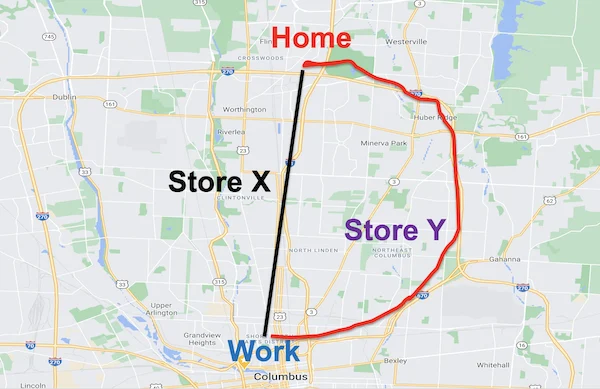
Imagine an individual whose daily commute takes them approximately 15 miles from their workplace to their home. They typically follow a consistent route. If a family member calls and requests that they pick up batteries and bug spray on their way home, the response often hinges on the convenience of the requested stop. If "Store X," a retailer located just a minute or two off their established route, carries the items, the request is likely to be met with an easy "yes." The reason is straightforward: the stop at Store X is already congruent with the individual’s intended path and therefore requires minimal deviation from their established routine.
However, the situation changes dramatically if the required items are only available at "Store Y," a location situated several miles off their regular route. This detour could potentially add 20 minutes or more to their commute. In such a case, the individual might hesitate, not necessarily due to a lack of willingness to help, but because of the significant inconvenience. It requires them to abandon their familiar, efficient path for a considerably more arduous one.
This analogy directly translates to the sales environment. When salespeople invest time in asking thoughtful, probing questions early in the engagement, they empower customers to articulate their goals, overcome their obstacles, establish their priorities, and define their desired outcomes. The salesperson’s subsequent presentation of their offering, framed as a direct solution to these clearly stated needs, effectively creates a "direct route" towards a resolution. In this scenario, the purchase decision aligns with the customer’s already established path, akin to stopping at Store X. It feels natural and convenient because it is consistent with what the customer has already articulated as important.
Conversely, when salespeople bypass or inadequately conduct the discovery phase, they often find themselves attempting to persuade customers to embark on an entirely different and less familiar journey. This leads to prolonged efforts spent on explaining, convincing, defending, and overcoming objections, all because the initial destination – the customer’s true objective – was never clearly established. This is the equivalent of directing a customer to Store Y: it is more challenging, time-consuming, and often feels like overt selling, a sensation that many consumers actively resist.
The renowned sales author Jeffrey Gitomer aptly captured this sentiment: "People don’t like to be sold, but they love to buy." The most effective sales conversations are not those that push prospects toward a predetermined outcome they haven’t embraced, but rather those that guide them toward objectives they have themselves identified as crucial. This is precisely why consistency serves as such a potent influence principle. When customers articulate their priorities, and the salesperson can genuinely demonstrate how their solution aligns with those very priorities, the decision to proceed feels organic and inevitable, as it is consistent with the customer’s own expressed desires.

The Strategic Imperative of Questioning
The critical question for any sales professional, therefore, becomes: "Are my sales questions guiding customers toward their desired ‘Store X,’ or am I inadvertently forcing them toward an inconvenient ‘Store Y’?" The answer to this question can illuminate why some sales interactions flow effortlessly, while others devolve into arduous struggles. While deep product knowledge and an understanding of the competitive landscape are undoubtedly vital, the ability to formulate and ask the right questions is paramount. The most efficient path to a sale is often paved by empowering customers to follow the journey they have already implicitly chosen for themselves.
Data Supporting the Power of Listening in Sales
The emphasis on listening and questioning is not merely anecdotal. Research consistently supports the efficacy of this approach. A study by the Harvard Business Review found that top-performing salespeople ask significantly more open-ended questions and spend more time actively listening to customer responses. This approach allows them to uncover underlying needs and motivations that might otherwise remain hidden. Another report by CSO Insights revealed that 82% of buyers feel that salespeople don’t understand their needs, highlighting a critical gap that can be bridged through more effective questioning and listening. Furthermore, studies in behavioral economics, such as those by Dan Ariely, demonstrate that people are more committed to decisions they have had a hand in shaping. By asking questions that allow customers to define their own requirements, salespeople foster a sense of ownership over the solution.
The Ethical Foundation of Influence
It is crucial to underscore that the principle of consistency, when applied ethically, is not about manipulation but about facilitating a more effective and customer-centric sales process. By helping customers clarify their own values and needs, and then demonstrating how a product or service aligns with those, salespeople are acting as facilitators of informed decision-making. This approach builds trust and long-term relationships, which are far more valuable than short-term gains achieved through deceptive tactics. Brian Ahearn’s certification as a Cialdini Method Trainer emphasizes this ethical dimension, ensuring that influence is wielded responsibly and for mutual benefit.
Broader Implications for Sales Strategy
The strategic implications of prioritizing consistency through effective questioning are far-reaching. Organizations that train their sales teams to focus on discovery and understanding rather than aggressive pitching are likely to see:
- Increased Conversion Rates: When solutions are perceived as organic fits, objections decrease, and the path to purchase becomes clearer.
- Higher Customer Satisfaction: Customers feel heard and understood, leading to more positive post-purchase experiences.
- Stronger Customer Relationships: Building trust through genuine understanding fosters loyalty and repeat business.
- Reduced Sales Cycle Length: By efficiently identifying and addressing needs, the time from initial contact to closed deal can be significantly shortened.
- Enhanced Brand Reputation: A sales process perceived as helpful and consultative, rather than pushy, elevates the company’s image.
In conclusion, the principle of consistency, driven by masterful questioning and active listening, offers a powerful and ethical framework for sales success. It shifts the focus from the salesperson’s agenda to the customer’s journey, creating a more collaborative and ultimately more effective path to achieving mutual objectives. The true art of influence in sales lies not in talking more, but in asking the right questions that empower customers to lead themselves to the right solution.
