

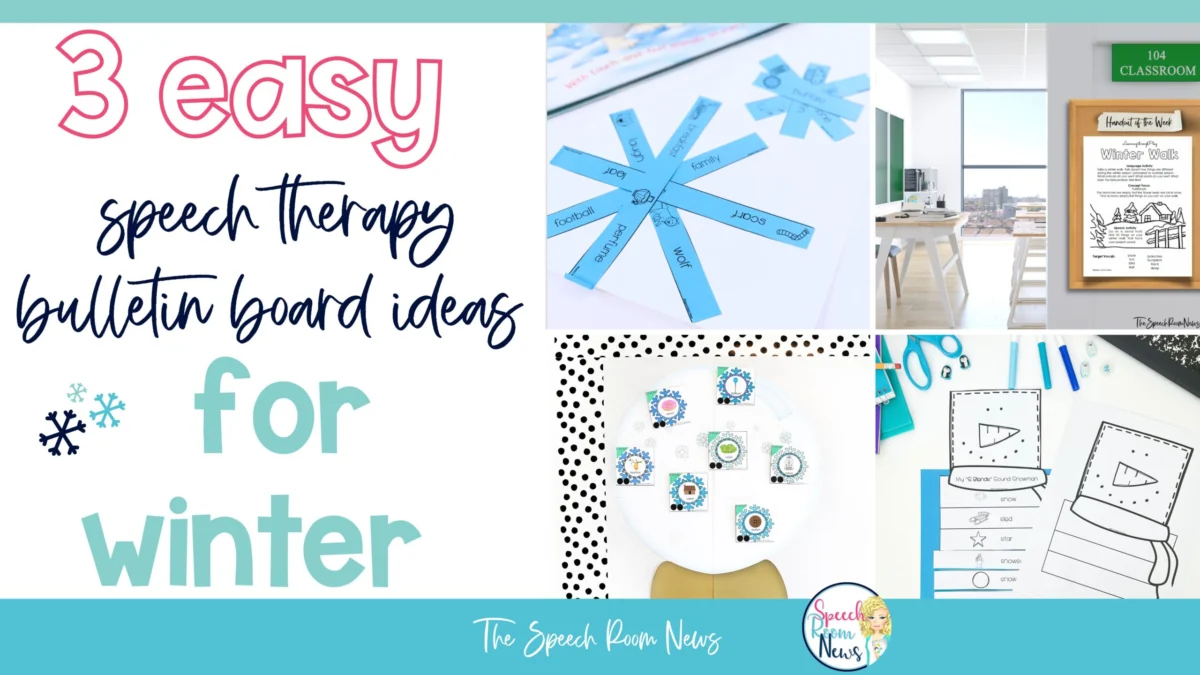
The strategic design of therapeutic spaces, particularly the effective utilization of bulletin boards, represents a significant, yet often underestimated, component in speech-language pathology (SLP) practice. Far from being mere decorative elements, thoughtfully constructed bulletin boards serve as dynamic tools that can demonstrably enhance student engagement, reinforce therapeutic concepts, and foster crucial home-school connections. Speech-language pathologists, operating within diverse educational and clinical environments, consistently seek innovative and efficient methods to support communication development. The integration of demonstrative, interactive, and functional bulletin board concepts, particularly adapted for seasonal themes like winter, offers a robust framework for achieving these therapeutic objectives while optimizing valuable clinician time and resources.
The Foundational Role of Environmental Design in Speech-Language Pathology
In the demanding landscape of speech-language pathology, where clinicians often manage extensive caseloads and diverse student needs, every aspect of the therapeutic environment must be leveraged for maximum impact. The physical space, including walls and display areas, provides a continuous, passive learning opportunity. Research in educational psychology consistently highlights the importance of stimulating environments in fostering learning and retention. For students undergoing speech therapy, visual cues, repetitive exposure to target sounds or language structures, and opportunities for hands-on engagement are paramount. Bulletin boards, when designed with therapeutic intent, can transform a standard therapy room or hallway into an extension of the learning process.

The planning cycle for an SLP often involves seasonal rotations of materials and themes to maintain student interest and align with broader school curricula. For the winter months, incorporating thematic elements not only creates an inviting atmosphere but also provides a natural context for language-rich activities. By categorizing bulletin board ideas into demonstrative, interactive, and functional types, SLPs can ensure a comprehensive approach that addresses various therapeutic goals and stakeholder needs, from direct student intervention to vital parent education. This structured approach allows for proactive resource preparation, streamlining the implementation process at key junctures, such as the beginning of a new academic term or the transition into a new season, when new students and families may be introduced to the therapy room.
Demonstrative Bulletin Boards: Celebrating Progress and Cultivating Ownership
Demonstrative bulletin boards serve as visual showcases of student achievement and effort, playing a critical role in fostering a sense of accomplishment and ownership among learners. These displays typically feature student-created crafts or work products that are directly linked to therapeutic goals. The act of creating these items, often during therapy sessions, provides a tangible outcome of their hard work and progress, transforming abstract linguistic concepts into concrete representations.
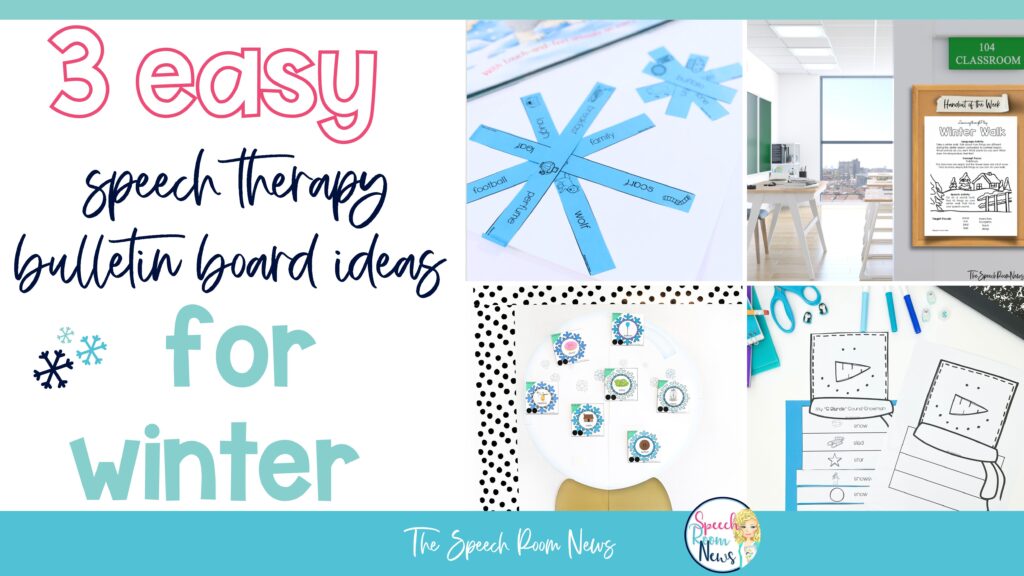
Consider the "Snowflake Paper Strip Craft," a prime example of a demonstrative activity. This "fake crafting" approach emphasizes simplicity and minimal preparation, a crucial consideration for time-constrained SLPs. Students manipulate pre-cut paper strips, often sourced from adaptable resources like the "Year Round Craft Paper Strip Art for Articulation and Language." The core therapeutic value lies not in the complexity of the craft itself, but in the repeated articulation or language practice that occurs while assembling the snowflake. For instance, a student might practice target sounds (e.g., /s/ blends like "strip," "snowflake," "scissors") or language concepts (e.g., sequencing instructions, describing attributes like "blue," "long," "short") with each strip they glue. The physical act of cutting (potentially on cardstock for increased resistance, aiding fine motor skill development) and assembling further embeds the learning experience through multisensory engagement. Displaying these individual snowflakes collectively on a bulletin board transforms a series of individual therapeutic exercises into a collaborative winter wonderland, visually affirming each student’s contribution and progress.
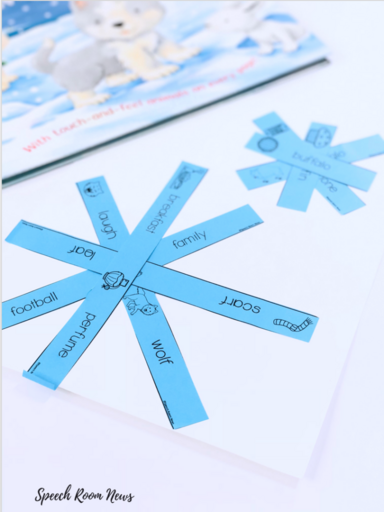
Similarly, the "Snowman Articulation Chop" craftivity offers another highly effective demonstrative approach. This activity involves students practicing target words while cutting out strips of paper, which are then assembled into a snowman figure. For example, a student targeting the /sh/ sound might practice words like "shovel," "scarf," "sheet" as they "chop" the paper strips. The simplicity of the craft ensures that the focus remains squarely on the speech-language targets, while the visual outcome—a personalized snowman—provides a powerful motivator. Adding elements like a colored carrot nose or a construction paper hat can further personalize the creation, enhancing student engagement and pride. When these snowmen adorn a bulletin board, they collectively illustrate the diverse phonetic achievements of the therapy group, creating a celebratory and encouraging atmosphere.
From a pedagogical perspective, demonstrative bulletin boards align with principles of positive reinforcement and intrinsic motivation. Seeing their work publicly displayed can significantly boost a student’s self-esteem and encourage continued effort. For parents and other educators who pass by the therapy room, these boards offer a clear, visual representation of the activities and progress happening within speech therapy, demystifying the therapeutic process and showcasing the value of the SLP’s work. The implication is a stronger sense of community within the school, where student achievements in speech and language are recognized and celebrated alongside academic successes.
Interactive Bulletin Boards: Fostering Dynamic Engagement and Skill Generalization
Interactive bulletin boards elevate the role of environmental displays from passive observation to active participation. These boards are designed to be manipulated by students, providing hands-on opportunities to practice and reinforce therapeutic targets. The dynamic nature of interactive displays keeps students engaged and motivated, particularly during transitional periods like waiting for therapy sessions or passing through hallways.

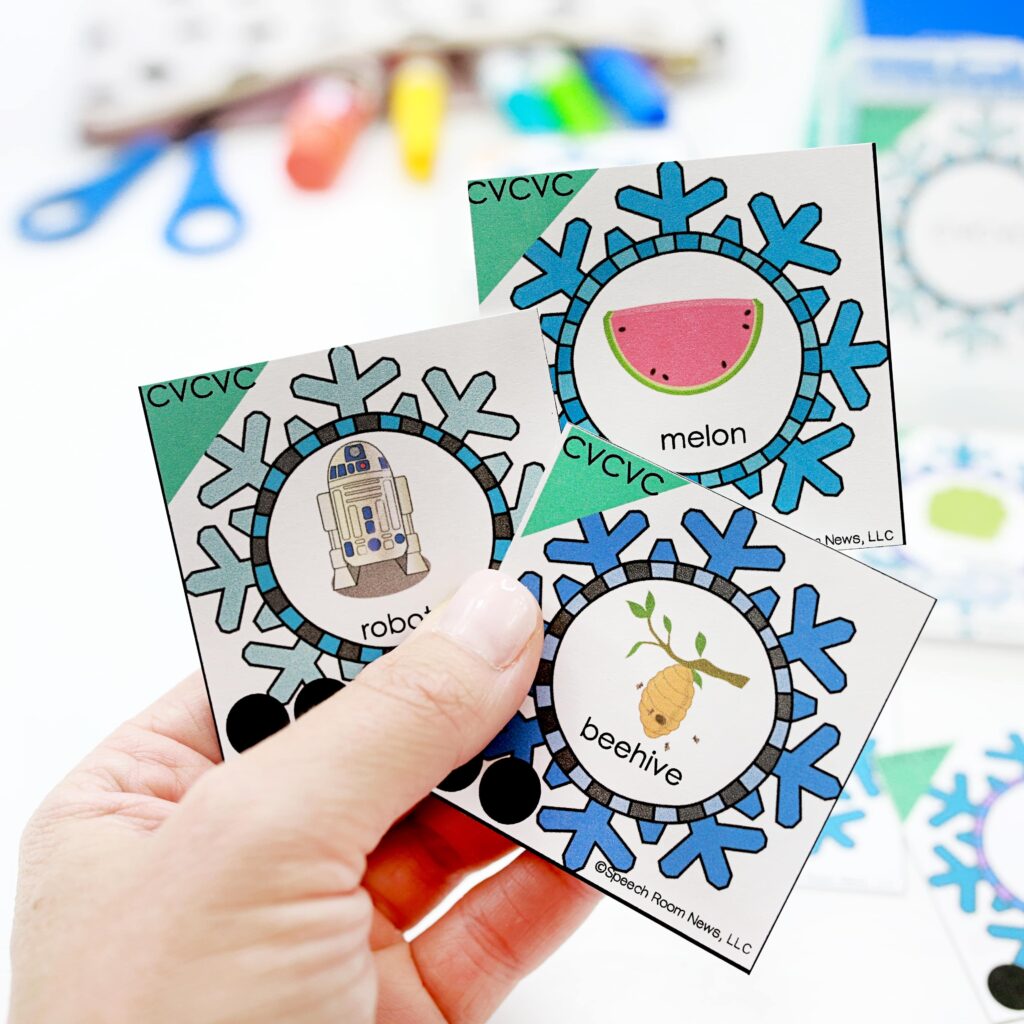
The "Falling Flakes: Apraxia Snowflakes" set exemplifies an interactive bulletin board designed for targeted therapeutic intervention. Apraxia of speech, a motor speech disorder, often benefits immensely from multisensory approaches that combine auditory, visual, and tactile cues. This set features snowflake cards, each displaying an image and word, along with black dots indicating the number of syllables. Students are encouraged to touch these dots as they produce the sounds, thereby integrating kinesthetic feedback into their articulation practice. The color and syllable pattern coding on the cards facilitate organization and targeted practice. By attaching these snowflake cards with Velcro to a poster-sized snow globe on the bulletin board, students can actively add and remove flakes, physically engaging with their speech targets. This manipulation not only reinforces the target words but also provides a playful, self-directed practice opportunity that can improve motor planning and sequencing.
Similarly, the "Falling Flakes: Phonology Activities" set targets phonological disorders using minimal pairs, a highly effective strategy for addressing sound pattern errors. Each snowflake card presents an image and word from a minimal pair (e.g., "fan" and "van"), with color and pattern coding for easy identification. The interactive element remains consistent: students attach and remove these snowflake cards from a poster-sized globe using Velcro. This hands-on interaction allows for repeated exposure and practice of contrasting sounds, helping students to differentiate and produce target phonological patterns more accurately. The inclusion of various winter-themed posters within the set ensures novelty and sustained interest throughout the season.
The educational implications of interactive bulletin boards are substantial. They tap into principles of active learning, where students construct knowledge through direct experience. For children, especially those with communication disorders, kinesthetic engagement can significantly enhance learning and memory retention. The immediate feedback loop, whether self-corrected or facilitated by a passing adult, reinforces correct productions. Furthermore, these boards can promote generalization of skills by providing practice opportunities outside the structured therapy session. A student waiting for therapy might spontaneously engage with the board, practicing sounds in a low-pressure, playful context. This informal practice is crucial for the carryover of newly acquired speech and language skills into everyday communication. From an SLP’s perspective, these pre-designed, interactive resources offer a highly efficient means of creating engaging and therapeutically potent learning stations without requiring extensive daily preparation.
Functional Bulletin Boards: Empowering Families and Extending Learning Beyond the Clinic
Functional bulletin boards are perhaps the most outwardly impactful category, extending the reach of speech therapy beyond the clinical or school setting into the home and community. These boards are typically used to disseminate information, provide resources, and offer practical strategies for parents and caregivers to support their child’s communication development. This approach directly addresses the critical need for carryover and generalization of skills, recognizing that consistent reinforcement in natural environments is paramount for lasting progress.
The "Winter Speech and Language Packet: Learning Through Play" handouts exemplify the power of functional bulletin boards. These handouts provide parents with actionable, accessible ideas for integrating speech and language practice into common winter activities. Instead of abstract exercises, parents receive concrete suggestions for enhancing communication skills during familiar routines and play scenarios, such as:
- Snowball Fight: Practicing action verbs, spatial concepts (over, under), descriptive adjectives (cold, soft).
- Snowman Building: Sequencing (first, next, last), body parts, size concepts (big, medium, small).
- Sledding: Expressing emotions (excited, scared), safety rules, cause-and-effect.
- Hot Chocolate: Following directions, describing taste/texture, requesting items.
- Winter Clothing: Naming items, categorizing, describing attributes (warm, fuzzy).
- Making Cookies: Vocabulary related to baking, sequencing steps, requesting assistance.
By making these handouts readily available on a bulletin board, SLPs empower parents to become active participants in their child’s therapeutic journey. This proactive approach to parent education is supported by extensive research demonstrating that family involvement is a significant predictor of positive therapeutic outcomes. When parents understand how to embed communication practice into daily life, the frequency and naturalness of skill reinforcement increase dramatically, leading to faster progress and better generalization of skills.
The availability of a "SPANISH VERSION" of the "Winter Speech and Language Packet" further underscores the commitment to inclusivity and cultural responsiveness, ensuring that language barriers do not impede critical parent education. This reflects a broader professional responsibility to provide accessible resources to all families, thereby maximizing the potential for home-based support.
The implications of functional bulletin boards extend beyond individual student progress. They contribute to a more informed and engaged school community, fostering a collaborative partnership between SLPs, families, and other educators. For school administrators, these boards demonstrate a commitment to comprehensive student support and community outreach. For the SLP, they serve as an efficient mechanism for consistent parent communication, reducing the need for individualized explanations of common strategies and freeing up time for direct therapy. By providing parents with practical tools, SLPs are not just teaching children to speak; they are equipping families to create language-rich environments that nurture lifelong communication competence.
SLP Perspectives and Broader Educational Impact
The thoughtful implementation of demonstrative, interactive, and functional bulletin boards reflects a strategic approach to speech-language pathology that aligns with professional best practices. Speech-language pathologists, often juggling extensive caseloads and administrative duties, benefit immensely from resources that are both therapeutically effective and time-efficient. The use of adaptable craft templates, pre-designed interactive components, and ready-to-distribute parent handouts exemplifies this efficiency, allowing SLPs to maximize their direct therapy time while still enriching the learning environment.
From a professional standpoint, organizations like the American Speech-Language-Hearing Association (ASHA) emphasize the importance of creating supportive and stimulating environments for individuals with communication disorders, as well as engaging families in the therapeutic process. Bulletin boards, when designed with these principles in mind, serve as tangible evidence of an SLP’s commitment to these standards. They visually articulate the scope and impact of speech-language services to the broader school community, including teachers, administrators, and visitors, potentially increasing understanding and advocacy for SLP programs.
The broader educational impact of these strategies is significant. By showcasing student work, facilitating active engagement, and empowering parents, SLPs contribute to a holistic educational experience. Improved communication skills are foundational for academic success, social-emotional development, and future vocational opportunities. A child who can articulate their thoughts, understand complex language, and interact effectively with peers and adults is better equipped to navigate all aspects of life. Bulletin boards, as an integral part of the therapeutic landscape, play a subtle yet powerful role in supporting this overarching goal. They transform passive walls into active participants in the journey of communication development, proving that even simple visual aids, when strategically designed, can have profound and lasting effects on learning and growth.
In conclusion, the integration of demonstrative, interactive, and functional bulletin board ideas for winter, as detailed by speech-language pathology experts, offers a multifaceted approach to enhancing therapeutic outcomes. These strategies address critical needs in student engagement, skill reinforcement, and family empowerment, all while respecting the demanding schedules of SLPs. By embracing these creative and practical environmental designs, clinicians can cultivate more dynamic, supportive, and effective learning spaces, ultimately contributing to the improved communication abilities and overall well-being of the students they serve.
