

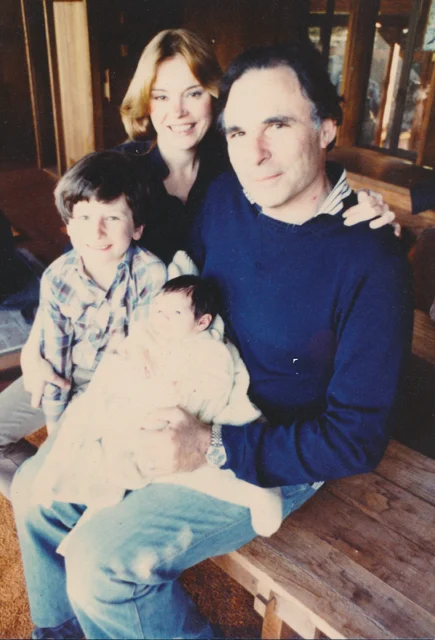
San Francisco, CA, November 17, 2025 – The world of psychology and affective science mourns the loss of Dr. Paul Ekman, a towering figure whose seminal research fundamentally reshaped our understanding of human emotions, facial expressions, deception, and compassion. Dr. Ekman, aged 91, passed away peacefully at his home, surrounded by his family. His passing marks the end of an era for a field he not only advanced but, in many ways, defined.
For over six decades, Dr. Ekman dedicated his formidable intellect and boundless curiosity to unraveling the complexities of human emotional experience. His work, characterized by rigorous empirical investigation and a profound commitment to cross-cultural universality, challenged prevailing notions and laid the groundwork for much of modern affective science. Born in 1934, Dr. Ekman’s journey into the science of emotion began with his doctoral studies at Adelphi University, followed by postdoctoral work at the Langley Porter Neuropsychiatric Institute. His early research, often conducted in collaboration with Wallace V. Friesen, focused on the relationship between facial expressions and emotional states.
The cornerstone of Dr. Ekman’s legacy is arguably his groundbreaking work on the universality of basic human emotions and their associated facial expressions. Traveling to remote parts of the world, including Papua New Guinea, where he studied pre-literate societies, Dr. Ekman and his colleagues presented photographs of facial expressions to individuals unfamiliar with Western culture. The consistent ability of these participants to accurately identify the emotions depicted—happiness, sadness, anger, fear, surprise, disgust, and contempt—provided powerful evidence for a biologically innate set of universal emotional expressions. This research directly contradicted the then-dominant cultural relativist view, which posited that all emotional expressions were learned and culturally specific. This finding, published in landmark studies throughout the 1960s and 1970s, revolutionized the field, providing a shared, observable framework for studying emotions.
"Paul brought his remarkable intellect, observational skills, and unflagging energy to illuminate the ways we express and feel our emotions and how they are embodied in our physiology," stated Dr. Robert W. Levenson, Ph.D., a distinguished professor in the Department of Psychology at the University of California, Berkeley, and a long-time colleague of Dr. Ekman. "His research, theorizing, and ideas for how emotions could be harnessed in service of the greater good galvanized what was a small niche area of research into a vibrant and thriving research area that will continue to be hugely influenced by his work and vision."
Dr. Ekman’s innovative methodologies extended to the development of the Facial Action Coding System (FACS), a comprehensive, anatomically based system for describing all observable facial movements. Developed with Friesen, FACS meticulously breaks down facial expressions into their constituent muscle actions, providing a precise, objective tool for quantifying and analyzing the subtle nuances of human expression. FACS has become an indispensable instrument in a wide array of fields, from psychology and neuroscience to human-computer interaction and forensic science. Its systematic approach offered researchers a common language, enabling replication and deeper investigation into the mechanics and meaning of facial communication.
Complementing FACS, Dr. Ekman also developed Micro Expression Training Tools. Micro-expressions are fleeting, involuntary facial expressions that can betray a person’s true emotions, often lasting only a fraction of a second. His training programs, designed to help individuals recognize these subtle cues, found widespread application in law enforcement, intelligence agencies, and clinical settings, aiming to improve observational skills and enhance understanding of nonverbal communication.
The impact of Dr. Ekman’s work transcended academia, significantly influencing public discourse and popular culture. His bestselling books, including "Emotions Revealed" and "Telling Lies," translated complex scientific findings into accessible language for a broad audience. The critically acclaimed television series "Lie to Me," for which Dr. Ekman served as a consultant, brought the science of micro-expressions and deception detection into millions of homes, sparking widespread fascination with the hidden language of faces. Furthermore, his advisory role for Pixar’s animated film "Inside Out" demonstrated his commitment to making the science of emotions understandable and engaging for audiences of all ages.
Beyond his scientific contributions, Dr. Ekman dedicated the latter part of his career to applying his research to foster a more compassionate world. This commitment was deeply influenced by his enduring friendship and collaboration with His Holiness the Dalai Lama. Their shared interest in the potential of emotions to cause suffering and their belief in the possibility of cultivating positive emotional states led to joint projects and profound discussions. Together, they co-authored "Developing Global Compassion," a significant work that explored the scientific and spiritual dimensions of compassion and its role in addressing global challenges.
This profound collaboration also forged a strong working relationship between Dr. Ekman and his daughter, Dr. Eve Ekman. Together, they spearheaded the development of the Atlas of Emotions, an interactive online tool designed to enhance emotional literacy and self-awareness. This ambitious project, a comprehensive visual and narrative exploration of emotions, aims to equip individuals with the vocabulary and insight needed to navigate their emotional landscapes more effectively. Furthermore, their work extended to the Cultivating Emotional Balance (CEB) program, which integrates contemplative practices with emotion science to train emotional skills and promote well-being.
"My dad’s commitment to rigorous science, love of discovery, and dedication to alleviating pain from destructive emotions were at the very core of his brilliant mind and accomplishments," shared Dr. Eve Ekman, Ph.D., director of the Paul Ekman Group and a contemplative social scientist. "However, his huge heart and ability to vulnerably share his own struggles with emotions were what made him beloved by so many. He was an incredibly loving dad—a lover of life and unrelentingly curious."
The Paul Ekman Group, now under the leadership of Dr. Eve Ekman, continues to advance his mission. The organization is dedicated to making emotional awareness, empathy, and truthfulness accessible globally through science-based education and training, ensuring that Dr. Ekman’s life’s work continues to benefit humanity.
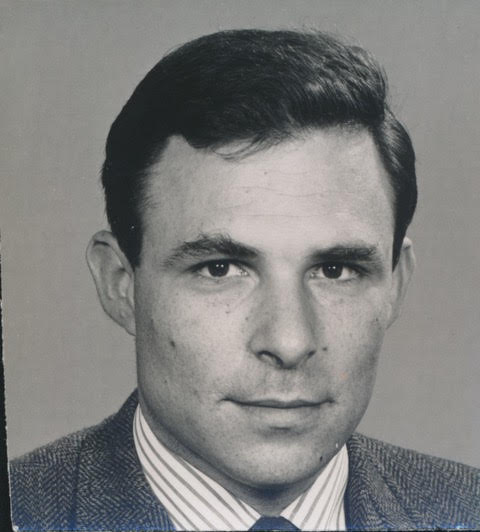
A Life of Discovery: Chronology of a Scientific Pioneer
Dr. Paul Ekman’s distinguished career can be traced through several key milestones:
- 1934: Born in Washington, D.C.
- 1950s: Pursues undergraduate studies at the University of Chicago and New York University.
- 1958: Earns his Ph.D. in Psychology from Adelphi University.
- Late 1950s – Early 1960s: Conducts postdoctoral research at the Langley Porter Neuropsychiatric Institute, beginning his in-depth study of facial expressions.
- 1960s – 1970s: Undertakes extensive cross-cultural research, particularly in remote areas, to investigate the universality of facial expressions of emotion. This period yields foundational data for his universalist theory.
- 1978: Publishes "Emotions in the Hand of Hitler: The Psychology of Destruction," exploring the darker aspects of human emotion.
- 1980s: Develops the Facial Action Coding System (FACS) with Wallace V. Friesen, revolutionizing the objective measurement of facial behavior.
- 1985: Publishes "Telling Lies: Clues to Deceit in the Marketplace, Politics, and Marriage," which becomes a seminal work on deception detection.
- 1990s – 2000s: Collaborates extensively with His Holiness the Dalai Lama, focusing on compassion and the cultivation of positive emotions. This leads to the "Developing Global Compassion" project.
- 2000s: Consults on the popular television series "Lie to Me," bringing his research on micro-expressions and deception to a global audience.
- 2000s – 2010s: Works with his daughter, Eve Ekman, on the Atlas of Emotions and the Cultivating Emotional Balance program. Serves as a scientific advisor for Pixar’s "Inside Out."
- 2025: Passes away at the age of 91.
Broader Impact and Enduring Legacy
Dr. Ekman’s influence is undeniable across multiple disciplines. In psychology, his work provided a robust empirical foundation for the study of emotion, moving the field away from purely subjective introspection towards observable, measurable phenomena. His research on deception detection has had profound implications for law enforcement, national security, and legal proceedings, although its application remains a subject of ongoing debate and refinement. In anthropology, his cross-cultural findings challenged ethnocentric perspectives and highlighted shared human experiences.
The development of FACS and micro-expression analysis has also had a significant impact on fields such as artificial intelligence and human-computer interaction, where researchers are striving to create systems that can understand and respond to human emotional states. Furthermore, his later work on compassion and emotional regulation, particularly in collaboration with the Dalai Lama, has contributed to the growing fields of positive psychology and mindfulness-based interventions, offering practical tools for improving mental well-being and fostering more harmonious societies.
The fact that Dr. Ekman’s work continues to be advanced by his daughter, Dr. Eve Ekman, through the Paul Ekman Group and their collaborative projects, speaks to the enduring power and relevance of his scientific vision. His legacy is not confined to academic journals but lives on in the training programs that empower individuals and organizations, in the interactive tools that promote emotional intelligence, and in the ongoing scientific inquiry he inspired.
Honoring Dr. Ekman’s Life and Work
The Paul Ekman Group and his family are currently working on a documentary celebrating Dr. Ekman’s life and scientific legacy, which is in development. Those wishing to contribute to its completion can find more information and donation opportunities at [link to documentary support page].
In recognition of his immense contributions, the Paul Ekman Group is also compiling reflections, stories, photographs, films, and messages of appreciation from colleagues, students, and readers worldwide. These contributions will be featured on a dedicated memorial page, creating a lasting tribute to his life and impact.
Dr. Ekman is survived by his children, Eve Ekman and Tom Ekman, and a wide circle of cherished friends who became like family. His passing leaves a void in the scientific community, but his groundbreaking research and profound insights into the human heart will continue to illuminate our understanding of ourselves and each other for generations to come.
