

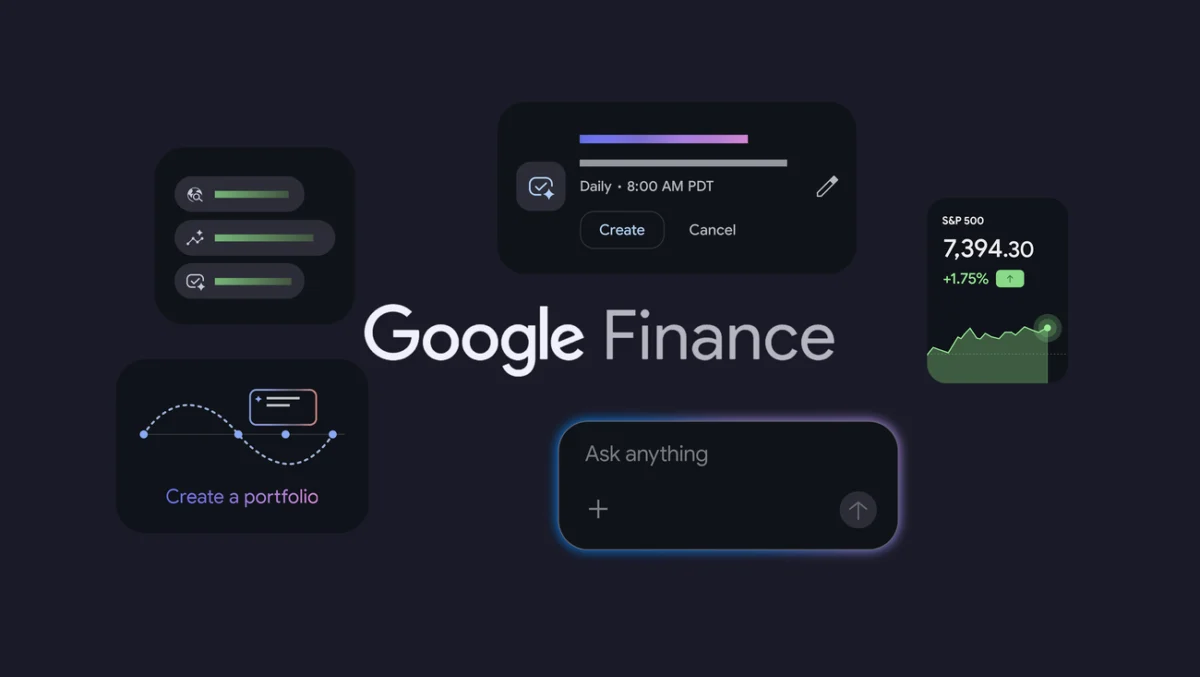
Google has officially announced the transition of its Google Finance platform out of its beta phase, marking a significant milestone in the evolution of the company’s financial data services. This update introduces a comprehensive suite of new capabilities designed to streamline how retail investors track portfolios, interpret market movements, and receive personalized financial intelligence. Alongside the web-based improvements, the technology giant has launched a dedicated Google Finance application for Android, with an iOS version slated for release later this year. These developments signal a renewed commitment by Google to compete in the increasingly crowded fintech space, where data accessibility and artificial intelligence are becoming the primary differentiators for user retention.
Enhanced Portfolio Management and AI Integration
The cornerstone of this update is the global rollout of a revamped portfolio tracking system. Recognizing that modern investors often hold assets across multiple brokerage accounts and platforms, Google Finance now offers a consolidated dashboard. This interface provides a holistic view of performance data, allowing users to monitor their net worth and asset fluctuations in real-time. To lower the barrier to entry for new users, Google has implemented several frictionless onboarding methods. Beyond manual entry, users can now populate their portfolios by uploading documents such as CSV files or PDFs of brokerage statements. In a more advanced application of computer vision and natural language processing, the platform even allows users to upload screenshots of their holdings or simply describe their investments in plain text to generate a digital tracking profile.
The integration of artificial intelligence represents a shift from passive data display to active financial analysis. Within the new portfolio dashboard, Google has embedded a research tool that allows users to query their own data using natural language. This feature is designed to help investors identify structural weaknesses in their investment strategies. For example, a user can ask the system to identify sectors that are underrepresented in their current holdings or request an analysis of how their fixed-income allocation might influence long-term growth projections. By leveraging large language models (LLMs), Google Finance aims to democratize the kind of portfolio analytics that were previously the domain of professional financial advisors or high-cost premium software.
Automated Intelligence and Custom Market Briefings
In addition to portfolio tracking, Google has introduced a "Tasks" feature aimed at automating market research. This capability allows users to set up custom briefings that Google Finance compiles in the background. The system is designed to handle complex, multi-variable requests, such as a daily pre-market briefing that analyzes overnight volatility in the cryptocurrency market or specific updates on stocks within a user’s watchlist. This move addresses the "information overload" common in financial news by filtering for relevance based on a user’s specific financial interests.
These briefings are delivered via push notifications through the primary Google app on both Android and iOS, as well as appearing within a dedicated research panel on the Google Finance web interface. Users retain granular control over these automated tasks, with the ability to edit schedules, refine instructions, or pivot the focus of the briefings as their investment priorities change. This level of customization reflects a broader industry trend toward "push" rather than "pull" information models, where relevant data finds the user rather than requiring manual searching.
The Launch of the Standalone Android Application
Perhaps the most notable shift in strategy is the release of a standalone Google Finance app for Android. For several years, Google Finance existed primarily as a web destination or a subset of Google Search results. The launch of a dedicated app suggests that the company sees a demand for a focused, high-frequency utility for mobile users. The app mirrors the core functionality of the web experience but is optimized for "on-the-go" consumption. Key features include a live financial news feed, real-time price data, and the AI research tool.
A standout feature in the mobile experience is the inclusion of AI-powered "Key Moments." This tool utilizes machine learning to parse news articles, earnings reports, and market data to provide concise explanations for why a specific stock is moving. By synthesizing vast amounts of text into digestible bullet points, Google aims to provide context to price volatility that raw charts cannot convey. The company has confirmed that while the Android app is available immediately, an iOS version is currently in development and is expected to debut before the end of the year.

A Chronological Context of Google Finance
The history of Google Finance has been characterized by periods of rapid innovation followed by long stretches of stagnation. Understanding this timeline provides context for why the current update is viewed as a major strategic pivot for the company.
- 2006: Google Finance is launched as a direct competitor to Yahoo Finance and MSN Money, featuring interactive Adobe Flash charts and news integration.
- 2009: The platform introduces real-time data for the New York Stock Exchange (NYSE) and NASDAQ, a major advancement for free consumer financial tools at the time.
- 2017–2018: Google undergoes a controversial "simplification" of the service. The standalone "Portfolios" feature is removed, and Finance is largely integrated into the main Google Search experience. This move was met with significant backlash from power users who relied on the platform for detailed tracking.
- 2020: Responding to user feedback, Google begins to reintegrate portfolio tracking and adds more robust "Watchlist" features, though the service remains in a perpetual state of "new" or beta testing.
- 2024: The current release marks the end of the beta period, the return of advanced portfolio analytics, the introduction of generative AI tools, and a return to a dedicated app-based strategy.
Market Analysis and Supporting Data
The timing of this update coincides with a global surge in retail investment activity. Data from various market research firms indicates that the number of individual investors participating in equity and cryptocurrency markets has grown exponentially since 2020. According to a 2023 report on retail trading, individual investors now account for roughly 20% of total stock market volume in the United States. This demographic increasingly relies on mobile-first, AI-driven tools to manage their assets.
Furthermore, the "fintech-ization" of Big Tech is an ongoing trend. Competitors like Apple have already integrated robust financial tracking into their ecosystems through the Apple Stocks app and the Apple Card. By enhancing Google Finance, Alphabet Inc. (Google’s parent company) is ensuring it remains a primary gateway for financial information, thereby protecting its search advertising moat and expanding its footprint in the high-value financial services data sector.
The move also aligns with Google’s broader corporate strategy to integrate its Gemini AI technology across its entire product suite. By positioning Google Finance as an AI-first research tool, the company is demonstrating a practical, consumer-facing use case for its generative models, moving beyond simple chatbots into specialized analytical utilities.
Industry Implications and Future Outlook
Industry analysts suggest that Google’s move could pressure traditional financial news outlets and established fintech apps to accelerate their own AI integrations. The ability of Google to pull data from its vast indexing of the web gives it a unique advantage in providing "Key Moments" and market briefings that competitors may struggle to replicate with the same breadth.
However, the transition to AI-driven financial advice also brings challenges regarding data accuracy and "hallucinations"—a known issue where AI models present false information as fact. To maintain trust, Google will need to ensure that its financial AI tools are grounded in verified market data and that users are clearly informed of the risks associated with AI-generated analysis.
Looking ahead, Google has outlined a roadmap for further enhancements. Over the coming months, the company plans to bring live earnings calls directly into the mobile app, allowing users to listen to corporate presentations in real-time. The task-based briefings and advanced portfolio features currently on the web will also be phased into the Android and iOS apps to ensure parity across all platforms. As Google Finance moves out of beta, it appears positioned to transition from a simple price-tracking tool into a sophisticated, AI-enhanced financial ecosystem designed for the modern retail investor.
By providing these tools for free, Google is not just offering a service but is collecting valuable signals on consumer sentiment and investment trends. As the platform matures, it will likely become a central pillar of Google’s strategy to organize the world’s financial information and make it universally accessible and useful. For the millions of users who navigate the volatility of modern markets, these upgrades provide a more robust, data-driven framework for making informed investment decisions.
