

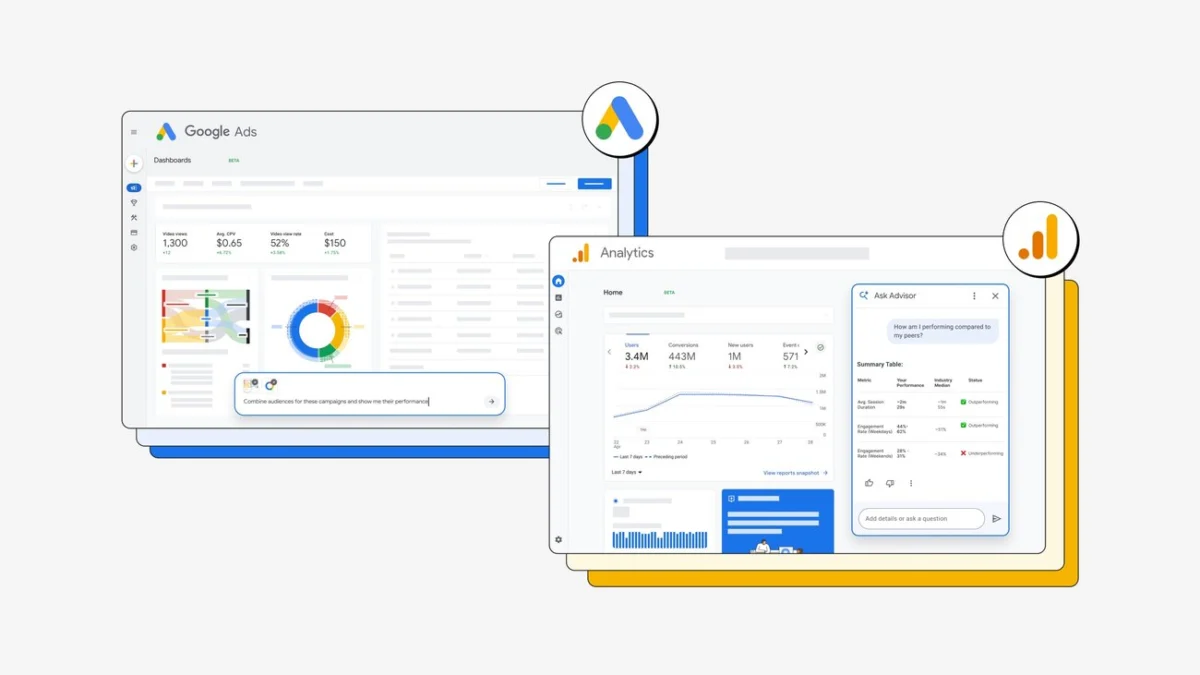
Google has officially announced a suite of transformative updates to its marketing ecosystem, integrating advanced agentic AI experiences across Google Ads and Google Analytics. This strategic expansion, built upon the company’s proprietary Gemini large language model, is designed to move beyond simple automation toward "agentic" capabilities—AI systems that can not only analyze data but also proactively suggest and prepare actions to streamline workflows and expedite business growth. By deploying these tools, Google aims to alleviate the mounting pressure on marketing professionals who are currently tasked with navigating an increasingly fragmented digital landscape and a transition away from traditional tracking methods.
The central pillar of this rollout is the enhancement of Ask Advisor, an in-product AI agent that functions as a sophisticated bridge between raw data and strategic execution. As marketing departments face a deluge of information from various touchpoints, the ability to extract actionable insights in real-time has become a competitive necessity. Google’s latest updates focus on three primary areas: surfacing opportunities through intelligent homepages, democratizing data visualization through natural language reporting, and providing comparative context via industry benchmarking.
The Evolution of Agentic AI in Digital Advertising
The introduction of these tools marks a significant milestone in the chronology of Google’s advertising technology. For over a decade, Google has utilized predictive AI—machine learning algorithms that optimize bidding and targeting based on historical patterns. However, the shift toward "agentic" AI represents a paradigm change. Unlike previous iterations that operated largely in the background, agentic AI acts as a collaborative partner.
Josh Moser, Senior Director of Product Management at Google, emphasized that these experiences are specifically designed to put answers and actions directly into the hands of marketers. This transition began in earnest in early 2023 with the initial previews of generative AI in Google Ads and has rapidly accelerated following the integration of Gemini. The objective is to transition the marketer from a manual data operator to a strategic orchestrator who oversees AI-driven processes.
Streamlining Analytics with Automated Insight Overviews
One of the most immediate changes is the implementation of AI Overviews at the top of the Google Analytics homepage. For years, analysts have spent a significant portion of their daily routine—often estimated at 30% to 50% of their time—simply identifying shifts in performance. The new AI Overviews provide an instant, natural-language summary of important updates since the user last logged in.
These summaries cover a wide range of variables, including seasonal peaks in sales, sudden changes in traffic sources, or anomalies in conversion rates. This "at-a-glance" functionality is coupled with a deep-link mechanism: if a specific data card indicates a concerning or promising trend, a single click carries that context directly into the Ask Advisor interface for deeper interrogation. To ensure marketers remain informed without needing to be constantly logged in, Google has introduced a notification system. Users can now opt into summaries via email or mobile notifications, allowing for a customized cadence of updates that fits their specific operational needs.
Personalization at Scale: The New Google Ads Experience
Parallel to the updates in Analytics, the Google Ads homepage has been revamped to surface timely, AI-powered insight cards. These cards are not generic; they are personalized to the specific business goals and historical performance of the account. This level of personalization is intended to help businesses capture new demand the moment it appears, rather than reacting to reports days or weeks after a trend has peaked.
A key feature of the new Ads interface is the custom prompt box located above the insight cards. This allows marketers to move beyond pre-defined reports and ask specific questions about their competitive landscape. For instance, a user can inquire about how specific competitors are impacting their impression share or ask for trend analysis that could improve a particular campaign’s performance. This conversational interface effectively lowers the barrier to entry for complex data analysis, allowing team members who may not be data scientists to derive high-level strategic value from the platform.
From Raw Data to Visualization: The Democratization of Reporting
Historically, creating comprehensive marketing dashboards was a labor-intensive process requiring technical proficiency in tools like Looker Studio or SQL. Google is addressing this friction point with the introduction of new Dashboard capabilities in Google Ads, with a rollout to Google Analytics expected shortly.
Through simple text prompts, marketers can now transform raw data into clear, professional visualizations. Instead of manually selecting dimensions and metrics, a user can type a command such as, "Show me a bar chart comparing mobile versus desktop conversions over the last quarter." The system not only generates the visual representation but also provides a real-time summary explaining the "why" behind the data. This explanatory layer is crucial for internal reporting, as it helps marketing leads make a data-backed case for new budget allocations or campaign pivots to executive stakeholders.
Benchmarking and Competitive Intelligence
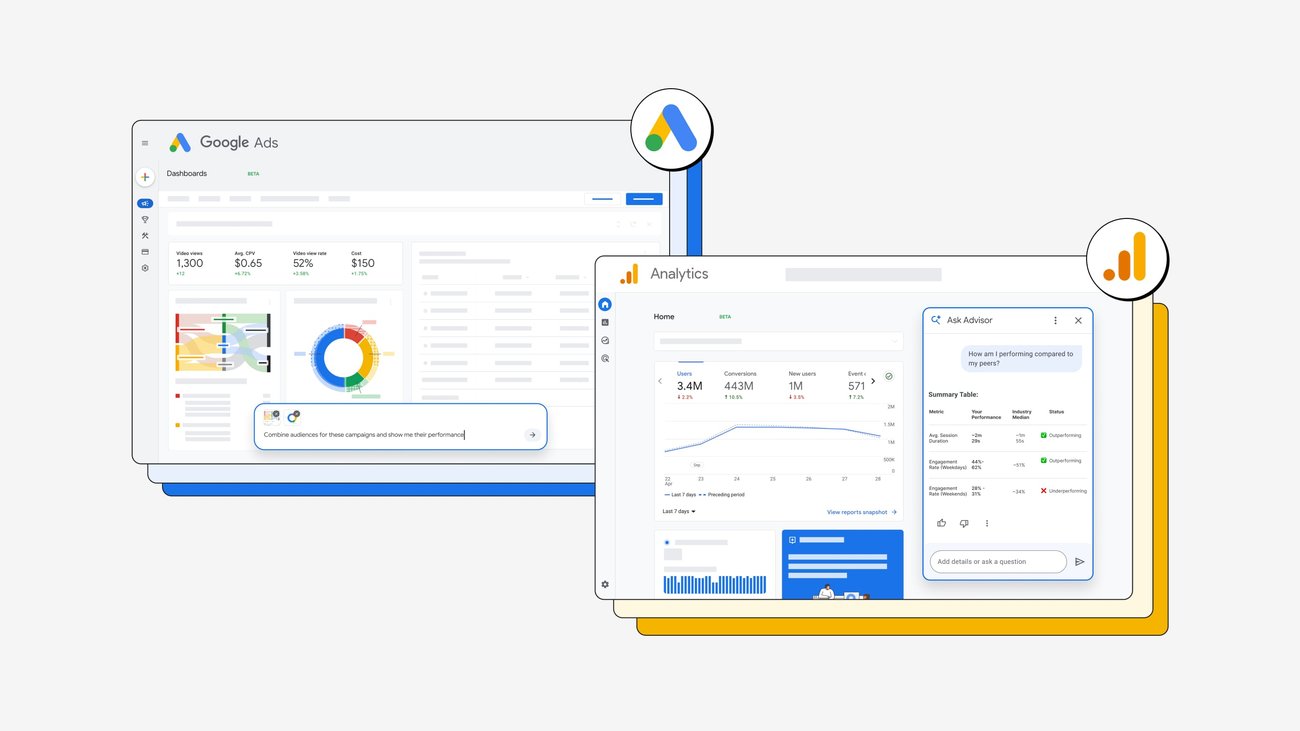
In an era of tightening margins, understanding performance in a vacuum is no longer sufficient. Google’s new benchmarking feature within Google Analytics, powered by Ask Advisor, allows businesses to compare their campaign performance against anonymized averages from similar businesses.
This feature addresses a long-standing request from the marketing community for more context regarding "what good looks like" in specific industries. By analyzing performance relative to peers, businesses can identify whether a dip in conversions is an internal issue or a broader market trend. This contextual intelligence is designed to give marketers the confidence to double down on successful strategies or course-correct when they fall below industry standards.
Industry Reactions and Preliminary Results
Early adopters of the agentic AI features have reported significant improvements in operational efficiency. Kevin Marshall, Paid Media Director at Gardyn, noted that Ask Advisor has become a primary tool for directional checks on media performance. According to Marshall, the speed of the AI-driven insights provides his team with the "time to dig deeper and make shifts that improve performance sooner."
This sentiment is echoed by broader industry data. According to recent surveys of digital marketing agencies, the adoption of generative AI tools has led to a 20% to 30% reduction in time spent on routine reporting tasks. By automating the "what" and the "how," these tools allow human talent to focus on the "why"—the creative and psychological aspects of marketing that AI cannot yet replicate.
The Broader Economic Impact and Implications
The integration of Gemini into Google’s marketing tools is more than a feature update; it is a response to the structural changes in the global advertising market. With the phase-out of third-party cookies and the rise of privacy-centric browsing, the quality of first-party data analysis has become the primary differentiator for brands.
However, the rise of agentic AI also brings questions regarding transparency and control. Google has been careful to frame these tools as "co-pilots" rather than "auto-pilots," emphasizing that the marketer remains in the driver’s seat. This is a critical distinction for an industry that is wary of "black box" algorithms. By providing summaries that explain the reasoning behind a suggestion, Google is attempting to build a "glass box" model of AI—one where the logic is visible and auditable by the user.
From a competitive standpoint, this move solidifies Google’s position against other tech giants like Microsoft and Meta, who are also racing to integrate generative AI into their respective advertising platforms. The advantage Google holds lies in its vast data ecosystem; by linking Ads and Analytics through a single AI agent, it creates a feedback loop that is difficult for competitors to match.
Future Outlook: The Role of the Marketer in an AI-First World
As these tools become standard, the role of the digital marketer is expected to evolve. The demand for manual technical skills, such as tag management or manual bid adjustments, may decrease, while the demand for "prompt engineering" and strategic oversight will likely increase.
The future of marketing with Google’s new AI tools points toward a landscape where the speed of insight is the primary currency. As agentic AI continues to mature, we can expect even deeper integrations, perhaps moving into automated creative generation and real-time budget reallocation across entire portfolios based on predictive modeling.
For now, the rollout of these features in Google Ads and Google Analytics provides a glimpse into a more efficient, data-literate future. Marketers are encouraged to begin experimenting with Ask Advisor and the new dashboarding tools to familiarize themselves with the conversational nature of modern data analysis. As these solutions continue to learn from user interactions, their accuracy and utility are expected to grow, further cementing AI as an indispensable component of the modern marketing toolkit.
