

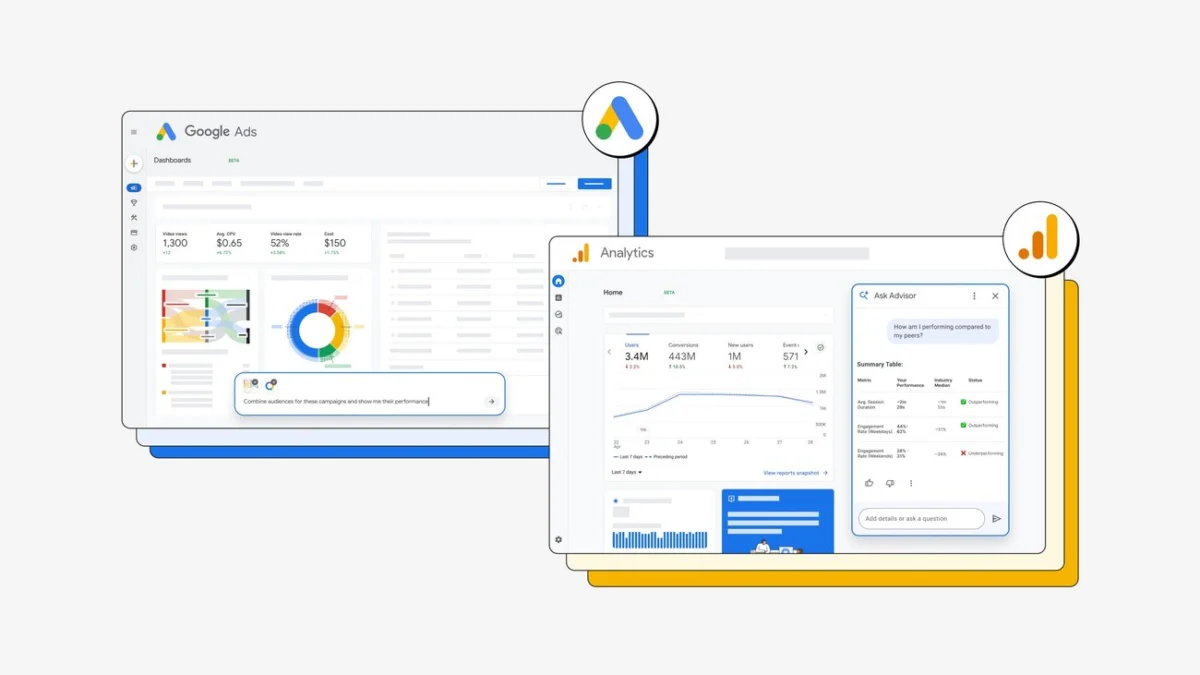
Google has officially announced a significant expansion of its artificial intelligence capabilities within its flagship marketing platforms, Google Ads and Google Analytics. By integrating sophisticated "agentic" experiences and the Gemini-based "Ask Advisor" tool, the technology giant aims to streamline the complex workflows that currently define modern digital marketing. This shift represents a move away from static dashboards toward interactive, proactive AI assistants capable of not only surfacing data but also explaining the underlying causes of performance shifts and suggesting immediate strategic actions.
As the digital advertising landscape becomes increasingly saturated and data-heavy, the traditional role of the marketing analyst has faced mounting pressure. Marketers are often required to possess deep technical expertise in measurement to uncover the "why" behind campaign performance while simultaneously maintaining the strategic agility to execute the "how." Google’s latest updates are specifically designed to bridge this gap, placing advanced analytical power directly into the hands of marketers through natural language interfaces and automated insight generation.
The Rise of Agentic AI in Marketing Platforms
The centerpiece of this update is the deployment of agentic AI, a subset of artificial intelligence that goes beyond simple text generation to perform tasks and navigate complex software environments on behalf of the user. Within Google Ads and Google Analytics, this manifests as "Ask Advisor," an in-product AI agent. Unlike traditional help bots, Ask Advisor is integrated into the core data streams of the platforms, allowing it to provide context-aware answers and execute adjustments based on real-time performance metrics.
Josh Moser, Senior Director of Product Management at Google, emphasized that these tools are intended to amplify human expertise rather than replace it. By automating the more tedious aspects of data mining and report generation, Google intends to keep marketers "firmly in the driver’s seat" while providing them with the high-level insights necessary to chart a path toward business growth.
Enhanced Homepage Insights and Real-Time Summaries
One of the most immediate changes users will notice is the transformation of the Google Analytics and Google Ads homepages. For analyst teams, staying abreast of performance shifts as they occur is a constant challenge. To address this, Google Analytics has introduced AI Overviews at the top of the homepage. These summaries provide an instant digest of important updates that have occurred since the user’s last login, such as seasonal sales peaks, sudden traffic spikes, or unexpected drops in conversion rates.
The integration is designed to be seamless; if a specific data card catches a marketer’s eye, a single click carries that context directly into the Ask Advisor interface for deeper analysis. Furthermore, Google has introduced a notification system that allows users to receive these AI-generated smart summaries via email or phone. This allows stakeholders to stay informed at a frequency that suits their specific business cycle, whether that be daily updates during a major product launch or weekly check-ins for evergreen campaigns.
Simultaneously, the Google Ads homepage has been revamped to surface personalized, AI-powered insight cards. These cards are tailored to the specific nuances of a user’s business, offering context on how competitors are impacting impression shares or identifying emerging trends that could be leveraged to improve campaign ROI. A new prompt box located above these insight cards allows users to generate custom insights by asking specific questions about their current business priorities.
Transforming Raw Data into Visual Intelligence
Reporting has long been a bottleneck in the marketing workflow, often requiring hours of manual data extraction and visualization in external tools. Google is addressing this by introducing a new "Dashboards" feature in Google Ads, with a rollout for Google Analytics expected in the near future. This feature allows users to transform raw, complex datasets into clear, professional-grade visualizations using simple text prompts.
The significance of this update lies in the "real-time summary" generated alongside every report. This summary uses generative AI to explain the "why" behind the numbers, providing a narrative that helps marketers justify new campaign ideas or budget shifts to executive leadership. By lowering the barrier to entry for high-level data visualization, Google is effectively turning every user into a data expert, regardless of their technical background in SQL or advanced data modeling.
Benchmarking Against Industry Standards
A critical component of any marketing strategy is understanding how a brand performs relative to its peers. To facilitate this, Google has introduced a new benchmarking feature within the Ask Advisor tool in Google Analytics. This capability allows marketers to compare their campaign performance against anonymized averages from similar businesses within their industry.
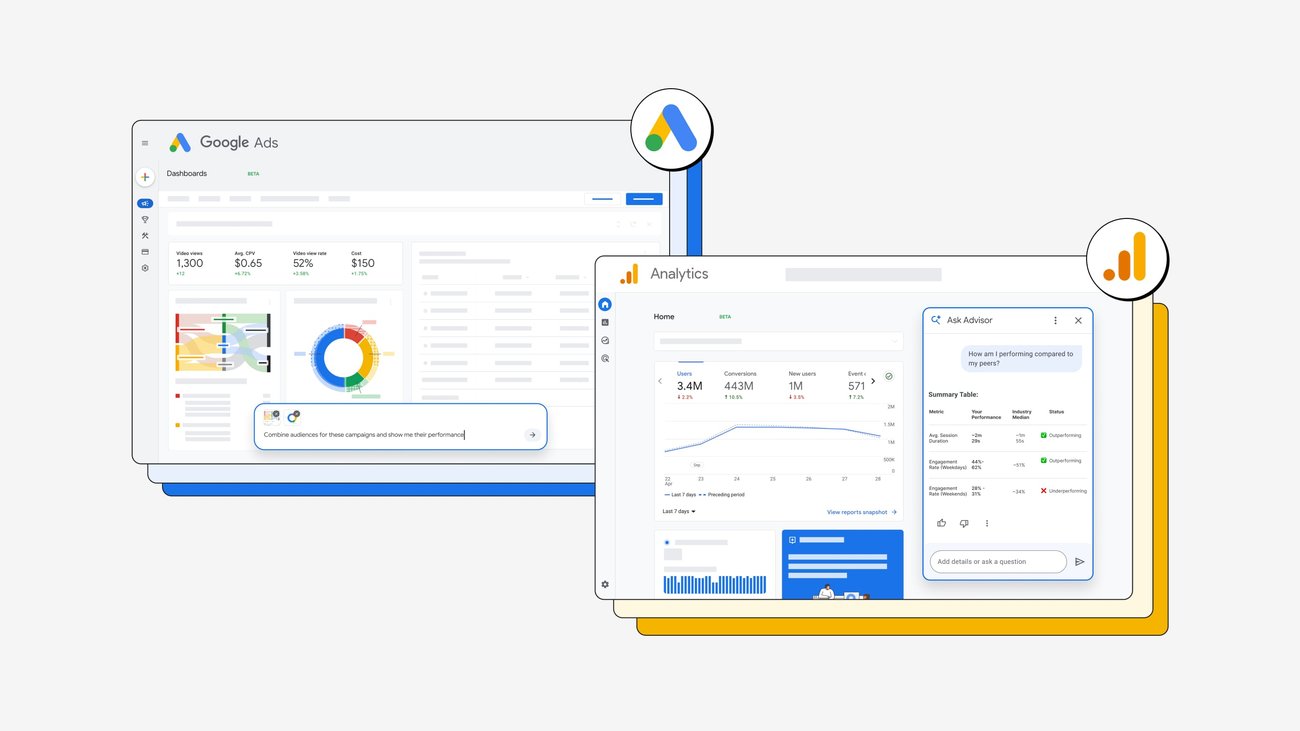
By leveraging Google’s vast repository of aggregated data, the AI can pinpoint areas where a business is overperforming or identify specific gaps where there is room for growth. This type of competitive intelligence was previously reserved for those with the budget for expensive third-party market research. Its integration into the standard Google Analytics suite provides a level of strategic confidence that is essential for refining long-term growth plans.
A Chronology of Google’s AI Evolution
The integration of Gemini-powered agentic tools is the latest step in a multi-year journey for Google. To understand the impact of these tools, it is helpful to view them within the context of Google’s AI roadmap:
- Early Automation (2018–2021): Google introduced Smart Bidding and Responsive Search Ads, using machine learning to optimize bids and creative assets in real-time.
- The Shift to GA4 (2022–2023): The transition from Universal Analytics to Google Analytics 4 (GA4) laid the groundwork for a more privacy-centric, data-modeled approach, utilizing AI to fill gaps left by the phasing out of third-party cookies.
- The Gemini Era (2024–Present): With the announcement of Gemini, Google’s most capable AI model, the focus shifted toward generative and agentic AI. This led to the debut of conversational tools in Google Ads and the current rollout of Ask Advisor.
This progression shows a clear trend: Google is moving from "black box" automation, where the AI makes decisions behind the scenes, to "transparent" AI, where the system explains its reasoning and collaborates with the human user.
Industry Reactions and Real-World Impact
Early adopters of these agentic tools have reported significant gains in operational efficiency. Kevin Marshall, Paid Media Director at Gardyn, noted that Ask Advisor has become a primary tool for directional checks on paid media performance. According to Marshall, the speed of the AI-generated insights allows his team to "dig deeper and make shifts that improve performance sooner," highlighting the competitive advantage of rapid data interpretation.
From a broader industry perspective, these updates are seen as a response to the increasing complexity of the "customer journey." With consumers moving across multiple devices and platforms, the volume of data generated is too vast for human analysts to process manually. Supporting data from industry reports suggest that marketing teams using AI-driven analytics see an average increase in productivity of 15% to 20%, as they spend less time on data cleaning and more time on creative strategy.
Analysis of Implications and Future Outlook
The deployment of agentic AI in Google’s marketing ecosystem has several long-term implications for the industry. First, it democratizes access to sophisticated data analysis. Small to medium-sized businesses (SMBs) that cannot afford a full-time data science team can now leverage the same analytical power as global corporations.
Second, the role of the digital marketer is evolving. As AI handles the technical execution and data synthesis, the value of a marketer will increasingly be found in their ability to provide creative direction, ethical oversight, and strategic vision. The "human in the loop" becomes a director of AI agents rather than a manual operator of software.
However, this transition also raises questions about data privacy and the "echo chamber" effect. While Google emphasizes that benchmarking data is anonymized and aggregated, the reliance on AI-generated insights could lead to a homogenization of marketing strategies if multiple competitors are following the same AI-suggested "best practices."
Furthermore, the "agentic" nature of these tools suggests a future where AI might not just suggest changes but could eventually be authorized to execute them autonomously within predefined guardrails. This would represent the ultimate shift in marketing automation, where the system manages the day-to-day fluctuations of a campaign while the human focuses on high-level brand building.
Conclusion
Google’s introduction of new AI tools across Ads and Analytics marks a pivotal moment in the evolution of MarTech. By integrating the power of Gemini through Ask Advisor, homepage AI Overviews, and natural language reporting, Google is addressing the most significant pain points in the modern marketing workflow: the speed of insight and the ease of execution.
As these tools become more deeply embedded in the daily routines of marketers worldwide, the focus will shift from "collecting data" to "acting on intelligence." For businesses looking to maintain a competitive edge, the adoption of these agentic experiences is no longer optional but a fundamental requirement for navigating the complexities of the digital economy. Marketers can begin exploring these new capabilities today by accessing the Ask Advisor features within their existing Google Ads and Google Analytics accounts.
