


Securing budget approval is not merely a bureaucratic hurdle; it is the foundational act that unlocks an organization’s potential for innovation, market expansion, systemic improvements, and impactful global presence. This pivotal green light, initiating a cascade of transformative outcomes, hinges on one fundamental skill: the ability to compellingly articulate why decision-makers should invest in your idea. While a patch of dirt may appear unremarkable to some, the visionary leader sees the blueprint for a thriving garden, ready to be cultivated from a mere concept into a tangible reality.
The Fiduciary Imperative: Understanding the Budget Approver’s Lens
At the heart of every corporate decision, especially those involving significant financial outlay, lies a complex interplay of accountability and risk management. Budget approvers—typically CFOs, board members, and senior executives—operate within a world largely defined by numbers, quarterly reports, and shareholder expectations. Their primary mandate is fiduciary responsibility: safeguarding company assets, ensuring sustainable growth, and maximizing return on investment (ROI). The pressure is immense; their choices directly impact the company’s financial health, market standing, and future viability. This inherent caution often leads to budget discussions that, while necessary, can become fixated solely on the dollar amount, overlooking the broader strategic vision.
According to a 2023 survey by Gartner, nearly 60% of CFOs cite "managing costs" as their top priority, closely followed by "driving growth" and "improving profitability." This data underscores a prevalent mindset: expenditures are viewed through a lens of immediate financial impact and measurable returns. Projects that cannot clearly demonstrate a robust financial case often struggle to gain traction, regardless of their perceived innovative merit. This environment necessitates that budget seekers transcend the confines of traditional financial reports and engage decision-makers on a deeper, more holistic level.
Beyond Spreadsheets: The Power of Narrative in Financial Proposals

While meticulously balanced expenses and precise projections are non-negotiable—indeed, the numbers must add up to move forward—they are often insufficient to capture the imagination and secure enthusiastic backing. Your role as a budget seeker extends beyond presenting data; it involves crafting a narrative that pulls leaders away from mere project allocations and fiscal calendars, allowing them to truly grasp the transformative potential of their approval. It’s about shifting their perspective from black-and-white figures to a full-color vision, akin to Dorothy stepping into the vibrant, magical land of Oz from her monochromatic Kansas.
The power of narrative lies in its ability to bridge the analytical and emotional aspects of decision-making. Research in cognitive psychology indicates that stories activate more parts of the brain than raw data, fostering empathy, memorability, and a sense of shared experience. A well-constructed story transforms abstract figures into relatable outcomes, making a project’s future feel not just plausible, but desirable. This strategic use of storytelling secures not just funding, but also invaluable time, resources, and organizational backing—the essential ingredients for any successful endeavor. To help gain traction and earn funding for your next project, here are three narrative techniques that can bring your proposal to life.
1. Make Budget-Approvers the Heroes of ROI: The Three-Act Structure
It is insufficient for leaders to merely see money "disappear" into a project; they must envision its spectacular "reappearance" in the form of substantial return on investment. While predicting the future with absolute certainty is impossible, the story you tell about your vision can effectively align budget-approvers’ expectations and illuminate the path to future gains. Much like film producers review scripts and storyboards before bankrolling a blockbuster, financial decision-makers require a compelling preview of the "final cut" of your project’s success.
Consider the cinematic analogy: Christopher Nolan, known for grand productions like his reimagining of The Odyssey with a reported $250 million budget, honed his craft on smaller, yet critically acclaimed films. Before The Odyssey, he adapted Christopher Priest’s novel The Prestige for a relatively modest $40 million. Set in Victorian London, the 2006 film intricately depicts a rivalry between two magicians. It opens with a voiceover by Michael Caine, describing the three parts of a magic trick:
- The Pledge: The magician shows you something ordinary.
- The Turn: The magician takes the ordinary something and makes it do something extraordinary.
- The Prestige: The hardest part; bringing the extraordinary back, completing the trick.
This structure, mirroring the classic three-act story arc (beginning, middle, end), offers a powerful framework for your budget proposal. The "pledge" of your budget proposal should present the current state or problem, making it clear and relatable. The "turn" outlines the innovative solution or project, demonstrating how the investment transforms the ordinary into something extraordinary. Finally, the "prestige" reveals the triumphant return—the tangible and intangible benefits, the ROI, the transformed landscape that results from the approved budget. This should convey spectacle and speak directly to the hopes and fears of the budget-approvers, addressing not just financial metrics but also strategic advantages, market positioning, and long-term organizational value.
To highlight this effect, consider a project description light on narrative:
"With a $40 million budget, the film could gross upwards of $100 million at the box office, achieve a runtime of 130 minutes, and ultimately aggregate a 76% on Rotten Tomatoes based on 208 reviews."
This statement is precise, data-backed, and utterly devoid of life or compelling reason for investment beyond raw numbers.
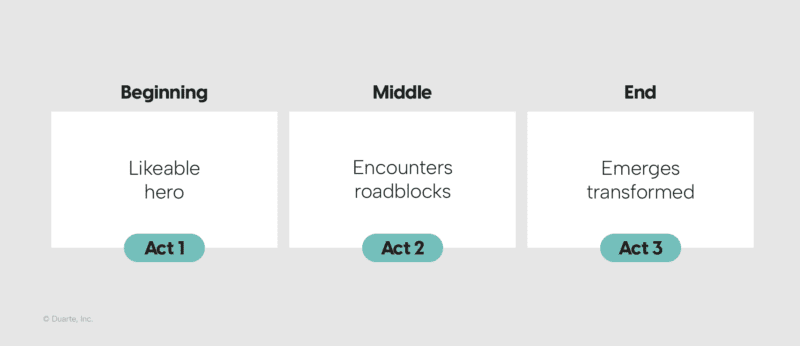
Now, let’s apply the three-act structure:
"With your invaluable approval of our $40 million budget, this project will bring to life a stunning reimagining of Christopher Priest’s award-winning novel, featuring a stellar ensemble cast including Hugh Jackman, Christian Bale, Scarlett Johansson, Michael Caine, and David Bowie in a role reminiscent of his iconic performance in Labyrinth. The meticulous adaptation will navigate complex narrative and visual challenges, but its cross-over appeal to fantasy and science fiction enthusiasts, combined with the immense star-power of its cast, will attract diverse and expansive audiences. We believe that with the caliber of craft and talent behind this endeavor, it possesses the profound potential to captivate and challenge generations of viewers, garner significant critical accolades, and deliver over 200% ROI at the box office and through ancillary revenue streams, cementing its place as a cultural touchstone."
The difference is palpable. The second example immediately casts the budget-approver as the central hero, the catalyst putting this grand vision into motion. It acknowledges the challenges ("painstaking detail") but transforms the dollar amount into a fully formed, exciting vision of the finished product. While the first example hyper-focuses on ROI purely in terms of metrics, the second skillfully blends projected financial returns with loftier dimensions like cultural legacy, critical acclaim, and brand elevation. It’s the distinction between presenting a story as a static chart and one destined for the silver screen, inspiring a deeper, more personal commitment.
2. Call Your Shots in Budget Conversations: The S.T.A.R. Moment
When presenting your budget story, you need the unwavering confidence of a seasoned professional. This isn’t about making unsubstantiated claims or deferring critical details—no one desires another Fyre Festival debacle. Rather, it’s about honest, reflective self-awareness of your capabilities and a clear vision for overcoming challenges. The budget-approvers, however, require conviction. Before you can achieve your goals, you must wow decision-makers into believing in your capacity to deliver. This demands a blend of swagger, backed by demonstrable skills and thorough preparation. Babe Ruth’s infamous "called shot" from the 1932 World Series provides a timeless example of this principle.
In Game 3 of the 1932 World Series, the New York Yankees faced the Chicago Cubs at Wrigley Field. The atmosphere was charged with animosity, and the crowd was particularly hostile as Babe Ruth stepped up to bat in the 5th inning. After taking two strikes from Cubs pitcher Charlie Root, Ruth famously made a pointing gesture towards the center-field bleachers. On the very next pitch, he launched a colossal home run precisely to that spot, and the Yankees went on to sweep the series. While the exact details of the gesture have been debated for decades, the legend, immortalized by reporter Joe Williams’ headline, "RUTH CALLS SHOT AS HE PUTS HOME RUN NO. 2 IN SIDE POCKET," captivated the popular imagination.
At Duarte, this act of seizing opportunities to create indelible impressions is termed a S.T.A.R. moment—Something They’ll Always Remember. These moments, whether deployed in Academy Award-winning documentaries or high-stakes keynote presentations, can equally win over budget-approvers and secure funding. Before your next budget discussion, ask yourself: how can I create a S.T.A.R. moment that convinces approvers my next swing will be a home run?
S.T.A.R. moments manifest in various forms:
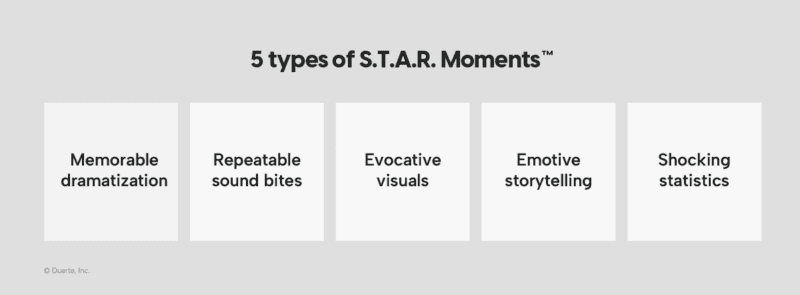
- Memorable Dramatization: A live demonstration of a product, a compelling narrative of a customer’s pain point, or a visual metaphor that encapsulates the project’s impact.
- Repeatable Sound Bites: Concise, impactful phrases that summarize your project’s value proposition and can be easily shared and remembered by decision-makers.
- Evocative Visuals: Not just data charts, but compelling images, videos, or infographics that illustrate the future state or the problem being solved.
- Emotive Storytelling: Personal anecdotes, testimonials, or hypothetical scenarios that tap into the human element and connect with the audience’s values.
- Shocking Statistics: A single, powerful data point presented in a way that highlights the urgency or immense opportunity.
While a degree of audacious confidence can be effective, true executive presence and the ability to "call your shot" are built on deep thinking, meticulous practice, and comprehensive preparation. Ruth was batting .341 and had already hit 41 home runs in 1932 before his iconic gesture. As a budget-seeker, you have one critical chance to demonstrate competence, build trust, and earn credibility. Spend too much time merely explaining industry analysis or recounting your past accomplishments, and you risk losing your audience. Instead, craft your S.T.A.R. moment by presenting your budget proposal with multimedia elements that deliver a crisp, clear story, making the approver the hero.
Before entering the room or clicking that video call, consider which phrase best describes your budget story:
"Here’s what I can do."
or
"With your help, here’s what we can do."
By centering the approver in your S.T.A.R. moment, you subtly invite them to participate in your project as more than just a signatory. From this foundation, a story that resonates on an emotional level can drive decision-makers to connect passionately with your potential and become invested in your success.
3. Make Budget-Approvers Believe in Something More than Money: The "New Bliss"
Beyond logic and calculated confidence, the ability to transfix approvers with a vision that transcends mere financial gain can forge a profound connection. Crafting your message with empathy and emotional heft allows your story to channel human elements that move beyond mere details and plot points. This is what enables audiences to see something larger in cultural events, and it explains why people sometimes cry while watching commercials.
One powerful technique to engage both analytical and emotional audiences is to balance the financial aspects of your budget ask with the new bliss of its potential. At Duarte, "new bliss" refers to what audiences stand to gain after navigating the "messy middle" of working toward a goal or implementing an organizational change. As budget-seekers, illustrating the tension between what currently is and what could be can guide approvers to deeply desire the "new bliss" outlined in your budget proposal.
Incorporating a robust structure and compelling story can help your budget proposal address financial realities while simultaneously encouraging decision-makers to envision this "new bliss." Perhaps your CFO, while needing reassurances on spend, also regularly misses their child’s ballet recitals. A project that promises more efficient workflows and a better work-life balance for their team might resonate deeply. Maybe leadership is anxious about the company’s status in the industry; your proposal could highlight how this innovation will revitalize public interest and secure a competitive edge. Or perhaps there’s a desire to create a product or service that is not only profitable but genuinely helps people and fulfills a broader societal mission.
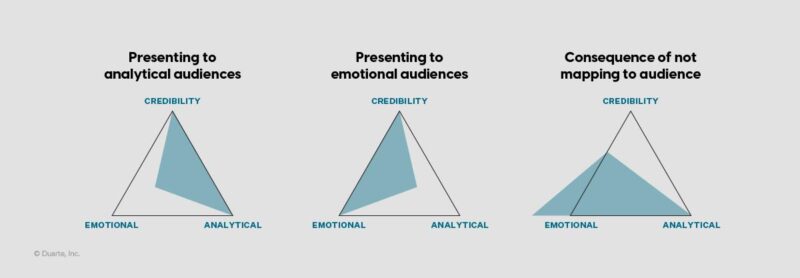
Centering your proposal solely on how your project will generate significant revenue is one valid approach. However, consider the impact of a budget story that highlights how your vision for a more efficient workflow can give everyone (including your CFO) more family time. Or how your innovation could reignite public interest in your brand, not just financially, but emotionally, by fulfilling a market need. Or how, with proper funding, you aim to remove a clear, frustrating pain point from the customer experience, leading to loyalty and advocacy. This subtle yet profound difference can foster a personal commitment to the project among stakeholders, extending far beyond a simple approval signature.
Calibrating this perfect balance means rooting your story in audience-first empathy. By acknowledging the inner lives, aspirations, and even unstated concerns of your budget approvers, you can structure your story to seamlessly integrate sound financial reasoning with details that register on an emotional level. Beyond just money and time, organizational backing is a critical indicator of a project’s success. Securing this at scale requires transforming mere buy-in into genuine belief, driven by a story that reverberates at every level of the organization. However, it’s crucial not to become overly sentimental, as this risks losing sight of the strategic and financial stakes.
Strategic Integration: Weaving Narrative into the Budget Process
These three narrative techniques—making approvers heroes of ROI, calling your shots with S.T.A.R. moments, and inspiring belief beyond the balance sheet—are not isolated tactics. They form a cohesive strategy for impactful communication throughout the entire budget cycle. From initial concept discussions to final presentations, consistent messaging that integrates financial prudence with visionary storytelling builds trust and momentum. Preparation involves not only number-crunching but also deep audience analysis, understanding their priorities, pain points, and aspirations. Practice is essential to deliver the story with confidence and authenticity, allowing for natural, empathetic engagement. Finally, incorporating feedback loops helps refine the narrative, ensuring it resonates with diverse stakeholders.
The Future of Funding: From Transaction to Transformation
In an increasingly competitive and dynamic business landscape, budget approval is evolving from a transactional process into a transformative one. It’s no longer just about allocating funds; it’s about investing in a shared future, fostering a culture of innovation, and empowering individuals to bring their best ideas to fruition. Organizations that cultivate leaders capable of weaving compelling narratives around their financial proposals will not only secure more funding but also inspire greater internal alignment, enhance employee morale, and ultimately gain a significant competitive advantage. By delivering a budget story that is structured, empathetic, and strategically punctuated by well-placed S.T.A.R. moments, budget seekers can confidently pave the road ahead, turning ambitious visions into undeniable realities. Embracing the storyteller’s mantle is no longer a soft skill; it is a critical competency for driving organizational success.
