


The discourse surrounding Artificial Intelligence’s role in content creation, particularly within the professional sphere, has intensified significantly in recent weeks. A thought-provoking LinkedIn post, beginning with the assertion, “I don’t use AI to write my content,” has reignited a critical debate that challenges the very definition of authenticity and expertise in the digital age. While the author clarified this statement was not a declaration of superiority but rather an emphasis on the value of content regardless of its origin, it has illuminated a crucial distinction: the difference between leveraging AI as a tool to enhance human cognition and allowing it to supplant genuine thought processes.
This evolving conversation echoes a previous examination of the topic, "Is AI Making Us Lazy Influencers?" The core of the current discussion hinges on a fundamental question: when does the use of AI cross the line from beneficial augmentation to a deceptive substitution for authentic human experience and intellect?
The Allure and the Apprehension of AI in Content
AI tools have rapidly integrated into various professional workflows, offering undeniable benefits in efficiency and refinement. For content creators, these tools can assist in organizing complex ideas, challenging preconceived notions, clarifying prose, and meticulously editing written work. This collaborative potential is widely acknowledged. However, the potential for AI to fundamentally alter the relationship between creators and their audience, particularly in fields where personal authority and lived experience are paramount, is a growing concern.
The scenario presented by the LinkedIn post author, albeit hypothetical, vividly illustrates this concern. Imagine an individual who has consumed extensive content from a particular thought leader—books, online courses, videos, and regular social media updates. Upon meeting this individual in person, a stark disconnect emerges. The personal discourse fails to align with the depth, nuance, and unique perspective previously encountered. This dissonance could lead to the revelation that the content, the ideas, and the knowledge were not, in fact, the product of the individual’s own intellectual labor, but rather the output of an AI or another undisclosed party. Such a discovery would likely evoke a profound sense of disappointment, raising questions about the integrity of the influencer’s persona and the value of the audience’s investment in their work.
Echoes of Milli Vanilli: The Crisis of Authenticity
This dilemma draws a compelling parallel to the infamous Milli Vanilli scandal of the late 1980s. The music duo achieved meteoric success, garnering awards and selling millions of albums, only for their careers to implode upon the revelation that they had not sung the songs themselves. The issue was not that the music itself was inherently flawed, but rather that the public had been led to believe they were admiring one form of talent—vocal performance—when in reality, they were engaging with a different entity. This breach of trust, rooted in a lack of authenticity, led to the immediate collapse of their careers.
The parallels to the current AI debate are striking. If a creator’s published works, which have shaped an audience’s thinking and fostered respect, are later revealed to be largely AI-generated, the intellectual merit of the content might remain unchanged. However, the audience’s perception of the creator’s authority, credibility, and genuine expertise could be irrevocably damaged. This is particularly true in fields where influence is built upon the foundation of personal experience, conviction, and unique insights.
Authority and the Ethical Imperative
Dr. Robert Cialdini’s well-established principles of influence offer a critical lens through which to examine this issue. The principle of Authority posits that individuals are more inclined to trust and be persuaded by those they perceive as possessing genuine expertise. This expertise, however, must be demonstrably authentic.
When AI is responsible for generating an individual’s ideas, examples, narratives, and conclusions, the expertise being showcased shifts from personal knowledge and experience to the skill of prompt engineering. While prompt engineering is a developing and valuable skill, it is fundamentally different from the hard-won wisdom derived from years of lived experience, critical thinking, and personal development. The ability to formulate effective prompts does not equate to possessing the underlying knowledge, lived experiences, or personal convictions that form the bedrock of genuine influence.
AI as a Collaborator, Not a Replacement
It is crucial to reiterate that this critique is not an indictment of AI itself. AI tools offer significant advantages when employed judiciously. They can serve as powerful collaborators, aiding in the processing of complex thoughts, akin to engaging in a deep discussion with a trusted confidant. Furthermore, AI can excel in refining existing content, improving narrative flow, identifying logical inconsistencies, and highlighting blind spots in an author’s reasoning. In these capacities, AI acts as an enhancer, amplifying human capabilities.
However, AI remains a poor substitute for the irreplaceable elements of human experience. The stories individuals have lived, the mistakes they have made, the profound lessons learned, and the deeply held convictions they have cultivated are uniquely human attributes. These are experiences that AI, by its very nature, cannot replicate because it has never inhabited the human condition. These are precisely the elements that imbue a voice with its distinctiveness and resonant power.
The Future of Expertise in the AI Era
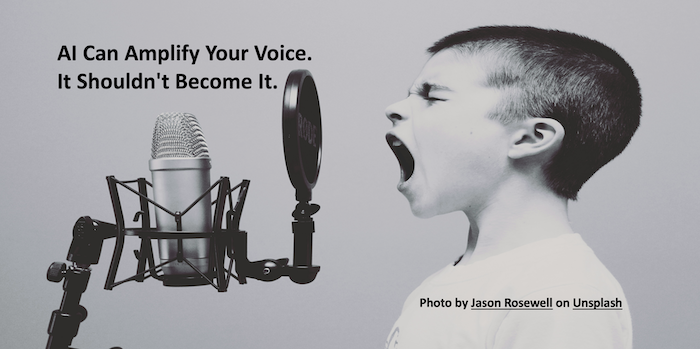
The trajectory of AI integration suggests that those who will derive the most significant benefit in the coming decade will not be those who rely most heavily on AI, but rather individuals who have dedicated years to cultivating genuine expertise. These individuals will then leverage AI as a sophisticated tool to communicate their established knowledge and insights more effectively and efficiently. AI has the capacity to amplify an existing voice, but it should never be allowed to become the voice itself.
Charting the Course: A Question for Reflection
As AI continues its rapid evolution, a critical question emerges for all professionals and content creators: Where do we draw the line between utilizing AI as a powerful tool to augment our capabilities and allowing it to become the de facto author of our expertise? Navigating this ethical frontier requires a commitment to transparency, authenticity, and the preservation of genuine human insight. The enduring power of influence lies not in the sophistication of the tools used, but in the authenticity and depth of the human mind and spirit behind the message.
The Broader Impact on Industries
The implications of this debate extend far beyond individual content creators and influencers. Industries that rely heavily on trust, expertise, and personal connection are particularly susceptible to the ramifications of AI-generated content.
Education: The academic world faces the challenge of detecting AI-generated essays and assignments, prompting a re-evaluation of assessment methods and a greater emphasis on critical thinking and originality. Universities are investing in AI detection software and revising academic integrity policies to address the new landscape.
Journalism: The news industry grapples with maintaining journalistic integrity and public trust. While AI can assist in data analysis and draft reporting, the core principles of investigative journalism, ethical sourcing, and nuanced storytelling remain firmly in the human domain. Concerns about the spread of AI-generated misinformation and propaganda are paramount.
Marketing and Advertising: Brands that have built their reputation on authentic connections with their audience must carefully consider their use of AI. Over-reliance on AI for customer engagement or content creation could alienate consumers who value genuine human interaction and relatable narratives. The ethical use of AI in personalized marketing is also under scrutiny.
Creative Arts: Authors, artists, and musicians are exploring AI as a creative partner, but the question of authorship and intellectual property remains complex. The debate centers on whether AI-generated art is truly original or derivative, and how to credit and compensate the human element involved in its creation.
A Timeline of AI’s Growing Influence
The rapid advancement of AI capabilities has been a defining technological trend of the past few years.
- Late 2022: The public release of advanced large language models (LLMs) like OpenAI’s ChatGPT brought AI’s content generation capabilities to the forefront of public consciousness. This marked a significant shift from niche applications to widely accessible tools.
- Early 2023: Widespread adoption of LLMs for content creation tasks, from drafting emails to generating marketing copy and even creative writing, became evident across various professional sectors. Discussions around AI’s impact on jobs and industries intensified.
- Mid-2023: Concerns about AI’s potential to generate misinformation, plagiarize, and devalue human creativity began to dominate public discourse. Educational institutions and professional organizations started developing guidelines and policies.
- Late 2023 – Present: The debate has evolved from a discussion about AI’s capabilities to a critical examination of its ethical implications, particularly concerning authenticity, authorship, and the erosion of genuine expertise. Industry-specific responses and regulatory discussions are now underway globally.
Data and Statistics Illustrating the Trend
While precise data on the extent of AI use in professional content creation is still emerging, several indicators highlight its growing prevalence:
- A report by Goldman Sachs in March 2023 estimated that generative AI could automate tasks equivalent to 300 million full-time jobs globally. While this includes a broad range of tasks, content creation is a significant component.
- Surveys indicate a substantial increase in the adoption of AI tools for business purposes. For instance, a 2023 study by McKinsey found that companies are increasingly integrating AI into their operations, with a significant portion citing content generation and marketing as key areas of application.
- The exponential growth in the usage of AI tools like ChatGPT is evident from public usage statistics, with millions of users engaging with these platforms daily for a variety of creative and professional tasks.
Official Responses and Industry Reactions
Organizations and governing bodies are beginning to respond to the challenges posed by AI in content creation:
- Educational Institutions: Many universities are updating their academic integrity policies and investing in AI detection software. Some are exploring new assessment methods that focus on in-class work, oral presentations, and critical analysis of AI-generated content.
- Technology Companies: AI developers are actively working on features to enhance transparency and identify AI-generated content, though the arms race between generation and detection continues.
- Regulatory Bodies: Governments worldwide are beginning to explore regulatory frameworks for AI, focusing on issues of transparency, copyright, and accountability. The European Union’s AI Act is a prominent example of such efforts.
- Industry Associations: Professional organizations in fields like marketing, writing, and media are issuing guidance and best practices for the ethical use of AI, emphasizing the importance of disclosure and human oversight.
Conclusion: The Imperative of Human-Centric Influence
The conversation around AI and content creation is far from over. It represents a pivotal moment where the definition of expertise, authenticity, and influence is being reshaped. The key lies in embracing AI as a powerful amplifier of human intellect and experience, rather than a substitute for it. As the landscape continues to evolve, a commitment to ethical practices, transparency, and the cultivation of genuine human-centric influence will be paramount for individuals and organizations seeking to thrive in this new era. The ultimate measure of impact will not be the efficiency of the tools employed, but the enduring value and trustworthiness of the human voice that guides them.
