

A decade ago, the Atlas of Emotions was introduced to the world, marking a significant milestone in the scientific and public understanding of human emotional experience. Launched in 2016, this innovative framework emerged from a unique and profound collaboration between pioneering emotion scientist Dr. Paul Ekman, his daughter and fellow researcher Dr. Eve Ekman, and His Holiness the 14th Dalai Lama. The ambitious goal was to systematically map the complex landscape of human emotion, grounding it in rigorous scientific consensus while making it deeply accessible to a global audience.
Ten years on, the Atlas of Emotions has transcended its initial introduction, becoming an influential emotional awareness framework whose impact continues to resonate across diverse spheres. Its principles and tools are actively employed in educational settings, guiding students and educators alike in understanding and navigating emotions. In therapeutic environments, clinicians leverage the Atlas to enhance client self-awareness and facilitate emotional regulation. Research laboratories are utilizing it as a foundational tool for further exploration into the nuances of emotional processing, and in everyday conversations, it has become a valuable lexicon for articulating and comprehending feelings.
A Glimpse Behind the Scenes: The Genesis of the Atlas
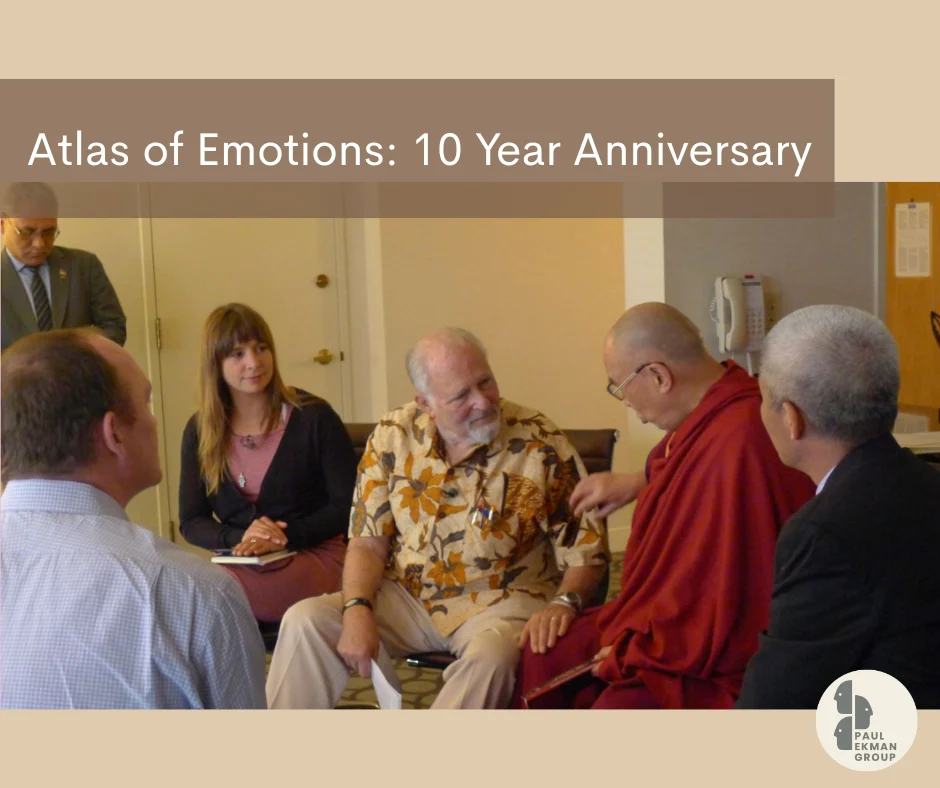
To commemorate this tenth anniversary, a rare and insightful piece of archival footage has been shared, offering a behind-the-scenes look at a working meeting between Dr. Paul Ekman, Dr. Eve Ekman, and His Holiness the Dalai Lama as they meticulously reviewed the Atlas in its nascent stages of development. This visual testament captures the very spirit of the project’s inception.
Dr. Paul Ekman, a titan in the field of emotion research, embarked on the monumental task of mapping the terrain of human emotions by first identifying areas of consensus within the scientific community. This documentary footage underscores the interdisciplinary approach that characterized the Atlas’s creation. It showcases a powerful synergy between rigorous psychological research, sophisticated graphic design, and the profound contemplative insights offered by His Holiness the Dalai Lama. The foundation of this ambitious undertaking was built upon a bedrock of consensus, meticulously detailed in Dr. Ekman’s landmark survey. This extensive study, which involved nearly 250 emotion scientists from around the globe, revealed a remarkable degree of agreement on the fundamental nature of universal human emotions, providing the scientific bedrock for the Atlas’s structure.
The video, which can be viewed here, offers a unique perspective on the collaborative process, illustrating the dedication and shared vision of its key architects. It highlights how diverse perspectives were integrated to create a cohesive and comprehensive understanding of emotional experiences. The footage reveals discussions and refinements that were crucial in shaping the Atlas into the accessible and scientifically robust tool it is today.
From Inception to Global Acclaim: The Atlas’s Journey
The official launch of the Atlas of Emotions in 2016 immediately captured global attention, signifying a significant moment in public engagement with emotional intelligence. Its innovative approach to visualizing and explaining the complexities of emotions garnered widespread recognition, including a feature in The New York Times. The newspaper’s coverage, published on May 7, 2016, specifically highlighted the Atlas’s pioneering method of mapping emotions and its success in making sophisticated psychological concepts comprehensible to the general public. This early validation from a major international news outlet was instrumental in propelling the Atlas onto the global stage.
The initial recognition served as a catalyst, sparking widespread adoption and integration of the Atlas into various fields and contexts. Over the past decade, its application has been remarkably diverse:
- Education: The Atlas has been integrated into curricula across primary, secondary, and higher education institutions. It serves as a pedagogical tool to foster emotional literacy, helping students identify, understand, and articulate their feelings, as well as develop empathy towards others. Educational psychologists have noted its efficacy in reducing instances of bullying and improving classroom dynamics by promoting a more emotionally aware environment.
- Mental Health and Therapy: Therapists and counselors worldwide have embraced the Atlas as a valuable resource in their practice. It provides a shared language and framework for clients to explore their emotional states, identify underlying patterns, and develop coping mechanisms. Studies in clinical psychology suggest that clients who engage with the Atlas report enhanced self-awareness and a greater capacity for emotional regulation, leading to improved therapeutic outcomes.
- Personal Development and Well-being: Beyond formal settings, individuals have adopted the Atlas for personal growth and enhanced well-being. Its accessible format allows people to deepen their understanding of their own emotional responses, leading to more mindful decision-making and improved interpersonal relationships. Online communities and workshops dedicated to emotional intelligence frequently feature the Atlas as a core component.
- Research: The Atlas continues to be a vital tool for researchers investigating the intricacies of human emotions. Its standardized framework facilitates cross-cultural studies and comparative analyses of emotional experiences. Emerging research is exploring its application in fields such as neuroscience, artificial intelligence, and human-computer interaction, seeking to understand how emotional states influence cognitive processes and technological engagement.
- Conflict Resolution and Diplomacy: The principles embedded within the Atlas, emphasizing understanding and empathy, have found applications in conflict resolution and diplomatic efforts. By providing a framework for recognizing and validating diverse emotional perspectives, it can contribute to more effective communication and de-escalation strategies in challenging interpersonal and international contexts.
Building on a Legacy: User Insights and Future Directions
As the Atlas of Emotions celebrates this significant tenth anniversary, the creators are not only reflecting on its past achievements but are also actively looking towards the future. A crucial aspect of this forward-looking strategy involves actively seeking input from the global community that has embraced and utilized the Atlas.
The creators are inviting users to share their experiences, asking: "How have you used the Atlas of Emotions? What has it helped you see, understand, or change?" This direct engagement with users is vital for informing the ongoing development and evolution of the Atlas. User feedback is being collected through a dedicated feedback form, with the explicit aim of shaping the next chapter of this impactful work. This commitment to user-centric development underscores the Atlas’s enduring mission to remain a relevant and effective tool for emotional understanding.
The insights gathered from these user testimonials will be invaluable, providing real-world evidence of the Atlas’s impact and identifying areas where further refinement or expansion might be beneficial. This collaborative approach ensures that the Atlas remains a living, evolving resource, responsive to the ever-changing landscape of human emotional experience.
Charting the Course Ahead: Enhancements and New Publications
The celebration of the Atlas’s first decade is accompanied by exciting announcements regarding its future development. Significant updates are planned for the online, interactive Atlas of Emotions, promising an even more dynamic and engaging user experience. These enhancements are expected to incorporate the latest research findings and user feedback, further enriching its capabilities and accessibility.
Furthermore, Dr. Eve Ekman is currently undertaking the development of a comprehensive Atlas of Emotions book. This forthcoming publication, slated for release in 2027, is anticipated to delve deeper into the original Atlas’s foundational concepts, offering expanded explorations, updated insights derived from a decade of research and application, and novel perspectives on how individuals can engage with the complex emotional landscape that profoundly shapes our lives. This book promises to be a significant contribution to the field of emotional intelligence, building upon the established legacy of the Atlas.
Individuals interested in being among the first to know about the book’s availability are encouraged to join the dedicated announcement list. This proactive approach to communication ensures that the growing community of Atlas users and enthusiasts will be kept informed of these important developments. The continued evolution of the Atlas of Emotions, both in its digital and literary forms, underscores a steadfast commitment to fostering greater emotional awareness and well-being on a global scale. The journey that began ten years ago is far from over; it is entering a new and promising phase, poised to offer even greater insights and practical tools for navigating the rich tapestry of human emotion.
