

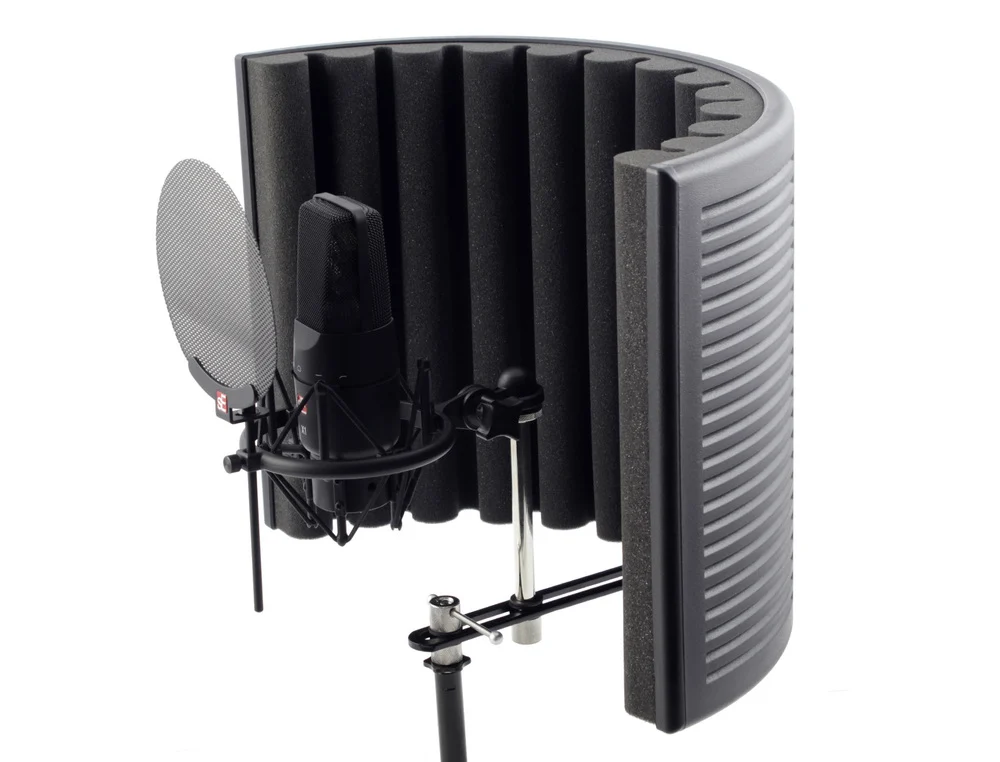
The question of whether a sound reflection filter is a necessary component for a home recording studio is a frequently posed inquiry within the professional audio community. This article aims to provide a definitive and evidence-based answer, dissecting the function of home studios, the principles of microphone operation, and the efficacy of these specialized acoustic devices.
Understanding the Purpose of a Home Recording Studio
At its core, a home recording studio is designed to create a controlled and consistent acoustic environment. The primary objectives are to prevent external sounds from entering the recording space (sound ingress) and to prevent recorded audio from escaping (sound egress). Crucially, it also seeks to minimize the impact of unwanted sound reflections within the studio itself. These reflections, often referred to as room echo or reverberation, can significantly degrade the clarity and quality of audio recordings. The ultimate goal is to capture a pure, uncolored sound source directly into the microphone.

To achieve this, individuals often construct dedicated recording booths, transform existing rooms into makeshift studios, or adapt unconventional spaces such as garages or even, humorously, cat beds. The process of establishing such an environment involves careful consideration of acoustic treatment.
Addressing Unwanted Sound Reflections: Methods and Materials
The mitigation of sound reflections hinges on either absorbing sound waves or redirecting them in a manner that prevents them from returning to the microphone. This principle is illustrated by everyday materials: hard, flat surfaces like glass or bare walls tend to reflect sound waves efficiently. Conversely, soft, porous materials such as thick curtains, duvets, or acoustic foam tiles are designed to absorb these sound waves, thereby reducing reflections. Even seemingly unconventional items can play a role; a furry cat, for instance, is far less reflective than a television screen due to its sound-absorbing texture.
However, it is imperative to emphasize that the creative use of household items should not extend to practices that compromise animal welfare. The suggestion of lining a recording booth with cats, while perhaps illustrative of the principle of sound absorption, is strongly discouraged and would be considered unethical and potentially illegal.

The Emergence of Reflection Filters: Design and Marketing
In recent years, specialized devices known as sound reflection filters have gained popularity, particularly among those setting up home studios. These products typically consist of a semi-circular or curved baffle made of acoustic foam or other sound-absorbing materials, designed to be mounted around a microphone. The marketing of these filters often suggests they create a personal "sweet spot" for recording, isolating the microphone from ambient room noise and reflections.
Prominent examples of such filters include the Auray Sound Reflection Filter and the sE Electronics Sound Reflection Filter. These devices are generally positioned behind the microphone, aiming to create a barrier that intercepts sound waves emanating from the sides and rear of the microphone capsule. The implied promise is that by surrounding the microphone with this absorbent material, the recording environment’s acoustic characteristics will be significantly improved, leading to cleaner, more professional-sounding audio.
The Crucial Role of Microphone Pickup Patterns
To critically assess the effectiveness of reflection filters, it is essential to understand how microphones capture sound. Microphones are not omniscient ears; they possess directional characteristics known as polar pickup patterns. These patterns define the sensitivity of a microphone to sound arriving from different directions relative to its front.
Common polar pickup patterns include:
- Omnidirectional: Picks up sound equally from all directions. This pattern is susceptible to capturing significant room noise and reflections.
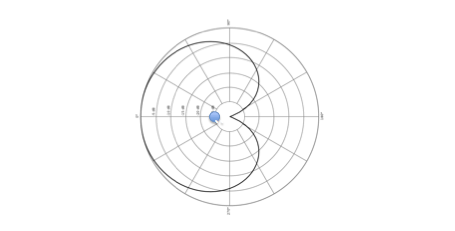
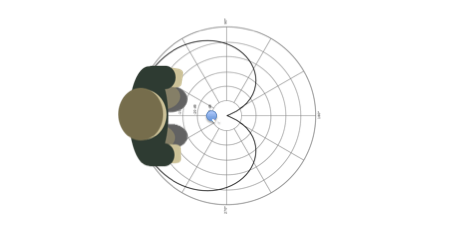
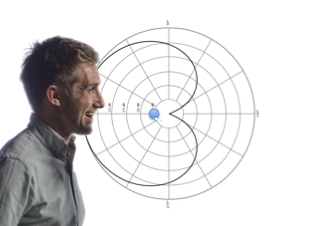
- Cardioid: Picks up sound primarily from the front, with progressively less sensitivity to the sides and a significant rejection of sound from the rear. This is the most common pattern for voice-over and vocal recording, as it helps to isolate the desired sound source and minimize unwanted room acoustics.
- Figure-8 (Bidirectional): Picks up sound equally from the front and the rear, with maximum rejection from the sides.
- Supercardioid and Hypercardioid: These are variations of the cardioid pattern, offering tighter front pickup but with a small lobe of sensitivity at the rear.
Some high-end microphones, such as the Neumann U87, offer switchable polar patterns, allowing users to adapt the microphone’s sensitivity to different recording scenarios. However, many microphones are fixed in a cardioid pattern as a standard configuration. The preference for the cardioid pattern in voice recording is directly linked to its ability to minimize the pickup of ambient room sound and reflections, thereby producing a cleaner signal.
Visualizing the Cardioid Pickup Pattern
To better understand the directional nature of microphones, consider the following visualizations:
- Plan View (Top-Down): Imagine looking down at a microphone. The cardioid pattern resembles a heart shape, with the widest pickup occurring directly in front and narrowing towards the sides, with minimal sensitivity at the rear.
- Incorporating the Voice Artist: When a voice artist speaks into a cardioid microphone, their voice falls within this directional "bubble" of sensitivity. The microphone is primarily capturing the direct sound from the artist’s mouth.
- Three-Dimensional Perspective: Extending this concept into three dimensions, the cardioid pickup pattern forms a roughly heart-shaped or beanbag-like volume in front of the microphone. While there is some tolerance for slight variations in position (left, right, high, or low), the primary pickup remains focused forward.
The Interaction of Reflections and Pickup Patterns
Sound reflections, originating from walls, ceilings, and other surfaces, travel in all directions and will inevitably reach a microphone. However, the impact of these reflections on the final recording is heavily influenced by the microphone’s polar pickup pattern.
When a microphone with a cardioid pattern is used, it inherently rejects a significant portion of the sound arriving from the sides and almost all sound from the rear. This means that even if reflections are present in the room, the cardioid pattern acts as a primary filter, attenuating many of these unwanted sound waves before they are even captured by the microphone’s capsule.
Evaluating the Efficacy of Reflection Filters
Now, let us consider the impact of a sound reflection filter in conjunction with a cardioid microphone. When a reflection filter is placed behind a microphone, it is designed to absorb sound waves that would otherwise bounce off the surfaces behind the microphone and return to it. However, because the cardioid pattern already significantly rejects sound from the rear, the filter’s contribution to reducing reflections is often minimal.
Visual representations demonstrate this phenomenon. When reflections are shown entering a cardioid pickup pattern, it’s evident that only a small amount of side-angled reflections and virtually no rear-angled reflections are captured by the microphone. Introducing a reflection filter, while blocking some of these reflections, does not dramatically alter the overall acoustic picture captured by the microphone, especially when compared to the inherent rejection provided by the cardioid pattern.
Empirical testing, involving recordings made with and without a reflection filter, has often revealed a negligible difference in the final audio quality. This suggests that the primary acoustic benefit in such a scenario is derived from the microphone’s directional characteristics rather than the reflection filter itself.
The Definitive Answer: Do You Need a Reflection Filter?
Based on the principles of acoustics and microphone operation, the answer to the question of whether a sound reflection filter is necessary for a home studio is, unequivocally, no. For most home recording applications, particularly those utilizing cardioid microphones, reflection filters represent an unnecessary expenditure of both time and money.
Why Then Are Reflection Filters Widely Purchased?
The persistent popularity of reflection filters can be attributed to several factors, primarily related to marketing and a lack of technical understanding among some users. Inexperienced voice-over artists, or those new to studio recording, may be influenced by the visual presence of these devices in promotional materials, endorsements from other users, or advice from individuals who themselves may not fully grasp their limited efficacy. The assumption that a device designed to block sound must inherently improve recordings is a logical, yet ultimately flawed, conclusion in this context.
While reflection filters do not actively harm the recording process, their inability to provide a significant acoustic benefit renders them largely ineffective. They do not contribute positively to the sound quality.
The True Path to High-Quality Home Recordings
For individuals seeking to achieve professional-sounding recordings in a home studio environment, the focus must shift from supplementary accessories like reflection filters to fundamental acoustic treatment. This involves creating a genuinely sound-treated space. This could range from constructing a purpose-built vocal booth to strategically treating an existing room with sound-absorbing materials. The key is to reduce the overall reverberation and echo within the recording area.
This foundational aspect of audio engineering is a subject in itself and is comprehensively covered in resources such as dedicated webinars and courses on home studio construction. These resources delve into the principles of acoustic design, material selection, and practical implementation strategies for creating an optimal recording environment.
The journey to achieving excellent home studio recordings is one that prioritizes a controlled acoustic space. While the allure of quick fixes like reflection filters may be tempting, investing in proper acoustic treatment is the most effective and enduring strategy for producing high-quality audio.
