

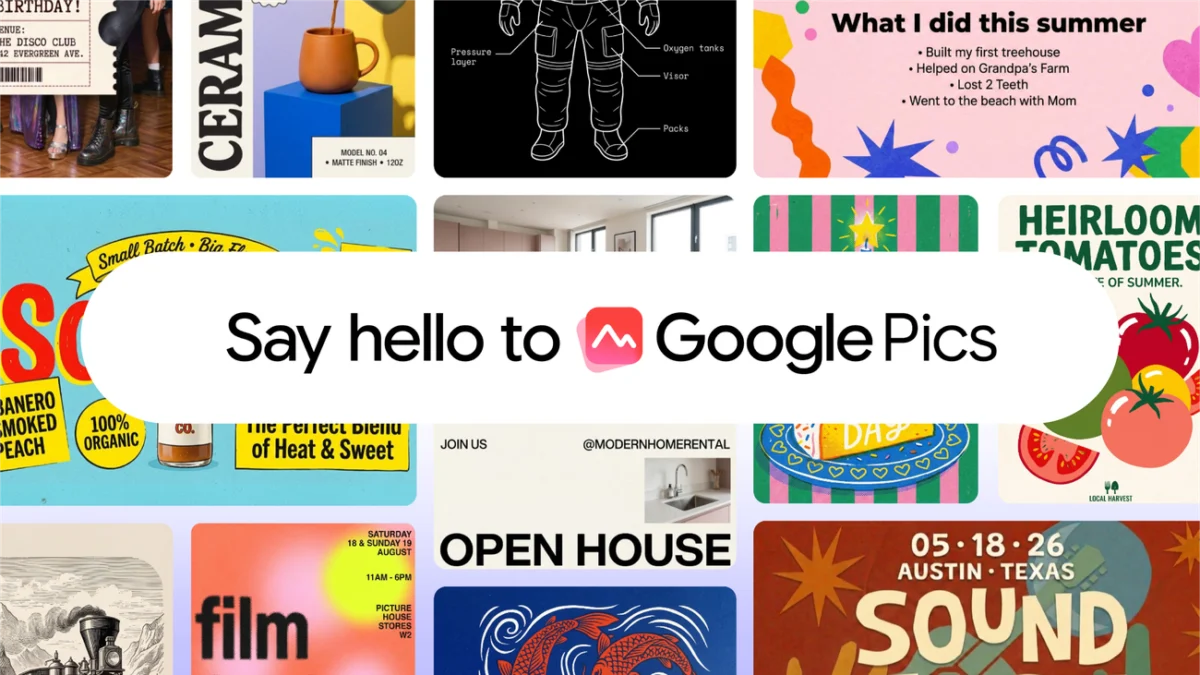
Google has officially announced the rollout of Google Pics, a sophisticated image creation and editing tool designed specifically for the Google Workspace ecosystem. This new utility, built upon the specialized "Nano Banana" generative model, represents a significant leap in the company’s efforts to democratize professional-grade design tools for business users and creative professionals alike. The platform is currently being deployed to Google AI Pro and Ultra subscribers, as well as a broad segment of Workspace business customers, signaling a strategic move to consolidate creative workflows directly within the productivity applications where users spend the majority of their time.
The introduction of Google Pics addresses a long-standing friction point in digital content creation: the need to toggle between dedicated design software and document editors. By integrating these capabilities directly into Google Docs, Slides, and eventually Google Drive, Google aims to streamline the production of visual assets, ranging from social media graphics and corporate posters to complex digital illustrations and product mockups.
The Architecture of Nano Banana and Precise Creative Control
At the heart of Google Pics is the "Nano Banana" image generation and editing model. While Google has previously utilized its Imagen series for broad-spectrum AI imagery, the Nano Banana model appears to be optimized for the specific demands of Workspace users—prioritizing precision, stylistic consistency, and the ability to perform iterative edits. Unlike traditional generative AI tools that often require users to start from scratch with a new prompt for every change, Google Pics emphasizes "refinement and co-creation."
This model allows for granular adjustments to existing images. Users can select specific regions of a graphic to modify, change lighting conditions, or add elements without altering the core composition. This level of control is essential for corporate branding, where maintaining a specific aesthetic across various documents is paramount. Meg Whittenberger, Product Manager for Google Pics, emphasized that the tool is designed to provide "unparalleled precision," catering to users who require more than just a generic visual output.
The standalone version of the tool, accessible via the shortcut "pics.new," provides a dedicated canvas for high-intensity design work. However, the true utility for the average business user lies in the contextual integration. In Google Slides, for instance, a user can generate a custom background or a specific icon that matches the presentation’s color palette without leaving the interface. In Google Docs, the tool facilitates the immediate creation of headers or illustrative diagrams that align with the text’s subject matter.
Chronology of Google’s Generative AI Integration
The launch of Google Pics is the latest milestone in an accelerated timeline of AI deployment within the Google Workspace environment. Over the past 24 months, Google has transitioned from experimental AI features to deeply integrated, production-ready tools.
- Early 2023: Google introduced "Help me write" in Docs and Gmail, marking the first major consumer-facing implementation of large language models (LLMs) within Workspace.
- Late 2023: The rebranding of Bard to Gemini and the introduction of Gemini for Workspace brought more advanced reasoning and data synthesis to spreadsheets and documents.
- Mid-2024: Google began previewing specialized image generation features within Slides, though these were limited in scope and lacked advanced editing capabilities.
- Current Launch: The rollout of Google Pics represents the transition from simple "text-to-image" generation to a comprehensive "image-to-edit" suite, powered by the Nano Banana model.
This timeline reflects a broader industry trend where the focus has shifted from the novelty of AI generation to the utility of AI-assisted workflows. Google’s strategy centers on the concept of "fluid productivity," where the boundaries between different types of media—text, data, and imagery—become increasingly blurred.
Supporting Data and Market Context
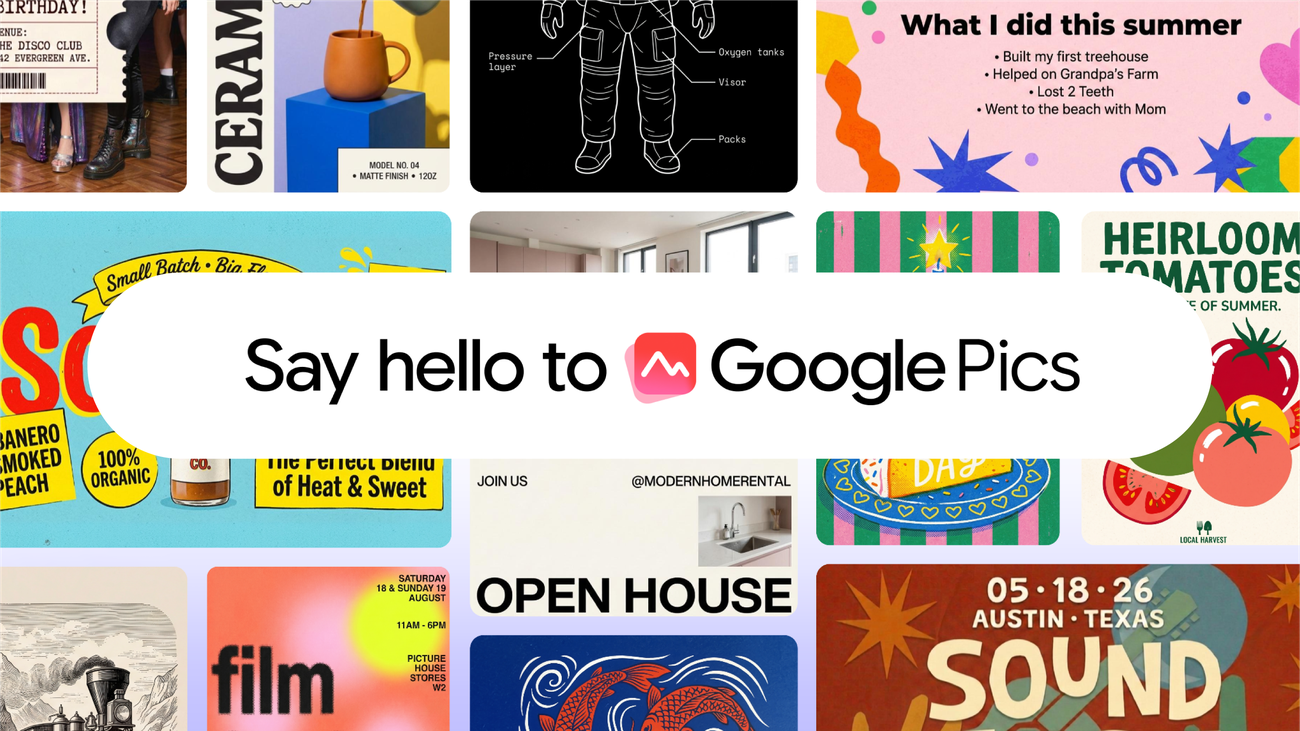
The launch of Google Pics comes at a time when the demand for visual content is at an all-time high. According to internal Google data, millions of users interact with billions of images across Workspace products every month. However, a significant portion of these images are sourced from external libraries or created in third-party applications, leading to "context switching" that can reduce productivity by up to 40%, according to various workplace efficiency studies.
Furthermore, the generative AI market is currently undergoing a shift toward specialization. While platforms like Midjourney and DALL-E 3 dominate high-end artistic generation, there is a growing niche for "utility AI"—tools that focus on corporate branding, consistency, and ease of use. By providing Google Pics as part of the Workspace subscription, Google is positioning itself to capture the enterprise market that may find standalone design subscriptions too costly or difficult to manage across large teams.
The inclusion of Google Pics in the Google AI Pro and Ultra tiers also serves as a mechanism to drive subscriptions for the company’s premium AI offerings. As competition intensifies with Microsoft’s Copilot and Adobe’s Firefly-integrated Creative Cloud, Google is leveraging its massive Workspace install base—estimated at over 3 billion users—to maintain its lead in the productivity sector.
Official Positioning and Strategic Objectives
In statements regarding the launch, Meg Whittenberger highlighted the goal of making professional-level design accessible to non-designers. The official positioning of Google Pics is not as a replacement for high-end professional suites like Adobe Photoshop, but as a "co-creator" that handles the heavy lifting of asset generation and basic editing.
"We want to make it so you don’t have to jump between applications to create and share visuals," Whittenberger noted. This focus on "frictionless creation" is a core pillar of the Google Workspace roadmap. By enabling users to drop files directly from Google Drive into Google Pics and then back into a document, Google is creating a closed-loop ecosystem that keeps users within its proprietary environment.
Industry analysts suggest that this move is also a response to the rise of platforms like Canva, which have seen explosive growth by offering simplified design tools for business users. By integrating these features directly into the apps where the actual work—writing reports and building decks—is happening, Google offers a convenience factor that third-party platforms struggle to match.
Broader Impact and Industry Implications
The deployment of Google Pics is likely to have several far-reaching implications for the digital workplace and the creative industry.
1. The Democratization of Visual Communication
With Google Pics, the ability to create high-quality, relevant imagery is no longer restricted to those with specialized training. This "democratization" allows small business owners, educators, and corporate employees to communicate more effectively through visuals. A marketing manager can now create a product mockup in seconds, or a teacher can generate custom illustrations for a lesson plan without searching for royalty-free images that only vaguely fit the topic.
2. The Shift in Creative Roles
As AI tools become more capable of handling routine design tasks, the role of professional designers is expected to shift toward higher-level creative direction and brand strategy. Google Pics handles the "production" phase of design, allowing humans to focus on the "conceptual" phase. However, this also raises questions about the future demand for entry-level graphic design services, which often involve the very tasks Google Pics is designed to automate.
3. Data Privacy and Ethical AI
Google has emphasized that Google Pics is built with enterprise-grade privacy and security. For Workspace business customers, the data used to generate and edit images is subject to the same rigorous protections as their documents and emails. This is a critical differentiator from many public AI tools, where the ownership of generated content and the use of user data for model training remain contentious issues. Google’s commitment to "Responsible AI" includes the use of digital watermarking (such as SynthID) to identify AI-generated content, helping to mitigate the risks of misinformation and deepfakes.
4. Competitive Pressure on the "Big Three"
The "Big Three" of productivity and creativity—Google, Microsoft, and Adobe—are now in a direct confrontation. Microsoft has integrated Designer into its 365 suite, and Adobe has brought Firefly into its Express and Photoshop apps. Google’s advantage lies in its web-first architecture and the seamlessness of its collaboration features. The success of Google Pics will depend on how well the Nano Banana model performs compared to Microsoft’s DALL-E integration and Adobe’s proprietary models.
Future Outlook and Availability
The rollout of Google Pics is currently in its initial phase. While Docs and Slides integrations are active for eligible subscribers today, the integration with Google Drive is slated for the coming weeks. This Drive integration is particularly anticipated, as it will allow users to manage their AI-generated assets alongside their traditional files, facilitating better organization and version control.
As the Nano Banana model continues to be fine-tuned based on user feedback, Google is expected to introduce even more advanced features, such as video snippet generation or 3D object manipulation. For now, the focus remains on "easy image creation and editing," a goal that, if fully realized, could fundamentally change the visual language of the modern office.
The platform is accessible to Google One AI Premium subscribers and most Workspace business tiers. For those looking to test the capabilities immediately, the company has provided a streamlined entry point through the pics.new URL, marking a new chapter in Google’s journey to make generative AI a standard component of every professional’s toolkit.
