

The pursuit of sonic perfection in voiceover work hinges significantly on the quality of the microphone employed. This comprehensive guide delves into the nuances of selecting the ideal microphone for aspiring and seasoned voiceover artists, meticulously examining options across a spectrum of budgets. Understanding the fundamental principles of microphone technology, from polar patterns to phantom power, is crucial for making an informed decision that aligns with individual needs and financial constraints. This exploration aims to demystify the technical jargon and provide actionable insights for building a professional voiceover setup, whether for demo reels, auditions, or full-scale production.
Understanding the Core of Voiceover Recording: Essential Equipment
Before diving into specific microphone recommendations, it’s vital to establish a foundational understanding of the equipment necessary for professional voiceover recording. A well-rounded setup, even at an entry-level, ensures a clear signal path and facilitates the production of high-quality audio. This basic framework is essential for anyone looking to enter the voice acting industry, enabling them to create compelling demo reels and effectively audition for roles. For newcomers, the initial step involves honestly assessing one’s vocal suitability for the demands of the voice acting profession.
Decoding Microphone Technology: Types and Functionality
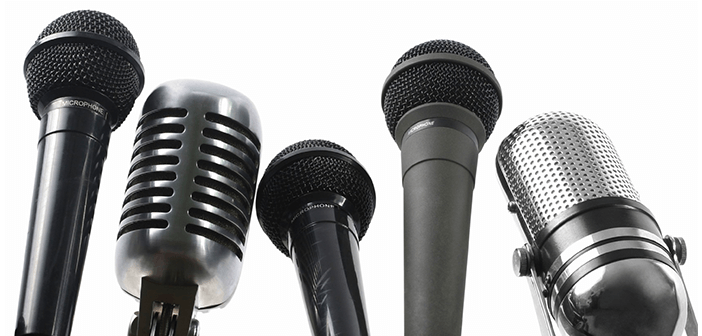
The landscape of audio capture is dominated by several key microphone types, each with distinct characteristics that lend themselves to specific applications. Understanding these differences is paramount to selecting the right tool for the job.
The Role of Phantom Power
Certain microphones, particularly condenser microphones, require an external power source to operate. This power, known as "phantom power," is typically supplied through the microphone cable (usually an XLR cable) and is a standard feature on most professional audio interfaces and mixers. Phantom power provides the necessary voltage for the internal circuitry of condenser mics, enabling them to convert subtle sound waves into an electrical signal. While the concept might seem daunting, phantom power is a straightforward feature that should not deter aspiring professionals. It is essential to ensure any interface or mixer used is equipped with this capability if opting for phantom-powered microphones.
The Advantages of USB Microphones
USB microphones have gained considerable traction, especially among beginners and those prioritizing convenience.
USB Microphone Advantages:
- Plug-and-Play Simplicity: Their primary appeal lies in their ease of use. They connect directly to a computer via a USB port, eliminating the need for separate audio interfaces or preamplifiers. This simplifies setup and reduces the initial cost.
- Portability: Their all-in-one design makes them highly portable, ideal for mobile recording setups or home studios with limited space.
- Cost-Effectiveness: For entry-level users, USB microphones often present a more affordable entry point into audio recording.
USB Microphone Disadvantages:
- Limited Upgrade Path: While convenient, USB microphones often have a less flexible upgrade path. Replacing the microphone typically means replacing the entire unit, unlike traditional XLR setups where individual components can be upgraded.
- Potential for Latency: In some instances, particularly with complex computer systems or demanding recording software, USB microphones can introduce a slight delay (latency) between the sound source and the recorded audio.
-
- Sound Quality Limitations: While many USB microphones offer good sound quality for their price point, they may not achieve the same level of detail, warmth, or transparency as higher-end XLR-based systems, especially for critical professional applications.
Dynamic Microphones: Robust and Reliable
Dynamic microphones are known for their durability and ability to handle high sound pressure levels (SPLs). They operate on the principle of electromagnetic induction, where sound waves move a diaphragm attached to a coil within a magnetic field, generating an electrical current.
Dynamic Microphone Pros:
- Durability and Robustness: They are built to withstand rough handling and are less susceptible to damage from drops or extreme environmental conditions.
- Excellent for Loud Sources: Their ability to handle high SPLs makes them ideal for recording loud instruments or in noisy environments where bleed is a concern.
- No External Power Required: Dynamic microphones do not require phantom power, simplifying setup and reducing potential power-related issues.
- Natural Sound Rejection: They generally offer good rejection of off-axis sound, helping to isolate the primary sound source.
Dynamic Broadcast Voiceover Mic Cons:
- Lower Sensitivity: Compared to condenser microphones, dynamic mics are typically less sensitive, meaning they require more gain from a preamplifier to achieve a strong signal. This can sometimes introduce more noise into the recording if the preamplifier is pushed too hard.
- Less Detail and Nuance: While excellent for certain applications, they may not capture the finest details and subtle nuances of a voice as effectively as a high-quality condenser microphone.
Large Diaphragm Condenser Microphones: The Professional Standard
Large diaphragm condenser (LDC) microphones are the workhorses of professional studios, renowned for their sensitivity, detail, and ability to capture a wide frequency range. They utilize a capacitor, where sound waves vibrate a thin diaphragm that alters the capacitance between it and a backplate, producing an electrical signal.
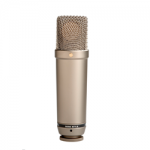
Large Diaphragm Condenser Pros:
- Exceptional Sensitivity and Detail: LDCs excel at capturing the subtle nuances, textures, and breath sounds of the human voice, providing a rich and detailed audio capture.
- Wide Frequency Response: They typically offer a broad and often more "flat" frequency response, meaning they reproduce sound with greater accuracy and less coloration than some other microphone types.
- Warmth and Richness: Many LDCs impart a desirable warmth and presence to vocals, making them a popular choice for voiceover and broadcast applications.
- Low Self-Noise: Modern LDCs are engineered with very low self-noise, ensuring that the microphone’s own internal noise does not interfere with the recorded signal.
Large Diaphragm Condenser Cons:
- Require Phantom Power: As mentioned, these microphones necessitate phantom power to operate.
- More Fragile: Condenser microphones are generally more sensitive to physical shock and environmental factors like humidity and extreme temperatures.
- Can Be More Expensive: High-quality LDCs often come with a higher price tag, reflecting their sophisticated design and superior performance.
- Potential for Over-Sensitivity: In untreated or noisy environments, their high sensitivity can pick up unwanted background noise or room reflections.
Understanding Polar Patterns: Directing the Sound Capture
A critical aspect of microphone performance is its polar pattern, which describes the microphone’s directional sensitivity – essentially, where it "hears" best and worst. This dictates how the microphone captures sound from different directions.
- Omnidirectional: Captures sound equally from all directions. Useful for capturing room ambiance or when the sound source is moving.
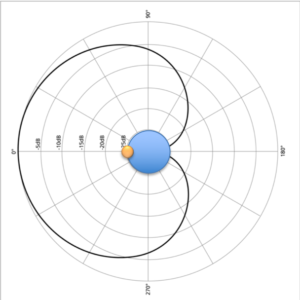
- Cardioid: Captures sound primarily from the front, with significant rejection from the rear. This is the most common pattern for voiceover work as it helps isolate the voice and minimize room noise.
- Supercardioid/Hypercardioid: Offer even tighter directional pickup than cardioid, with greater rejection from the sides, but also a small lobe of sensitivity at the rear.
- Bidirectional (Figure-8): Captures sound equally from the front and rear, with maximum rejection from the sides. Often used for interviews with two sources facing each other.
For most voiceover applications, the cardioid polar pattern is the standard. It effectively isolates the voice from background noise and minimizes unwanted room reflections. While some high-end microphones, like the Neumann U87 or AKG C414, offer switchable polar patterns, ensuring your chosen microphone has at least a cardioid setting is essential for effective voiceover work. The diagram of a cardioid pattern illustrates its focus on the frontal pickup, with a gradual reduction in sensitivity as the sound source moves off-axis.
Understanding Additional Features: Pads and Connectors
Beyond polar patterns, other features can enhance a microphone’s utility.
Pads: Managing Input Levels
Pads are built-in attenuators that reduce the microphone’s output signal level. They are primarily useful for preventing distortion when recording extremely loud sound sources, such as close-miking a guitar amplifier. For typical voiceover work, where vocal levels are generally managed through microphone technique and preamp gain, pads are less critical. However, some microphones include them, offering an added layer of flexibility for diverse recording scenarios.
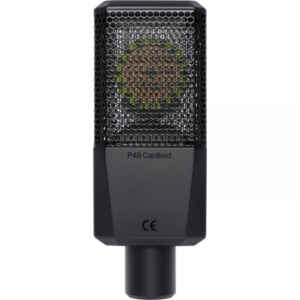
Connectors: XLR vs. Jack
The type of connector used by a microphone is directly related to its functionality and signal integrity.
- XLR Connectors: These are the standard for professional microphones, particularly those requiring phantom power. XLR cables are three-pin connectors that provide a balanced audio signal. This balanced configuration is crucial for long cable runs and helps to eliminate noise interference picked up by the cable, ensuring a cleaner and more robust audio signal.
- Jack Connectors (TS/TRS): While common in the audio world, standard 1/4-inch jack (TS) connectors are typically unbalanced and less suitable for professional microphone applications, especially those requiring phantom power or demanding pristine signal quality. If a microphone only offers a jack output and requires phantom power, it is generally not considered a professional-grade voiceover microphone.
Key Considerations for Selecting Your Voiceover Microphone
The ultimate goal is to find a microphone that minimizes technical complications while delivering the best possible sound quality for your unique voice and the specific type of voiceover work you intend to pursue.
The Importance of Frequency Response
Microphones are not all created equal when it comes to their frequency response. Some are designed with a "flat" response, meaning they reproduce sound accurately across the entire audible spectrum. Others have a customized frequency response, intentionally boosting or cutting certain frequencies to impart a particular character or enhance specific vocal qualities.
For example, a microphone with an artificial lift in its high frequencies might make a female voice sound unnaturally sibilant (exaggerated ‘s’ sounds). Conversely, a microphone designed with a slight warmth in the lower mids can add richness to a male voice. Understanding your voice and the desired sonic outcome is key. The most expensive microphone on the market is not necessarily the best for your individual needs. Setting a realistic budget and exploring options within that range is the most practical approach.
A Spectrum of Voiceover Microphones: From Entry-Level to Professional
The following is a curated list of microphones, recognized for their performance and suitability for voiceover work, presented across various price points. The order does not imply a strict ranking of preference but rather an exploration of available options.
Budget-Friendly Options (Under $300):
-
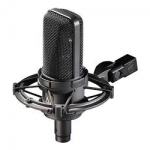
Rode NT1 / NT2 (~$249/£200): These microphones have long been a popular choice for newcomers to voice acting. They offer good resonance and a frequency response comparable to other dedicated voice microphones. Their quiet and neutral sound profile, coupled with a wide dynamic range, contributes to high-quality recordings. While seasoned professionals might discern a characteristic "Rode sound" that is less transparent than some ultra-high-end mics, for those entering the field, they represent a solid and cost-effective investment. The Rode NT1 is particularly noted for its exceptionally low self-noise, making it a strong contender in its price bracket.
-
Lewitt LCT 440 Pure (~£245): This large-diaphragm cardioid condenser microphone is a more recent entrant that has garnered attention for its clear and crisp sound. Its innovative design, featuring an open front, magnetic pop-shield, and included shock mount, enhances usability. The 1-inch condenser capsule contributes to its impressive audio fidelity at its accessible price point, making it a compelling option for budget-conscious artists.
-
Blue Yeti Pro (~$249.00): A standout in the USB microphone category, the Blue Yeti Pro is an excellent choice for those beginning their voiceover journey with budget constraints. It offers both USB and XLR connectivity, providing a degree of flexibility for future upgrades. While USB microphones are not generally the primary recommendation for professional studios due to potential latency and upgrade limitations, the Yeti Pro’s performance and features make it a superior option within the USB market. The "Pro" version offers higher bit recording and the XLR output, distinguishing it from the standard Yeti.
Mid-Range Excellence ( $300 – $700):
-
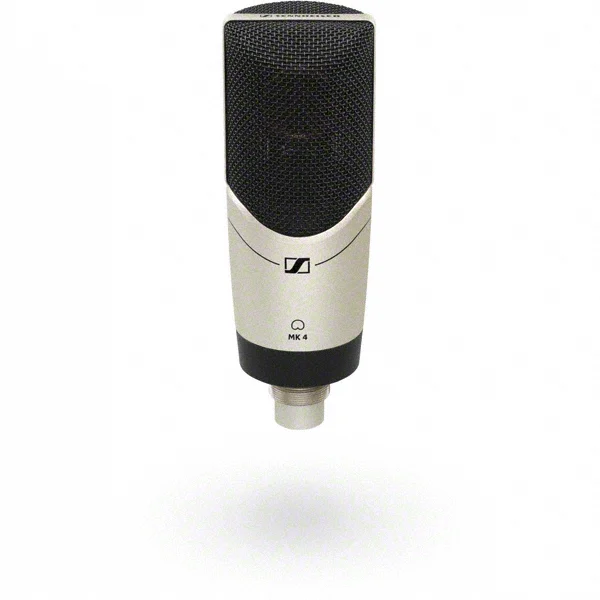
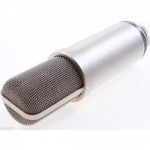
Sennheiser MK4 (~$350/£300): This microphone stands out as a top recommendation for serious voice artists. A testament to its quality, the MK4 features a diaphragm capsule designed by the same team responsible for the esteemed Neumann U87. It is a cardioid-only microphone without a pad, but it delivers exceptional sound quality for both male and female voices. Its robust build, durability, and impressive performance for its price point make it an outstanding value. The manufacturer’s heritage, with Sennheiser owning Neumann, lends significant credibility to its sonic capabilities.
-
sE Electronics sE2200a II C ($299): This versatile condenser microphone offers a strong, upfront sound that is ideal for first-time voice actors. It features a high-pass filter and a 10dB pad, providing valuable sound-shaping options and contributing to its low self-noise. Its adaptability makes it a good choice for various vocal applications.
-
Audio-Technica AT4033 ($399): The AT4033 is a highly regarded cardioid condenser microphone known for its excellent transient response and clean output signals. It incorporates an 80Hz high-pass filter, which can be switched between a flat frequency response and a low-end roll-off. This feature is particularly useful for diminishing ambient noise and mitigating plosive sounds (popping ‘p’ and ‘b’ sounds) during close vocal recording.
-
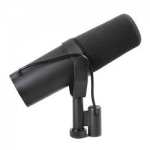
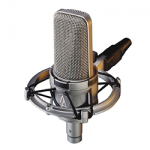
Shure SM7B ($349): A legendary microphone, the SM7B is a cardioid dynamic microphone that has been a staple in radio and sound studios for decades. Its sound is exceptionally clear, possessing a natural warmth and presence. The broad frequency response can be adjusted if needed, and a high-boost switch enhances presence. Its robust construction and integrated swing mount allow for precise positioning, making it an excellent choice for home studios. While often associated with broadcast, its characteristics translate exceptionally well to voiceover work, offering a punchy and articulate sound.
-
Rode NTK ($529): Another strong contender from Rode, the NTK is a vacuum tube condenser microphone that delivers a warm and clear sound. Its rugged build quality ensures longevity, and its sonic characteristics are well-suited for a wide range of voiceover applications. The inclusion of a vacuum tube in its design often imparts a desirable analog warmth and character to the vocal recording.
-
Audio Technica 4047 ($699): This microphone is designed for versatility and offers sonic characteristics reminiscent of classic FET studio microphones. Its transformer-coupled output and specially tuned element contribute to its unique sound. With low self-noise, a wide dynamic range, and high SPL capability, the AT4047 is built for professional use, featuring a precision-machined brass housing for enhanced stability and sensitivity.
-
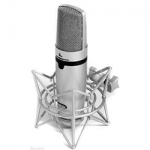
Sennheiser MKH 416 (Circa $700/£550): This hypercardioid shotgun microphone is ubiquitous in the film and television industry for its dialogue capture capabilities. While not a standard cardioid, its focused pickup pattern and exceptional rejection of off-axis sound make it incredibly effective in challenging acoustic environments. Its durability is legendary, making it the go-to travel microphone for many professionals. When positioned correctly and used for voiceover, it can deliver a powerful, punchy commercial sound. Many professionals who own an MKH 416 also possess a large-diaphragm condenser to cover all recording eventualities.
Professional Tier ( $700 and above):
-
Miktek C7 ($899): This large-diaphragm FET condenser microphone is praised for its pleasing sonic qualities and versatility. The C7 features three selectable pickup patterns: cardioid, omnidirectional, and bidirectional. This flexibility makes it suitable for a wide range of applications, including interviews and general voiceover work where capturing multiple sound sources might be necessary. Its design allows for immediate, high-quality recording without extensive tweaking.
-
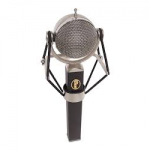
Blue Dragonfly: One of Blue Microphones’ more affordable offerings, the Dragonfly provides a sweet, vintage-inspired sound reminiscent of classic Neumann and AKG microphones. Its unique design allows for extensive positioning flexibility of the capsule relative to the sound source, opening up a broad spectrum of sonic possibilities for voiceover artists.
-
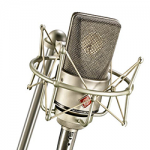
Neumann TLM 103 ($1,099): Despite not being originally designed specifically for voice work (TLM stands for Transistorless Microphone), the TLM 103 is a highly recommended microphone by many voice actors. Its transformerless circuit ensures a low self-noise level and a wide dynamic range. The cardioid capsule is finely tuned for acoustic balance and excellent phase cancellation from rear sounds. A potential consideration is its slight lift in high frequencies, which can sometimes make higher female voices sound a bit sibilant.
-
AKG C414 ($1,100): The AKG C414 is a professional-grade microphone renowned for its exceptional pickup range and a pleasingly flat frequency response. It is a robust and reliable instrument suitable for a wide array of recording tasks. Featuring switchable polar patterns and a pad setting, it offers significant versatility, making it an excellent choice for any working voice artist seeking a high-quality, multi-purpose microphone.
-
Neumann U87 ($3,180/£2,500): Widely regarded as the industry standard in professional recording studios worldwide, the U87 boasts a stellar reputation for voice recording. Its build quality, performance, and premium price tag reflect its status. This microphone features switchable polar patterns and a pad, a flat response, and excels with both male and female voices. While a significant investment, it represents a benchmark in microphone technology. For those seeking a comparable sound at a fraction of the cost, the Sennheiser MK4 is often cited as a compelling alternative.
Final Considerations and Next Steps
Choosing the best microphone for voice acting ultimately depends on a combination of budget, desired sonic characteristics, and the specific demands of your intended work. The microphones listed above are recognized for their quality and performance within the voiceover industry.
For those looking to further enhance their understanding and setup, resources like comprehensive home recording studio courses are invaluable. These often cover not only microphone selection but also acoustic treatment, signal processing, and best practices for achieving professional-sounding results.
[V1.6 Updated on 6th Jan 2026]
