

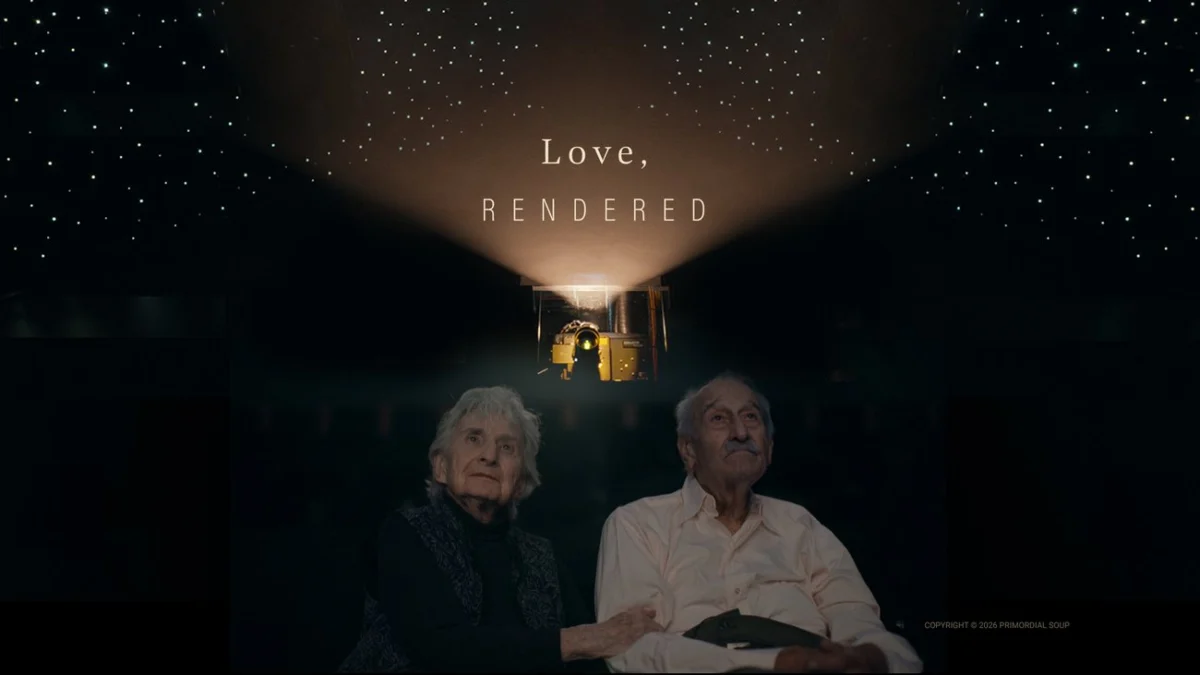
The intersection of advanced generative artificial intelligence and documentary filmmaking has reached a new milestone with the release of "Love, Rendered," a short film that explores the fragile nature of human memory and the potential for technology to serve as a bridge to the past. Produced through a high-profile collaboration between Google DeepMind and Primordial Soup—the creative venture of Academy Award-nominated filmmaker Darren Aronofsky—the project demonstrates how machine learning can reconstruct unrecorded historical moments. The film centers on Burt and Ethelle Shatz, a couple whose seven-decade marriage is being tested by Burt’s progressive cognitive decline. By leveraging AI to visualize a pivotal moment from the 1950s that was never captured on camera, the filmmakers have introduced a new paradigm for "reminiscence therapy," moving beyond static photographs to immersive, animated recreations of life-defining events.
The Narrative Core: A Seventy-Year Union
The documentary focuses on a specific, fading memory: the day Burt and Ethelle first met at a student co-op in Cleveland, Ohio. For seventy years, this encounter existed only as a shared mental narrative between the two. However, as Burt’s memory began to fail due to age-related cognitive impairment, the details of that day—the architecture of the room, the specific clothing, the way they moved—threatened to disappear entirely. Unlike later milestones in their lives, this foundational moment occurred before the ubiquity of personal cameras, leaving no physical record for the couple to revisit during Burt’s illness.
The project’s technical lead, Michael Chang, an engineer at Google DeepMind, approached the task with a perspective shaped by personal experience with familial memory loss. This emotional investment informed the project’s primary goal: not just to create a photorealistic animation, but to capture the "emotional truth" of the couple’s history. This required a delicate balance between high-end computational power and intimate human direction, ensuring the technology served the story rather than overshadowing it.
The Science of Reminiscence and Cognitive Decline
The conceptual framework for "Love, Rendered" is rooted in reminiscence therapy, a clinical practice used primarily for elderly patients and those with dementia. This therapeutic approach utilizes sensory cues—such as music from a patient’s youth, family photographs, or familiar scents—to stimulate brain activity and improve mood, communication, and self-esteem. According to the World Health Organization, approximately 55 million people worldwide live with dementia, a figure projected to rise to 78 million by 2030. As the global population ages, the demand for innovative neurological support tools has intensified.

Director Liz Garbus, known for her documentary work on the human condition, was inspired by the neurological resilience observed in patients in minimally conscious states. Clinical research, including fMRI studies, has shown that familiar voices and images can trigger significant neural responses even when other cognitive functions are severely impaired. Darren Aronofsky similarly noted the profound impact of sensory triggers on memory, citing the viral instance of a former ballerina with Alzheimer’s who regained physical coordination upon hearing the score of Tchaikovsky’s "Swan Lake." "Love, Rendered" attempts to provide these same triggers for Burt Shatz by visually synthesizing a memory that had no prior physical form.
A Two-Part Technical Methodology
To recreate the 1950s student co-op and the younger versions of Burt and Ethelle, the Google DeepMind team employed a sophisticated two-part technical workflow. This process was designed to ensure that the AI-generated content remained grounded in the couple’s actual appearance and micro-mannerisms.
1. Image Restoration and Synthesis
The first phase involved gathering existing archival materials. The team took old, often damaged or low-resolution photographs of the couple from their youth and processed them through image restoration models. These models use deep learning to denoise, colorize, and sharpen historical images while preserving the essential features—such as eye shape, expressions, and poses—that define an individual’s identity. These restored images served as the visual "anchor" for the AI, providing a consistent reference point for the younger versions of the couple.
2. Generative Video and Motion Transfer
The second, more complex phase involved animating these static anchors. Using generative video models, the engineers were able to create fluid motion from single frames. To ensure the movements felt authentic to Burt and Ethelle, the team utilized motion transfer techniques. This allowed them to map the specific, idiosyncratic "micro-mannerisms" of the couple—the way they tilted their heads or the specific curve of a smile—onto the AI-generated avatars. Jess Gallegos, a key contributor to the workflow, noted that human direction was essential at this stage; Ethelle Shatz herself acted as a consultant, correcting details such as the architecture of a staircase or the specific style of a shoe heel to ensure the rendered environment matched her recollection.

The Role of Human-Centric AI Development
A recurring theme throughout the production of "Love, Rendered" was the subordination of the tool to the artist. Darren Aronofsky emphasized that AI, much like a paintbrush or a camera, remains inert until guided by human intent. The collaboration between DeepMind’s engineers and Primordial Soup’s creative team represents a shift in how AI is perceived in the film industry—not as a replacement for human creativity, but as a medium for expanding the boundaries of what can be visualized.
This human-centric approach is also reflected in the democratization of these tools. While "Love, Rendered" utilized enterprise-grade models and bespoke engineering, the underlying technology is increasingly available to the public. Google’s Gemini platform, for instance, now allows users to perform basic photo restoration and colorization through conversational prompts. This accessibility suggests a future where families can independently preserve their legacies, using AI to repair historical gaps in their own archives.
Broader Implications for Historical Preservation and Elder Care
The success of "Love, Rendered" has significant implications for several fields beyond filmmaking. In the realm of historical preservation, the ability to "render" unrecorded history based on eyewitness testimony and limited archival data could change how we document the past. For oral history projects, this technology offers a way to provide visual context to narratives that were previously purely auditory.
In the medical field, the film serves as a proof-of-concept for high-tech reminiscence therapy. If immersive, AI-generated environments can trigger emotional responses and cognitive "sparks" in patients with dementia, there is potential for these tools to be integrated into long-term care facilities. By providing patients with personalized "memory loops," caregivers might be able to improve the quality of life for those suffering from severe memory loss.
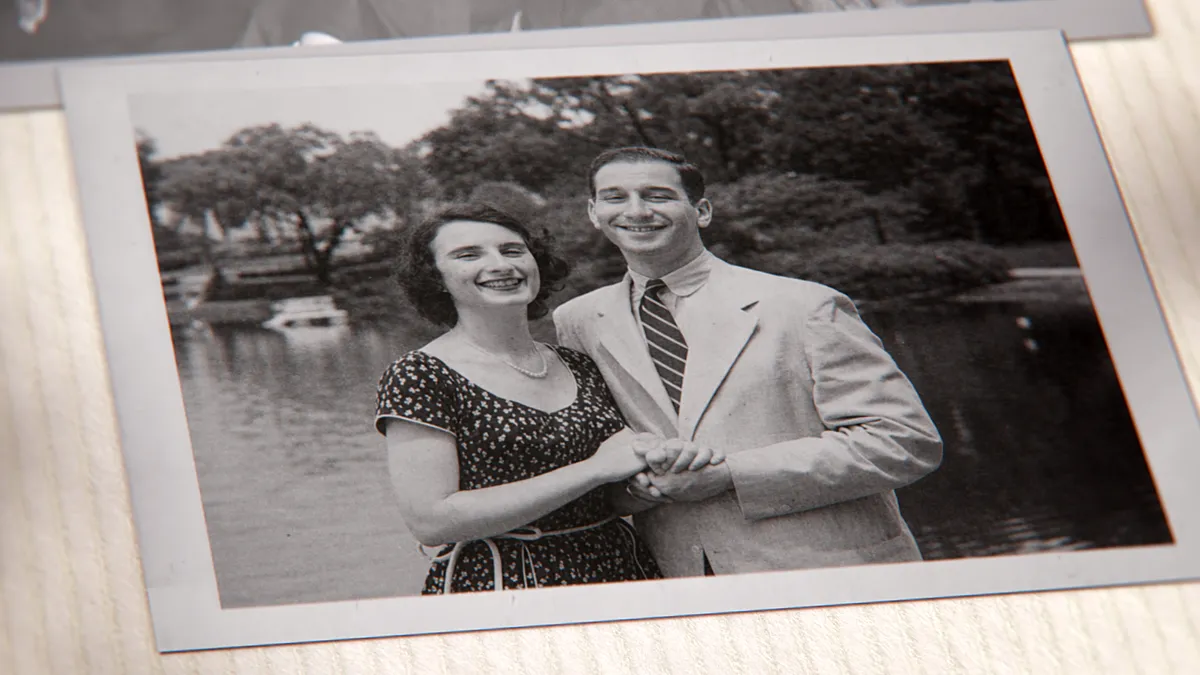
However, the use of AI to recreate memories also invites ethical scrutiny. Critics of generative technology often point to the risks of "hallucinations"—where the AI creates details that never occurred—potentially distorting the actual history of the subjects. The filmmakers addressed this by involving Ethelle Shatz in every step of the process, ensuring that the "rendered" memory was a collaborative reflection of her truth rather than a purely algorithmic fabrication.
Conclusion: A New Frontier in Digital Storytelling
"Love, Rendered" debuted at the Telluride Film Festival, receiving acclaim for its emotional depth and technical sophistication. The film stands as a testament to the enduring power of a 70-year partnership and the capacity of modern technology to honor that bond. By combining the artistic vision of Garbus and Aronofsky with the computational expertise of Google DeepMind, the project has provided a blueprint for how AI can be used to capture the intangible aspects of the human experience.
As Burt and Ethelle Shatz watched their younger selves meet for the first time on screen, the technology achieved its ultimate purpose: the temporary reversal of time. For a few minutes, the fog of cognitive decline was cleared by the light of a rendered memory, allowing a couple at the end of their journey to revisit its very beginning. The project confirms that while memories may fade, the stories they tell can be preserved, frame by frame, through the thoughtful application of human-guided innovation.
