

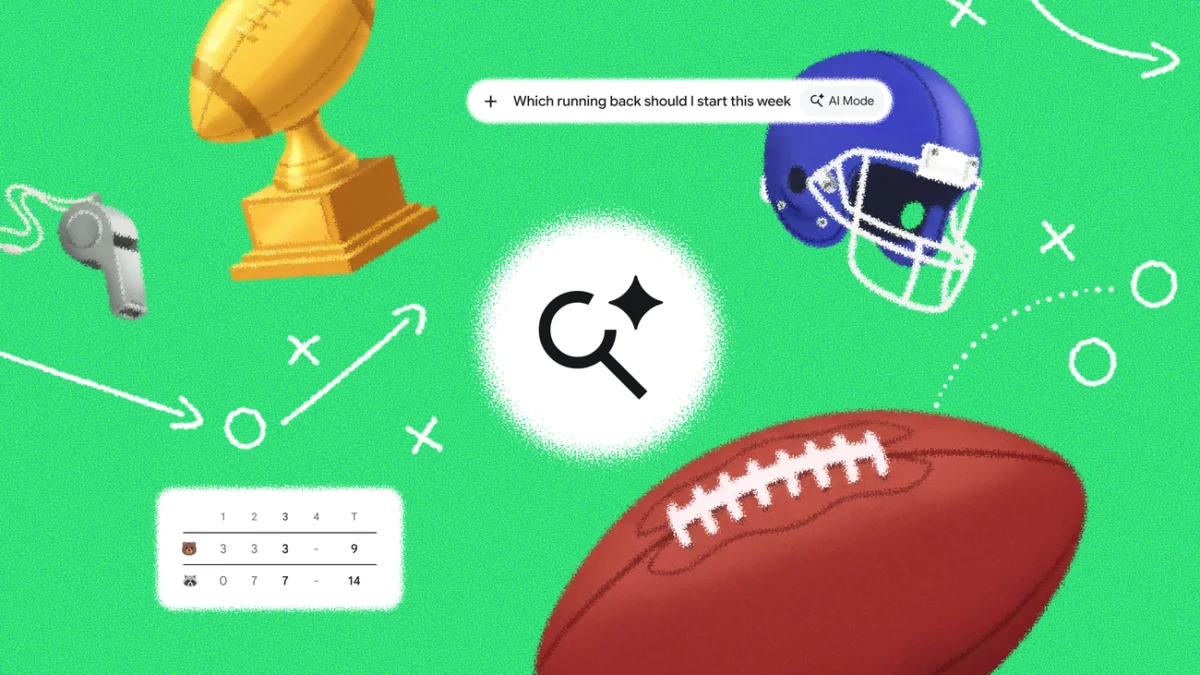
The technology sector’s push into the sports entertainment landscape reached a new milestone today as Google officially unveiled a suite of sophisticated upgrades to its Search platform, specifically engineered to cater to the American football audience. As the 2024 professional football season commences, the Mountain View-based company has integrated a real-time Live Game Feed, granular player analytics, and a first-of-its-kind fantasy football account synchronization feature powered by generative artificial intelligence. These updates represent a strategic shift for Google Search, transitioning from a static repository of information into a dynamic, "second-screen" companion designed to retain users within the Google ecosystem during live broadcasts.
Denise Ho, Senior Director of Product Management for Search at Google, characterized the update as a comprehensive "game-day guide" that leverages the company’s advancements in AI to provide tailored insights. The rollout is currently focused on the U.S. mobile market, with plans to expand to collegiate football and international regions later this month. This development comes at a time when sports viewership is increasingly fragmented across streaming platforms and traditional cable, making centralized data hubs more valuable to the average consumer.
The Evolution of the Live Game Feed and Real-Time Data
At the core of this update is the newly redesigned Live Game Feed. While Google has long provided score updates, the new iteration offers a multifaceted timeline that aggregates play-by-play data, social media commentary, and video highlights into a single interface. When users search for an active professional game, a prominent red "Live" icon serves as the entry point to this dashboard.
Beyond simple scorekeeping, the feed utilizes AI-powered insights to provide context to the game’s progression. For example, if a team faces a critical third-down situation, the system can surface historical success rates or relevant player milestones in real-time. This level of depth was previously the domain of specialized sports apps like ESPN or the NFL’s official platform. By integrating these features directly into the search engine, Google is addressing the "zero-click" search trend, where users find all necessary information without ever leaving the search results page.
The feed is currently available for professional football in English on mobile devices within the United States. According to Google, the expansion into collegiate football—a market with a massive and loyal following—will follow a phased rollout strategy throughout the autumn months.
Advanced Metrics and the New Matchup Carousel
In addition to real-time updates, Google is significantly expanding the volume of statistical data available to users. A new "Matchup Carousel" has been introduced, allowing fans to swipe through various games occurring simultaneously across the league. This eliminates the need for multiple searches, streamlining the user experience for those monitoring the entire league’s progress on a Sunday afternoon.
The depth of player statistics has also seen a substantial upgrade. Traditional metrics such as passing touchdowns and rushing yards are now supplemented by more technical defensive and offensive data, including sacks, fumbles, and yards after catch (YAC). These metrics are particularly relevant to the "stat-head" demographic and the burgeoning sports betting community, which relies on granular data for informed decision-making.
Furthermore, Google has announced that it will soon integrate predictive analytics, showing which teams are statistically favored to win the championship as the season progresses. Interactive playoff brackets will also be introduced toward the end of the regular season, providing a visual roadmap of the road to the Super Bowl. These features are slated for a global rollout on mobile, indicating Google’s intent to capture the international interest in American football, which has seen significant growth in markets like Germany and the United Kingdom.
Fantasy Football Integration: A New Frontier for AI Mode
Perhaps the most significant technological leap in this announcement is the integration of fantasy football accounts directly with Google Search. By allowing users to link their Yahoo Fantasy or Sleeper accounts, Google is positioning its "AI Mode" (powered by its Gemini large language models) as a personal sports consultant.
Once a user securely connects their account, they can ask AI Mode for specific recommendations based on their actual roster. This includes "start/sit" advice, where the AI analyzes player matchups and recent performance trends to suggest the optimal lineup. It also extends to "waiver wire" targets, identifying available free agents who could improve the user’s team.
The integration removes the friction of manual data entry or the need to toggle between different apps and browser tabs. Users can ask complex questions such as, "Should I bench my star wide receiver given the current weather conditions and his recent injury report?" or "Who is the best replacement for my injured quarterback on the waiver wire?" The AI processes the user’s specific league settings and roster composition to provide a customized response.

Google has emphasized the security of this connection, stating that the linking process is handled through a secure protocol that protects user data while allowing the AI to access the necessary roster context. This feature is currently limited to the U.S. in English, but it represents a template for how Google might integrate other personal data silos into its search experience in the future.
Market Context and Supporting Data
The timing of Google’s update is strategically aligned with the massive economic engine of American football. According to the Fantasy Sports & Gaming Association (FSGA), over 50 million people in North America participate in fantasy sports, with football being the dominant category. The fantasy sports market was valued at approximately $27 billion in 2023 and is projected to continue growing as digital integration becomes more seamless.
From a viewership perspective, the NFL remains the most-watched programming in the United States. In 2023, 93 of the top 100 most-watched television broadcasts were NFL games. By capturing the attention of this massive audience, Google is not only driving search volume but also gathering valuable data on user preferences and habits.
Industry analysts suggest that this move is a direct response to the increasing competition in the "live data" space. Apple recently launched its "Apple Sports" app, designed to provide a clean, fast interface for scores and stats. Meanwhile, social media platforms like X (formerly Twitter) remain the primary hub for real-time social commentary. Google’s new features appear to be an attempt to synthesize these disparate experiences—stats, social buzz, and personal data—into a singular, AI-driven interface.
Technical Analysis and Implications for the Future
The reliance on AI Mode for fantasy insights highlights Google’s broader strategy of making Gemini the centerpiece of the user experience. Unlike traditional search algorithms that return a list of links, the generative AI approach provides a synthesized answer. In the context of sports, where data is updated by the second, the challenge for Google is ensuring that its LLMs (Large Language Models) are grounded in the most current facts.
To mitigate the risk of "hallucination" or outdated information, Google’s sports AI utilizes a RAG (Retrieval-Augmented Generation) framework. This allows the model to pull from live data feeds and official league statistics before generating a response. For the user, this means the difference between a generic suggestion and a data-backed recommendation that takes into account the latest injury reports or coaching changes.
Furthermore, the introduction of a feedback loop—where users can "thumbs up" or "thumbs down" AI responses—suggests that Google is using this football season as a massive training ground for its sports-centric AI. As the season progresses, the model is expected to become more adept at understanding the nuances of football strategy and the specific needs of fantasy players.
Official Response and User Feedback
In her announcement, Denise Ho emphasized that these features are part of an iterative process. "We built this feature for fantasy fans of all levels, and we’ll continue improving it throughout the season," Ho stated. She encouraged users to provide active feedback to help refine the AI’s recommendations and the overall utility of the Live Game Feed.
The response from the tech and sports communities has been generally positive, though some privacy advocates have raised questions about the long-term implications of linking personal gaming accounts to a central search engine. Google has countered these concerns by highlighting the opt-in nature of the feature and the use of industry-standard security protocols for connected apps.
Broader Impact on the Digital Sports Ecosystem
The enrichment of Google Search with these features could have profound implications for sports journalism and specialized fantasy platforms. If Google can provide high-quality "start/sit" advice and real-time highlights, smaller niche websites may find it increasingly difficult to compete for traffic. This "platformization" of sports content suggests a future where the search engine acts as a primary interface for all digital consumption, rather than just a gateway to other sites.
As the season kicks off, the success of these features will likely be measured by user retention and the accuracy of the AI-driven insights. If successful, this model could be applied to other major sporting events, such as the NBA season, the MLB playoffs, or international soccer leagues. For now, Google has positioned itself as a formidable player in the sports technology arena, leveraging its AI prowess to change how fans engage with the most popular sport in America.
