


In the intricate landscape of corporate governance and innovation, the approval of a budget transcends a mere financial transaction; it lays the fundamental groundwork for strategic possibilities, enabling everything from pioneering product development and market entry to the robust evolution of internal support systems and the projection of an organization’s narrative on a global stage. This cascade of potential outcomes originates from a meticulously crafted argument for why decision-makers should invest in a particular vision. When a project receives the coveted green light, it signifies readiness to cultivate plans and nurture them into tangible realities. Yet, the challenge lies in the inherent difficulty for all stakeholders to perceive the full potential of an idea from its nascent stages, akin to envisioning a flourishing garden from a patch of bare earth.
The Chasm Between Vision and Fiscal Prudence
Budget-approvers, often operating as chief financial officers (CFOs), executive leadership, or investment committees, are not primarily focused on abstract future possibilities. Their operational paradigm is fundamentally anchored in quantifiable metrics and financial prudence. As the ultimate custodians of corporate capital and accountable parties for project success or failure, the pressure to make judicious choices is immense. Their decisions are inextricably linked to the fiscal health of the company and their fiduciary responsibility to shareholders, forming twin anchors that perpetually steer their focus toward the bottom line. This inherent bias often results in budget discussions that, while necessary, can become overly fixated on the immediate dollar amount, potentially overshadowing the broader strategic implications and long-term value.
According to a 2023 survey by Gartner, nearly 60% of CFOs report increasing pressure to manage costs while simultaneously driving growth, highlighting the perennial tension between investment and expenditure. This data underscores why proposals steeped purely in numbers, without a compelling narrative, often struggle to gain traction. The average project failure rate, often attributed to factors like inadequate funding or lack of executive sponsorship, hovers around 30-45% across various industries, emphasizing the critical nature of initial approval. Decision-makers, therefore, are tasked with navigating a complex risk-reward matrix, where every dollar allocated is a dollar diverted from other potential investments or retained earnings.
For budget seekers—project managers, department heads, or innovation leads—the mandate is clear: to illuminate the comprehensive picture that extends far beyond the confines of a dashboard or spreadsheet. While the meticulous balancing of expenses and the rigorous accounting for every cent are non-negotiable prerequisites for progression, an equally vital component is a narrative powerful enough to elevate leaders beyond the granular details of project allocations and fiscal calendars. This narrative must enable them to truly apprehend the transformative potential of their approval, much like Dorothy’s breathtaking transition into the vibrant, full-technicolor world of Oz. Painting such a vivid and accurate portrayal of the journey ahead is instrumental in securing the essential ingredients for any successful endeavor: dedicated time, adequate resources, and unwavering organizational backing. To empower individuals in gaining momentum and securing funding for their next ventures, three narrative techniques stand out as particularly effective in bringing project proposals to life.
1. Making Budget-Approvers the Architects of ROI

It is insufficient for a budget proposal merely to detail where money will be spent; leaders must be shown how that investment will reappear, ideally amplified, in the form of substantial Return on Investment (ROI). While the future inherently holds an element of unpredictability, a well-constructed narrative about the project’s vision serves to align budget-approvers’ expectations with potential outcomes. This process mirrors how film producers meticulously review scripts and storyboards before committing significant capital to a motion picture; decision-makers require a clear, compelling vision of the "final cut" of their investment.
Consider the cinematic genius of Christopher Nolan. Before he embarked on a reimagining of The Odyssey with an estimated budget of $250 million, he demonstrated his storytelling prowess and fiscal acumen by adapting Christopher Priest’s novel The Prestige for a comparatively modest $40 million. The 2006 film, set in Victorian London, meticulously chronicles the intense rivalry between two magicians. Its opening famously features a voiceover by Michael Caine, dissecting a magic trick into three essential parts: The Pledge, The Turn, and The Prestige. The "pledge" is the ordinary object shown to the audience; the "turn" is when the ordinary object is made to do something extraordinary; and the "prestige" is the spectacular reappearance of the object, defying expectation.
Translating Cinematic Structure to Budget Proposals
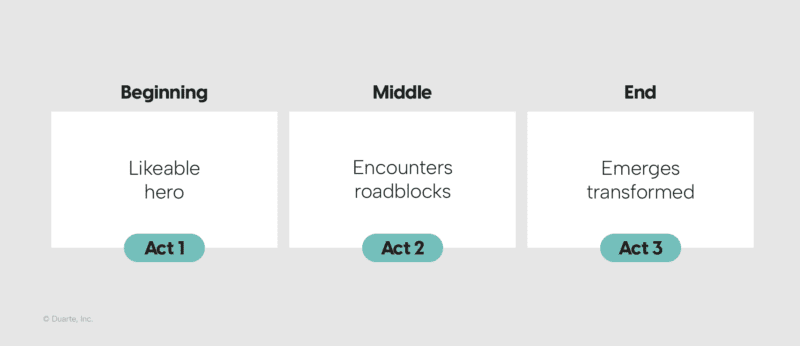
This three-act structure—Pledge, Turn, Prestige—offers a potent metaphor for a budget proposal. The "pledge" of your budget proposal should clearly define the current state and the initial investment required. The "turn" should articulate the innovative process, the challenges anticipated, and how the investment will be utilized to overcome them. Finally, the "prestige" must convey the spectacular return, the transformed reality, and the profound impact, all while resonating with the hopes and fears of the budget-approvers. At Duarte, a renowned communication firm, this beginning-middle-end structure is advocated for any compelling story, from well-researched recommendations to inspiring audiences to embrace new ideas.
To illustrate the profound difference narrative makes, consider two descriptions of a hypothetical film project:
Example 1: Data-Centric, Lacking Narrative
"With a $40 million budget, the film is projected to gross upwards of $100 million at the box office, achieve a runtime of 130 minutes, and ultimately aggregate a 76% score on Rotten Tomatoes based on 208 reviews."
Analysis: This description is precise, data-backed, and financially sound, yet it is utterly devoid of life, failing to ignite imagination or convey the deeper value proposition.
Example 2: Narrative-Driven, Three-Act Structure
"With your pivotal approval of our $40 million budget, this film will become a stunning reimagining of Christopher Priest’s award-winning novel, featuring captivating performances by Hugh Jackman, Christian Bale, Scarlett Johansson, Michael Caine, and David Bowie in his most authentic role since Labyrinth. The adaptation demands painstaking detail, but its inherent cross-over appeal into fantasy and science fiction genres, combined with the collective star-power of its cast, will attract diverse and expansive audiences. Given the caliber of craft and talent dedicated to this project, we confidently believe it possesses the potential to enchant and intellectually challenge generations of viewers, garner significant critical accolades, and realize over 200% ROI at the box office and through ancillary markets, extending its cultural legacy for decades."
Analysis: The second example dramatically transforms the proposition. It positions the budget-approver as a central hero, the catalyst initiating the transformative process. It implicitly acknowledges the challenges ("painstaking detail") but elevates the dollar amount into a fully realized vision of the finished product. Crucially, it combines projected ROI metrics with loftier, yet tangible, dimensions such as cultural capital and lasting legacy, thereby significantly enhancing the pitch’s allure. This exemplifies the difference between presenting a story via a chart and crafting one destined for the silver screen. The real magic, of course, lies in convincing budget-approvers that this grand vision is not only attainable but also within your team’s capability to execute. This requires an element of confident conviction.
2. The Art of the "Called Shot": Building Credibility and Trust
In the high-stakes arena of budget conversations, delivering your narrative demands the unwavering confidence of a seasoned professional. This is not about making extravagant, unsubstantiated claims and hoping to retroactively fill in the details—a recipe for disaster, as evidenced by infamous debacles like the Fyre Festival. Rather, it stems from a profound self-awareness of one’s capabilities and a demonstrated history of effectively overcoming challenges. It is the budget-approvers who require conviction, and before reaching ambitious goals, one must first inspire decision-makers to believe in your capacity to deliver. This necessitates a blend of strategic swagger and the verifiable skills to substantiate it. Babe Ruth’s legendary "called shot" offers a compelling historical parallel.
During Game 3 of the 1932 World Series, the New York Yankees faced the Chicago Cubs at Wrigley Field. The atmosphere was charged with animosity between the teams, and the crowd was notoriously hostile as Babe Ruth stepped up to bat in the 5th inning. After taking two strikes from Cubs pitcher Charlie Root, Ruth famously made a pointing gesture towards the center-field stands, a declaration of his intent. On the very next pitch, Ruth launched a towering home run precisely to the spot he indicated, and the Yankees ultimately swept the series.
Creating "S.T.A.R. Moments" in Business
The 1932 World Series might have receded into historical obscurity were it not for the enduring legend Ruth forged at the plate. Despite ongoing debates among eyewitnesses, historians, and analyses of grainy footage regarding the exact nature of his gesture, a headline from reporter Joe Williams had already immortalized the event in the popular imagination: "RUTH CALLS SHOT AS HE PUTS HOME RUN NO. 2 IN SIDE POCKET."
At Duarte, such pivotal opportunities to distinguish a presentation or message are termed S.T.A.R. moments—an acronym for Something They’ll Always Remember. These moments, deployed with impactful results in contexts ranging from Academy Award-winning documentaries like An Inconvenient Truth to high-profile keynote presentations, can be equally effective in persuading budget-approvers to fund a project to fruition. Before any critical budget discussion, a key question for project proponents should be: How do I convince budget-approvers that my next swing will be a homerun?
S.T.A.R. moments manifest in various forms:
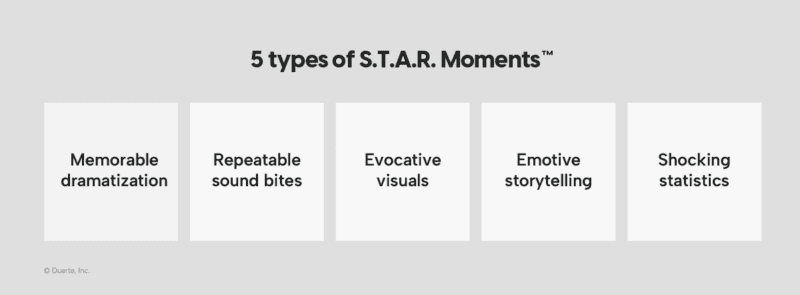
- Memorable Dramatization: A vivid, emotionally resonant demonstration or scenario.
- Repeatable Sound Bites: Concise, impactful phrases that are easily recalled and shared.
- Evocative Visuals: Powerful images, videos, or demonstrations that convey complex ideas instantly.
- Emotive Storytelling: Personal anecdotes or narratives that connect on a human level.
- Shocking Statistics: Data presented in a way that highlights a critical problem or immense opportunity.
While a degree of audaciousness can be strategically employed, true, lasting confidence is forged through deep analytical thinking, diligent practice, and meticulous preparation. This foundation proves far more resilient when facing intense scrutiny. Ruth’s "called shot" wasn’t a fluke; he was batting .341 in 1932 and had already accumulated 41 home runs. His gesture was an expression of earned confidence, not unfounded arrogance. As a budget-seeker, you typically have a singular, critical opportunity to demonstrate competence, cultivate trust, and establish credibility when it’s time to make your pitch.
Spending excessive time elaborating on intricate industry analyses or enumerating your personal accomplishments risks disengaging budget-approvers. Instead, a S.T.A.R. moment is best created by presenting a budget proposal augmented with carefully selected multimedia elements that facilitate a crisp, clear, and compelling narrative, ultimately positioning the approver as the pivotal hero. Before entering the meeting room or initiating a video call, critically assess which phrase best encapsulates your budget story:
- "Here’s what I can do."
- "With your help, here’s what we can do."
By centering the approver within your S.T.A.R. moment, you subtly invite them to participate in your project not merely as an arbiter of line items but as an active, invested stakeholder. This foundational shift then allows for the articulation of a story that resonates on an emotional level, inspiring decision-makers to forge a passionate connection with your project’s potential and genuinely advocate for its success.
3. Making Budget-Approvers Believe in Something More than Money
Beyond the allure of magic and mystique, the deliberate crafting of a message imbued with empathy and emotional weight can perform the heavy lifting required to forge a profound connection. Infusing stories and situations with complex human feelings transcends mere details and plot points; it is what enables audiences to perceive something larger and more significant in cultural events, whether films, sporting spectacles, or even commercials that sometimes evoke tears.
One particularly effective method for reaching both analytically-minded and emotionally-driven audiences is to achieve a careful balance between the financial imperatives of your budget request and the profound new bliss that its potential promises. Within the Duarte methodology, "new bliss" signifies the enhanced state or valuable gains that audiences stand to acquire following the "messy middle" of striving toward a goal or implementing significant organizational change. As budget-seekers, expertly illustrating the tension between "what currently exists" and "what could be" serves as a powerful guide, drawing approvers to desire the "new bliss" meticulously outlined in your budget proposal.
Integrating robust structure and compelling storytelling empowers your budget proposal to address undeniable financial realities while simultaneously encouraging decision-makers to envision a profoundly improved future. Perhaps your CFO, while primarily seeking rigorous reassurances on spending, frequently expresses regret over missing their child’s ballet recitals. Or perhaps the leadership team harbors anxiety regarding the company’s competitive standing within the industry. Alternatively, they may aspire to create a product, service, or solution that is not only profitable but also genuinely beneficial to society or alleviates a significant customer pain point.
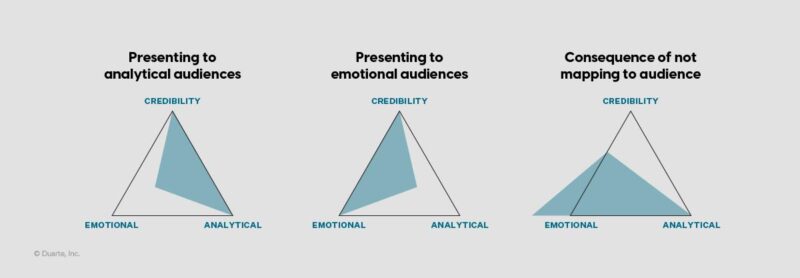
While centering your proposal solely on generating substantial financial returns is a valid approach, consider the enhanced impact of a budget story that highlights how your vision for a more streamlined workflow could grant everyone, including your CFO, more valuable family time. Or how your innovative product could reinvigorate public interest and loyalty in your brand. Or how, with adequate funding, your team aims to eradicate a persistent pain point from the customer experience, fostering unparalleled satisfaction. This nuanced difference can inspire stakeholders to feel a personal, deeply rooted commitment to the project, extending far beyond a simple rubberstamp of approval.
Calibrating this perfect balance necessitates grounding your story in audience-first empathy. By diligently acknowledging and understanding the inner lives, professional aspirations, and personal values of your budget approvers, you can strategically structure your narrative to seamlessly weave sound financial reasoning with impactful details that resonate on an emotional level. Beyond securing time and money, securing robust organizational backing is perhaps the most significant predictor of a project’s success. Achieving this on a grand scale requires transforming mere "buy-in" into genuine "belief" through a story that reverberates meaningfully at every echelon of the organization. However, it is crucial to temper sentimentality with a clear understanding of the financial stakes, maintaining a professional and credible tone.
By delivering a budget story that is thoughtfully structured, empathetically crafted, and strategically punctuated by a well-placed S.T.A.R. moment, project proponents can effectively navigate the complexities of corporate finance, transforming a dry financial request into an inspiring vision. This approach paves the road ahead for innovation, growth, and the realization of ambitious organizational objectives, ensuring that critical ideas move from conception to impactful reality.
