

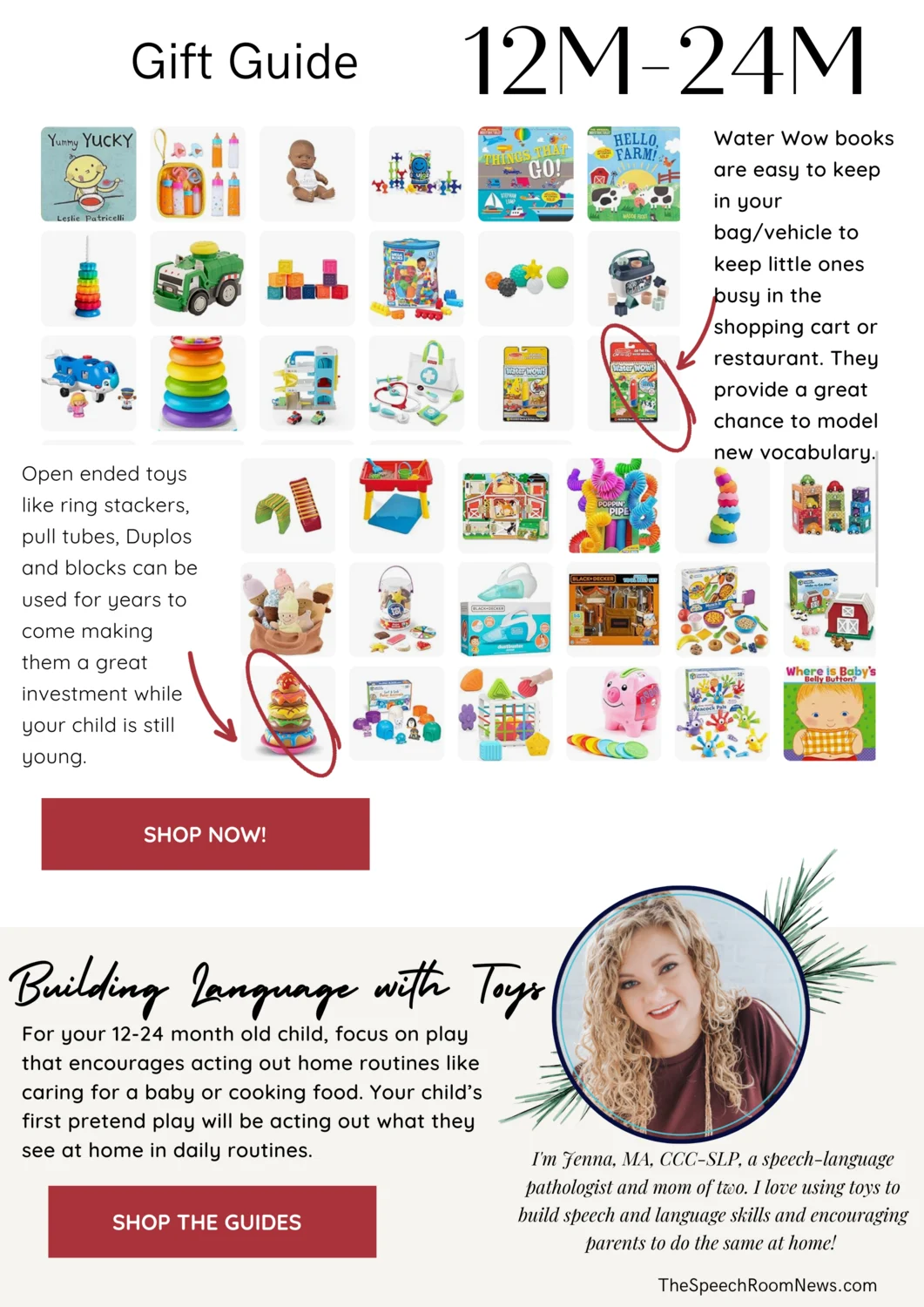
Jenna Kirk, MA, CCC-SLP, a distinguished pediatric speech-language pathologist and a mother with direct experience navigating speech challenges, has launched a series of specialized holiday gift guides aimed at assisting parents and caregivers in selecting toys that actively promote speech and language development in children. Released in anticipation of the crucial holiday shopping season, these guides offer expert-vetted recommendations, categorized by age, to empower families with tools for enriching their children’s communication skills through play. The initiative comes as a direct response to the widespread parental quest for toys that offer more than mere entertainment, aligning play with crucial developmental milestones.
The Expert Behind the Initiative: Jenna Kirk’s Unique Perspective
Jenna Kirk, the founder of The Speech Room News, brings a dual perspective to this endeavor: her professional expertise as a certified speech-language pathologist and her personal journey as a parent. With a Master of Arts degree and certification from the American Speech-Language-Hearing Association (ASHA), Kirk possesses a profound understanding of pediatric communication disorders and typical language acquisition. Her clinical practice focuses on helping children overcome various speech and language challenges, making her uniquely qualified to identify toys that can serve as therapeutic tools in a home environment.
Adding another layer of authenticity and insight, Kirk is also a mother of two young children, one of whom has been diagnosed with Childhood Apraxia of Speech (CAS). CAS is a neurological speech sound disorder in which a child has difficulty making accurate movements when speaking. This personal experience profoundly informs her recommendations, providing a relatable and empathetic foundation for her advice. It underscores the practical challenges parents face in selecting appropriate resources and highlights the importance of integrating therapeutic support into daily play. Her guides are not merely academic recommendations but are born from a deep understanding of both clinical efficacy and real-world applicability within a family setting.
The Foundational Role of Play in Speech and Language Development

The scientific community overwhelmingly supports the notion that play is not just leisure but a fundamental mechanism for learning and development in children, particularly concerning speech and language. From infancy through early childhood, play serves as the primary context for children to experiment with sounds, words, and social interactions. Dr. Roberta Golinkoff and Dr. Kathy Hirsh-Pasek, leading researchers in child development, emphasize that children learn best through active, engaged, meaningful, socially interactive, and iterative experiences—all hallmarks of quality play.
Toys, when thoughtfully selected, transform into powerful learning instruments. They provide concrete objects for children to label, categorize, and describe, thereby expanding their vocabulary. Interactive play scenarios encourage turn-taking, question-asking, and narrative development, fostering pragmatic language skills essential for social communication. For instance, a simple dollhouse can facilitate complex imaginative play, where children create stories, assign roles, and engage in dialogue, practicing sentence structure and problem-solving through verbal expression. Building blocks or puzzles, while seemingly focused on motor skills, also offer opportunities for spatial language ("under," "over," "next to") and collaborative communication.
Addressing a Widespread Need: The Demand for Informed Toy Selection

The modern toy market is vast and often overwhelming for parents seeking products that genuinely contribute to their child’s development. While many toys are marketed as "educational," the efficacy of these claims can vary widely. Without expert guidance, parents may struggle to differentiate between products that offer superficial learning opportunities and those that provide deep, meaningful engagement crucial for skill building.
Statistics from organizations like ASHA consistently highlight the prevalence of speech and language delays and disorders. Approximately 1 in 12 children aged 3-17 years in the U.S. has a disorder of speech, voice, language, or swallowing. Early identification and intervention are paramount, and everyday tools like toys can play a significant supportive role. Kirk’s gift guides directly address this need by filtering through the noise of the market, offering curated lists based on clinical expertise and practical experience. This demystifies the process for parents, providing them with actionable, trustworthy recommendations that transcend fleeting trends. The increasing awareness among parents about developmental milestones has also fueled a greater demand for resources that help them proactively support their children’s growth, making these guides particularly timely.
Key Principles Guiding Speech-Language Focused Toy Selection

When selecting toys to enhance speech and language, Jenna Kirk focuses on several critical attributes that maximize developmental benefits. These principles are rooted in established pediatric therapy practices:
- Encouraging Interaction and Turn-Taking: Toys that necessitate interaction with another person are invaluable. Board games, cooperative puzzles, or simple ball play encourage back-and-forth communication, eye contact, and the fundamental social rules of conversation. This fosters pragmatic skills, which are crucial for effective social communication.
- Promoting Imaginative and Symbolic Play: Open-ended toys like play kitchens, dollhouses, action figures, or dress-up clothes provide endless opportunities for children to create their own narratives, assign roles, and engage in "pretend" scenarios. This type of play is vital for developing abstract thinking, narrative skills, and understanding different perspectives. It allows children to practice vocabulary in various contexts and develop complex sentence structures as they describe their imaginary worlds.
- Facilitating Vocabulary Expansion and Concept Development: Toys that introduce new objects, colors, shapes, or actions naturally prompt language use. Farm animal sets, sorting toys, or books with rich illustrations offer opportunities for labeling, describing attributes, and understanding concepts. The more diverse the vocabulary a child is exposed to and encouraged to use, the stronger their language foundation becomes.
- Supporting Articulation and Phonetic Awareness: While less direct, certain toys can indirectly support speech sound development. Musical instruments encourage exploration of sounds and rhythm, which are precursors to speech. Blowing toys (e.g., bubbles, pinwheels) can strengthen oral motor muscles, which are important for articulation. Books with rhyming words or alliteration can enhance phonetic awareness, a critical pre-reading skill.
- Versatility and Open-Endedness: Toys that can be used in multiple ways, rather than those with a single prescribed function, tend to be more effective for language development. Blocks, play-doh, or art supplies allow children to direct their own play, which in turn encourages them to vocalize their intentions, ideas, and observations.
- Durability and Safety: While not directly language-related, these practical considerations ensure that the toys can withstand repeated use and are safe for children, allowing for sustained engagement without parental worry.
Structure and Accessibility of the Gift Guides
Jenna Kirk’s holiday gift guides are meticulously organized to provide maximum utility for parents. They are segmented by age group, recognizing that speech and language development is a progressive journey with distinct milestones at different stages. This age-based categorization ensures that the recommended toys are developmentally appropriate, challenging enough to stimulate growth but not so advanced as to cause frustration.

In addition to the main gift lists, Kirk has thoughtfully included a section dedicated to "stocking stuffers," offering smaller, budget-friendly items that can still pack a significant developmental punch. This demonstrates a holistic approach to holiday gifting, ensuring that every gift, regardless of size, can contribute to a child’s communication journey.
The guides are made highly accessible through two primary formats:
- Amazon Gift Guides: Directly linked to Amazon.com/shop/speechroomnews, these digital lists allow for convenient browsing and purchasing. This integration leverages the familiarity and ease of use of a major online retailer, simplifying the shopping process for busy parents.
- Downloadable PDF: A comprehensive PDF document titled "Christmas Toy Guide.pdf" is available for direct download, offering a printable version that parents can reference offline or share easily. This dual approach caters to different preferences and ensures widespread access to the valuable recommendations.
The visual aids included in the original post, such as images of the guide pages, suggest a clear, aesthetically pleasing layout, making the information digestible and inviting.

Broader Impact and Implications for Child Development
The release of these expert-curated toy guides holds significant implications for child development and parental empowerment:
- Empowering Parents as Active Participants: By providing clear, expert-backed recommendations, Kirk empowers parents to move beyond passive consumption and become active, informed participants in their child’s developmental journey. It equips them with the knowledge to make intentional choices that directly support speech and language skills.
- Bridging the Gap Between Clinical Knowledge and Consumer Choices: This initiative effectively translates complex clinical understanding of speech and language development into practical, consumer-friendly advice. It demystifies the therapeutic aspects of play, making specialized knowledge accessible to the general public.
- Contribution to Early Intervention Efforts: While not a substitute for formal therapy, developmentally appropriate toys can serve as powerful complementary tools for early intervention. For children already receiving therapy, these toys can reinforce learned skills at home. For children exhibiting mild delays, they can provide the necessary stimulation to catch up.
- Shifting Consumer Mindsets: Such guides encourage a paradigm shift in how parents view toys—from mere entertainment objects to essential developmental tools. This fosters a more conscious and purposeful approach to toy purchasing, prioritizing long-term developmental benefits over fleeting trends.
- Leveraging Digital Platforms for Expert Dissemination: The use of Amazon and downloadable PDFs highlights the effective role of digital platforms in disseminating specialized expert advice to a broad audience, making valuable resources readily available at the click of a button.
Perspectives from the Speech-Language Pathology Community

Within the speech-language pathology community, initiatives like Jenna Kirk’s are widely applauded. Professionals consistently advocate for play-based intervention, recognizing that naturalistic contexts are often the most effective for fostering communication skills in young children. The American Speech-Language-Hearing Association (ASHA) frequently publishes resources emphasizing the importance of parent education and the strategic use of everyday materials to support language development. These guides align perfectly with the principles of family-centered practice, where caregivers are equipped with strategies and tools to facilitate learning in their daily routines. The focus on specific age groups also reflects best practices in developmental psychology, ensuring that recommendations are aligned with a child’s cognitive and linguistic readiness.
In conclusion, Jenna Kirk’s holiday gift guides represent a valuable resource for parents navigating the complexities of child development and consumer choices. By combining professional expertise with personal insight, she offers a practical, accessible, and scientifically grounded approach to selecting toys that do more than just entertain—they build foundational speech and language skills, fostering a lifetime of effective communication. The initiative serves as a testament to the power of informed choices in supporting children’s holistic development, particularly during a season dedicated to giving.
