


The rapid integration of artificial intelligence into content creation workflows has ignited a critical debate within professional circles, particularly among influencers and thought leaders. A recent discourse, sparked by a LinkedIn post declaring, "I don’t use AI to write my content," has brought to the forefront a nuanced distinction: the difference between leveraging AI as a tool to enhance human thinking and allowing it to supplant the creative and intellectual process altogether. This distinction holds significant implications for authenticity, authority, and the very nature of influence in the digital age.
The initial sentiment, often interpreted as a badge of honor for manual content generation, was clarified by the post’s author. The core message emphasized that the ultimate value of content, regardless of its origin, lies in its ability to provide genuine utility and insight to the audience. This perspective aligns with a pragmatic view of AI, where its efficacy is measured by its output’s impact. However, this viewpoint, while valid, may overlook a more profound ethical and psychological dimension.
The author of the original article, Brian Ahearn, a recognized expert in influence and Chief Influence Officer at Influence PEOPLE, articulates a critical concern: the potential for a disconnect between the perceived source of expertise and its actual origin. He posits that while AI can be an invaluable assistant in organizing thoughts, challenging assumptions, improving clarity, and editing prose, its role should remain that of a collaborator, not a replacement for the human mind.
The Milli Vanilli Parallel: Authenticity Under Scrutiny
To illustrate this point, Ahearn draws a powerful parallel to the infamous Milli Vanilli scandal of the late 1980s. The pop duo achieved meteoric success, winning awards and selling millions of albums. Their downfall, however, was not due to a decline in musical quality but the revelation that they did not perform the vocals on their hit songs. This breach of authenticity shattered their credibility and effectively ended their careers. The audience felt deceived, having invested their admiration and trust in a fabricated persona.
This historical precedent serves as a potent analogy for the potential pitfalls of over-reliance on AI in content creation. If influencers or thought leaders present content that is largely or entirely generated by AI, and their subsequent interactions or public appearances reveal a significant disparity in knowledge, articulation, or perspective, a similar erosion of trust could occur. The audience, having consumed content that appeared to originate from a specific individual’s unique insights and experiences, might feel misled.
The Erosion of Authority: From Expertise to Prompting
A key principle of influence, as outlined by Dr. Robert Cialdini, is Authority. This principle posits that individuals are more inclined to trust and be persuaded by those who demonstrate genuine expertise. When AI generates the core ideas, examples, narratives, and conclusions of a piece of content, the "expertise" being showcased shifts from the individual’s lived experience and developed knowledge to their skill in crafting effective prompts. While prompt engineering is a developing skill, it is fundamentally different from the deep, experiential knowledge that forms the bedrock of true authority.
The implication is that the influencer’s value proposition begins to wane if their unique voice and intellectual contributions are perceived to be outsourced. This is not to diminish the power of AI as a tool. Ahearn himself acknowledges his regular use of AI for organizational purposes, idea refinement, and editing. He likens this to a collaborative brainstorming session with a trusted confidant.
The Irreplaceable Human Element: Lived Experience and Conviction
What AI cannot replicate, according to Ahearn, are the indelible marks of human experience: the stories lived, the mistakes made, the lessons learned, and the deeply held convictions forged through personal trials and triumphs. These elements are not merely data points; they are the fabric of individual identity and the source of authentic connection. They are the components that imbue a voice with uniqueness and resonance.
The concern is that an over-reliance on AI could lead to a homogenization of content, where a superficial polish masks a lack of genuine substance and personal imprint. This could inadvertently lead to a landscape where the "influencer" becomes a curator or conductor of AI-generated output, rather than a genuine originator of thought and insight.
A Chronology of AI Integration in Content Creation
The rise of AI in content creation is a relatively recent phenomenon, accelerating with the widespread availability of sophisticated language models.
- Early 2020s: Advancements in Natural Language Processing (NLP) and the development of large language models (LLMs) like GPT-3 begin to make AI-generated text more coherent and human-like.
- 2022-2023: Tools powered by LLMs become accessible to the public, offering capabilities ranging from writing assistance to full content generation. This period sees a surge in discussions about AI’s impact on various professions, including marketing, journalism, and creative industries.
- Mid-2023 onwards: The debate intensifies as professionals grapple with the ethical implications, authenticity concerns, and potential for AI to either augment or displace human creativity and expertise. The initial "AI is a threat" narrative begins to evolve into a more nuanced discussion of AI as a potential collaborator.
Supporting Data and Industry Trends
While precise data on the percentage of influencers using AI for content generation is still emerging, anecdotal evidence and industry surveys suggest a significant and growing adoption. A study by Statista in 2023 indicated that a substantial portion of content creators are exploring or actively using AI tools to streamline their workflows. This trend is driven by the perceived benefits of increased efficiency, idea generation, and improved content quality.
However, this adoption also brings inherent risks. A report by the Pew Research Center in 2023 highlighted public concerns about the proliferation of AI-generated misinformation and the difficulty in distinguishing between human-created and AI-generated content. This underscores the importance of transparency and ethical considerations as AI becomes more integrated into public discourse.
Broader Impact and Implications for the Future of Influence
The implications of this AI-driven evolution extend beyond individual content creators. For the broader ecosystem of influence and audience engagement, several key areas are impacted:
- Audience Trust and Credibility: The cornerstone of influence is trust. If audiences perceive a lack of authenticity or genuine human insight, their trust will erode, diminishing the effectiveness of any influencer or brand.
- The Value of Human Expertise: As AI becomes more adept at generating plausible content, the premium placed on genuine, lived human experience and unique intellectual capital is likely to increase. Skills such as critical thinking, emotional intelligence, and original ideation will become even more valuable differentiators.
- Ethical Frameworks for AI Use: The industry is beginning to grapple with the need for clearer ethical guidelines regarding AI in content creation. This includes questions of disclosure, attribution, and the responsibility of creators to ensure the authenticity of their work.
- The Evolution of "Influence": The very definition of influence may evolve. It could shift from solely the creation of content to the skillful curation, augmentation, and ethical application of AI-generated insights, all while maintaining a strong, authentic human voice at the core.
A Call for Conscious Collaboration
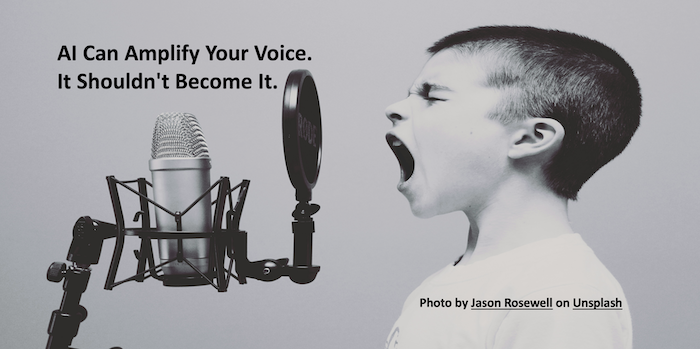
Brian Ahearn’s perspective offers a vital caution: AI should amplify, not replace, the human voice. The individuals who will likely thrive in the coming decade are not those who delegate their thinking entirely to algorithms, but those who possess a deep well of authentic expertise and leverage AI as a sophisticated tool to communicate that expertise with greater reach and precision.
The question for every content creator, influencer, and thought leader to ponder is: "Where do you draw the line between using AI as a tool and allowing it to become the author of your expertise?" This introspection is crucial for navigating the evolving landscape of digital communication and ensuring that influence remains rooted in genuine connection and verifiable human insight. The future of influence hinges on this delicate balance, where technology serves as a powerful enhancer of human intellect and experience, rather than a substitute for it.
