


The journey of growth, in all its multifaceted forms, is inherently intertwined with a degree of discomfort, a phenomenon observable from the earliest stages of human development to the complex landscapes of adult achievement. This principle, often overlooked in the pursuit of rapid progress, underscores a fundamental truth: significant advancement rarely occurs without a preceding period of challenge, adaptation, and sometimes, outright pain.
The Universal Language of Growing Pains
The analogy of childhood growing pains, where young bodies experience discomfort as they expand, serves as a potent metaphor for the broader concept of growth. Children, though unable to articulate the physiological processes at play, instinctively recognize the sensation of discomfort. This primal experience foreshadows a lifelong pattern: that stretching beyond current limitations, whether physical, emotional, or intellectual, is often accompanied by an unwelcome but necessary ache.
This pattern is demonstrably evident in the realm of physical development and athletic endeavors. Elite athletes, for instance, routinely push their bodies to extreme limits. Consider the rigorous training regimens of powerlifters and bodybuilders. Workouts can escalate to the point of physical exhaustion, sometimes bordering on nausea, as muscles are torn down and rebuilt to achieve greater strength and size. Similarly, marathon runners undertake thousands of miles of training, enduring early mornings, persistent muscle soreness, and the constant risk of injury. These are not incidental side effects; they are integral components of the growth process, demanding a conscious decision to persevere despite the physical toll. Data from sports science consistently shows a direct correlation between training volume, intensity, and the subsequent physiological adaptations that lead to enhanced performance. For example, studies on muscle hypertrophy indicate that mechanical tension and metabolic stress, both achieved through intense training, are key drivers of muscle growth.
Beyond the Physical: The Profound Challenges of Personal Growth
While physical growth demands discomfort, the most profound and often the most challenging transformations occur in the personal sphere. As individuals navigate their roles as partners, parents, leaders, friends, and spiritual beings, the stakes for growth become significantly higher, and the potential for emotional and psychological pain can be far more intense than any physical exertion.
The complexities of interpersonal relationships, particularly marriage, provide a stark illustration. The simple act of admitting fault, of uttering the words "I’m sorry," requires a profound act of humility. It necessitates setting aside ego and pride, and confronting the emotional discomfort of remorse for having caused hurt. This internal struggle, the laying down of one’s own perceived righteousness, is a critical juncture in relationship growth. Research in social psychology, such as studies on conflict resolution, indicates that the ability to apologize effectively is a strong predictor of relationship satisfaction and longevity. The difficulty in offering such an apology often stems from a deeply ingrained fear of vulnerability and a societal conditioning that can equate admitting error with weakness.
Conversely, the act of offering forgiveness can be equally, if not more, challenging. To forgive is to acknowledge that one has been wounded, a state that many individuals perceive as a position of vulnerability. The courage required to extend grace and release resentment, especially after significant hurt, is a testament to the depth of personal growth. Studies on forgiveness have shown its profound impact on individual well-being, reducing stress and improving mental health, yet the emotional barrier to achieving it remains significant for many.
Spiritual Journeys: Tested by Fire
The principle of growth through adversity extends deeply into spiritual development. A careful examination of religious texts reveals a recurring theme: individuals who achieve profound spiritual connection and influence rarely tread an easy path. Prophets, apostles, and countless figures throughout history faced immense hardship, including disappointment, rejection, persecution, and suffering. Their faith was not forged in comfort, but in the crucible of trial. The admiration for their unwavering conviction often overshadows the profound personal cost they paid.
For instance, the biblical narrative is replete with examples of spiritual leaders undergoing severe tests. Abraham, a foundational figure in several major religions, was commanded to sacrifice his son Isaac, a trial of unimaginable emotional weight. Moses faced decades of leading a contentious people through the wilderness, enduring constant challenges and doubts. The Apostle Paul, a pivotal figure in early Christianity, endured imprisonment, beatings, shipwrecks, and constant opposition, all while spreading his message. These accounts, when viewed through the lens of growth, highlight that spiritual maturity is often a byproduct of enduring and learning from profound adversity. Data from religious studies suggests that individuals who engage with their faith during times of crisis often report a deeper sense of purpose and resilience upon emerging from those challenges.
The Calculated Risk: Weighing Pain Against Gain
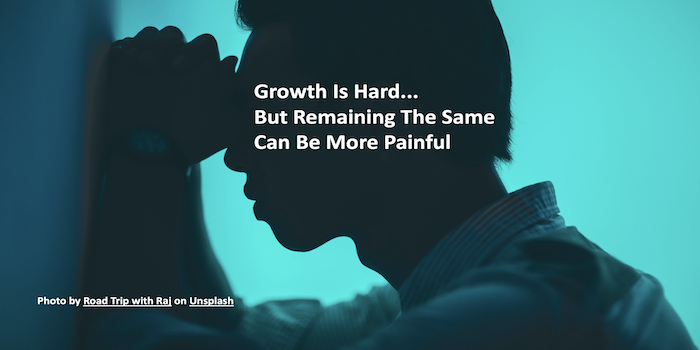
Ultimately, growth, in any domain, demands a conscious decision to embrace discomfort for the promise of future gain. Whether the objective is enhanced physical health, stronger interpersonal bonds, greater leadership capacity, or a deeper spiritual life, there comes a critical moment of reckoning. This moment requires individuals to assess whether the pain of the present is a worthwhile investment in the progress of tomorrow. This assessment is not purely rational; it requires a significant measure of faith and foresight.
Looking back across a spectrum of human experience, from personal achievements to professional endeavors, the consistent conclusion is that the arduous path of growth is, in fact, worth the investment. The individuals who leave the most enduring legacies are not those who meticulously avoided challenges, but those who allowed difficult experiences to serve as catalysts for profound character development.
The Unseen Architect: Adversity and Character
A key lesson learned from extensive work in the field of influence and leadership is that people are fundamentally drawn to individuals whose character has been shaped by adversity. While competence can capture attention, it is character, forged through trials, that cultivates trust. The synergistic combination of strong character and demonstrable competence positions individuals as credible authorities, a standing that endures and forms the bedrock of lasting influence. Research in organizational psychology has repeatedly shown that leaders who have overcome significant obstacles are often perceived as more authentic and inspiring, fostering higher levels of team loyalty and performance.
This doesn’t imply that subsequent seasons of growth become effortless. The demands of continuous improvement are relentless. Each bodybuilding contest necessitates another period of intense, often painful, training. Every marathon runner faces the recurring need for discipline and perseverance. Similarly, meaningful advancements in relationships invariably require difficult conversations and a willingness to navigate emotional complexities.
The presence of pain, therefore, does not necessarily diminish with experience. What evolves is an individual’s confidence in their ability to navigate it. Past experiences of growth, even those marked by hardship, build a reservoir of knowledge and resilience, instilling the belief that positive outcomes lie on the other side of challenge.
Stepping into the Arena: The Courage of Effort
The enduring wisdom of Theodore Roosevelt’s "Man in the Arena" speech resonates deeply with this understanding. Roosevelt eloquently champions the individual who dares to enter the arena, accepting the risks of failure, enduring hardship, and persistently striving toward a goal. The true defeat, as he articulated, is not in stumbling or falling, but in the decision to abandon the pursuit of growth because the perceived cost is too high.
The stark reality is that while growth is undeniably difficult and often painful, the alternative—stagnation—carries a far greater, albeit often less apparent, cost. The regression that comes from avoiding challenge can lead to missed opportunities, unfulfilled potential, and a pervasive sense of regret.
Therefore, the critical question for individuals to consider is not whether growth will be difficult, but whether they are willing to embrace the discomfort inherent in it. Reflecting on personal histories, there are often specific seasons of arduous growth that, in retrospect, are recognized as profoundly transformative and deeply appreciated precisely because they were persevered through. These are the moments that define us, shaping our character and ultimately, our capacity for a more fulfilling and impactful life. The investment in enduring discomfort is, in essence, an investment in becoming a more resilient, capable, and influential individual.
