

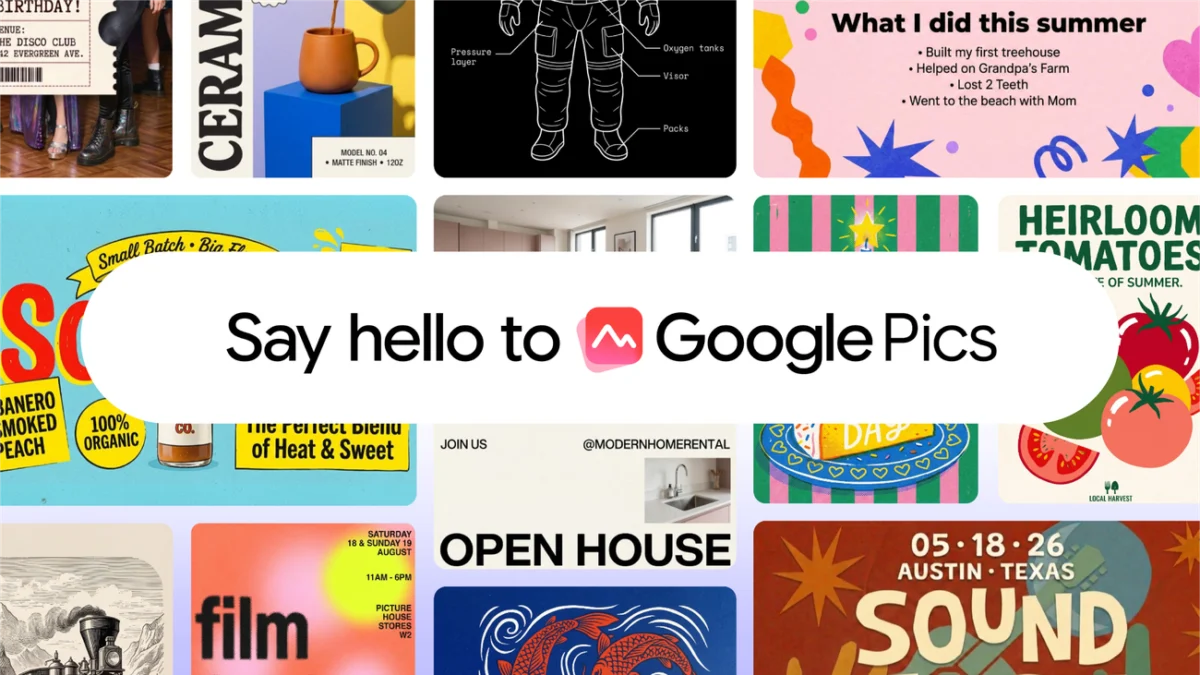
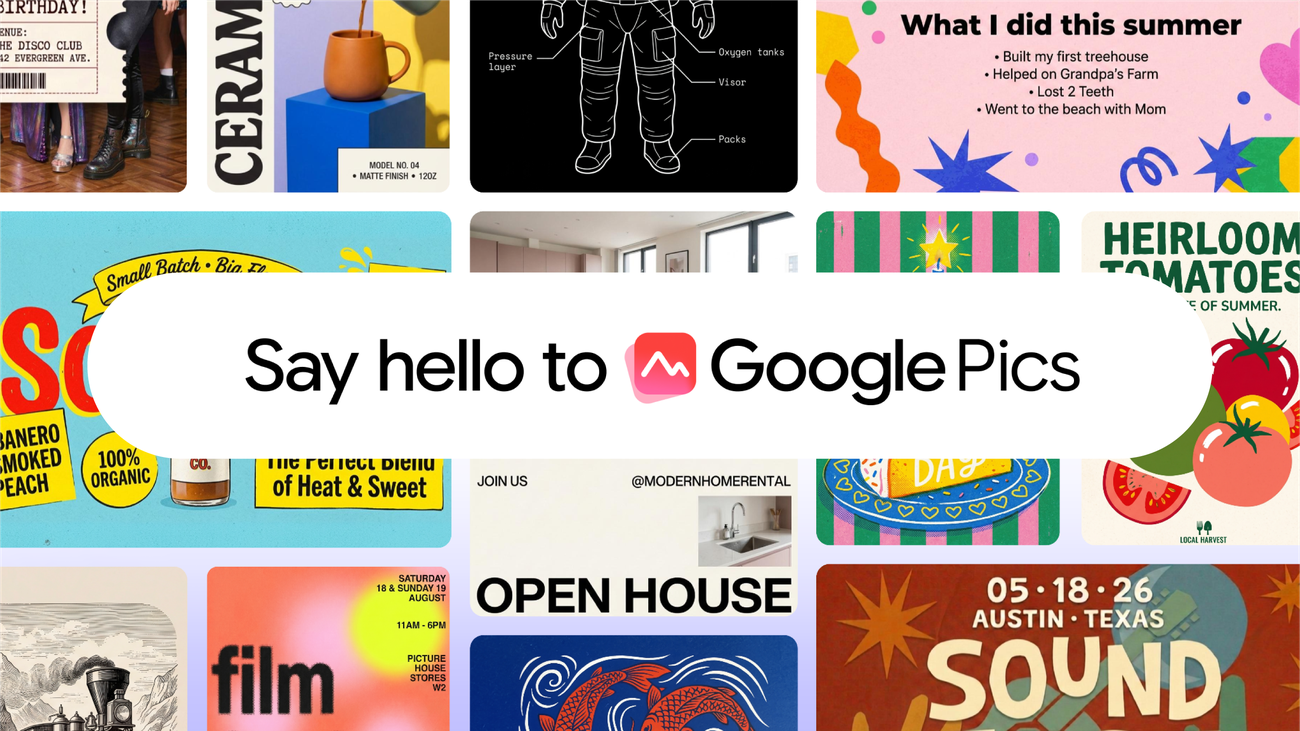
Google has officially announced the launch of Google Pics, a sophisticated image generation and editing suite designed to integrate seamlessly within the Google Workspace ecosystem. This new tool, built on the advanced Nano Banana generative model, marks a significant expansion of Google’s artificial intelligence capabilities, moving beyond text-based assistance into the realm of high-precision visual content creation. The rollout, which is scheduled to take place over the coming weeks, targets a broad spectrum of users, including Google AI Premium and Ultra subscribers, as well as the majority of Workspace business customers. By embedding professional-grade design tools directly into everyday applications like Google Docs, Slides, and eventually Drive, Google aims to eliminate the friction typically associated with cross-platform creative workflows.
The introduction of Google Pics represents a strategic pivot for the company as it seeks to consolidate its lead in the competitive generative AI market. While standalone AI image generators have proliferated over the last two years, Google’s approach emphasizes utility and accessibility within a professional context. Meg Whittenberger, Product Manager for Google Pics, emphasized that the tool is designed to provide "unparalleled precision," allowing users to not only generate images from scratch but also to refine, co-create, and edit existing visuals with a level of control previously reserved for specialized design software.
Technical Foundation and the Nano Banana Model
At the heart of Google Pics is the Nano Banana model, a specialized iteration of Google’s generative AI architecture optimized for both speed and granular editing capabilities. Unlike earlier iterations of text-to-image models that often struggled with specific user instructions or minor adjustments, Nano Banana is engineered for "fine-tuned editing." This allows users to modify specific elements of an image—such as changing the color of a subject’s clothing, altering the background of a product mockup, or adjusting the lighting of a digital illustration—without requiring a complete regeneration of the asset.
The "Nano" designation suggests that the model is designed for high efficiency, potentially allowing for faster processing times and lower latency during the "co-creation" process. This efficiency is critical for business environments where users expect real-time responses while building presentations or drafting reports. By focusing on precision, Google is addressing one of the primary pain points of generative AI: the "lottery" effect, where users must repeatedly prompt the AI in hopes of getting a usable result. Google Pics aims to replace this trial-and-error approach with a suite of intuitive editing controls that allow for manual refinement.
Seamless Integration Across the Workspace Ecosystem
The most transformative aspect of Google Pics is its deep integration with Google Workspace. Historically, creating visual content for a presentation or a document required a fragmented workflow: a user would generate an image in a third-party application, download it, and then upload it into Google Slides or Docs. Google Pics removes these intermediate steps.
Starting immediately, users will find Google Pics functionality embedded directly within Google Docs and Google Slides. This allows for the creation of custom graphics, social media posts, and digital announcements without ever leaving the document or slide deck. For example, a marketing professional drafting a campaign brief in Google Docs can now generate a conceptual image for a social media post directly in the side panel. Similarly, a teacher creating a presentation in Slides can generate and edit educational diagrams on the fly.
In the coming weeks, the integration will extend to Google Drive. This update is particularly significant for asset management and organizational workflows. Users will be able to drop files directly from Drive into the Google Pics standalone interface to begin designing brand concepts or product mockups. This interconnectedness ensures that brand assets and creative projects remain within the secure, collaborative environment of Workspace, rather than being scattered across various external design tools.
Chronology of Google’s AI Evolution
The launch of Google Pics is the latest milestone in a rapid series of AI-driven updates from the tech giant. To understand the significance of this release, it is helpful to look at the timeline of Google’s recent AI development:
- Early 2023: Google introduces "Help me write" in Workspace, focusing on text generation and summarization.
- Late 2023: The rebranding of Google’s AI efforts under the Gemini umbrella, including the launch of Gemini Pro and Ultra models.
- Mid-2024: The integration of Gemini into the Workspace side panel, offering users a conversational interface to interact with their documents and emails.
- Late 2024: The announcement of Google Pics, marking the transition from text-centric AI to a multi-modal approach that prioritizes visual content creation and professional editing.
This progression demonstrates a clear trajectory: Google is moving from providing "assistance" to providing "production" tools. While earlier AI features helped users manage information, Google Pics is designed to help users create final, polished products.
Market Context and Competitive Landscape
Google’s entry into the professional image editing space places it in direct competition with industry stalwarts like Adobe and emerging AI powerhouses like OpenAI and Midjourney. Adobe has seen significant success with its Firefly generative AI, which is integrated into Photoshop and Illustrator. Meanwhile, Microsoft has integrated DALL-E 3 into its Copilot and Designer tools within the Microsoft 365 suite.
However, Google’s advantage lies in its massive user base and the ubiquity of its Workspace tools. With millions of users interacting with billions of images across Docs, Slides, and Drive every month, Google has a captive audience that values convenience and workflow continuity. According to recent industry data, the generative AI market in the enterprise sector is expected to grow by over 30% annually as businesses seek to automate creative tasks and reduce the time spent on content production. By offering a "pro-level" tool within a familiar interface, Google is positioning itself to capture a significant share of this burgeoning market.
Security, Ethics, and Responsible AI
As with all its generative AI products, Google has emphasized the importance of responsible deployment. Google Pics includes built-in safeguards to prevent the generation of harmful or inappropriate content. Furthermore, images created with Google Pics will likely utilize Google’s SynthID technology—an invisible digital watermark that identifies content as being AI-generated. This is a crucial feature for enterprise customers who must navigate the legal and ethical implications of using AI-generated imagery in marketing and public communications.
The integration with Workspace also ensures that the data used and generated within Google Pics remains subject to the same rigorous privacy and security standards as the rest of the Workspace suite. For business customers, this provides a level of assurance that is often lacking in consumer-grade AI tools, where data ownership and usage policies can be opaque.
Inferred Industry Reactions and Analyst Perspectives
Industry analysts suggest that the launch of Google Pics will be particularly impactful for small to medium-sized businesses (SMBs) that may not have the budget for full-time graphic designers or expensive software subscriptions. By providing "easy image creation" that yields professional results, Google is effectively democratizing design.
"The integration of high-end image editing directly into the document layer is a game-changer for productivity," notes one industry analyst. "It changes the document from a static container of information into a dynamic canvas for creation."
While creative professionals may still rely on more robust platforms like Adobe Creative Cloud for complex projects, Google Pics is expected to become the go-to tool for "everyday" design tasks—presentations, internal communications, and rapid prototyping.
Broader Impact and Future Outlook
The rollout of Google Pics is just the beginning of what appears to be a broader strategy to infuse every aspect of digital work with generative capabilities. As the tool evolves, it is likely that we will see further integrations with other Workspace apps, such as Google Sheets (for data visualization) and Google Meet (for dynamic backgrounds and visual aids).
The introduction of the "pics.new" shortcut also signals Google’s intent to make this tool a standalone destination for creators, much like "docs.new" or "sheets.new" revolutionized how users start new projects. This shortcut provides an immediate entry point for users who want to jump straight into the creative process without navigating through the Drive interface.
In conclusion, Google Pics represents a major leap forward for Google Workspace, transforming it from a suite of productivity tools into a comprehensive creative platform. By combining the power of the Nano Banana model with the convenience of Workspace integration, Google is providing its users with the tools they need to bring their imaginations to life with precision and ease. As the rollout continues over the coming weeks, the impact on how businesses and individuals communicate visually is expected to be profound, ushering in a new era of AI-augmented creativity.
