

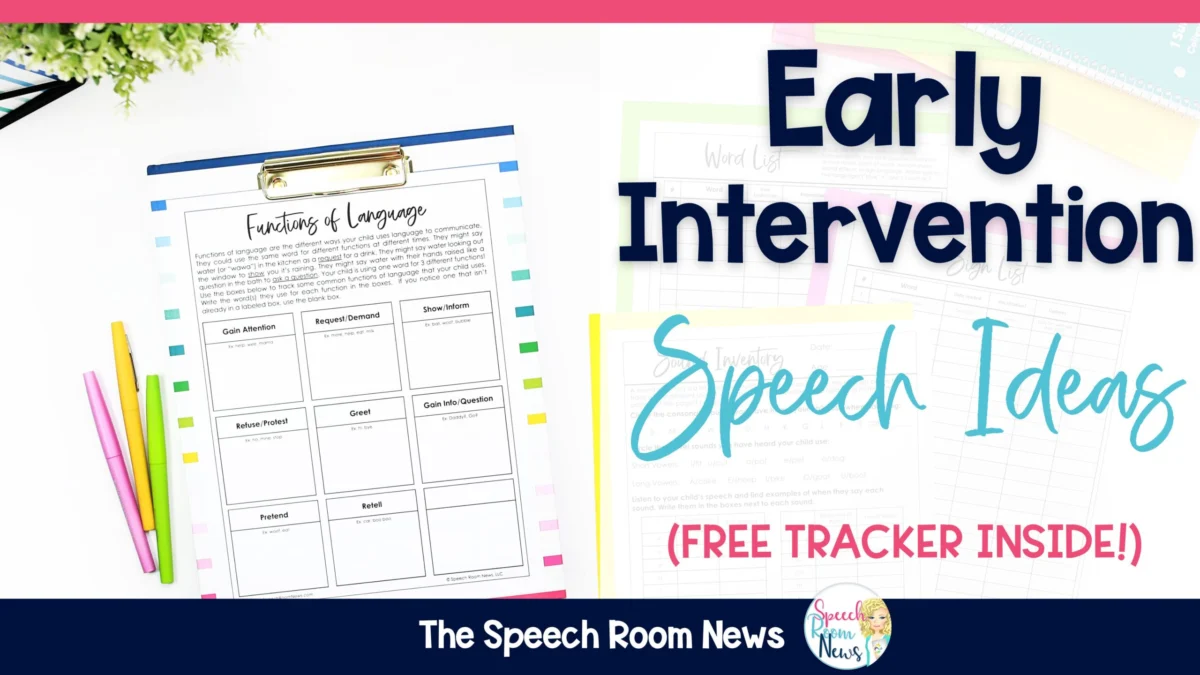
The trajectory of a child’s linguistic and cognitive development is profoundly influenced by the timing and efficacy of support services, particularly in the realm of speech and language. Early intervention speech therapy stands as a cornerstone in this developmental journey, its significance magnified for young children exhibiting delays in their communication skills. For both dedicated speech-language pathologists (SLPs) and parents navigating the complexities of early childhood speech acquisition, a deep understanding of their respective, intertwined roles is not merely beneficial but critically essential. This comprehensive approach encompasses targeted therapeutic activities, diligent progress tracking, and access to robust educational resources, all aimed at fostering optimal speech and language outcomes.
The Imperative of Early Intervention in Child Development
Early intervention in speech and language development refers to a system of coordinated services designed to promote the child’s development and well-being, and to enhance the family’s capacity to meet their child’s special needs. Typically, these services are offered from birth through age three, a period characterized by remarkable brain plasticity and rapid skill acquisition. The brain’s capacity for learning and adaptation is at its peak during these formative years, making early intervention uniquely powerful. Addressing speech and language delays during this window can significantly mitigate long-term challenges in communication, literacy, social interaction, and academic performance.
Research consistently demonstrates that children who receive early intervention for speech and language difficulties exhibit better developmental outcomes compared to those who do not. Studies indicate that approximately 10-15% of children under three years of age may experience some form of speech or language delay. Without timely support, these delays can cascade into more complex issues, affecting self-esteem, social integration, and academic achievement. Conversely, effective early intervention has been shown to reduce the need for more intensive and costly special education services later in a child’s educational career, highlighting its economic as well as developmental benefits. The focus is not merely on "fixing" a problem, but on building a robust communication foundation that supports all subsequent learning and social engagement.
The Evolving Landscape: From Professional Insight to Parental Reality
Speech-language pathologists dedicate their careers to understanding and facilitating communication development. Many enter the profession with a profound theoretical and clinical grasp of typical language acquisition stages, from early babbling to complex sentence structures. However, the theoretical framework often gains a new dimension when an SLP becomes a parent and observes their own child’s developmental path. This personal experience can transform professional understanding, lending a unique empathy and practical insight to their work.
For instance, an SLP meticulously trained in documenting communicative milestones might find their professional expectations challenged when their own child’s development deviates from the typical timeline. The initial excitement of observing and charting a child’s "first words" can quickly shift to concern when those expected milestones, such as babbling or initial verbalizations, do not emerge as anticipated. This personal journey often underscores a universal truth for both professionals and parents: the path of child development is individual and can present unexpected turns. This dual perspective—combining expert knowledge with firsthand parental experience—often fuels the creation of practical tools and strategies, designed to bridge the gap between clinical theory and the daily realities of raising a child with speech delays. It highlights the subtle yet critical role parents play as primary facilitators of language development within the naturalistic environment of the home.
The Science and Strategy of Tracking First Words and Sounds
The systematic tracking of a child’s early speech sounds and words is a cornerstone of effective early intervention. This practice is not merely about record-keeping; it is a vital diagnostic tool, a progress monitor, and a source of invaluable data for both parents and therapists. From a clinical perspective, meticulously recorded data provides objective evidence of a child’s communicative growth, enabling SLPs to tailor interventions, assess their effectiveness, and make informed decisions about the child’s therapy plan.
One primary reason for tracking is to compare a child’s development against established age-specific milestones. These milestones serve as benchmarks, indicating typical ranges for the emergence of sounds, words, and grammatical structures. When a child consistently misses these milestones, it signals a potential need for evaluation. Beyond simply counting words, tracking allows for the analysis of speech patterns and the complexity of utterances. For example, therapists and parents can observe the evolution of syllable shapes over time. This includes progression from simpler consonant-vowel (CV) words like "mama" or "dada," to vowel-consonant (VC) words like "up" or "eat," and eventually to more complex consonant-vowel-consonant-vowel (CVCV) structures like "wawa" (water) or "baba" (bottle), and finally to consonant-vowel-consonant (CVC) words like "ball" or "cup." Documenting this progression provides crucial insights into a child’s phonological development and their readiness for more complex speech production.
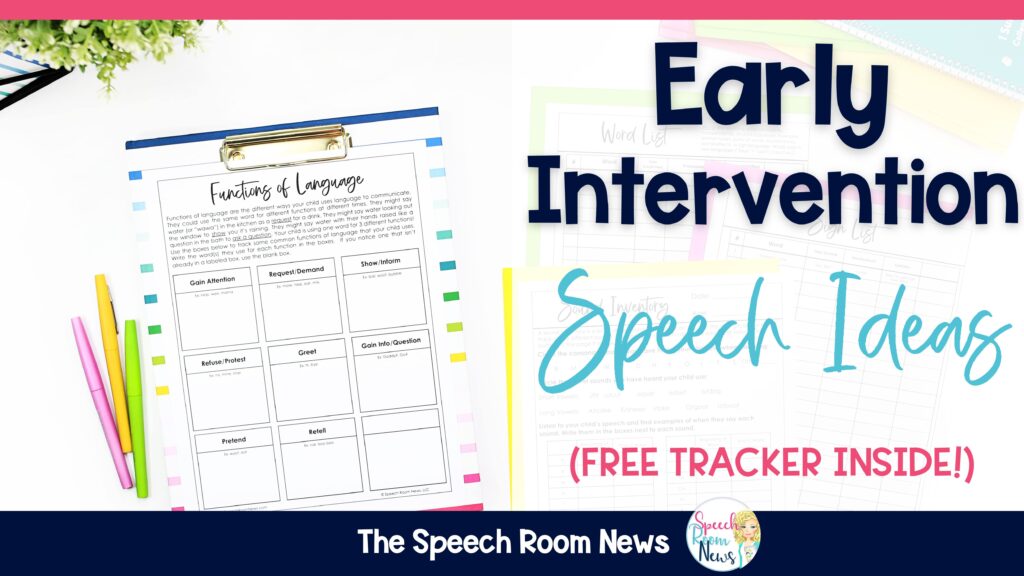
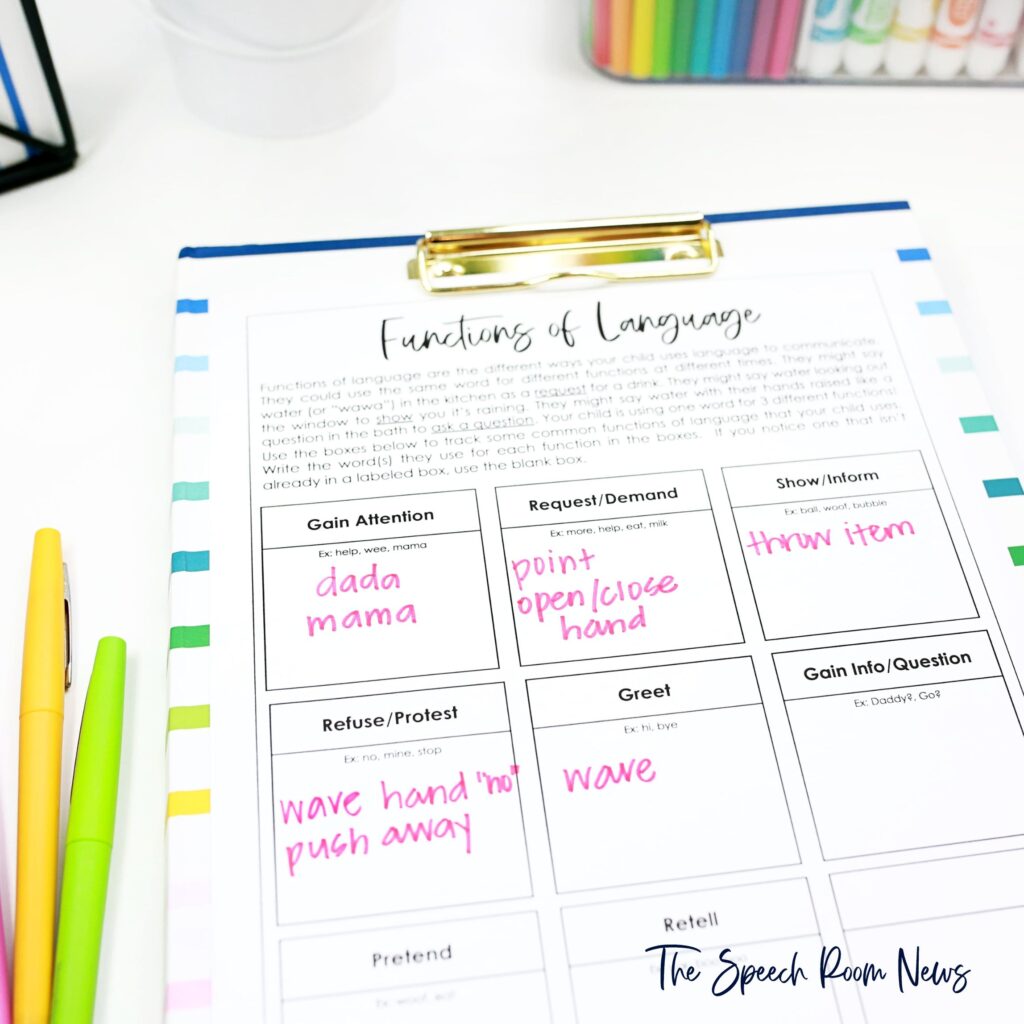
Furthermore, parental tracking alleviates the inherent difficulty of recalling every new sound or word a child produces, especially as their vocabulary begins to expand. This structured data eliminates guesswork, allowing parents to share precise and comprehensive information with their child’s therapist during regular coaching sessions. Resources like a "First Words Tracker" empower parents by providing an organized framework to record early vocalizations, first words, and the contexts in which they occur. These trackers often include sections for tracking sound inventory (which sounds the child is producing), syllable shapes, and the communicative functions of language (e.g., requesting, protesting, labeling). Parents who engage in intentional tracking often report a surprising awareness of the breadth of sounds and words their child is already attempting, fostering a sense of achievement and reinforcing their active role in the therapeutic process.
Navigating "Late Talkers": When to Seek Professional Guidance
The term "late talker" generally refers to a toddler (typically between 18 and 30 months of age) who has a good understanding of language, develops typically in other areas (motor skills, cognitive skills, social skills), but has a limited expressive vocabulary for their age. While every child develops at their own pace, and some natural variation is expected, certain indicators should prompt parents to seek professional advice.
Key indicators that might suggest a child is a late talker include:
- Fewer than 10 words by 18 months of age.
- Fewer than 50 words by 24 months of age.
- Lack of two-word combinations by 24 months (e.g., "more juice," "mama up").
- Limited use of gestures to communicate (e.g., pointing, waving).
- Absence of babbling or limited variety in babbling sounds.
- Difficulty understanding simple instructions for their age.
While some late talkers may eventually catch up to their peers without formal intervention ("late bloomers"), studies show that a significant percentage (estimated between 40-50%) may continue to experience language difficulties, potentially affecting literacy and academic success. This makes the "wait and see" approach a risky one. It is crucial to dispel the myth that children will simply "grow out of it."

If concerns arise, the best course of action is to consult with a pediatrician, who can then refer the family to a speech-language pathologist for a comprehensive evaluation. Parents can also contact their local school district, as many offer early intervention services. An SLP can determine if the child’s delay is within the typical range of variation or if it indicates a need for intervention. Early intervention handouts specifically designed for parents of late talkers can be invaluable. These resources often clarify what constitutes a "word," outline the stages of babbling, and provide practical strategies for encouraging child-led play to stimulate speech. Understanding these nuances empowers parents to make informed decisions and actively participate in their child’s development.
Integrating Speech Therapy into Daily Life: Practical Activities for Parents
Effective early intervention emphasizes the integration of therapeutic strategies into a child’s natural daily routines. This approach leverages the predictability and repeated exposure inherent in daily activities, creating countless organic opportunities for language learning. When activities are consistent, children can better anticipate events, learn specific vocabulary, understand social expectations, and practice new communication skills in meaningful contexts.
1. Eating a Snack: A Communication Catalyst
Snack time offers an ideal, low-pressure environment for encouraging communication, often more so than a full meal. This is because snacks are typically highly motivating for children.
- Preparation: Pour a desired snack into a clear bowl.
- Modeling: As you pour, verbalize your actions and desires: "Look, I’m pouring some crackers into the bowl. Yum! I love to eat crackers. You like to eat crackers too. Mmmm, crackers."
- Prompting and Waiting: Offer the bowl to your child and ask, "Do you want crackers?" Look expectantly at your child and wait for a response. The "wait time" is crucial, allowing the child processing time to formulate a response.
- Celebrating Attempts: Celebrate any attempt at communication, whether it’s a word approximation (e.g., "cacka"), a gesture (pointing, reaching), or even a sound. The goal is to reinforce the act of communicating.
- Expansion: If the child says "cacka," you can expand by saying, "Yes, crackers! You want more crackers." This provides a slightly more advanced model without correcting the child directly. This repeated modeling, coupled with communication temptations, significantly increases the likelihood of imitation.
2. Brushing Teeth: Mirroring and Modeling Language
Time spent in front of a mirror during personal care routines offers a unique opportunity for building social connection and language skills through shared attention and interaction.
- Narrate and Explain: Verbally describe every action and its purpose. Instead of a terse "Brush your teeth," try: "It’s time to brush your teeth! We brush and clean our teeth so they stay healthy. Healthy teeth help us eat all kinds of yummy foods. Let’s find your green toothbrush. Can you find the toothpaste? Squeeze just a little bit out. Now what do we do? Yes! Let’s brush the front teeth. Now what? Time to brush the back teeth! You brushed your teeth so well. Now let mommy brush them too. I am brushing the front and the back. I go up and down, making sure I get all your teeth. We did it! Time to rinse our teeth and our brush so they stay clean."
- Use Positional Words: Emphasize spatial concepts like "up," "down," "front," and "back" during the activity.
- Turn-Taking: Engage in back-and-forth interactions, such as making funny faces in the mirror, sticking out tongues, opening and closing mouths, or making different sounds. This fosters reciprocal communication and joint attention.
- Cause and Effect: Discuss the "why" behind actions, explaining the connection between brushing and healthy teeth. This builds comprehension and vocabulary.
These examples illustrate how seemingly mundane daily activities can be transformed into rich language-learning opportunities through intentional modeling, narration, and responsive interaction. The key is to capitalize on predictable moments to build vocabulary, comprehension, and expressive language skills. Comprehensive resources, such as "Early Intervention Daily Routines Handbooks," often provide numerous additional ideas for integrating speech therapy into bath time, getting dressed, playtime, and story time, offering a wealth of practical strategies for parents.
Empowering Parents with Comprehensive Resources
The success of early intervention heavily relies on empowering parents with the knowledge, tools, and confidence to implement therapeutic strategies at home. Speech-language pathologists often provide specialized handouts and resource packets that serve as practical guides for families. These resources cover a broad spectrum of topics essential for supporting early language development.
Typically, these parent handouts might be organized into thematic sets:
- Set 1: Norms and Language Strategies: Provides information on typical speech and language developmental milestones, helping parents understand what to expect at various ages. It also introduces foundational language stimulation strategies like parallel talk, self-talk, expansion, and focused stimulation.
- Set 2: Daily Routines: Offers specific, actionable ideas for incorporating language practice into everyday activities such as mealtime, bath time, dressing, and bedtime, as elaborated above.
- Set 3: Encouraging First Words: Focuses on techniques to elicit initial verbalizations, including using communication temptations, offering choices, and modeling simple words.
- Set 4: Late Talkers: Addresses specific concerns related to late language emergence, providing definitions, risk factors, and clear guidance on when and how to seek professional evaluation.
- Set 5: Gestures: Highlights the critical role of gestures as a precursor to verbal language, providing ideas for encouraging pointing, waving, and other non-verbal communication.
These structured handouts are designed to be accessible, informative, and actionable, enabling parents to become active and effective participants in their child’s therapy journey. When used in conjunction with direct SLP guidance, these resources create a powerful home-based intervention program, ensuring consistency and maximizing a child’s potential for speech and language growth. Feedback from families using such tools often indicates that intentional tracking and structured activities significantly enhance their awareness of their child’s progress and empower them to make a tangible difference.

The Broader Impact and Collaborative Future
The profound impact of early intervention speech therapy extends far beyond individual children and their families. By fostering effective communication skills from a young age, society invests in the cognitive, social, and emotional well-being of its future generations. Children who can communicate effectively are better equipped to navigate social interactions, express their needs and desires, succeed academically, and ultimately contribute meaningfully to their communities.
The ongoing success of early intervention programs necessitates a collaborative ecosystem involving parents, caregivers, educators, pediatricians, and speech-language pathologists. Public awareness campaigns are crucial to educate parents about the signs of speech and language delays and the importance of timely intervention. Furthermore, ensuring equitable access to high-quality early intervention services, regardless of socioeconomic status or geographic location, remains a critical challenge and a societal imperative. Continuous research into best practices, coupled with innovative resource development, will continue to refine and strengthen these vital programs. Ultimately, investing in early intervention is an investment in a child’s fundamental ability to connect with the world around them, setting them on a positive developmental trajectory for life.
