

In an effort to empower parents and caregivers with informed choices for holiday gifting, Jenna Kirk, MA, CCC-SLP, a distinguished pediatric speech-language pathologist and mother of two, has unveiled a series of meticulously curated Amazon Gift Guides. These guides are specifically designed to highlight toys that actively foster speech and language skills across various developmental stages, providing a valuable resource for families seeking to support their children’s communication abilities through play. Kirk, who navigates the complexities of childhood speech development firsthand as a parent to a child with Childhood Apraxia of Speech, emphasizes the profound impact of intentional toy selection on a child’s linguistic journey.
The Foundational Role of Play in Speech and Language Acquisition
The significance of play in early childhood development, particularly for speech and language acquisition, is well-documented by developmental psychologists and speech-language pathologists worldwide. Play is not merely a recreational activity; it is a critical conduit through which children explore, experiment, and make sense of their world, simultaneously building cognitive, social, emotional, and communication skills. For language development, play provides natural, motivating contexts for children to practice vocalizations, mimic sounds, engage in turn-taking, expand vocabulary, understand sentence structures, and develop narrative abilities.
Research consistently indicates that children who engage in diverse and interactive play experiences often exhibit stronger language proficiencies. According to a report by the American Academy of Pediatrics, play is essential for healthy brain development, allowing children to develop problem-solving skills, creativity, and language. It provides opportunities for children to use and understand language in meaningful contexts, moving beyond rote memorization to active application. Interactive play, especially with caregivers, has been shown to be particularly impactful, creating a rich environment for linguistic exchange and learning.
Addressing the Landscape of Speech and Language Disorders

The initiative by Ms. Kirk gains particular relevance given the prevalence of speech and language disorders among children. Data from the National Institute on Deafness and Other Communication Disorders (NIDCD) suggests that roughly 8 to 9 percent of young children (ages 3-17) have a speech sound disorder. Conditions like Childhood Apraxia of Speech (CAS), which Ms. Kirk’s own child experiences, are neurological speech sound disorders in which the brain has difficulty planning the movements needed for speech. This makes it challenging for children to produce sounds, syllables, and words correctly and consistently. Early identification and intervention, often involving specialized therapy and supportive home environments, are crucial for children with such diagnoses.
For parents navigating these challenges, selecting toys that can reinforce therapeutic goals at home is paramount. Many conventional toys, while entertaining, may not inherently offer the structured or open-ended opportunities necessary for targeted speech and language practice. This is where expert-curated guides, such as those provided by Ms. Kirk, become indispensable, bridging the gap between clinical intervention and everyday play.
Expert Methodology: Principles Guiding Toy Selection

When curating her recommendations, Ms. Kirk applies a set of principles rooted in her professional expertise as a speech-language pathologist. While the specific "few things" she focuses on were not explicitly listed in the initial announcement, standard SLP practice dictates a focus on several key attributes when selecting toys for language development:
- Open-Ended Play: Toys that encourage imagination and have multiple uses, rather than a single prescribed function, are highly valued. Examples include building blocks, dolls, animal figures, or art supplies. These allow children to create their own narratives, fostering descriptive language and complex sentence structures.
- Interactive Potential: Toys that promote interaction between the child and a caregiver or peer are crucial. Games involving turn-taking, puzzles requiring collaboration, or items for pretend play (e.g., play kitchens, doctor kits) facilitate dialogue, social communication, and joint attention.
- Sensory Engagement: Toys that appeal to multiple senses (sight, touch, hearing) can capture a child’s attention and provide varied learning experiences. Textured objects, musical instruments, or colorful manipulatives offer different pathways for language input and expression.
- Durability and Safety: Practical considerations such as a toy’s ability to withstand repeated use and adherence to safety standards are always important for ensuring longevity and a secure play environment.
- Developmental Appropriateness: Toys must align with a child’s cognitive and motor skills to be engaging and effective. A toy too advanced can lead to frustration, while one too simple may not stimulate growth. Ms. Kirk’s age-sorted guides directly address this principle.
- Promotion of Specific Language Skills: Certain toys are particularly effective for targeting specific language goals, such as expanding vocabulary (e.g., farm animals for animal names and sounds), practicing articulation (e.g., puppets for specific phonemes), or developing narrative skills (e.g., story-telling cards).
These guiding principles ensure that the recommended toys are not just entertaining, but serve as powerful tools for fostering communication skills in a natural, play-based setting.
A Chronology of Developmental Play: Age-Sorted Guides

The core utility of Ms. Kirk’s initiative lies in its organization by age, providing a developmental roadmap for toy selection. This chronological approach ensures that recommended items are developmentally appropriate, maximizing their potential for engagement and skill-building.
-
Infants (0-12 months): Laying the Foundation
- At this earliest stage, language development is pre-linguistic. Toys that promote sensory exploration, cause-and-effect understanding, and early vocalizations are key. Soft books with varied textures, rattles, unbreakable mirrors, and simple stacking rings encourage visual tracking, grasping, babbling, and responsiveness to sounds. These activities are foundational for developing auditory processing and the motor skills needed for speech. Engaging in "parentese" (infant-directed speech) while playing with these toys significantly enhances language exposure.
-
Toddlers (1-3 years): Bursting into Words

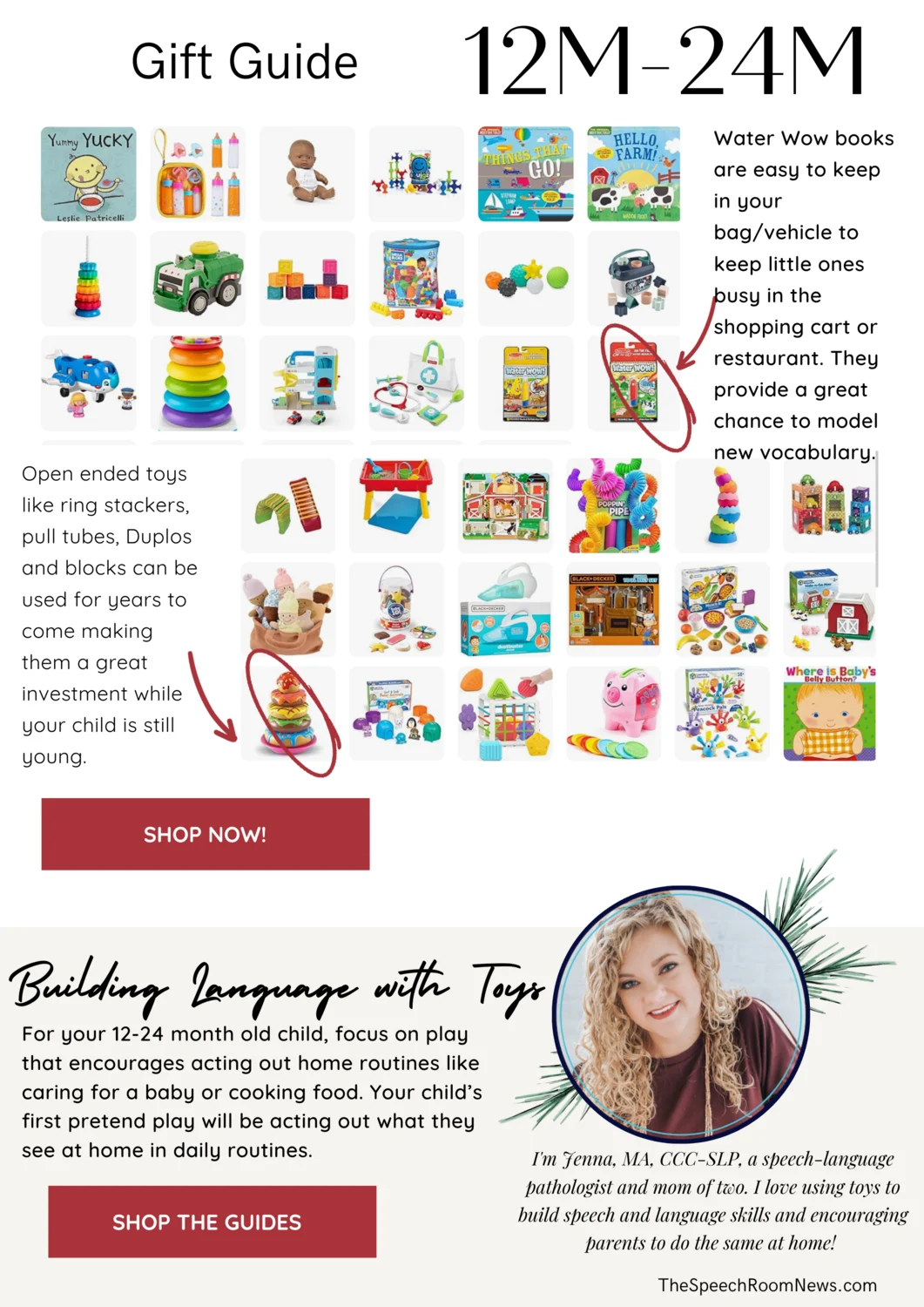
- This period is marked by an explosion in vocabulary and the emergence of first words and simple sentences. Toys that facilitate imitation, object identification, and basic concept development are crucial. Shape sorters, simple puzzles, baby dolls, chunky vehicles, and picture books encourage naming objects, following simple directions, understanding spatial concepts (in/out, up/down), and engaging in early pretend play. Interactive songs and games also play a vital role in developing rhythm and phonetic awareness.
-
Preschoolers (3-5 years): Expanding Narratives and Social Skills
- Preschoolers are developing more complex sentence structures, narrative abilities, and social communication skills. Open-ended toys that support imaginative play, role-playing, and cooperative games are highly beneficial. Play kitchens, doctor kits, dress-up clothes, building blocks, board games focused on turn-taking, and puppets encourage storytelling, problem-solving, emotional expression, and the practice of social scripts. These experiences are critical for developing pragmatic language skills – how language is used in social contexts.
-
Early School Age (5-8 years): Refining Communication and Critical Thinking
- Children in this age group are refining their conversational skills, understanding humor, and engaging in more complex problem-solving. Toys that foster strategic thinking, advanced storytelling, and collaborative play are excellent. More complex board games, science kits, chapter books, creative writing prompts, and construction sets (e.g., LEGOs) support inferencing, critical thinking, sequencing, and the articulation of more sophisticated ideas. These activities reinforce literacy skills and prepare children for academic demands.
By categorizing toys in this manner, Ms. Kirk provides a clear framework for parents to select items that align precisely with their child’s current developmental stage and future growth potential.

The Role of Stocking Stuffers: Small Wonders, Big Impact
Beyond larger gifts, Ms. Kirk’s guides also thoughtfully include recommendations for stocking stuffers, emphasizing that even small items can significantly contribute to speech and language development. These smaller toys often provide focused opportunities for specific skill-building:
- Fine Motor Skills: Small manipulatives like play-doh, mini puzzles, or small building pieces enhance fine motor control, which is indirectly linked to articulation as it strengthens muscles used in speech.
- Sensory Input: Fidget toys, textured balls, or small sensory bottles can provide calming sensory input, helping children regulate and focus, thereby improving their attention for communication tasks.
- Turn-Taking: Simple card games or small cooperative games encourage turn-taking, waiting, and verbal negotiation, foundational elements of conversational exchange.
- Vocabulary Expansion: Novelty items or themed mini-sets (e.g., small animal figures, miniature food items) can introduce new vocabulary in an engaging, manageable format.
These "small wonders" demonstrate that effective language support does not always require elaborate or expensive items, but rather thoughtful selection.

Broader Impact and Implications for Families
The implications of initiatives like Ms. Kirk’s extend far beyond simply purchasing toys. They represent a significant step in empowering parents and caregivers to become active participants in their children’s speech and language development.
- Parental Empowerment: By providing expert-vetted recommendations, the guides demystify the often overwhelming toy market. Parents gain confidence in their ability to select toys that are not only enjoyable but also educationally enriching.
- Early Intervention Support: For children already receiving speech therapy, these guides offer practical tools to reinforce therapeutic strategies in the home environment, making therapy goals feel less like "work" and more like play. This continuity between clinic and home can accelerate progress.
- Normalization of Support: Presenting these toys as mainstream gift ideas helps normalize the concept of supporting developmental skills through play, reducing any stigma associated with speech and language delays.
- Preventative Measures: For typically developing children, engaging with these types of toys can serve as a preventative measure, strengthening foundational language skills and potentially mitigating future difficulties.
- Economic Efficiency: By guiding purchases towards toys with long-term developmental benefits, families can make more economically efficient choices, investing in items that offer sustained value rather than fleeting entertainment.
In a consumer landscape often saturated with products that prioritize fleeting trends over developmental utility, expert-curated resources like these gift guides offer a refreshing and critical service. They underscore the understanding that play is a child’s primary occupation, and through it, the complex architecture of communication is meticulously built.

Accessing the Guides and Further Resources
Parents, educators, and caregivers interested in exploring these expert recommendations can access the Amazon Gift Guides directly through the provided link: amazon.com/shop/speechroomnews. Additionally, a downloadable PDF version of the Christmas Toy Guide is available for convenience. Ms. Kirk encourages feedback and further toy recommendations from the community, fostering a collaborative approach to supporting children’s communication journeys. Her platform, The Speech Room News, continues to serve as a valuable resource for speech-language pathologists and educators, sharing insights and strategies from her professional and personal experiences.
This initiative by Jenna Kirk stands as a testament to the power of informed choices in fostering robust developmental outcomes, reminding all that the best gifts are often those that contribute to a child’s lifelong ability to connect, express, and thrive.
