


Ten years ago, the Atlas of Emotions was introduced to the world, a groundbreaking initiative born from a unique confluence of scientific inquiry, contemplative wisdom, and collaborative spirit. Launched in 2016, this innovative framework for understanding and navigating the complexities of human emotion has since permeated educational institutions, therapeutic practices, academic research, and the broader public discourse, marking a decade of profound influence and ongoing development.
The genesis of the Atlas of Emotions lies in the vision of Dr. Paul Ekman, a renowned psychologist celebrated for his pioneering work on facial expressions and universal emotions. Driven by a desire to create a scientifically robust yet universally accessible map of the emotional landscape, Dr. Ekman, in partnership with his daughter Dr. Eve Ekman, a medical doctor and emotional intelligence expert, and His Holiness the Dalai Lama, embarked on an ambitious project. Their collaboration sought to synthesize empirical psychological research with the Dalai Lama’s profound insights into the nature of mind and well-being. This interdisciplinary approach was foundational, aiming to bridge the gap between rigorous scientific understanding and practical, compassionate application.
A significant undercurrent to the Atlas’s development was Dr. Paul Ekman’s extensive research, including a landmark survey of nearly 250 emotion scientists. This comprehensive study, conducted prior to the Atlas’s launch, revealed a striking consensus on the existence and nature of universal emotions, providing a solid empirical bedrock for the project. The Atlas, therefore, was not conceived in a vacuum but emerged from a deep understanding of established scientific agreement, augmented by contemplative perspectives.
A Glimpse into the Collaborative Process: Unseen Footage Reveals Early Dynamics
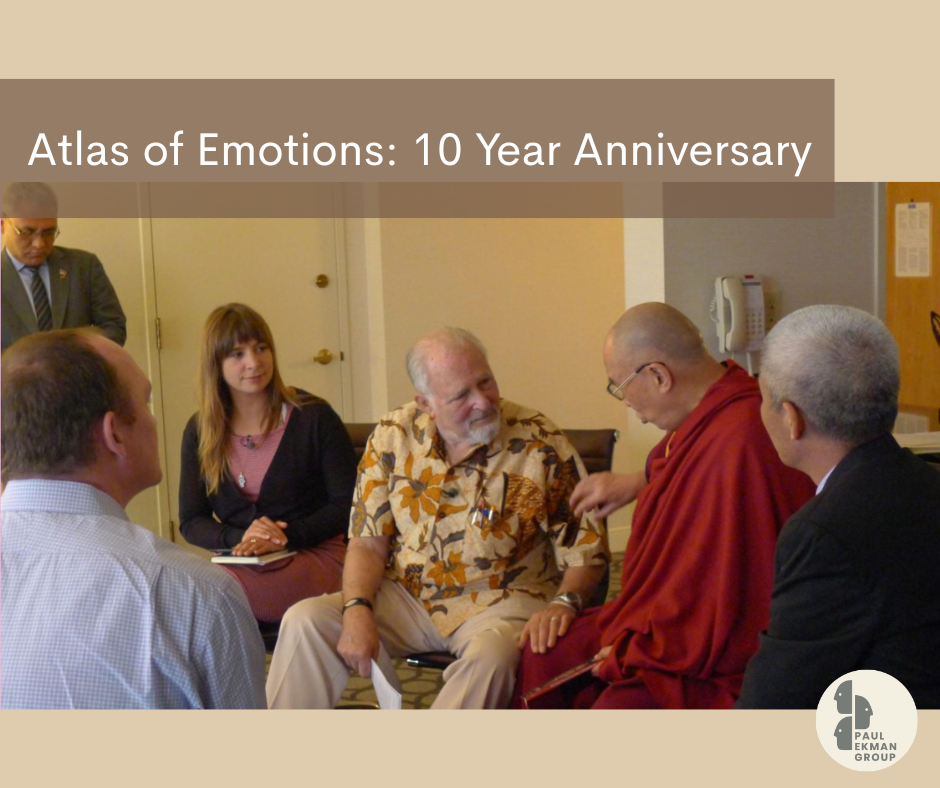
To commemorate this significant anniversary, the Paul Ekman Group has unveiled never-before-seen archival footage. This exclusive content offers a rare behind-the-scenes look at a pivotal working meeting between Dr. Paul Ekman, Dr. Eve Ekman, and His Holiness the Dalai Lama. The video captures the three key figures actively reviewing and discussing the Atlas of Emotions in its nascent stages. This footage is particularly valuable as it illustrates the collaborative spirit and the intellectual synergy that characterized the project’s development. It underscores the project’s commitment to an interdisciplinary methodology, harmonizing the precision of psychological research with the aesthetic considerations of graphic design and the profound philosophical insights of the Dalai Lama. The visual record serves as a tangible testament to the foundational consensus upon which the Atlas was built.
The initial public reception to the Atlas of Emotions was significant. Upon its launch in 2016, the project garnered widespread international attention. Notably, The New York Times featured the Atlas in a prominent article, highlighting its innovative approach to mapping emotions and its success in demystifying complex psychological concepts for a general audience. This early recognition from a globally respected media outlet served as a crucial catalyst, propelling the Atlas into broader public consciousness and fostering its subsequent widespread adoption across various sectors.
From Conception to Global Reach: A Decade of Impact
Over the past ten years, the Atlas of Emotions has evolved into a versatile tool, demonstrating its efficacy across a diverse range of applications. Its impact can be observed in numerous spheres:
- Educational Settings: The Atlas has been integrated into curricula, providing students of all ages with a structured framework to identify, understand, and articulate their emotional experiences. This has fostered enhanced emotional literacy, crucial for social-emotional learning and academic success. Educational psychologists have noted its utility in helping young learners develop empathy and conflict-resolution skills.
- Therapeutic Environments: Mental health professionals have leveraged the Atlas to deepen therapeutic alliances and facilitate more nuanced explorations of clients’ emotional states. Therapists report that the visual and conceptual clarity of the Atlas aids clients in verbalizing feelings that may otherwise be difficult to express, thereby accelerating the therapeutic process and improving outcomes in areas such as anxiety, depression, and trauma.
- Research Laboratories: Academics and researchers worldwide have utilized the Atlas as a standardized instrument for studying emotional responses, cross-cultural emotional understanding, and the impact of emotional regulation interventions. Studies employing the Atlas have contributed to a growing body of knowledge in affective science, exploring the universality and variability of emotional experiences across different demographics and cultural contexts.
- Professional Development: In the corporate world and other professional arenas, the Atlas has been adopted for leadership training, team building, and enhancing interpersonal communication. Organizations have reported improvements in workplace dynamics, employee engagement, and leadership effectiveness through the application of the Atlas’s principles in fostering greater emotional intelligence and empathy among staff.
- Personal Growth and Well-being: Beyond formal settings, countless individuals have turned to the Atlas of Emotions for self-reflection and personal development. Its accessible interface and insightful content empower individuals to gain a greater understanding of their own emotional patterns, leading to improved self-awareness, stress management, and overall well-being. Online forums and personal blogs frequently feature testimonials from users who credit the Atlas with helping them navigate personal challenges and cultivate more fulfilling relationships.
The Scientific Foundation: Consensus on Universal Emotions
The Atlas of Emotions is built upon a robust scientific foundation, particularly Dr. Paul Ekman’s extensive research into universal emotions. His seminal work, which included cross-cultural studies on facial expressions, provided compelling evidence that certain basic emotions are recognized and expressed universally across human societies. This foundational understanding is crucial because it establishes a common ground for discussing and categorizing emotions, making the Atlas a tool that transcends cultural and linguistic barriers. The agreement among emotion scientists, as evidenced in Dr. Ekman’s surveys, confirms that while the triggers and expressions of emotions can vary, the core emotional experiences themselves possess a degree of universality. This scientific consensus underpins the Atlas’s credibility and its widespread applicability.
A Call for Continued Engagement: Shaping the Future of Emotional Understanding
As the Atlas of Emotions celebrates its tenth anniversary, the creators are actively seeking input from its global community of users. This initiative underscores a commitment to continuous improvement and adaptation. Users are invited to share their personal experiences with the Atlas, detailing how it has influenced their perspectives, understanding, or actions. This feedback is invaluable for informing the ongoing evolution of the project and ensuring its continued relevance. The feedback mechanism, typically a survey or dedicated online form, serves as a vital channel for collecting qualitative data that complements quantitative research and user analytics. By actively engaging its user base, the Atlas aims to foster a sense of co-creation and shared ownership, further solidifying its impact.
Charting the Path Forward: Enhanced Digital Experience and a Forthcoming Book
Looking ahead, the Paul Ekman Group has announced exciting developments designed to further enhance the reach and depth of the Atlas of Emotions. Significant updates are planned for the online, interactive Atlas of Emotions platform. These enhancements are expected to include refined navigation, expanded content, and potentially new interactive features that will offer users even more sophisticated tools for exploring their emotional lives.
Furthermore, Dr. Eve Ekman is currently developing an "Atlas of Emotions" book. Scheduled for release in 2027, this forthcoming publication promises to build upon the foundation of the original Atlas, offering a more in-depth exploration of emotional science, practical applications, and new perspectives. The book is anticipated to delve into complex emotional dynamics, provide updated research findings, and offer readers innovative strategies for cultivating emotional resilience and well-being. This expansion into a book format signals a commitment to making these insights accessible to an even broader audience, catering to those who prefer a more traditional, in-depth study of the subject matter. A dedicated announcement list is available for individuals wishing to be notified of the book’s release, ensuring that interested parties can stay informed about this significant new contribution to the field of emotional intelligence.
The decade-long journey of the Atlas of Emotions stands as a testament to the power of interdisciplinary collaboration and the enduring human quest for self-understanding. From its scientifically grounded origins and the contemplative wisdom of the Dalai Lama to its widespread adoption in diverse settings and its future-oriented developments, the Atlas continues to illuminate the intricate landscape of human emotion, empowering individuals and communities to navigate life with greater awareness, empathy, and resilience. The ongoing evolution of this vital resource suggests a promising future for the study and application of emotional intelligence worldwide.
