


The well-established principle of reciprocity, a cornerstone of social psychology and a potent force in human interaction, often leads us to understand it through a simple, transactional lens: when someone extends a kindness or a favor, we feel an inherent obligation to reciprocate. This fundamental tenet of influence, popularized by researchers like Robert Cialdini, suggests that by giving first—especially when that giving is perceived as meaningful, personalized, and unexpected—we significantly increase the likelihood of receiving assistance in return. However, this widely understood dynamic represents only one facet of a far more profound and less frequently explored aspect of reciprocity: the transformative impact of giving on the giver themselves.
This dual nature of reciprocity was brought into sharp relief through a personal experience that underscored a critical, often overlooked, dimension of this social exchange. The narrative centers on a unique birthday gesture, a project conceived to celebrate a significant milestone: the 52nd birthday of Jane, the wife of author and influence expert Brian Ahearn. Rather than a singular, elaborate present, Ahearn devised a year-long gift-giving endeavor, promising to present Jane with a new gift each week for an entire year, culminating in a total of 52 presents. While Jane, the intended recipient, undoubtedly cherished the consistent flow of thoughtful surprises, the initiative yielded an even more profound and unanticipated outcome for Ahearn himself.
The Genesis of a Year-Long Gift of Giving
The impetus for this extended birthday celebration stemmed from Ahearn’s desire to offer something beyond the conventional. "I wanted to give her something extra special for her birthday," Ahearn recalled, as detailed in his reflections. The concept of "52 gifts for her 52nd birthday" emerged not from a pre-existing playbook of gift-giving strategies, but from an intuitive desire to prolong the joy and demonstrate sustained thoughtfulness. The decision to distribute the gifts over a year, rather than presenting them all at once, was crucial to the project’s unfolding impact. This temporal distribution ensured a consistent engagement with the act of giving, fostering a sustained process of intention and execution.
The practicalities of generating 52 distinct gifts over a year required a significant investment of thought and attention. This necessity, however, became the catalyst for a subtle yet powerful shift in Ahearn’s perception and behavior. To consistently identify and procure or create suitable gifts, he found himself compelled to listen more intently to Jane’s daily conversations, to observe what captured her interest, and to contemplate what might genuinely surprise or delight her. This proactive engagement with his wife’s preferences and potential joys transformed the act of gift-giving from a potentially perfunctory task into a deeply attentive practice.
Shifting Focus: From Recipient to Giver’s Internal Landscape
The conventional understanding of reciprocity positions the recipient as the primary beneficiary, focusing on their subsequent actions and potential reciprocation. This perspective, while valid in its own right, tends to overshadow the internal transformations that can occur within the giver. Ahearn’s experience illustrates this point compellingly. The act of selecting 52 gifts necessitated a deep dive into understanding Jane’s evolving desires, her unspoken wishes, and the subtle nuances of her personality. This process, driven by the need to give, inherently fostered a heightened state of awareness and empathy.
"I started paying more attention to my wife," Ahearn stated, articulating the core of this internal shift. This increased attentiveness went beyond superficial observation. It involved actively listening for clues, noticing fleeting expressions of interest, and considering what actions could elicit a smile or a feeling of being cherished. The project also involved his daughter, Abigail, who became an integral part of the process, either by offering gift ideas or participating in shopping excursions. This collaborative element further amplified the sense of connection and shared purpose, enriching the giving experience for all involved.
The initial objective was to provide for Jane, to offer her a year of joy. However, the unforeseen consequence was a profound recalibration of Ahearn’s own perspective. He realized that "I didn’t realize what I would receive in return," referring not to material reciprocation from Jane, but to the personal growth and enhanced connection he experienced.
The Two-Way Street of Reciprocity: Beyond the Transactional
The principle of reciprocity, when viewed through the lens of influence, typically focuses on the outward flow of benefits: "If I give something to you, you’re more likely to give something back to me." This is a fundamental aspect of how we navigate social and economic exchanges, and its efficacy is well-documented in fields ranging from marketing and sales to interpersonal relationships. Studies on consumer behavior, for instance, have consistently shown that receiving a free sample or a small gift can significantly increase a customer’s propensity to purchase. Research published in journals like the Journal of Consumer Research has explored the psychological underpinnings of this phenomenon, often linking it to a desire to alleviate indebtedness and maintain social equilibrium.
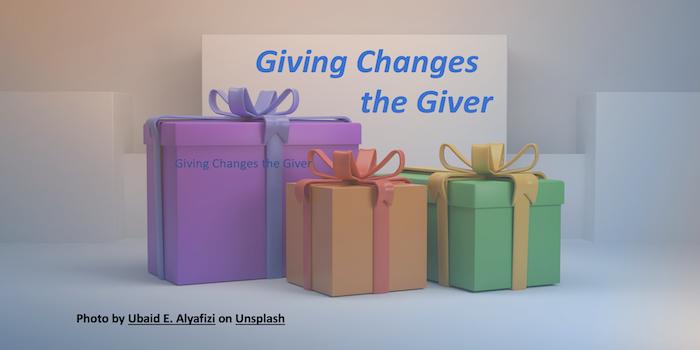
However, as Ahearn’s experience highlights, focusing solely on the return misses crucial dimensions of the giving process. The act of giving, when undertaken with genuine intent, can:
- Deepen Observational Skills: To give thoughtfully, one must observe. This requires a heightened awareness of the recipient’s environment, their expressed needs, and even their unarticulated desires. This practice hones our ability to notice details that might otherwise pass us by.
- Enhance Empathy and Understanding: When we are actively trying to please someone through our giving, we are compelled to step into their shoes, to understand their perspective, and to connect with their emotional state. This fosters a more profound sense of empathy.
- Cultivate Connection and Relationship Strength: The shared experience of giving and receiving, particularly when it involves a sustained effort, can significantly strengthen bonds. The year-long gift project, for example, created ongoing touchpoints for connection and shared joy between Ahearn and Jane.
- Shift Focus from Self to Other: In a world that often emphasizes personal achievement and self-interest, the act of giving requires a deliberate redirection of attention away from one’s own needs and desires towards the well-being and happiness of another.
This outward focus is particularly potent when the motive is pure generosity, devoid of a transactional mindset. Ahearn emphasizes a critical qualifier: "our motive matters." He distinguishes between genuine generosity and what he terms "a transaction with delayed payment." The former involves giving without an expectation of a quid pro quo, while the latter is essentially a calculated investment with an anticipated return.
Psychological research supports this distinction. Studies in positive psychology, such as those examining the benefits of altruism, suggest that acts of selfless giving are associated with greater well-being for the giver. The feeling of contributing to another’s happiness, independent of any personal gain, can activate reward pathways in the brain, leading to feelings of satisfaction and fulfillment. This is often referred to as the "helper’s high."
Consider the simple act of offering a thoughtful note of encouragement. This requires the giver to pause and reflect on what they genuinely appreciate about the recipient, a process that can elevate their own mood and reinforce positive feelings about that individual. Similarly, assisting a colleague necessitates an understanding of their challenges, fostering a sense of shared endeavor and mutual support. When we offer someone our undivided attention, we are compelled to quiet our own internal monologue and truly listen, a practice that not only benefits the speaker but also enhances our own listening skills and deepens our connection.
The Unforeseen Returns of Generosity
The adage "it’s better to give than to receive" often resonates differently depending on one’s age and perspective. As a child, the anticipation of receiving gifts on occasions like Christmas can overshadow the abstract notion of the joy of giving. However, with maturity and experience, the profound truth of this statement becomes increasingly apparent.
The power of receiving, Ahearn notes, is contingent upon someone else’s decision to give. This highlights a fundamental asymmetry: the act of giving is almost always within our capacity. We can offer encouragement, facilitate an introduction, share valuable information, or even perform small acts of courtesy like allowing another driver to merge into traffic. These actions, often requiring minimal effort or resources, can have a significant impact on the recipient.
The true transformative power of giving emerges when it becomes an ingrained aspect of one’s character, rather than a strategic tool for influence. When generosity is not about "keeping score" but about embodying a giving spirit, a cascade of positive internal and external effects can occur. These include:
- Enhanced Self-Worth and Confidence: Consistently acting with generosity can foster a strong sense of self-efficacy and positive self-regard. Knowing that one can positively impact others contributes to a feeling of purpose and value.
- Improved Emotional Well-being: Acts of kindness and generosity have been linked to reduced stress, lower rates of depression, and increased overall happiness. The focus on others can provide a welcome distraction from personal worries and cultivate a more optimistic outlook.
- Greater Resilience: Individuals who regularly engage in prosocial behaviors often demonstrate greater resilience in the face of adversity. Their strong social connections and sense of purpose can serve as buffers against life’s challenges.
- Increased Social Capital: Generosity tends to foster positive social networks and build trust. People are more likely to be drawn to and support individuals who demonstrate kindness and helpfulness.
- The Spread of Positivity: Perhaps one of the most significant outcomes of genuine generosity is its contagious nature. When people experience kindness, they are often inspired to extend that same kindness to others, creating a ripple effect that can positively impact communities. This phenomenon, often observed in social psychology, demonstrates how prosocial behavior can propagate through social networks, amplifying its overall impact.
This contagion of kindness is a powerful form of influence, not through manipulation or obligation, but through inspiration. It operates on a deeper, more intrinsic level, fostering genuine connection and mutual support.
In conclusion, while the principle of reciprocity undeniably highlights the tendency for people to reciprocate favors, the deeper lesson lies not in what we might receive from them, but in what transpires within us. The act of giving, when undertaken with authentic intent, is a profound gift to oneself. It cultivates attentiveness, deepens empathy, strengthens connections, and ultimately, enriches the giver’s internal landscape in ways that far surpass any transactional return. As Brian Ahearn’s personal narrative illustrates, the most meaningful reciprocal exchange may not involve a tangible return from another, but rather an internal transformation that redefines our understanding of influence and connection. Sometimes, when you give, the recipient is not the only one receiving a gift.
Brian Ahearn, the Chief Influence Officer at Influence PEOPLE and a faculty member at the Cialdini Institute, is a recognized authority on ethical influence. His work, deeply rooted in the principles established by Dr. Robert Cialdini, focuses on applying social psychology to enhance effectiveness in everyday interactions. Ahearn’s expertise has been honed through extensive training and endorsement by Cialdini himself, positioning him as one of a select group of certified trainers globally. His contributions to the field include the widely acclaimed book Influence PEOPLE, recognized by Book Authority as one of the top 100 influence books of all time. Further solidifying his impact, his books Persuasive Selling and Influenced from Above achieved Amazon new release bestseller status. Ahearn’s reach extends globally through his popular LinkedIn courses on persuasive selling and coaching, which have garnered over 850,000 views, and his TEDx Talk on pre-suasion, which has surpassed one million views, demonstrating his significant influence and reach in educating diverse audiences on the science of ethical persuasion.
