

Rites of passage, whether the celebratory toast of Auld Lang Syne, the hopeful glow of birthday candles, or the ceremonial smashing of champagne on a ship’s hull, mark significant transitions and the start of new chapters. In the corporate realm, annual sales cycles are similarly christened with Sales Kickoff (SKO) events, designed not merely as gatherings but as critical strategic junctures to define objectives, align efforts, and galvanize the sales force for the year ahead. Much like orchestrating a memorable event, a truly successful SKO demands meticulous reflection, strategic foresight, and a compelling narrative that resonates with every participant, transforming a routine assembly into a powerful catalyst for growth.
In today’s dynamic business environment, marked by rapid technological shifts, evolving customer expectations, and intense competition, the efficacy of an SKO has never been more vital. These events serve as the foundational launchpad for new initiatives, product rollouts, and strategic shifts, aiming to reinvigorate sellers, articulate clear pathways to success, and build indispensable momentum. Industry analyses suggest that companies investing strategically in their SKOs report higher sales productivity, improved employee retention, and a more cohesive organizational culture. However, achieving this impact requires moving beyond mere spectacle or a deluge of data. Experts point to four fundamental elements as crucial for keeping audiences engaged, energized, and ultimately, equipped to meet and exceed their annual targets.
The Strategic Imperative: Four Pillars of a Transformative SKO
While approaches to sales kickoffs can vary widely—from celebrity keynotes to elaborate corporate theatrics—the ultimate objective remains constant: to unify the sales team and ignite their passion for achieving ambitious goals. A common pitfall for organizations is to overemphasize aspirational targets without adequately detailing the process or emotional investment required to achieve them. To navigate these complexities and elevate an SKO from a "good" event to a truly "great" one, incorporating the right content, striking an emotional chord, and fostering genuine engagement are paramount. This transformation begins with the most crucial stakeholders in the room: the audience.
1. Prioritizing the Audience: The Foundation of Engagement
Leadership teams are inherently conditioned to prioritize the organization’s overarching health, future trajectory, and bottom line. While these concerns are legitimate, allowing them to exclusively dictate the messaging of a sales kickoff can prove detrimental. The risk lies in the untested assumption that all audience members, even those central to daily business operations, automatically share the same high-level concerns as executive leadership. The consequence is often a presentation replete with abstract numbers, high-level projections, and a visible decline in audience engagement.
Averting this common pitfall necessitates a fundamental shift in perspective, encapsulated by a simple yet profound question: Who is my audience, truly? Before the development of any event materials, planners must delve into the current mindset, recent experiences, and potential aspirations or anxieties shaping their sales force. This introspective process involves asking critical questions: What are their immediate challenges? What successes have they recently celebrated? What are their hopes for the coming year, and what fears might they harbor regarding new initiatives or market changes?

Remaining objective and empathetic throughout this analysis ensures that programming and content are designed with the audience’s specific needs and perspectives in mind. Leaders should endeavor to translate company goals into language that resonates personally with sellers, creating an environment conducive to maximum information absorption and motivational impact. This extends beyond content to logistical considerations, including the timing of sessions, provision of amenities (food, hydration, caffeine for both in-person and virtual attendees), and a balanced mix of passive learning and active, participatory programming.
Consider, for instance, an organization preparing to launch a new AI-enabled sales workflow. A leadership-first approach might focus on projected productivity gains and cost savings. An audience-first strategy, however, would anticipate potential seller reservations—concerns about job security, the learning curve, or perceived depersonalization of sales. By proactively addressing these anxieties, framing the initiative not just as a productivity win but as a tool to liberate sellers from tedious clerical tasks, the message shifts dramatically. Emphasize how the new tools will save significant time, allowing more energy and bandwidth for nurturing high-value client relationships and strategic engagement, rather than administrative burdens. Instead of a mandatory, static demonstration, allocate time for small group breakouts where sellers can hands-on experiment with the new technology, fostering ownership and a sense of discovery. This nuanced approach, while still achieving the productivity goal, establishes a much stronger emotional connection and intrinsic motivation for adoption.
To garner these crucial insights, direct engagement is key. Conversations with team leaders, surveys, or even direct interviews with a representative sample of sellers can illuminate their current mindset, pain points, and what they would genuinely value from an SKO. Such interactions not only make team members feel seen and valued but also provide the authentic "raw materials" necessary for crafting a message that truly connects and for making impactful programming decisions. This data-driven empathy allows for more precise questioning during content development: What specific challenges can this SKO help them overcome? What opportunities can it unlock for their personal and professional growth? What emotional impact do we want to leave them with?
2. Establishing a Singular "Big Idea": The North Star of Messaging
In the modern corporate landscape, information overload is a persistent challenge. Many ambitious presenters inadvertently dilute the impact of their SKOs by attempting to cover an exhaustive list of topics—financial performance, detailed product roadmaps, visionary industry forecasts. While each of these subjects holds merit, they should all serve a singular, overarching purpose: the one unforgettable takeaway that leadership wants the audience to grasp and internalize.
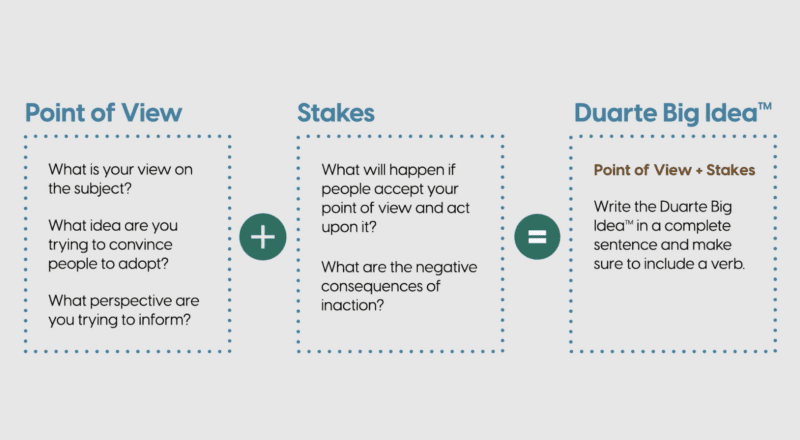
This is where the concept of a "Big Idea" becomes indispensable. A Big Idea is a strategic framework designed to distill complex messaging into a clear, concise, and compelling core concept. It articulates leadership’s unique point of view on a subject, intrinsically linked to what is at stake for the audience, all encapsulated within a single, digestible sentence. This formula typically combines a distinct "Point of View" (What specific belief or strategy are we advocating?) with the "Stakes" (What are the consequences of action or inaction for the audience?).
The consistent application of this principle is a cornerstone for leading communication firms and trusted by Fortune 50 companies for high-stakes moments. Its power lies in its simplicity and scalability. The initial goal is to craft the Big Idea as a single, unambiguous sentence. If it exceeds this, the task becomes ruthless editing: identifying and excising anything that does not directly contribute to the core meaning, asking, "What is the absolute essence of what I need to communicate?"
Once refined into an unmissable point, this Big Idea transforms into the organizational north star, guiding the development of the entire SKO, from the keynote address to breakout sessions and all supporting materials. It acts as a powerful filter, determining what content is essential and what can be omitted or communicated through alternative channels. This disciplined focus ensures message consistency, prevents cognitive overload, and amplifies the central call to action. For instance, in our AI workflow example, a strong Big Idea might be: "This new AI workflow will cut clerical tasks for sellers by 20%, freeing up 8-10 hours weekly to cultivate high-value client relationships and drive unprecedented growth." This statement clearly presents the POV (AI workflow’s benefit) and the stakes (time saved for high-value activities leading to growth).
3. Structuring the Narrative: The Universal Power of the 3-Act Story
Having identified the audience and crystallized the Big Idea, the next crucial step is to establish a coherent flow for the SKO programming. The timeless principle of a three-act story structure provides a universally recognizable framework: a beginning, a middle, and an end. This narrative arc is not merely for entertainment; it’s deeply embedded in human psychology and facilitates understanding, engagement, and retention.
The beginning of the SKO narrative positions the audience as the hero. It sets the current stage, acknowledges the existing circumstances, and explicitly addresses the feelings, gaps, and needs previously identified through audience research. This act establishes relevance and empathy. The middle is where the core action unfolds. Here, the hero (the sales team) encounters challenges, learns new strategies, and confronts obstacles that test their resolve. This creates narrative tension, mirroring the real-world complexities of sales. The end sees the hero transformed, achieving resolution as a new reality takes hold, accompanied by a clear path forward and a renewed sense of purpose.
This classic structure underpins millennia of storytelling, from ancient myths to modern blockbusters, making it inherently familiar and emotionally resonant. Its ubiquity allows audiences to instinctively follow the narrative progression, responding emotionally as tension builds and resolves.
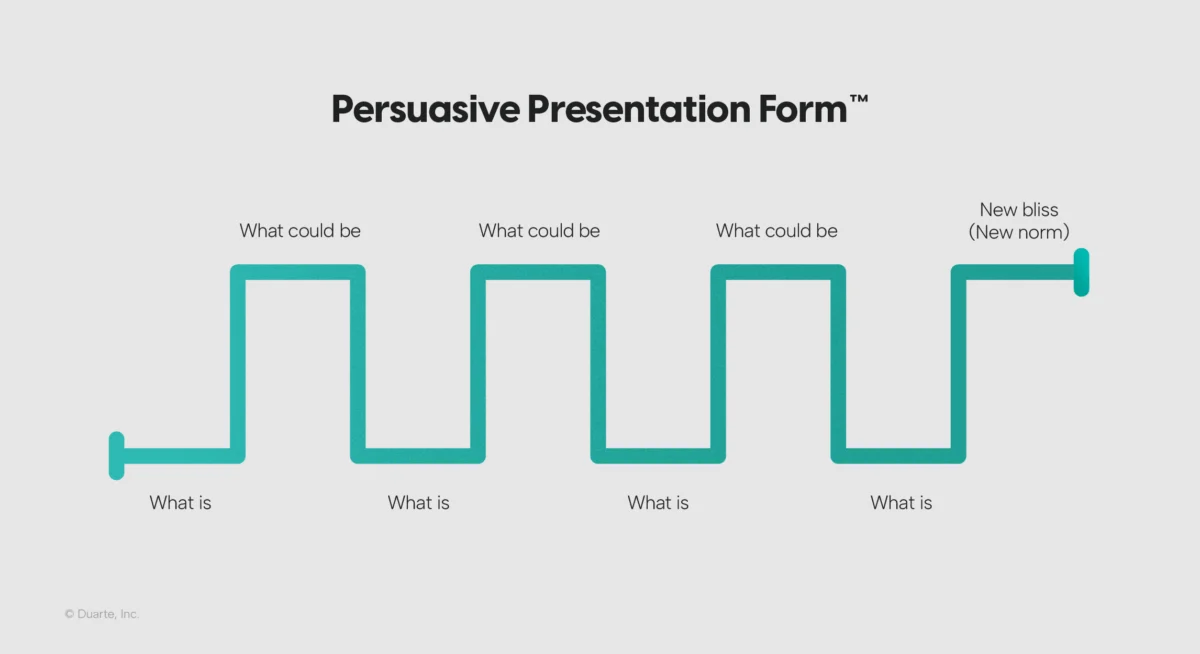
Much of an SKO’s content will naturally reside in the "messy middle," where growth occurs, and established practices evolve into new ones. To guide this tension toward a desirable outcome, a "Persuasive Presentation Form" can be employed. This structure alternates between describing "what is" (the current reality, challenges, and pain points) and "what could be" (the envisioned future, solutions, and opportunities), compelling the audience to embrace the "new bliss" offered in the resolution. This dynamic interplay creates a sense of journey and progression, motivating change.
For example, when introducing the AI workflow, the narrative in the middle act might oscillate: "We know that the current manual data entry demands consume valuable selling time, diverting focus from strategic client engagement (‘what is’). However, with the new AI tools, imagine having dedicated hours each week to cultivate deeper relationships with your top accounts, leading to higher conversion rates and customer satisfaction (‘what could be’). Yes, there will be an initial learning curve, and adapting to new systems can feel daunting (‘what is’), but we’ve developed comprehensive training and support structures to ensure a smooth transition, empowering you to reclaim your day and focus on what you do best: selling (‘what could be’)." This approach directly addresses concerns while continually reinforcing the benefits, building a compelling case for adoption.
This "what is" versus "what could be" dynamic, famously articulated by communications expert Nancy Duarte, is a powerful tool for persuasion. It acknowledges current struggles, validates audience experiences, and then strategically introduces a more desirable future, making the transition feel necessary and achievable. To apply this effectively: begin by clearly stating the current problem or "what is." Introduce the proposed solution or "what could be." Acknowledge the obstacles to reaching "what could be," demonstrating foresight and empathy. Then, reinforce the benefits of overcoming these obstacles and achieving the "new bliss." Finally, provide clear actions the audience can take to bridge the gap.
4. Weaving in a Personal Story: Humanizing the Mission

After meticulous audience research, the articulation of a powerful Big Idea, and the structuring of the message within a compelling narrative arc, the final, yet profoundly impactful, element is the inclusion of a personal touch. While natural storytellers may find this effortless, many leaders grapple with incorporating personal anecdotes. Yet, the willingness to share, even imperfectly, often garners respect and fosters genuine connection.
The advice is simple: just try it. Integrate a brief personal aside into a talk track to break monotony and add depth. For a high-stakes event like an SKO, practicing this technique in smaller team meetings can provide valuable feedback and build confidence. The story doesn’t need to be profoundly vulnerable; a happy medium that offers a glimpse into one’s life outside the corporate sphere can invite listeners in. When skillfully executed, a well-placed personal story can achieve several critical objectives: it humanizes leadership, making abstract corporate goals relatable; it creates emotional resonance, forging a deeper connection with the audience; and it reinforces key messages through vivid, memorable examples.
Consider the AI workflow example. A leader might share: "While piloting this new workflow over the past few months, something truly unexpected happened. My son entered his ‘terrible twos,’ and my wife and I were utterly exhausted. I was working late most nights, and she bore the brunt of toddler duty. But as I grew more adept with these AI tools, my days began to shorten. I was keeping pace with tasks and reclaiming time. Now, we all go to the park every day after daycare pickup. He burns off energy, I’m contributing more at home, and, frankly, we’re all sleeping a little better." This quick anecdote instantly humanizes the technology, transforming an abstract productivity gain into a tangible, relatable benefit—more time for family, better work-life balance.
Personal stories are potent tools for hooking an audience, allowing them to perceive the genuine thought and emotional investment behind leadership’s vision. To discover such impactful narratives, leaders should reflect on their own lives and leadership journeys for appropriate analogies that connect to the SKO’s core messages. Experimenting with these stories in smaller, trusted settings allows for refinement and gauging audience reception before a larger platform. With practice and strategic timing, the right personal stories can profoundly move hearts and minds, aligning teams around a shared vision and inspiring collective action.
Beyond the Event: Sustained Impact and Strategic Alignment
By diligently reflecting on the audience’s needs, committing to a singular, compelling Big Idea, framing the narrative within a universally understood three-act structure, and strategically weaving in authentic personal stories, an SKO transforms from a mere corporate meeting into a powerful, transformative event. This holistic approach ensures that the message is not only heard but deeply understood, internalized, and acted upon.
The implications of such a meticulously planned SKO extend far beyond the event itself. A truly successful kickoff fosters a stronger, more cohesive sales culture, enhances employee morale, and drives higher levels of commitment and performance throughout the year. It lays the groundwork for sustained organizational success by aligning every individual with a clear purpose and empowering them with both the tools and the motivation to achieve ambitious goals. In an era where talent retention and high-performance sales teams are paramount, investing in an SKO that genuinely resonates with and inspires its audience is not just good practice—it is a strategic imperative for any organization aiming for market leadership and sustained growth.
