

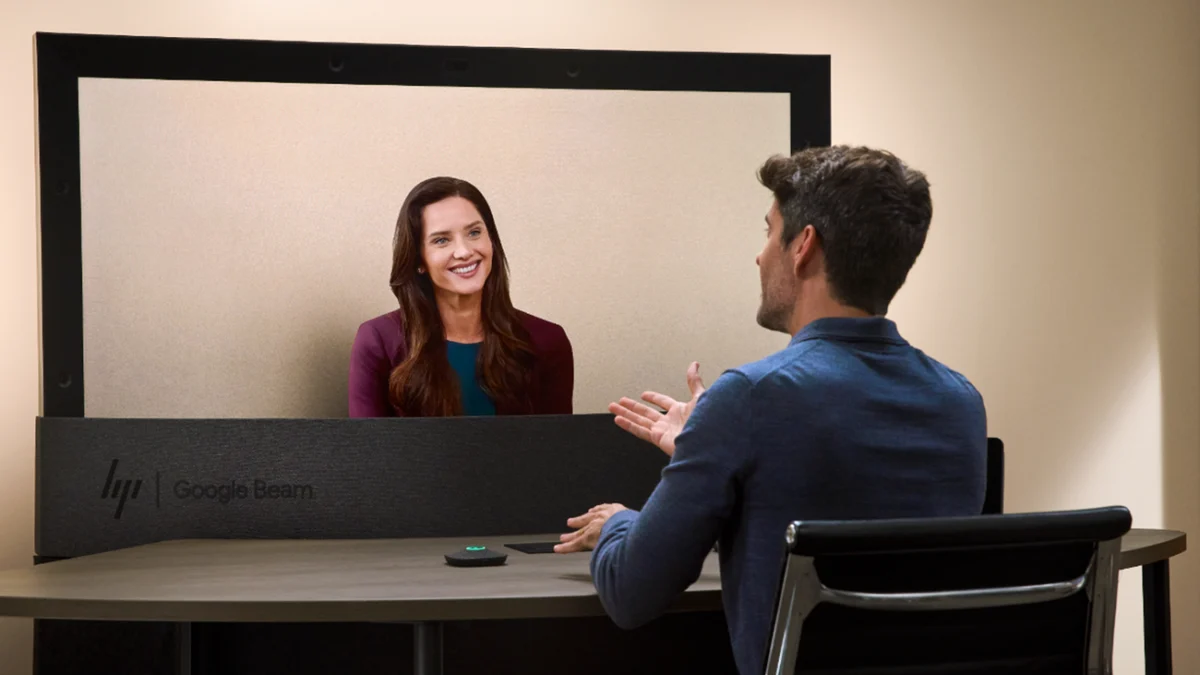
In an era where hybrid work has become the standard for global enterprise, Google has announced a significant expansion of its Beam technology, marking a pivotal shift from internal pilot programs to a broad international commercial rollout. The initiative, led by Aaron Luber, Director of Business Development for Google Beam, aims to redefine the architecture of digital communication by prioritizing "co-presence"—the psychological sensation of being in the same physical space as another person despite being miles apart. This expansion includes a strategic entry into five new international markets, a deepened hardware partnership with HP, and the establishment of a first-of-its-kind "extended network" through a collaboration with Industrious.
The Evolution of Spatial Communication and the Global Rollout
The current announcement represents the culmination of years of research and development into spatial communication. Initially incubated within Google’s experimental labs, Beam was designed to address the inherent limitations of traditional 2D video conferencing, such as the lack of true eye contact and the flattening of non-verbal cues. By utilizing advanced light-field technology and spatial audio, Beam creates a life-sized, three-dimensional representation of participants, facilitating a more natural flow of conversation.
As of today, Google has officially expanded the availability of Beam units to six countries: the United States, Canada, the United Kingdom, France, Germany, and Japan. This geographic footprint is supported by a newly established ecosystem of 18 channel partners. These partners, consisting of premier audiovisual integrators and distributors, are tasked with the deployment, maintenance, and technical support of the hardware, ensuring that enterprise-level clients have a seamless transition from legacy video systems to spatial co-presence environments.
The hardware itself is being marketed as "HP Dimension with Google Beam." By partnering with HP, Google leverages one of the world’s most robust hardware supply chains. This collaboration ensures that the technology is not only cutting-edge but also scalable and compliant with the rigorous IT standards of Fortune 500 companies. Crucially, the system is designed for interoperability, integrating with both Google Meet and Zoom, thereby acknowledging the multi-platform reality of modern corporate environments.
Quantifying the Impact: Data-Driven Success in the Workplace
One of the most compelling aspects of the expansion is the release of internal data regarding the technology’s efficacy. Google conducted a rigorous eight-week internal study to measure how Beam influenced team dynamics compared to traditional video conferencing. The results suggest a significant improvement in both the quality of connection and the efficiency of communication.
According to the study, teams utilizing Google Beam reported feeling 50% more connected to their colleagues. This metric is particularly vital in the context of the "loneliness epidemic" often cited in remote work discussions. Furthermore, participants found it 33% easier to ensure their feedback was clearly understood. This improvement is likely attributed to the restoration of micro-expressions and spatialized audio, which allow for better turn-taking and emotional resonance in conversation.
From a productivity standpoint, the study observed a 21% decrease in the need for follow-up meetings. In traditional 2D video calls, nuances are often lost, leading to misunderstandings that require subsequent "clarification" syncs. By providing a more authentic representation of the speaker, Beam appears to reduce the cognitive load of communication, allowing for "one-and-done" discussions that save significant time across the organization.
Strategic Partnerships and Real-World Use Cases
The commercial viability of Google Beam is being validated by a diverse roster of early adopters, including Bain & Company, Netflix, and Capital Group. These organizations are deploying the technology to solve specific logistical and cultural challenges associated with distributed workforces.
Bain & Company, a global management consulting firm, has integrated HP Dimension with Google Beam into its recruitment and talent development pipelines. Consulting is a high-touch industry where client-facing skills are paramount. Keith Bevans, Executive Vice President and Partner at Bain & Company, noted that the technology allows the firm to assess candidates’ body language and eye contact with a level of precision previously only possible in person. This has enabled Bain to conduct high-stakes interviews globally without the financial and environmental costs of transcontinental travel.
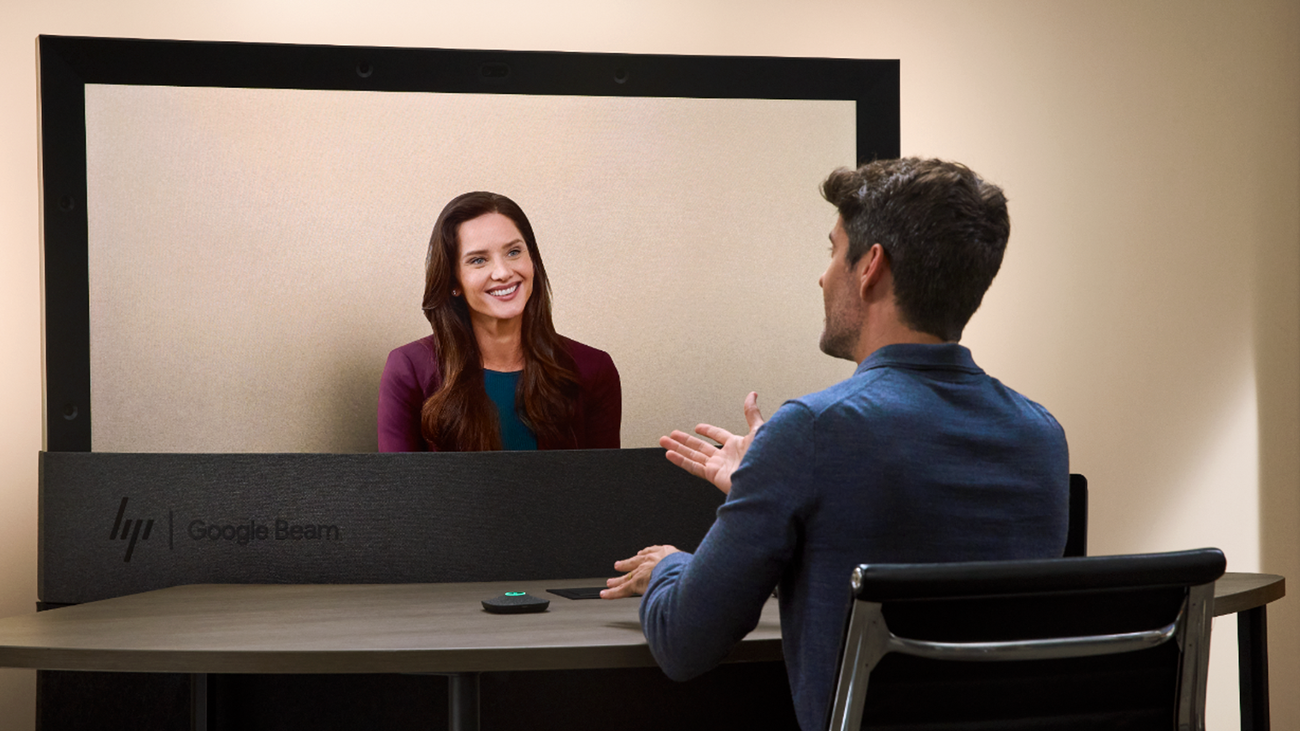
For companies like Netflix and Capital Group, the value proposition lies in cross-functional collaboration. When creative or financial teams are spread across time zones, the "flatness" of standard video can hinder the brainstorming process. Beam’s ability to simulate a shared room environment allows for more spontaneous and high-fidelity interactions, which are essential for creative direction and complex financial strategy.
The Industrious Partnership: Democratizing Access via the Extended Network
Perhaps the most innovative component of this announcement is the creation of the "Beam extended network" in partnership with Industrious, a leading provider of premium flexible workspaces. Recognizing that not every organization has the immediate infrastructure to install permanent Beam suites, Google is bringing the technology to third-party locations.
Starting in October, HP Dimension with Google Beam will be available for booking at select Industrious locations in major U.S. hubs, including New York City, Chicago, Atlanta, and Palo Alto. This move effectively shifts Beam from a purely capital-expenditure (CapEx) model for large corporations to an accessible, "as-a-service" model for startups and smaller businesses.
A pilot program conducted earlier this year demonstrated that distributed teams used these Industrious-based Beam units for a variety of high-value activities, such as manager-employee check-ins, client consultations, and critical project kick-offs. By placing Beam in co-working spaces, Google is positioning the technology as a utility for the broader professional community, rather than an exclusive tool for the tech elite.
Market Implications and the Future of Corporate Travel
The expansion of Google Beam comes at a time when corporations are under increasing pressure to reduce their carbon footprints and optimize operational costs. Corporate travel is one of the largest contributors to an organization’s Scope 3 emissions. If Google Beam can successfully replace even 20% of international business travel, the environmental and financial implications would be staggering.
Furthermore, the technology enters a competitive landscape that includes Apple’s Vision Pro (focused on individual spatial computing) and Microsoft’s Mesh (focused on avatars in the Metaverse). Google’s approach with Beam is distinct in its commitment to "photorealism" and "naturalism." Rather than asking users to interact with digital avatars or wear bulky headsets, Beam focuses on a "window-like" experience that requires no wearable hardware for the participant. This "frictionless" approach is likely to appeal to executives and clients who may be resistant to more immersive or "gamified" versions of virtual reality.
Chronology of Google’s Communication Innovation
To understand the significance of this expansion, one must look at the timeline of Google’s trajectory in the communication space:
- 2021: Google first previews "Project Starline" at its I/O conference, showcasing a prototype booth that used computer vision and machine learning to create 3D images.
- 2022: Internal testing expands within Google offices, and the technology begins to be referred to as a precursor to a commercial product.
- Early 2023: Google announces a partnership with HP to productize the technology, moving it from a research project to a scalable hardware solution.
- Mid 2023: Pilot programs begin with external partners like Bain & Company and Industrious.
- Late 2024 (Present): The official rebranding to Google Beam and the launch of the international expansion and the Industrious "Extended Network."
Conclusion: The New Standard for Global Connection
The expansion of Google Beam into five new countries and the launch of the extended network with Industrious marks a definitive moment in the post-pandemic evolution of work. As the initial novelty of remote work fades, the focus has shifted toward the quality of the digital experience. Google’s data suggests that the "connection gap" created by 2D screens is a measurable problem with a technological solution.
By combining the hardware expertise of HP, the global reach of 18 channel partners, and the accessibility of Industrious workspaces, Google is not just selling a product; it is proposing a new infrastructure for global commerce. As organizations like Netflix and Capital Group lead the way, the industry will be watching closely to see if spatial co-presence becomes the new standard for the modern enterprise. For now, the message from Google is clear: the distance between two people is no longer measured in miles, but in the quality of the technology that brings them together.
