

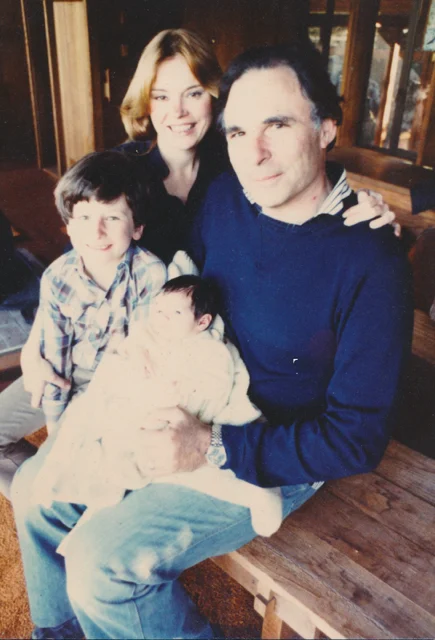
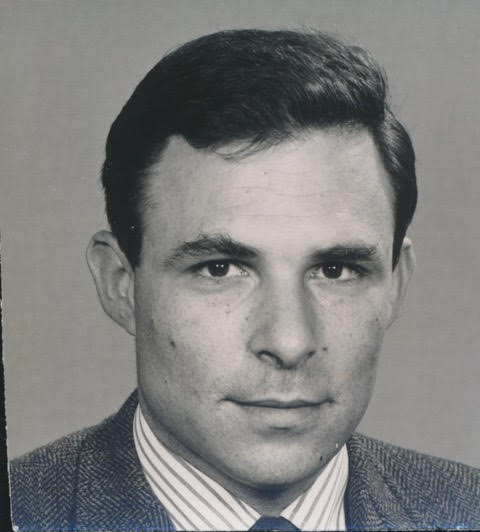
San Francisco, CA, November 17, 2025 – Dr. Paul Ekman, the preeminent psychologist whose groundbreaking work fundamentally reshaped our understanding of human emotion, facial expressions, deception, and compassion, has passed away at the age of 91. He died peacefully at his home, surrounded by his family. The Paul Ekman Group and his family announced his passing with profound sadness, marking the end of an era for the scientific study of human affect.
For over six decades, Dr. Ekman’s relentless pursuit of knowledge illuminated the intricate landscape of human emotional experience. His research, characterized by its rigor and global scope, challenged existing paradigms and laid the foundation for much of what we now understand about the universality of certain emotional expressions and their physiological underpinnings. His seminal work, often conducted in remote and diverse cultural settings, demonstrated that fundamental human emotions transcend geographical and linguistic boundaries, a finding that had profound implications for psychology, anthropology, and even international relations.
Early Life and Academic Journey
Born on February 15, 1934, Paul Ekman’s intellectual journey began with a deep curiosity about human behavior. He earned his Bachelor of Arts degree from New York University in 1955 and his Master of Arts degree from the same institution in 1957. He continued his studies at the University of California, Berkeley, and the Langley Porter Neuropsychiatric Institute, where he earned his Ph.D. in psychology in 1958. His early academic career was marked by a dedication to empirical research, a trait that would define his illustrious career.
The Genesis of Universal Emotions Research
Dr. Ekman’s most significant contributions stemmed from his pioneering research into the universality of facial expressions. In the 1960s, the prevailing scientific view often suggested that emotional expressions were largely learned and culturally specific. However, Dr. Ekman, along with his close collaborator Wallace V. Friesen, embarked on an ambitious project to test this hypothesis. Their research involved studying isolated tribes in Papua New Guinea who had had minimal contact with Western cultures.
By showing these individuals photographs of Westerners displaying various emotions, and by asking them to pose expressions corresponding to described emotional states (such as happiness, sadness, anger, fear, surprise, disgust, and contempt), Ekman and Friesen gathered compelling evidence. The study, published in a landmark paper in Science in 1969, revealed that participants from these isolated cultures could reliably match the facial expressions to the emotions being described, and vice versa. This finding provided strong support for the existence of universal, innate emotional expressions. This research was not merely academic; it laid the groundwork for understanding how emotions are communicated across vastly different societies and provided a common biological foundation for human interaction.
Developing the Facial Action Coding System (FACS)
Building upon the identification of universal expressions, Dr. Ekman and Dr. Friesen developed the Facial Action Coding System (FACS) in the early 1970s. FACS is a comprehensive, anatomically based system for describing all observable facial movements. It breaks down complex facial expressions into their constituent "action units" (AUs), which correspond to the contraction of specific facial muscles. By meticulously cataloging these AUs, FACS provides an objective and standardized method for analyzing facial behavior, enabling researchers to quantify and compare expressions with unprecedented precision.
FACS has become an indispensable tool in a wide array of fields, including psychology, neuroscience, artificial intelligence, and even in the development of advanced human-computer interaction. It has allowed scientists to precisely measure the subtle nuances of facial expression, revealing insights into everything from the intensity of an emotion to the underlying cognitive processes involved. The development of FACS was a monumental achievement, providing a shared, scientific language for describing the most complex human communication channel: the face.
The Science of Deception and Microexpressions
Dr. Ekman’s work also delved deeply into the complex realm of deception. His research on lie detection, particularly the study of microexpressions, has had a profound impact on law enforcement, intelligence agencies, and the legal system. Microexpressions are brief, involuntary facial expressions that reveal a person’s true emotional state, often betraying concealed emotions. These fleeting expressions, lasting only a fraction of a second, can be indicative of attempts to conceal or misrepresent feelings.
His bestselling book, "Telling Lies," published in 1985, brought these concepts to a wider audience, offering insights into the behavioral cues associated with deception. This work, along with his subsequent research, informed the development of training programs for professionals tasked with identifying deception, aiming to enhance their ability to detect truthfulness and understand hidden emotional states. The application of his research in this area has been both celebrated and debated, highlighting the ethical complexities inherent in analyzing human behavior for indicators of dishonesty.
A Global Advocate for Compassion and Emotional Well-being
In the latter part of his career, Dr. Ekman increasingly focused on the applications of his research for promoting human well-being and fostering a more compassionate world. His long-standing friendship and collaboration with His Holiness the Dalai Lama were instrumental in this shift. Together, they explored the scientific underpinnings of compassion and developed programs aimed at cultivating emotional skills and resilience.
This collaboration led to the development of the Atlas of Emotions, an interactive online tool designed to help individuals understand their emotional responses and build greater emotional literacy. This project, co-developed with his daughter Dr. Eve Ekman, offers a comprehensive framework for exploring the nuances of human emotions, their triggers, and their potential consequences. Furthermore, the "Cultivating Emotional Balance" (CEB) program, another initiative stemming from his work with the Dalai Lama, provides scientifically validated training in mindfulness and emotional regulation. These initiatives underscore Dr. Ekman’s belief that scientific understanding of emotions can be harnessed to alleviate suffering and promote positive social change.
A Transformative Influence Across Disciplines
Dr. Ekman’s influence extended far beyond academic circles. His research and theories have been integrated into numerous fields, including clinical psychology, forensic science, marketing, education, and even the entertainment industry. The acclaimed television series "Lie to Me," for which Dr. Ekman served as a consultant, brought the science of microexpressions and deception detection to millions of viewers, sparking public interest in the subtle cues of human interaction. His advisory role on Pixar’s animated film "Inside Out" further demonstrated his commitment to making the science of emotion accessible and engaging for audiences of all ages.
Dr. Robert W. Levenson, Ph.D., from the Department of Psychology at the University of California, Berkeley, reflected on Dr. Ekman’s impact: "Paul brought his remarkable intellect, observational skills, and unflagging energy to illuminate the ways we express and feel our emotions and how they are embodied in our physiology. His research, theorizing, and ideas for how emotions could be harnessed in service of the greater good galvanized what was a small niche area of research into a vibrant and thriving research area that will continue to be hugely influenced by his work and vision."
Personal Reflections and Enduring Legacy
Dr. Eve Ekman, Ph.D., director of the Paul Ekman Group and a contemplative social scientist, shared a personal tribute to her father: "My dad’s commitment to rigorous science, love of discovery, and dedication to alleviating pain from destructive emotions were at the very core of his brilliant mind and accomplishments. However, his huge heart and ability to vulnerably share his own struggles with emotions were what made him beloved by so many. He was an incredibly loving dad – a lover of life and unrelentingly curious."
Dr. Ekman’s legacy is carried forward by the Paul Ekman Group, now under the leadership of Dr. Eve Ekman. The organization continues his mission to promote emotional awareness, empathy, and truthfulness through science-based education and training programs worldwide. His numerous bestselling books, including "Emotions Revealed" and "Telling Lies," remain seminal works in the field, providing accessible insights into the complexities of human emotion.
A documentary celebrating Dr. Ekman’s life and scientific legacy is currently in development, offering an opportunity for those who wish to honor his profound contributions. The Paul Ekman Group is also collecting reflections, stories, and messages of appreciation from colleagues, students, and readers globally to create a memorial page that will serve as a testament to his enduring influence.
Dr. Paul Ekman is survived by his children, Eve Ekman and Tom Ekman, and a wide circle of cherished friends who became like family. His passing marks the end of a remarkable life dedicated to unraveling the mysteries of the human heart and mind, leaving behind a scientific and cultural inheritance that will continue to shape our understanding of ourselves and each other for generations to come. His work has not only advanced scientific knowledge but has also inspired countless individuals to engage more deeply with their own emotional lives and to foster greater understanding and connection with others.
