


The pervasive integration of Artificial Intelligence into organizational structures presents a profound leadership challenge, demanding a delicate balance between fostering innovation and managing widespread apprehension. The discourse surrounding AI is remarkably polarized, ranging from fervent advocacy for its transformative potential to deep-seated skepticism and outright aversion. This spectrum of opinion, often punctuated by ambivalence, creates a complex landscape for leaders aiming to harness AI effectively.
The Dichotomy of AI Perception: Hype, Hope, and Hesitation
Even a cursory understanding of the current technological zeitgeist reveals the significant divides in how AI is perceived within the workplace. Engage ten random employees in a candid conversation about AI, and the responses could span a vast emotional and intellectual range. Some might immediately conjure dystopian visions reminiscent of cinematic narratives like The Terminator, or express fears about the erosion of truth, likening it to "tears in rain." Conversely, others eagerly anticipate the dawn of "super intelligence," envisioning a future where AI cures intractable diseases, resolves climate change, and liberates humanity from drudgery. A significant segment, however, might prefer to sidestep the topic entirely, opting for less contentious subjects like the weather, indicative of underlying uncertainty or disengagement.
For organizations that have historically grappled with previous technological revolutions, the fear of missing out (FOMO) on AI’s potential is a palpable, ticking clock. The perceived risk of not adapting is often seen as detrimental, potentially leading to competitive disadvantage or obsolescence. However, this urgency can lead to a critical misstep: making AI-enablement an end in itself rather than a means to a strategic objective. In such scenarios, organizations frequently fail to ask the right, fundamental questions: Is this specific AI tool truly necessary? What are the potential losses or compromises in automating this particular workflow? Should an AI agent genuinely be granted a company credit card? With such wildly divergent perspectives percolating through the ranks, achieving AI adoption at scale transcends mere technological implementation; it necessitates an era-defining narrative that can unite diverse stakeholders.
Bridging the Divide: The Role of Human-Centric Communication
Under these challenging conditions, the critical question for leadership becomes: how can everyone be united around a shared, compelling AI message? The answer, as demonstrated by Fortune 50 companies and global brands, lies not in advanced algorithms but in the enduring power of core communication skills. Leaders must possess the ability to acknowledge difficulties openly, constructively challenge pushback, and meticulously build momentum behind their strategic vision. This demands a powerful trifecta of time-tested storytelling structures, thoughtful design principles, and impactful presentation strategies—elements crucial for ensuring every individual feels genuinely invested in the collective outcome.
Paradoxically, these deeply human qualities—empathy, persuasion, and the ability to inspire—cannot be automated. AI, despite its burgeoning capabilities, cannot command a stage, capture a moment with a resonant story, or move a reluctant audience to action. While concepts like "prompt engineering" and "vibe-coding" might optimize AI outputs, they are inherently limited in their capacity to foster deep organizational change and human buy-in. The quest for transformative change ultimately remains a human endeavor.

Fortunately, proven methodologies exist to guide organizations through this complex landscape. Duarte’s Illuminate™ change communication framework, for instance, offers a structured approach for transitioning organizations from entrenched ways of working towards a "new bliss" of transformation. In the age of AI, the foundational ingredients for inspiring lasting change—three-act narratives, symbolic ceremonies, compelling speeches, and crisp, clear visuals—remain as essential as ever. Like most ambitious visions, the journey begins with a dream, but it critically requires a clear-eyed acknowledgment of current realities.
Understanding the Internal Landscape: Data Reveals a Divided Workforce
Discussions around AI within organizations are rarely monolithic. Executives, managers, individual contributors, and even consumers harbor distinct hopes and fears regarding the horizon of AI integration. While broad polls, academic studies, and corporate surveys can offer general insights into AI sentiment, leaders must prioritize understanding how their specific workforce feels about AI to tailor an effective communication strategy.
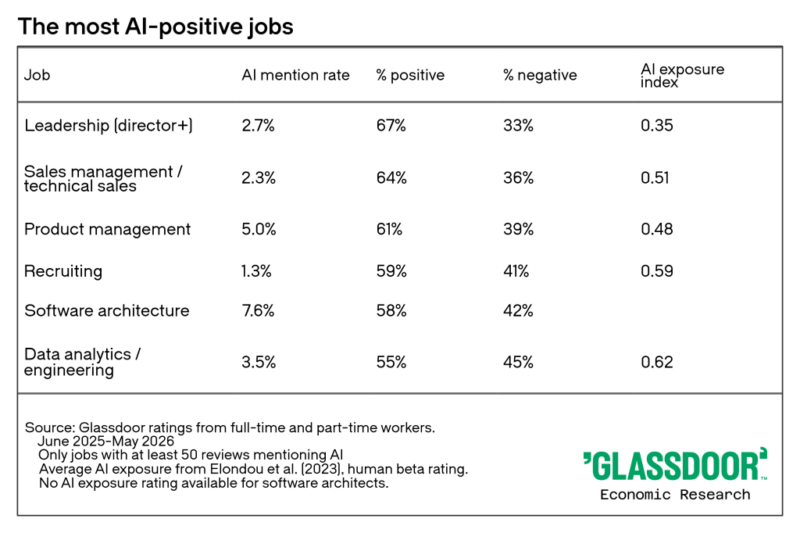
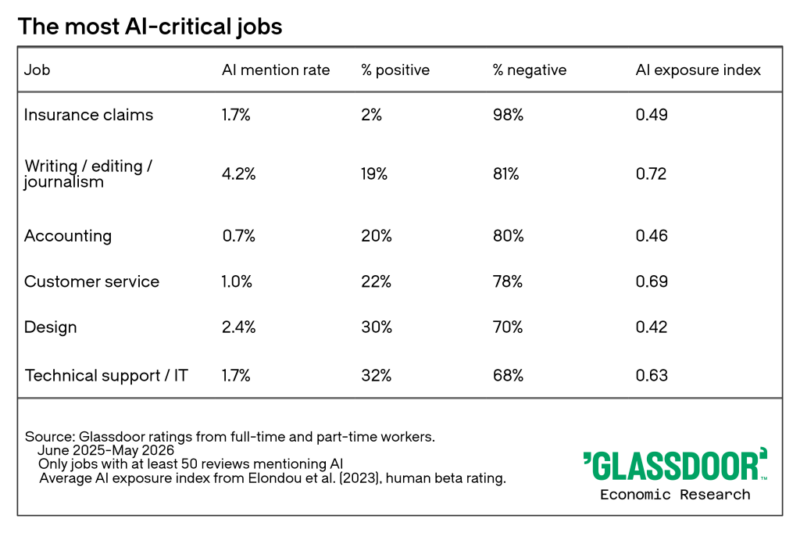
An August 2026 study by Glassdoor, analyzing employer reviews by workers, unveiled a significant divergence of opinions across various roles, demographics, and industries. While major trends indicated both strong support for and significant opposition to AI usage, the data highlighted specific areas of enthusiasm and skepticism.
- The Perceptual Chasm: Optimism vs. Skepticism
- AI-Positive Roles: Leadership (director+) showed the highest favorability at 67%. Other highly positive roles included Sales Management/Technical Sales (64%), Product Management (61%), Recruiting (59%), Software Architecture (58%), and Data Analytics/Engineering (55%). These roles often perceive AI as an enabler for strategic decision-making, efficiency, and market advantage.
- AI-Critical Roles: Conversely, roles requiring high specificity in language, meticulous numerical accuracy, or extensive interpersonal relationships skewed significantly negative. Insurance Claims professionals expressed 98% negativity, while Writing/Editing/Journalism roles registered 81% negativity. Accounting (80% negative), Customer Service (78% negative), Design (70% negative), and Technical Support/IT (68% negative) also demonstrated substantial apprehension. This resistance often stems from concerns about job displacement, the degradation of nuanced human skills, or AI’s inability to replicate complex human interactions and creative judgment.
These findings underscore a crucial divide in how leadership and key cross-sections of the workforce perceive AI. However, the problem extends beyond mere perception to the very implementation of AI initiatives.
- The Implementation Gap: Unplanned Adoption and Lack of Guidance
A study from the University of Konstanz further illustrates how employers are inadvertently sowing misalignment through their prescribed AI tools and strategies. Florian Kunze, head of the study and a professor of organizational behavior at the University of Konstanz, observed: "In many organizations, the major AI revolution has not unfolded as a planned transformation process so far. Instead, many employees are experimenting with AI, while employers are still lagging behind when it comes to establishing clear policies, providing training and implementing secure AI solutions."
This lack of structured guidance is a widespread issue. A Gallup poll revealed that a mere 25% of workers reported their company had communicated a clear plan for AI integration. This alarming statistic implies that the vast majority of businesses are providing either inadequate guidance, confusing mandates, or, in many cases, no support whatsoever for their AI initiatives. The consequences of such unfocused AI usage are manifold and detrimental, including skills atrophy among employees, the proliferation of sloppy brand assets due to unmonitored AI content generation, and runaway token spend as unoptimized prompts incur unnecessary costs.
In their haste to embrace progress, leaders often unintentionally send mixed messages or neglect to address the concerns of AI-averse or AI-agnostic segments of their workforce. Without a message that resonates and scales across all organizational levels, AI strategies will inevitably fail to achieve comprehensive buy-in. Effective leaders must proactively anticipate pushback, take feedback seriously, and transparently articulate a coherent, achievable path forward. If the vision for AI integration is incomplete, incoherent, or perceived as inauthentic to the organization’s core values, progress will stagnate, roadmaps will derail, and top talent may become disillusioned.
Duarte’s Illuminate™ Framework: A Blueprint for Transformative AI Adoption
Committing to a proven change communication strategy can provide AI initiatives with the robust support needed to take root and deliver measurable return on investment. Duarte’s Illuminate™ methodology offers a trusted blueprint for change communication, designed to motivate teams to move boldly into the AI era. This proven 5-part process, executed with dedication, grit, and grace, serves as a pathway to success for an organization’s AI adoption journey.
Stage 1: Cultivating a Winnable Dream
The initial stage of the Illuminate™ framework aims to transform a moment of inspiration into a concrete launching point for change. "Torchbearers"—trailblazing leaders—illuminate a possible future, inviting their organizations, industries, and even humanity at large to envision it with them. To spark change effectively, leaders in the Dream stage must skillfully contrast "what is" with "what could be," compelling audiences to acknowledge and actively desire a "new bliss." This new state could manifest as a more efficient way of working, an innovative product, or a refined mindset towards a revolutionary concept like AI. These strategic juxtapositions build tension, creating a compelling case for audience members to support the proposed vision.
The Dream stage often incorporates vision speeches or other forms of persuasive communication to establish the stakes and rally teams around exciting possibilities. However, crafting content that genuinely moves audiences forward requires a deep understanding of their hopes and fears regarding the topic at hand. Leaders should "test the waters" around their vision before making any official announcements, practicing adaptive listening to discern not only what their teams are thinking but also what they are feeling.
According to Glassdoor, resistance to AI can be categorized into eight primary concerns, ranging from fears of job displacement (accounting for 20% of negative replies) and AI distracting from core business objectives (13%), to companies using AI in alienating ways, such as workplace surveillance or as a stand-in for executive communications (10%). Given these rising concerns, leaders require an AI adoption vision that transcends a simple "just use it, OK?" directive.
Consider this strategic framing:
- What Is: Teams are burdened by manual data tracking, repetitive content brainstorming, and time-consuming buyer research within an increasingly saturated and "decaying" search environment. While AI has its drawbacks, competitors that strategically embrace and clearly define AI adoption are accelerating their progress and expanding their reach through AI-enabled workflows.
- What Could Be: With proper AI Standard Operating Procedures (SOPs), seamless IT-supported integration, and regular "temperature checks" throughout the process, teams can eliminate extraneous steps from entrenched processes, significantly boost systems maintenance, and consistently deliver high-quality results that keep pace with, or even surpass, the competition.
- The New Bliss: Now AI-enabled, teams are empowered to continually refine their workflows, enjoy more flexible schedules to cultivate deeper customer connections, pursue additional accounts, and explore creative projects with newly available bandwidth and reduced operational friction.
For optimal results during the Dream stage, leaders must approach the process with clear-eyed reflection, addressing:
- The current pain points and inefficiencies.
- The tangible benefits and opportunities AI presents.
- The potential risks and ethical considerations.
- The resources and training required for successful adoption.
- How AI aligns with the organization’s values and long-term goals.
With the right framing and a robust justification backing the "new bliss," the organization is prepared to take the Leap toward change.
Stage 2: The Courageous Leap into Action
Organizations transition into the Leap stage when torchbearers successfully persuade their teams to commit to decisive action. At this point, the AI message articulated by leadership begins to be amplified across teams through action-oriented words and phrases that signify growing consensus. AI processes are actively being rolled out, and all-hands meetings and sync-ups become integral parts of the transformative adventure. In this crucial stage, maintaining a steady pace and consistently celebrating progress are essential to keeping FUD (fear, uncertainty, and doubt) effectively in check.
Leaders can reinforce a sense of shared purpose and wonder through speeches that provide further context to the vision or powerfully remind teams of what is at stake. Since widespread AI adoption necessitates buy-in and active participation from every level, it is prudent to structure the AI strategy more as an incubator—a space for experimentation and learning—rather than a rigid, top-down solution. During this period of discovery, workers should feel empowered to openly share their approaches to AI and contribute directly to the company’s evolving capabilities. Telling the right story from the outset is pivotal in locking in this initial commitment.
Duarte’s own journey included a summer "vibe-coding" experiment, which intentionally prioritized time for exploration and creative problem-solving. Weekly AI Office Hours were established to nurture curiosity, providing a dedicated space for sharing knowledge, collaboratively pooling strategies to reduce token spend, and producing clearer, more effective AI outputs. Teams united to maintain a shared prompt library, update brand guidelines to incorporate AI-generated content, and rigorously test guardrails for ethical and effective usage. With AI positioned as a thought-partner, teams were actively encouraged to bounce ideas and pressure-test concepts throughout their workflows.
While giving a tech stack an AI makeover may not be as outwardly flashy as launching a new product or inaugurating a new headquarters, with the right support and ongoing commitment, organizations can strategically position themselves to harness emerging tools and remain agile in fast-moving environments. This foresight inherently means bracing for both known and unforeseen challenges.
Stage 3: Strategic Engagement: Knowing When to Fight and When to Adapt
During any quest for change, it is inevitable that something will go awry. With AI, the potential problems are myriad: inadequate prompts yielding unusable output, accuracy issues leading to "hallucinations," "AI-Optimized" workflows paradoxically taking longer than previous manual processes, or the relentless march of conflicting news stories about AI’s benefits and dangers. Rather than glossing over difficulties or suppressing dissent, leaders committed to AI adoption should view resistance or exasperation as invaluable opportunities to check in with teams and strategically modify their change plan.
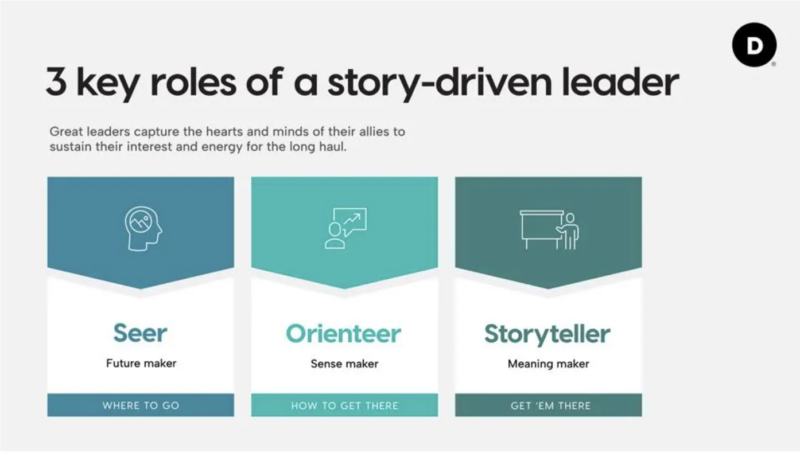
In a September 2026 C200 column for Forbes, Duarte CEO Nancy Duarte reflected on her experience announcing a bold AI vision at Duarte’s company kickoff. In the subsequent months, a blend of "eureka moments" and "patches of rough air" crystallized a refined vision for change in her mind. To successfully launch and implement a new vision, leaders must embody three critical personas to spark and sustain change within their organizations: the Seer, the Orienteer, and the Storyteller.
- The Seer: The future-maker, discerning "where to go."
- The Orienteer: The sense-maker, strategizing "how to get there."
- The Storyteller: The meaning-maker, inspiring people to "get ’em there."
Every challenge will demand that leaders revisit one or more of these personas. When the ultimate destination becomes fuzzy, the Seer helps bring it back into sharp focus. If a pathway stalls out, the Orienteer charts a new course. When competitors seemingly leapfrog a team’s AI outputs, the Storyteller crafts a narrative that imbues meaning into the struggle, transforming setbacks into lessons learned. Once a change initiative is in flight, successful execution requires regular, transparent communication to support alignment and continuously nourish teams with up-to-date information.
Viewing change through the lens of each persona helps weave a continuous thread through the transformation process. It contextualizes hurdles and punctuates skirmishes, allowing for the recognition of victories and the assimilation of lessons. In the Fight stage, leaders must constantly reevaluate whether the most prudent path through a rough patch is unwavering perseverance or a strategic pivot. This is where regular, open contact with teams (such as dedicated AI Office Hours) or powerful "battle speeches" at key turning points become critical for maintaining morale and direction. Unacknowledged problems, progress delays, and a lack of clear guidance are natural breeding grounds for FUD. Keeping the right narrative afloat is paramount to helping teams stay on track for the long haul. Because if the initial fights were bruising, teams must be prepared for the arduous climb ahead.
Stage 4: Sustaining Momentum Through the Climb
Initiatives inevitably lose steam. Deadlines come and go. Supposed "surefire fixes" prove insufficient. The "messy middle" of transformation can derail even the best-laid plans and overwhelm organizations of all sizes. When teams begin to question their ability to carry on, leaders know they have officially entered the Climb stage. It is important to note that this stage often runs concurrently with the Fight stage, continuously testing leaders to discern the appropriate intervention. The Climb stage explicitly contrasts the seemingly endless plodding between sites of conflict, aiming to mark and celebrate progress, however incremental. It is often the most trying stage for both teams and leaders: a sustained uphill battle without the immediate adrenaline rush of an initial push.

Where AI feels boundless, humans are not. They experience exhaustion, burnout, and discouragement. During the Climb stage, existing workloads clash against new AI obstacles, AI-generated results may prove lackluster, and new workflows inadvertently create new problems. Adoption can slow, and teams may backslide into old habits, while competitors appear to charge full speed ahead. Leaders themselves may even begin to wonder: Will we ever truly achieve widespread AI adoption?
Balancing the right approach requires a holistic understanding of the entire situation. Open lines of communication—through 1:1s with team leaders, anonymous surveys, and live Q&As—are vital for gathering the necessary context and accurately measuring the scope of any problem. While Fight messaging aims to ready teams for battle, the Climb is fundamentally about leveraging past accomplishments to refuel ongoing change efforts. As a guiding principle:
"Keep reminding people how far they’ve come and why the destination is still worth reaching."
Each "temperature check" presents an opportunity to revitalize the core message, acknowledge the hard work of those staying the course, and gain critical insight into what might be hindering the vision. It helps stragglers realize they are not alone, that transformation is an iterative process, and that the investment of time, energy, and resources is indeed paying off.
As leaders, if you find yourself struggling to defend your decisions for change, you might be falling victim to the sunk cost fallacy—a bitter pill to swallow. This underscores why having 360-degree coverage of your organization is paramount for success with large-scale change efforts. Such comprehensive insight makes it significantly easier to accurately diagnose problems, know when to strategically abandon a faltering change effort, and, crucially, recognize when it is finally yielding its intended benefits.
Stage 5: Realizing and Reinforcing the New Bliss
At long last, the delicate balance between dreaming, delegating, and doing achieves perfect harmony. Leaders have successfully envisioned and articulated a compelling image of the future, and workers have mobilized to bring it to fruition. After all the leaping, fighting, and climbing, the "new bliss" becomes a tangible reality. Teams are AI-optimized, workflows are more agentic and efficient, and outputs are consistently humming along at a greater clip. While dissenters and critics may always harbor private grumbles, the unified message has prevailed. Mission accomplished, right?
Yes, and no. Unlike taking a product to market or migrating to a new CRM, being truly "AI-enabled" signifies an ongoing commitment to staying current with innovations and best practices. Much like cybersecurity demands regular re-education and updated procedures to counter evolving threats, AI integration requires a continuous commitment. New models and capabilities are constantly emerging, while vulnerabilities and exploits continue to keep organizations on their toes.
However, this ongoing commitment should not dampen feelings of profound accomplishment. Retooling how teams engage with their work, successfully adopting new Standard Operating Procedures, and defining and then achieving success are all significant causes for celebration. While some organizations might be party-averse, teams require time to reflect on and process the journey they have undertaken. Scheduling an open mic session or a fireside chat where individuals can share their experiences contributes significantly to the mythmaking that enriches workplace culture and reinforces collective identity. After a celebratory closing ceremony, it is time to settle in and sustain the change. Workers can continue to refine their AI agility, and leaders can then turn their attention to pulling their next strategic change initiative from the clouds of possibility.
Beyond Adoption: Building Organizational Resilience in a Dynamic Era
Organizations once enjoyed longer, more predictable runways for reinvention. Today, industry evolution can occur virtually overnight. This "shock and awe" of accelerated uncertainty demands prompter, more agile action. Geopolitical friction, supply chain disruptions, and relentless technological disruption are now baked into daily operational life. Companies must remain nimble, constantly recalibrating to each new normal. With everyone often pulled in disparate directions, achieving team alignment requires a message meticulously crafted, expertly delivered, and robustly supported to withstand the headwinds of constant flux.
Whether an organization is adopting a proactive posture toward an emerging opportunity like AI or repositioning to batten down the hatches against impending challenges, committing to a proven framework for change communication can significantly ease the transition. If change has your organization feeling adrift, engaging with experts in communication strategy can provide the clarity, composure, and conviction necessary for your next change initiative. Rally your teams with a story they cannot help but tell, and powerfully put the future in perspective.
