

Years ago, a sermon delivered by a local pastor offered a profound perspective on managing interactions with individuals who present challenges in our lives. The speaker acknowledged the universal experience of encountering difficult people – whether they be family members, neighbors, colleagues, or mere acquaintances whom we would prefer to avoid. However, it was a subsequent statement that resonated deeply, prompting introspection: "When I talk about difficult people, remember – someone is thinking about you." This simple yet powerful observation immediately shifts the focus from identifying external irritants to considering our own role in interpersonal dynamics.
The ease with which we can pinpoint those who make our lives arduous stands in stark contrast to the difficulty of acknowledging that we, too, might be perceived as a challenging presence by someone else. This introspection inevitably leads to a fundamental question: How can we cultivate love for individuals we may not intrinsically like?
This dilemma was famously grappled with by C.S. Lewis in his seminal work, Mere Christianity. Lewis confessed to experiencing a similar internal conflict, struggling to reconcile his Christian imperative to love with his personal feelings of dislike for certain individuals. His breakthrough came when he recognized a parallel in his relationship with himself. There were times when he disapproved of his own actions, harbored disappointment in his character, or felt a general aversion to his own behavior. Yet, even in these moments of self-critique, he consistently pursued his own well-being, sought self-improvement, desired forgiveness, and aspired to become a better person.
This realization illuminated a critical distinction: while liking and loving are related, they are not synonymous. Affection is not a prerequisite for love. Lewis concluded that love, in its truest sense, can originate from a conscious decision to prioritize and actively seek the good of another person, irrespective of personal feelings.
From a Christian theological standpoint, the commandment to "love your enemies" takes on deeper meaning when love is understood not solely as an emotional response but as an volitional act. Biblical love, in this context, is a deliberate choice to act ethically and compassionately towards others, even when it incurs personal cost or when the recipient has done nothing to warrant such kindness.
In practical, everyday scenarios, this form of love can manifest in tangible actions. It might involve assisting a stranded motorist, offering support to an overwhelmed colleague, or extending a small act of kindness, such as covering a shortfall at a checkout counter for someone facing financial difficulty. These gestures stem from recognizing another person’s vulnerability or need and responding with the same empathy we would hope to receive in similar circumstances.
The implications of this approach to interpersonal relationships extend significantly into the realm of influence. Understanding and applying principles of human behavior can not only alter how others perceive and interact with us but also profoundly reshape our own perspectives.
The Principle of Liking: A Dual Perspective
Robert Cialdini, a renowned social psychologist and author, extensively explored the principles of influence. One of his key tenets is the principle of Liking. While this is commonly interpreted as the effort to make ourselves likable to others, an equally, if not more, important dimension is the deliberate effort to genuinely like the other person.
Cultivating liking for others can be facilitated by identifying commonalities. These shared experiences can range from cheering for the same sports team, enjoying similar hobbies, or navigating comparable family dynamics, to advocating for the same causes. While these shared interests may not erase fundamental differences, they serve to bridge the perceived distance between individuals, fostering a sense of connection.
Similarly, offering sincere compliments can be a powerful tool. By intentionally seeking out positive attributes in another person – be it a specific skill, a thoughtful action, or an admirable character trait – we begin to see beyond the behaviors that might initially irritate us. While emotional shifts may not be immediate, a change in perspective is often a natural consequence of this focused appreciation.

Unity and Shared Identity: The Foundation of Connection
The concept of unity, rooted in shared identity, offers an even deeper path toward fostering positive relationships. Consider the dynamics within a family. Despite potential personal friction or a lack of inherent enjoyment in constant proximity with a particular family member, the underlying bond of shared identity often compels individuals to make sacrifices for one another that they might not extend to outsiders.
This sense of shared identity can extend far beyond familial ties. We often identify with groups based on our affiliations with organizations, communities, professions, nationalities, or religious faiths. The more we categorize another person as "one of us" rather than "one of them," the more readily we are inclined to care about their welfare.
This psychological phenomenon is well-documented. As Cialdini notes in his work, particularly in Pre-suasion, individuals experience heightened activity in the brain’s self-reward centers when they aid a family member. This suggests that, on a fundamental level, assisting those with whom we share a strong identity feels akin to aiding ourselves.
Reciprocity: The Power of Giving First
The principle of reciprocity also presents an unexpected avenue for transforming difficult relationships. While commonly understood as responding to kindness with kindness, the act of choosing to give first can have a transformative effect on the giver. When we invest our time, attention, or energy into another person, we may begin to perceive them as an individual worthy of that investment, fostering a sense of value and connection.
Boundaries and the Nuances of Love
It is crucial to emphasize that embracing these principles does not necessitate overlooking destructive behavior, abandoning healthy boundaries, or condoning harmful actions. Loving someone does not equate to tolerating mistreatment. Rather, it involves a commitment to refusing to reduce an individual solely to the aspects of their personality or behavior that we find challenging.
The enduring question posed by Tina Turner, "What’s love got to do with it?" finds a profound answer in a broader, more inclusive understanding of human connection. In many philosophical and theological frameworks, love is central to human interaction and societal well-being.
Applying the Principles: A Call to Action
Consider an individual in your life whom you find particularly difficult to like. What might shift if, instead of waiting for warmer feelings to emerge organically, you consciously chose one small, deliberate action to seek that person’s good? This could be as simple as offering a word of encouragement, acknowledging an effort they’ve made, or actively listening to their perspective without immediate judgment.
Furthermore, it is equally valuable to reflect on the reciprocal question: Who in your life might be employing these very principles to navigate their interactions with you? This introspective exercise can foster greater empathy and a more nuanced understanding of interpersonal dynamics.
Broader Implications and Expert Insights
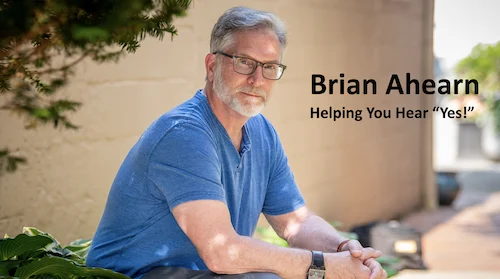
The insights drawn from Cialdini’s work and theological perspectives highlight a fundamental truth: our capacity for influence is deeply intertwined with our ability to connect with and understand others. Brian Ahearn, Chief Influence Officer at Influence PEOPLE and a faculty member at the Cialdini Institute, is a recognized expert in this field. As one of the few Cialdini Method Certified Trainers globally, Ahearn was personally trained by Robert Cialdini. His expertise lies in helping individuals and organizations apply the science of ethical influence in practical, everyday situations to achieve better outcomes.
Ahearn’s writings and teachings frequently underscore the importance of viewing influence not as manipulation but as a tool for fostering genuine connection and mutual understanding. His book, Influence PEOPLE, has been recognized among the best influence books of all time. His subsequent works, Persuasive Selling and Influenced from Above, have also garnered critical acclaim. Ahearn’s extensive reach through LinkedIn Learning courses and his highly viewed TEDx Talk on pre-suasion further demonstrate the widespread interest in these principles.
These principles, when applied with intention and integrity, can dismantle barriers, foster empathy, and ultimately contribute to more harmonious and productive relationships. They offer a framework for moving beyond superficial judgments and embracing the complexity of human interaction, recognizing that even in the most challenging relationships, there lies an opportunity for growth, understanding, and a more profound expression of love. The journey of transforming difficult relationships begins with a conscious decision to seek the good of the other, a principle that holds true across diverse philosophical and psychological perspectives.
