


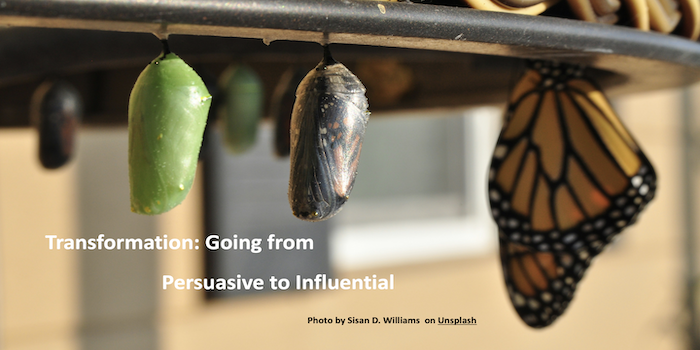
The pursuit of persuasive communication often focuses on the acquisition of specific verbal techniques and strategic approaches. While mastering the art of persuasion can undoubtedly enhance one’s ability to elicit agreement and achieve desired outcomes, a deeper inquiry emerges: what kind of person are we becoming in the process of learning and applying these influence principles? This fundamental question distinguishes between the superficial application of influence tactics and the profound internal transformation that can reshape our very identity and, consequently, our interpersonal relationships. This distinction, often overlooked in the rush to acquire actionable strategies, lies at the heart of ethical and sustainable influence.
The author’s personal journey offers a compelling illustration of this transformative process. For years, his athletic focus was firmly rooted in strength training, participating competitively in powerlifting and bodybuilding. During this period, any discussion of running was met with a dismissive attitude, characterized by the sentiment, "I hate it!" The rationale was simple: running was perceived as an inefficient expenditure of calories that could be better utilized in the gym to build muscle and strength. This mindset was deeply ingrained, reflecting an identity centered on power and physical augmentation through resistance training.
Approximately a decade after concluding his competitive weightlifting career, a significant shift began. A friend initiated a challenge, persuading a group of about a dozen individuals, including the author, to commit to running the Columbus Marathon. Prompted by his wife, the author reluctantly agreed to participate. To his own surprise, the experience of running, particularly the post-run exhilaration, began to foster an unexpected enjoyment. This burgeoning fondness gradually evolved into a deep affection for the activity, leading to a profound redefinition of his self-perception. The identity of a weightlifter gradually receded, replaced by the emergent identity of a runner.
This change in identity had a tangible impact on his daily life. Waking up in the predawn darkness for a run transitioned from a deliberate, often debated, decision into a natural and integrated part of his routine. The internal monologue that once questioned the value of running was silenced by the ingrained understanding: "Runners run, and I am a runner." This newfound identity didn’t magically eliminate the physical demands of the sport. Intense speed workouts still left his lungs burning, and long weekend runs often resulted in aching muscles. Marathon training, by its very nature, continued to demand significant discipline and effort. However, the crucial difference was that the willingness to undertake these challenges became significantly more natural and less of an internal struggle. This subtle yet profound shift, from a forced compliance to an inherent drive, underscores the power of identity in shaping our engagement with demanding activities.
This personal anecdote was recently amplified by listening to a podcast featuring Dallas Willard, a prominent philosopher and theologian, who spoke about the concept of the transformed life. Willard’s insights illuminated the crucial difference between attempting to perform actions that are incongruent with one’s inner state and embodying a being from which actions naturally flow.
When Doing Flows from Becoming: The Essence of Inner Transformation
Many of the core tenets espoused by religious teachings, particularly those attributed to Jesus, can appear dauntingly difficult when viewed solely as a set of external behaviors to be performed. For instance, the call to love one’s enemies, when viewed through the lens of unaddressed resentment, can feel like an insurmountable battle. Similarly, the imperative to respond with gentleness when one is deeply entrenched in a desire to prove their own righteousness can seem almost impossible to fulfill. While it is possible to attempt to force the correct outward behavior, true adherence requires a deeper, internal shift.
In the context of Christian spiritual development, this continuous process of internal change is referred to as sanctification. As individuals cultivate a deeper trust in Christ and endeavor to emulate His character, their responses to challenging situations begin to originate from a transformed heart. This internal metamorphosis gradually aligns outward actions with an evolving inner disposition.
Consequently, loving a difficult individual may still entail personal cost, and responding with patience may continue to require conscious effort. However, the inherent willingness to undertake these actions becomes increasingly natural. This growing ease stems from the fact that these behaviors increasingly reflect the person one is becoming. Just as the author’s transformation into a runner fundamentally altered his relationship with the activity of running, so too does inner transformation reshape one’s engagement with the principles and calls to action presented by spiritual traditions. The doing becomes a natural expression of the becoming.
The Profound Link Between Inner Transformation and Ethical Influence
The implications of this distinction extend significantly into the realm of influence. When influence principles are taught and learned purely as techniques for communication, individuals acquire practical strategies for articulating their ideas more effectively. These skills, such as making clear requests, establishing credibility, and identifying common ground, are undeniably valuable and can lead to meaningful improvements in achieving agreement and fostering collaboration. However, a critical question remains: are we merely becoming more adept at gaining agreement, or are we actively becoming individuals whom others have genuine reasons to trust and follow?
This question is central to the author’s work, particularly as explored in his book, Influenced from Above. In this publication, he delves into the connections between the well-established principles of influence, as articulated by Dr. Robert Cialdini, and the spiritual concept of faith. Cialdini’s seminal work identifies several key principles that govern human persuasion, including liking, unity, commitment and consistency, and reciprocity.
Consider the principle of liking. This principle suggests that people are more likely to be persuaded by those they know and like. The effectiveness of this principle is amplified when the "liking" is rooted in genuine connection. As individuals cultivate a deeper interest in others, practices like finding commonalities and offering sincere praise evolve from mere tactical maneuvers into expressions of genuine curiosity and heartfelt appreciation. This shift can serve as an initial, organic step towards developing a more profound sense of brotherly love.
The principle of unity highlights the power of shared identity in fostering agreement. When individuals recognize a common bond or shared purpose, collaboration becomes more fluid. This recognition not only facilitates agreement but also cultivates a genuine concern for the well-being of others, as they are perceived as belonging to the same collective. This resonates with the concept of agape love, a selfless and unconditional love for humanity.
The principles of commitment and consistency underscore the importance of honoring one’s word. When individuals consistently uphold their commitments, letting their "yes" mean yes and their "no" mean no, they build a foundation of trust through everyday faithfulness. This commitment to integrity is a cornerstone of reliable influence.
Furthermore, the principle of reciprocity helps to explain the natural human tendency to respond to generosity with generosity. While the principle itself focuses on the reciprocal exchange, its ethical application is illuminated by the Golden Rule. This guiding principle directs our attention beyond the immediate return, prompting us to consider how we would wish to be treated if we were in the other person’s circumstances. This empathetic perspective elevates reciprocity from a transactional exchange to an act of considerate interaction.
These principles, when understood through the lens of inner transformation, provide a framework for ethical influence. Instead of being tools for potential manipulation, they become expressions of a person’s character and their genuine concern for others. When influence is rooted in a transformed inner life, the distinction between manipulation and ethical influence all but disappears. An individual who is genuinely transformed would no more consider manipulating a friend than they would consider deliberately deceiving someone they care about. The motivation shifts from achieving a personal gain at any cost to fostering positive outcomes for all involved, guided by principles of love, respect, and integrity.
Practicing with a Higher Purpose: The Synergy of Doing and Becoming
The journey of transformation does not necessitate waiting for a complete inner metamorphosis before engaging in practices that foster positive relationships and influence. Practice itself plays a crucial role, as the act of doing often serves as a catalyst for becoming. The author became a runner by consistently engaging in the act of running, and similarly, individuals can cultivate qualities such as generosity, honesty, and compassion through their deliberate practice.
However, the ultimate objective extends beyond the mere mastery of specific influence strategies. The true aim is to evolve into an individual whose words and actions consistently emanate genuine concern for others. This involves developing the capacity to accept a "no" without jeopardizing the underlying relationship, a hallmark of resilient and ethical engagement. It is at this point, when influence naturally flows from an authentic inner state, that its ethical and sustainable power is fully realized.
This profound shift invites introspection: What skills, once practiced diligently, have eventually become an integral part of who you are? The answer to this question often reveals the pathway through which external techniques can be transmuted into an intrinsic aspect of one’s character, shaping not just what we say and do, but fundamentally, who we are.
Brian Ahearn, a recognized authority in the field of ethical influence, emphasizes this very point. As the Chief Influence Officer at Influence PEOPLE and a faculty member at the Cialdini Institute, Ahearn has dedicated his career to bridging the gap between the science of persuasion and its practical, ethical application. His background, including personal training and endorsement by Dr. Robert Cialdini, the foremost authority on ethical influence, lends significant weight to his insights. Ahearn’s published works, such as Influence PEOPLE, Persuasive Selling, and Influenced from Above, have garnered critical acclaim and reached a global audience through best-seller status and extensive online course viewership. His TEDx Talk on pre-suasion, with over a million views, further underscores the widespread interest in understanding how influence operates at its most fundamental levels. Ahearn’s expertise consistently points to the understanding that true influence is not merely a set of learned behaviors, but a reflection of an individual’s cultivated character and their genuine commitment to ethical engagement.
