

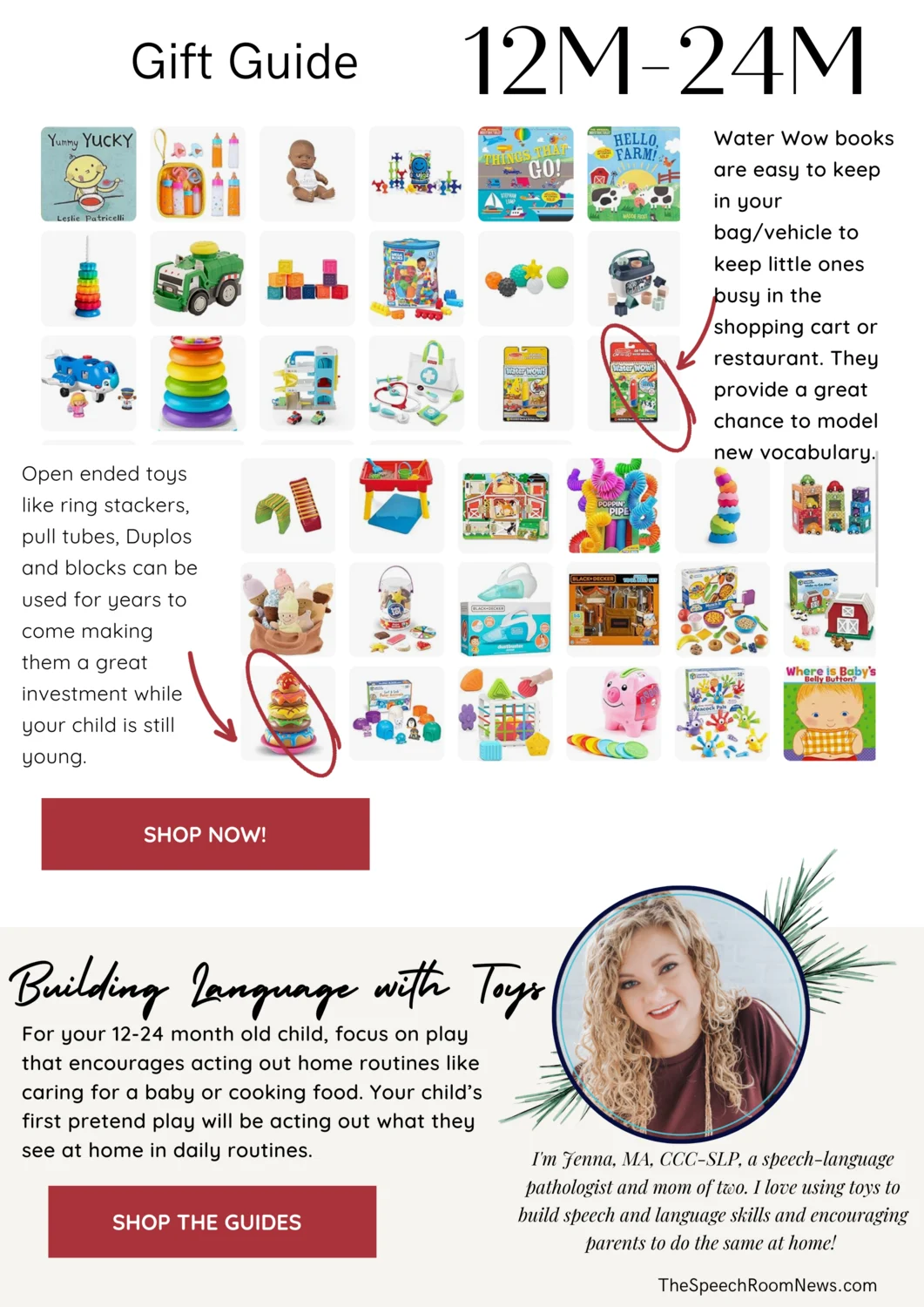
In a timely initiative designed to empower parents and caregivers, Jenna Kirk, MA, CCC-SLP, a seasoned pediatric speech-language pathologist and mother of two, has unveiled a series of specialized holiday gift guides. These meticulously curated lists feature toys specifically chosen for their capacity to foster and enhance children’s speech and language skills. The release, timed for the peak holiday shopping season, addresses a growing demand among families for resources that integrate therapeutic principles into everyday play, particularly for children navigating developmental communication challenges.
Kirk, who brings both professional expertise and personal experience to this endeavor—her own child having been diagnosed with Childhood Apraxia of Speech (CAS)—underscores the critical role that play-based learning holds in a child’s linguistic development. Her guides, accessible through Amazon storefronts and a downloadable PDF, are categorized by age, providing tailored recommendations that aim to make holiday gift-giving a meaningful investment in a child’s communicative future.
The Genesis of the Guides: An SLP’s Personal and Professional Mission
Jenna Kirk’s journey to creating these comprehensive toy recommendations is deeply rooted in her dual role as a clinician and a parent. As a pediatric speech-language pathologist, Kirk spends her professional life assessing, diagnosing, and treating speech, language, and swallowing disorders in children. Her clinical practice has provided her with extensive insights into the types of activities and materials that effectively stimulate communication development. Beyond her professional purview, Kirk’s personal experience as a mother whose child lives with Childhood Apraxia of Speech lends a profound authenticity and practical understanding to her recommendations. Childhood Apraxia of Speech is a neurological speech sound disorder in which the brain has difficulty coordinating the muscle movements necessary to speak. This condition often requires intensive, specialized therapy, and integrating therapeutic strategies into a child’s daily environment, including their playtime, becomes paramount.
This personal connection illuminates the "why" behind her initiative. Recognizing the often overwhelming task parents face in selecting toys that are not only engaging but also developmentally beneficial, Kirk sought to demystify the process. Her guides are a direct response to the common parental query: "What toys can genuinely help my child talk, understand, and interact better?" By leveraging her expertise, Kirk provides a trusted resource that bridges the gap between clinical recommendations and practical consumer choices.

The Power of Play: Fostering Foundational Language Skills
The concept underpinning Kirk’s gift guides is the well-established pedagogical principle that play is fundamental to a child’s holistic development, particularly in the realm of speech and language. Far from being mere recreation, play serves as a dynamic laboratory where children experiment with social roles, problem-solving, emotional expression, and, critically, language.
Developmental psychologists and speech-language pathologists widely acknowledge that various forms of play contribute uniquely to linguistic growth:

- Symbolic/Imaginative Play: Engaging in pretend play (e.g., playing house, doctor, or superheroes) allows children to create narratives, develop vocabulary related to diverse roles and scenarios, and practice complex sentence structures. It fosters abstract thinking and the ability to understand and express emotions, which are vital for pragmatic language skills (the social rules of language).
- Constructive Play: Building with blocks, LEGOs, or magnetic tiles encourages descriptive language as children explain their creations, follow instructions, and negotiate shared construction projects. This type of play also enhances spatial reasoning and problem-solving, which are indirectly linked to cognitive-linguistic processes.
- Sensory Play: Activities involving sand, water, playdough, or other textures can elicit a rich array of descriptive adjectives and verbs. It also provides opportunities for joint attention and shared engagement, foundational skills for communication.
- Games with Rules: Board games and card games promote turn-taking, following directions, asking clarifying questions, and understanding social cues—all essential components of effective communication and social interaction.
According to the Centers for Disease Control and Prevention (CDC), approximately 1 in 12 children aged 3-17 years in the United States has had a disorder of speech, voice, or language in the past 12 months. This statistic underscores the pervasive need for early intervention and consistent developmental support. Kirk’s guides are designed to transform holiday gift-giving into an opportunity for families to proactively support these crucial developmental areas through engaging, play-based interactions.
Expert Criteria: What Makes a Toy "Therapeutic"?
While the original article does not explicitly list the criteria Jenna Kirk uses, the principles guiding her selections can be logically inferred from standard speech-language pathology practices and her own stated focus on building speech and language skills. For an SLP, an ideal toy is not just entertaining but also inherently designed to elicit and facilitate specific communicative behaviors. Key criteria that likely inform Kirk’s recommendations include:

- Open-Ended Play Potential: Toys that do not have a single prescribed way to be played with (e.g., blocks, dolls, art supplies) encourage creativity, imaginative scenarios, and extended interaction, providing numerous opportunities for language use and development.
- Promotes Interaction and Turn-Taking: Toys that naturally encourage social engagement between a child and a caregiver or other children (e.g., board games, cooperative building sets, play kitchens) foster joint attention, turn-taking, and conversational skills.
- Encourages Verbalization: Toys that prompt questions, descriptions, storytelling, or sound imitation are highly valued. This could involve toys that require verbal commands, toys with various parts to name, or scenarios that invite narrative creation.
- Adaptability to Multiple Skill Levels: A good therapeutic toy can be used in simple ways for younger children or those with emerging skills, and in more complex ways for older children or those with advanced abilities. This ensures longevity and continued developmental relevance.
- Durability and Safety: Practical considerations for any children’s product, ensuring they withstand repeated play and meet safety standards.
- Sensory Engagement: Toys that appeal to multiple senses (touch, sight, sound) can be particularly effective for engaging children and providing diverse vocabulary opportunities.
- Relatability to Real-World Concepts: Toys that mimic real-life objects or situations (e.g., play food, tool kits, animal figures) help children learn functional vocabulary and concepts, preparing them for real-world communication.
- Minimal Electronic Interference: While some electronic toys can have educational value, SLPs often favor toys that require active participation and human interaction over passive screen-based or highly programmed activities that limit child-initiated communication.
By focusing on these principles, Kirk’s guides aim to steer parents towards toys that organically integrate language learning into playtime, transforming seemingly simple gifts into powerful tools for developmental support.
Addressing Specific Needs: Focus on Developmental Disorders
Jenna Kirk’s personal connection to Childhood Apraxia of Speech highlights a critical aspect of her work: the nuanced considerations required for children with specific speech and language disorders. While the guides offer general developmental support, they implicitly cater to the principles that benefit children with conditions like CAS, articulation disorders, language delays, or autism spectrum disorder.

For children with CAS, for instance, toys that encourage repetition of specific sounds or words, facilitate motor planning for speech through structured play, or promote imitation can be particularly beneficial. Similarly, for children with language delays, toys that introduce new vocabulary in context, encourage sentence expansion, or prompt narrative construction are invaluable. The guides’ age-sorted structure ensures that recommendations are developmentally appropriate, a key factor in successful therapeutic outcomes. This targeted approach elevates the guides beyond generic toy lists, positioning them as a specialized resource informed by professional clinical insight.
Accessibility and Reach: Making Expert Advice Available
Understanding the challenges of modern parenting, Kirk has made her expert recommendations highly accessible. The primary channels for these guides are her Amazon storefronts, meticulously sorted by age group. This platform offers a convenient, direct route for parents to browse and purchase recommended items, streamlining the often-complex process of finding suitable developmental toys. Furthermore, Kirk provides a downloadable PDF version of the guides, offering a comprehensive, printable reference that families can keep handy.

This multi-format accessibility ensures that parents, regardless of their preferred shopping method, can easily access well-researched and professionally endorsed toy suggestions. The integration with a widely used e-commerce platform also speaks to a modern approach to consumer education, meeting parents where they already are in their holiday shopping journey. The initiative not only provides recommendations but also implicitly educates parents on why certain toys are beneficial, fostering a deeper understanding of child development.
Broader Implications: Empowering Parents and Enriching Childhood
The release of Jenna Kirk’s holiday gift guides carries broader implications for both families and the landscape of children’s product consumption.

- Empowering Parental Choices: In an era saturated with countless toy options, parents often feel overwhelmed and unsure of how to make choices that truly benefit their children’s development. Kirk’s guides serve as a trusted filter, empowering parents with informed decisions that align with expert therapeutic principles. This alleviates the guesswork and instills confidence in their selections.
- Bridging Therapy and Home: For children receiving speech therapy, consistent practice and generalization of skills in the home environment are crucial. These guides provide concrete tools that parents can use to reinforce therapeutic goals outside of clinical sessions, making everyday play an extension of their child’s therapy. This integrated approach can significantly enhance progress.
- Promoting Intentional Play: The guides encourage a shift from passive consumption of toys to intentional play that is purposeful and developmental. They highlight that the value of a toy often lies not just in its features, but in how it facilitates interaction and engagement.
- Shaping Consumer Trends: As parents become more educated about developmental benefits, there’s a growing market for "educational" and "therapeutic" toys. Initiatives like Kirk’s contribute to this trend, potentially influencing toy manufacturers to design products with greater developmental intentionality.
- Support for Early Intervention: By promoting toys that stimulate speech and language, the guides indirectly support early intervention efforts. Engaging with developmentally appropriate toys from a young age can foster foundational skills, potentially mitigating or reducing the severity of later communication challenges.
Ultimately, Kirk’s holiday gift guides are more than just shopping lists; they represent a valuable resource in the ongoing effort to support children’s communication development. They underscore the simple yet profound truth that play is not just fun, but a powerful engine for learning and growth, especially when guided by expert insight. As families prepare for the holiday season, these guides offer a thoughtful pathway to gifts that not only bring joy but also build essential skills for life.
