

The integration of magnetic building tiles, traditionally recognized as popular educational toys, into pediatric speech and language therapy sessions is marking a significant shift in how clinicians approach engagement and skill development in young children. Far from being mere playtime distractions, these vibrant, geometric components are being leveraged by speech-language pathologists (SLPs) as dynamic, multi-sensory instruments to target a broad spectrum of communication and cognitive goals, from articulation to complex social interaction. This innovative application underscores a broader trend in early intervention toward play-based learning, which research consistently shows enhances retention and motivation in pediatric populations.
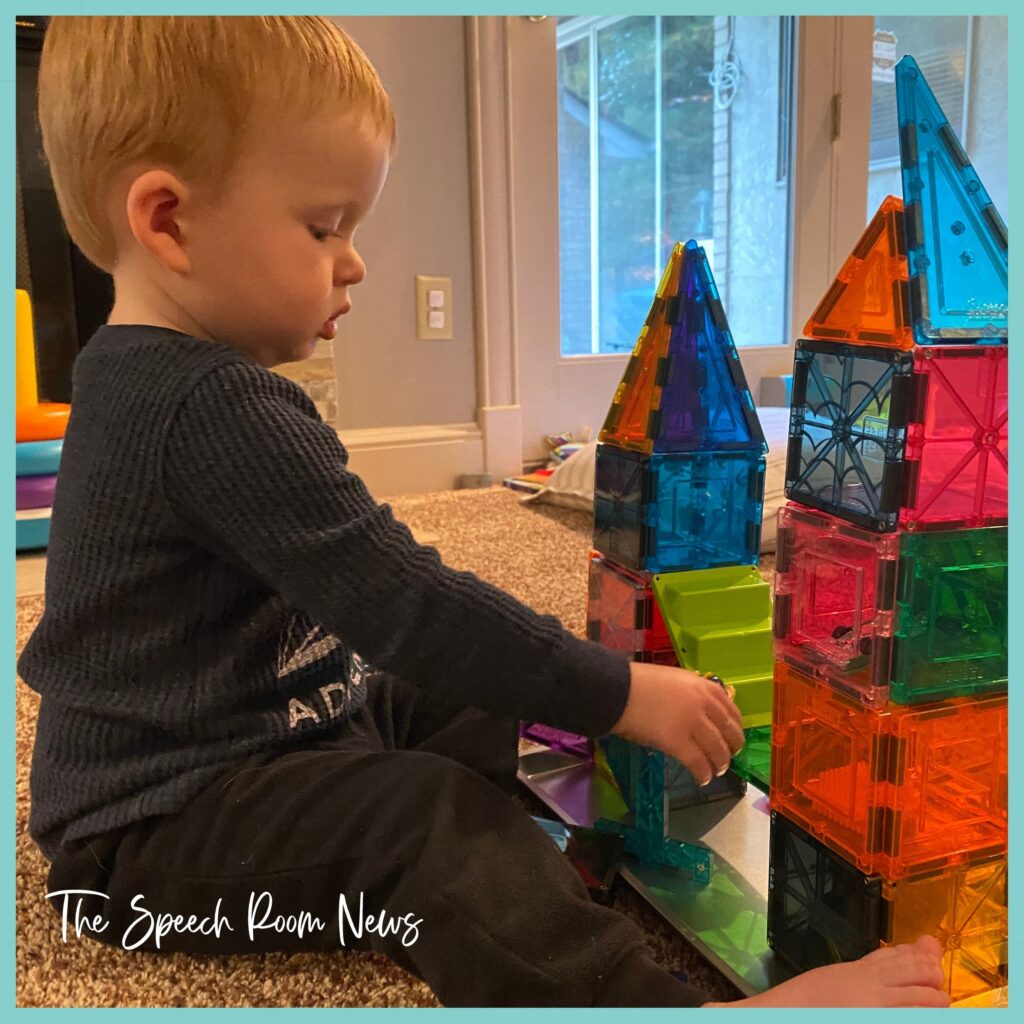
The rising prominence of magnetic tiles within therapeutic settings is a testament to their inherent versatility and appeal to children across various developmental stages. Originally conceived as open-ended construction toys, their simple magnetic connections allow for effortless manipulation, enabling children as young as one year old to engage in constructive play, while simultaneously challenging older children with intricate architectural designs. This broad age applicability makes them an invaluable, long-term investment for both homes and clinical environments. The initial outlay, though potentially higher than some conventional toys, is often justified by their durability and the expansive range of therapeutic benefits they offer, making them frequent additions to wish lists for therapy rooms or as recommended educational tools for parents.
The Evolution of Play in Therapy
The adoption of toys like magnetic tiles reflects an ongoing evolution in speech and language pathology, moving from more didactic, drill-based approaches to methodologies rooted in naturalistic and child-led play. This paradigm shift gained significant traction in the late 20th and early 21st centuries, as developmental psychology and neuroscience provided clearer insights into how children learn best. Play, once considered secondary to formal instruction, is now recognized as a primary vehicle for cognitive, social, emotional, and linguistic development. In a therapeutic context, play-based interventions offer a less intimidating environment, reducing anxiety and increasing a child’s intrinsic motivation to participate. This approach capitalizes on a child’s natural curiosity and desire to explore, embedding therapeutic goals within enjoyable activities that mimic real-world interactions. Magnetic tiles, with their inherent capacity for creative construction and imaginative play, fit seamlessly into this modern therapeutic framework.
Targeting Core Speech and Language Objectives
Speech-language pathologists are discovering myriad ways to weave magnetic tile play into individualized treatment plans, addressing specific communication deficits while fostering a holistic developmental approach.
-
Social Cooperative Work: Magnetic tiles excel at fostering social interaction and collaborative communication. During group therapy sessions or one-on-one interactions where the therapist acts as a play partner, students are naturally prompted into back-and-forth communication. They negotiate designs, assign roles (e.g., "You build the wall, I’ll build the roof"), request specific pieces ("Can I have a big square?"), and provide instructions or feedback ("Put it on top!"). This organic communication environment strengthens pragmatic language skills, including turn-taking, topic maintenance, perspective-taking, and conflict resolution, which are fundamental for effective social functioning.
-
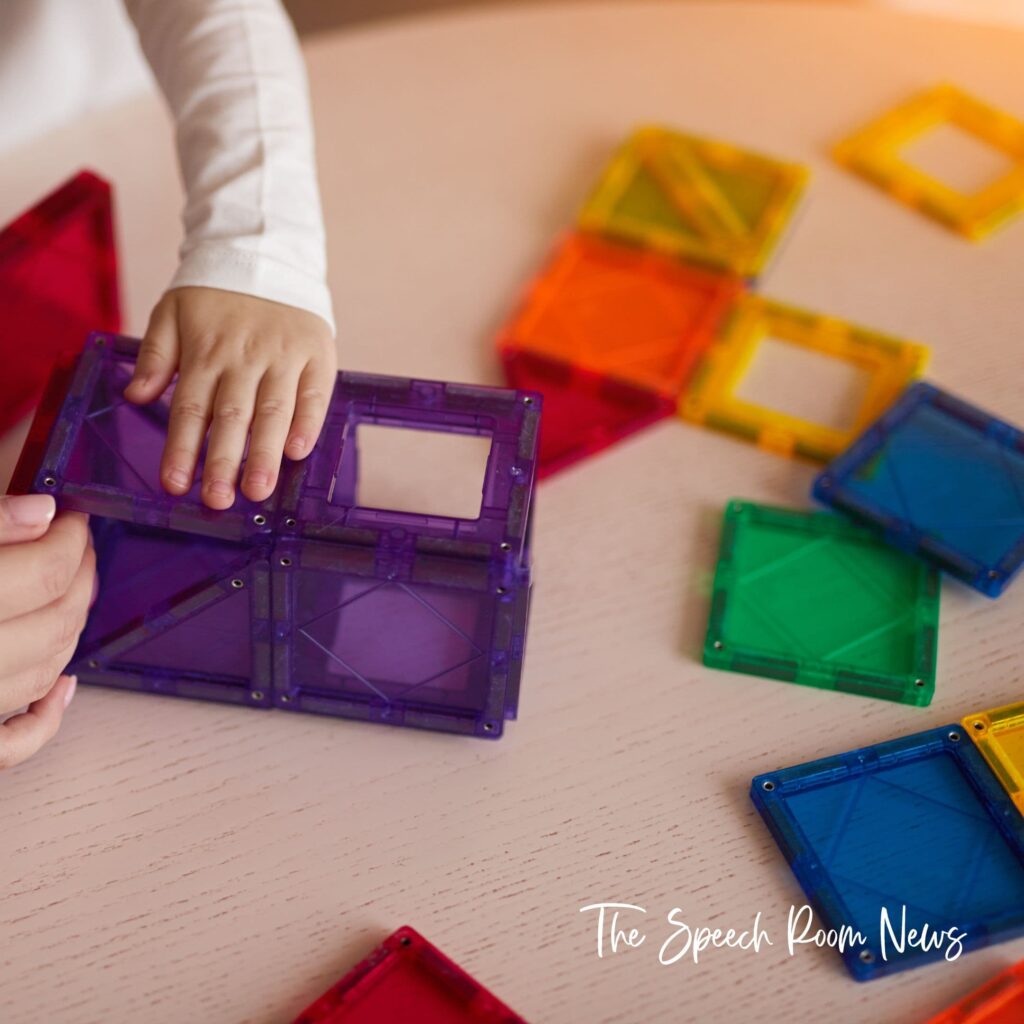
Prepositional Concepts: Abstract spatial concepts like "on," "under," "beside," "between," "in front of," and "behind" can be notoriously difficult for young children to grasp. Magnetic tiles offer a concrete, manipulable medium for teaching these prepositions. Therapists can instruct children to place tiles "under" a bridge, "on" a tower, or position a small toy "between" two structures. The physical act of placing and describing reinforces the meaning of each preposition, transforming an abstract linguistic concept into a tangible, observable action, thereby aiding comprehension and expressive use.
-
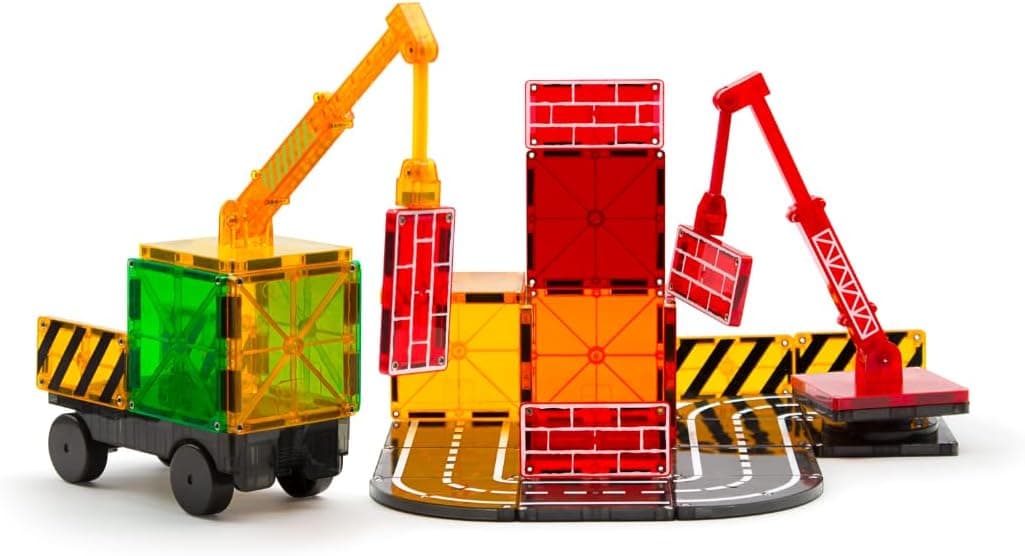
Sorting by Shape and Color: Beyond their construction potential, magnetic tiles are excellent tools for developing early cognitive and language skills, particularly categorization. Children can be asked to sort tiles by color (e.g., "Find all the red tiles") or by shape (e.g., "Put the triangles here, and the squares there"). This activity not only enhances their ability to identify and differentiate attributes but also provides opportunities for verbalizing their choices and describing the characteristics of the tiles, thus expanding vocabulary and descriptive language. An advanced application involves building "sorting bins" with the tiles themselves, adding a meta-cognitive layer to the activity.
-
Articulation Practice: Integrating specific phonemes into magnetic tile play makes articulation therapy both engaging and functional. If a child is working on the /k/ sound, for instance, the therapist might encourage them to build a "castle," a "cage," or a "car" garage. As they construct, they are prompted to repeatedly say words containing the target sound, such as "make," "pick," "block," "stack," or "cook." The playful context reduces the pressure often associated with repetitive drills, allowing for more natural and spontaneous production of target sounds within meaningful utterances.
-
Irregular Verbs: Magnetic tiles provide a dynamic backdrop for practicing irregular past tense verbs. Children can build structures and then narrate what "happened" to them, incorporating verbs like "built" (from build), "fell" (from fall), "hit" (from hit), "made" (from make), "came" (from come), or "ran" (from run) as they construct or deconstruct their creations. For example, a child might say, "I built a tall tower, and then it fell down." This narrative approach embeds the target verbs within a coherent story, promoting generalization of these grammatical structures.
-
Executive Functioning Practice: The process of planning, executing, and problem-solving inherent in building with magnetic tiles offers substantial opportunities for developing executive functioning skills. Therapists can introduce challenges such as "build a house with a roof and two windows in five minutes" or "design a ramp for this car." These tasks require planning, organization, sustained attention, impulse control, and adaptive problem-solving when structures don’t quite work as intended. Verbalizing these thought processes during play also enhances metacognitive awareness and descriptive language.
-
Regular Plurals: Magnetic tiles, with their multiple identical pieces, are ideal for practicing regular plural forms. As children build, they naturally use language like "I need more squares," "Look at all the triangles," or "I have two walls." Therapists can intentionally prompt for plurals by asking, "How many blocks do you have?" or "What kind of shapes are these?" This constant exposure and practice in a contextually relevant manner solidifies the understanding and production of regular plural morphemes.
-
WH Questions: Magnetic tiles can serve as excellent prompts for practicing WH-questions ("who," "what," "where," "when," "why"). During play, therapists can ask, "Where does this tile go?" "Who built the tallest tower?" "What are you building?" "When will your tower fall down?" or "Why did you choose that color?" These questions encourage children to describe their actions, intentions, and observations, thereby enhancing both their comprehension of questions and their ability to formulate coherent, informative responses.
-
The Pronoun "I": For children struggling with self-referential language, magnetic tile activities provide a natural, low-stakes environment to practice the pronoun "I." By asking "Who wants to add a piece?" and prompting the child to respond, "I do," or by having the child describe their actions, "I put the blue square on top," therapists can reinforce correct usage. This focus on individual contribution during a shared activity helps solidify the understanding of "I" as referring to oneself.
-
AAC Core Words: For children utilizing Augmentative and Alternative Communication (AAC) systems, magnetic tiles offer a highly engaging platform for reinforcing core words. Core words are high-frequency words that make up the majority of daily communication (e.g., "more," "on," "off," "go," "stop," "help," "up," "down," "that," "this"). During magnetic tile play, therapists can model these words on the child’s AAC device while simultaneously performing the action. For instance, "I want more tiles," "Put it on," "Take it off," "Make it go up," "I need help." The interactive nature of the toy provides immediate, tangible consequences for using these words, making the learning process highly effective and meaningful.
Expert Endorsement and Broader Implications
Leading speech-language pathologists widely endorse the integration of versatile, open-ended toys into therapy. Dr. Elena Rodriguez, a prominent pediatric SLP and advocate for play-based intervention, states, "Magnetic tiles are a game-changer. They tap into a child’s natural inclination to build and create, allowing us to embed complex language targets within highly motivating activities. We see increased engagement, longer attention spans, and more spontaneous communication compared to traditional methods." Parents frequently echo this sentiment, reporting that their children view therapy sessions involving magnetic tiles as "fun playdates" rather than clinical appointments, which significantly boosts their willingness to participate and generalize learned skills.
The growing recognition of such tools also has implications for toy manufacturers, encouraging the development of educational toys that are not only entertaining but also inherently therapeutic. It also highlights the importance of grants and wish list programs for clinicians, ensuring access to high-quality, durable materials that can support diverse therapy goals for a wide range of clients.
Conclusion
The adoption of magnetic tiles in speech and language therapy represents a compelling illustration of how simple, yet brilliantly designed, educational toys can be transformed into powerful therapeutic instruments. By providing a concrete, interactive, and endlessly adaptable medium, these tiles facilitate the acquisition and practice of critical speech and language skills in a way that is both effective and deeply engaging for young learners. As the field of pediatric intervention continues to embrace child-centered, play-based methodologies, magnetic tiles stand out as a prime example of how innovative applications of familiar objects can profoundly enrich the therapeutic landscape, fostering communication development and enhancing the overall well-being of children.
