


Understanding the intricate tapestry of human emotions, once a domain confined to academic discourse, is now accessible to the public through a groundbreaking tool developed by leading behavioral researchers. The Feelings Field Guide, a scientifically validated resource created by Drs. Paul and Eve Ekman, aims to bridge the gap between complex psychological research and everyday practical application, empowering individuals to better navigate their emotional landscapes and interpersonal interactions. This comprehensive toolkit distills over 50 years of pioneering work in emotion recognition and non-verbal communication into a tangible, user-friendly format.
Unveiling The Feelings Field Guide: A Scientific Approach to Emotional Literacy
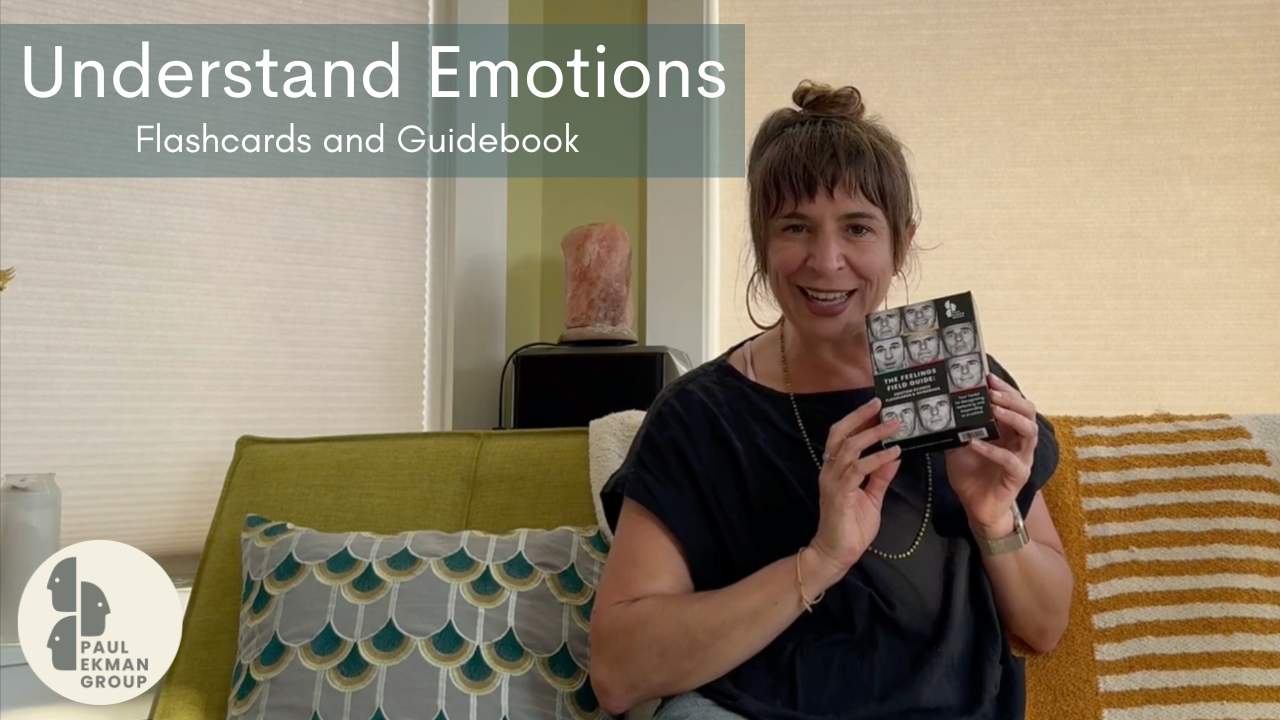
At its core, The Feelings Field Guide is designed to demystify the recognition and understanding of emotions. It is comprised of 92 meticulously crafted emotion flashcards, each depicting universal facial expressions, accompanied by a scientific guidebook. This pairing provides users with a tactile and visual method for identifying the subtle nuances of emotional states, a skill that has profound implications for personal well-being and professional efficacy. The guide’s methodology is rooted in the foundational research conducted by Dr. Paul Ekman, a psychologist renowned for his groundbreaking studies on the universality of facial expressions and his development of the Facial Action Coding System (FACS). FACS is a system that breaks down facial movements into their constituent muscle actions, allowing for the objective identification and classification of emotional expressions.
Dr. Eve Ekman, a leading expert in emotion science and a key figure in the development of the guide, elaborates on its core principles in an accompanying video. She explains the scientific basis for recognizing the seven universal emotions—anger, fear, disgust, contempt, surprise, sadness, and happiness—which are believed to be innate and expressed similarly across cultures. The guide leverages this universality, providing a common language and framework for understanding emotional cues that transcend cultural barriers. This scientific foundation lends significant credibility to the tool, assuring users that they are engaging with empirically validated knowledge.
From Research to Real-World Application: The Genesis of the Field Guide
The development of The Feelings Field Guide is not an isolated event but rather the culmination of a lifelong dedication to understanding human emotions. Dr. Paul Ekman’s research began in the 1960s, challenging prevailing anthropological theories that suggested facial expressions of emotion were culturally determined. His extensive fieldwork, particularly with the Fore people of New Guinea, provided compelling evidence for the universality of basic emotional expressions. This seminal work laid the groundwork for a deeper understanding of how emotions manifest physically and how these manifestations can be universally recognized.
Over the decades, Ekman and his colleagues continued to refine their understanding of facial expressions, micro-expressions (brief, involuntary facial expressions that reveal a person’s true emotions), and the complex interplay between emotion, cognition, and behavior. The creation of The Feelings Field Guide represents a deliberate effort to translate this vast body of scientific knowledge from the laboratory into accessible, actionable skills for the general public. The guide aims to empower individuals with the ability to not only identify emotions in themselves and others but also to respond constructively to these emotional signals.
The Toolkit: A Comprehensive Approach to Emotional Awareness
The physical components of The Feelings Field Guide are designed for maximum engagement and learning. While the specific contents of the 92 flashcards and the scientific guidebook are not detailed in the provided text, the emphasis is on their function: to improve emotional awareness and non-verbal communication. The flashcards likely feature high-quality images of individuals displaying distinct facial expressions associated with various emotions. The accompanying guidebook would then provide detailed explanations of these expressions, their underlying emotional states, the FACS coding for the facial muscle movements involved, and practical advice on interpreting these cues in different contexts.
The guide’s philosophy extends beyond mere recognition. It emphasizes the importance of translating this awareness into effective action. This means understanding not just what emotion is being expressed but also why and how to respond appropriately. For parents seeking to help children manage anxiety, for instance, the guide offers tools to identify the subtle signs of distress and to engage in empathetic communication. For professionals in high-stakes negotiations, the ability to accurately read the emotional undercurrents can provide a critical advantage, enabling them to tailor their approach and foster more productive outcomes.
Adaptable Learning: A Flexible Tool for Diverse Needs
The Feelings Field Guide is intentionally designed for flexibility, catering to a wide range of learning styles and practical applications. Users are encouraged to discover the most effective methods for their individual needs, promoting a personalized learning experience. This adaptability is crucial, as emotional intelligence is not a one-size-fits-all skill.
Potential uses include:
- Self-Quizzing: Using the expression cards to test one’s ability to identify emotions and their corresponding labels.
- Focused Study: Concentrating on specific emotions or facial expressions over a period to deepen understanding.
- Reflection Exercises: Engaging with prompts or scenarios in the guidebook that encourage introspection about personal emotional experiences and responses.
- Interpersonal Practice: Applying the learned skills in real-world interactions, observing and analyzing emotional cues in others.
The absence of a rigid "right" way to use the guide underscores its commitment to empowering users to integrate emotional learning into their daily lives in a manner that feels natural and beneficial. This approach aligns with the principles of adult learning, where autonomy and relevance are key drivers of engagement and retention.
Endorsements and Testimonials: Real-World Impact
The efficacy of The Feelings Field Guide is further validated by testimonials from individuals who have incorporated it into their lives. Mark B., a parent of a son experiencing anxiety and social regression, highlights the guide’s effectiveness in facilitating discussions about emotions. He expresses confidence in the product, attributing it to Dr. Ekman’s pioneering scientific contributions. This sentiment underscores the guide’s value in bridging the gap between complex scientific research and the practical needs of families.
Simon B., working in information security and data protection, attests to the guide’s utility in enhancing professional interactions. He notes that understanding micro-expressions and emotions has improved his ability to connect with colleagues, customers, and suppliers. In his field, where discerning genuine sentiment from spoken words can be critical, the ability to accurately read non-verbal cues offers a distinct professional advantage. These testimonials provide compelling evidence of the guide’s practical impact, demonstrating its applicability across diverse professional and personal contexts.
The Broader Significance: Why Emotional Intelligence Matters
The profound impact of emotions on human cognition, communication, and decision-making cannot be overstated. Emotions serve as a fundamental driver of our experiences, influencing our perceptions, motivations, and actions, often in ways we may not consciously recognize. When individuals misinterpret emotional signals—whether in themselves or in others—the consequences can range from minor misunderstandings to significant interpersonal conflicts and missed opportunities for genuine connection.
The ability to accurately recognize and respond to emotions, a cornerstone of emotional intelligence, offers a multitude of benefits:
- Enhanced Self-Awareness: A deeper understanding of one’s own emotional states, triggers, and patterns.
- Improved Interpersonal Relationships: The capacity to empathize with others, build trust, and navigate social situations more effectively.
- Better Decision-Making: Integrating emotional information into cognitive processes to make more balanced and informed choices.
- Effective Conflict Resolution: The ability to de-escalate tensions and find mutually agreeable solutions by understanding the underlying emotions driving a conflict.
- Increased Empathy and Compassion: Fostering a greater capacity to understand and share the feelings of others, leading to more compassionate interactions.
The Feelings Field Guide is specifically engineered to cultivate these vital skills. By grounding its methods in decades of rigorous scientific research and presenting them in a practical, repeatable format, the guide provides a robust pathway towards achieving greater emotional literacy and enhancing overall well-being.
Addressing Common Inquiries: Clarifying the Guide’s Uniqueness
How is this different from other emotion flashcards?
The primary differentiator of The Feelings Field Guide lies in its scientific foundation. While many emotion flashcards may simply label a feeling, this guide is uniquely based on the Facial Action Coding System (FACS). FACS is a scientifically validated methodology that objectively measures all observable muscular movements of the face. This ensures that the expressions depicted and analyzed within the guide are not arbitrary representations but rather scientifically accurate and universally recognized indicators of specific emotional states. This adherence to FACS provides a level of precision and reliability that sets it apart from more generalized or anecdotal approaches.
Is there a digital version?
The Feelings Field Guide is presented as a physical, tactile tool, emphasizing the benefits of hands-on learning and interaction with tangible materials. However, for individuals seeking a more in-depth, performance-based mastery of emotion recognition, the guide is often complemented by the Paul Ekman Group’s Micro-expression Training Tools. These digital resources are designed for certified training and offer a more advanced level of skill development, building upon the foundational knowledge provided by the Field Guide. This dual approach caters to both those who prefer a tangible learning experience and those who require advanced, certified training.
The development and dissemination of The Feelings Field Guide represent a significant step forward in making the science of emotions accessible and applicable. By translating decades of rigorous research into practical skills, Drs. Paul and Eve Ekman are empowering individuals to foster greater emotional understanding, improve their communication, and build more meaningful connections in an increasingly complex world. The guide stands as a testament to the enduring power of scientific inquiry to address fundamental aspects of the human experience.
