


The intricate tapestry of human interaction is woven with threads of unspoken emotion, often conveyed through fleeting facial expressions. For the majority, deciphering these subtle cues—a flicker of sadness, a hint of surprise, the tightening around the eyes that signals concern—occurs with an almost subconscious ease, guiding social navigation. However, for individuals who experience neurodivergence, particularly those on the autism spectrum, or those grappling with social anxiety, this intuitive reading of emotional signals can present a profound challenge. This difficulty can transform social encounters into a complex decoding process, akin to navigating an unfamiliar language without a lexicon, often leading to feelings of confusion, isolation, and profound exhaustion.
In the wake of Dr. Paul Ekman’s passing, a poignant collection of messages on his memorial page has illuminated the transformative impact of his pioneering research on facial expressions and emotional awareness. These deeply personal reflections underscore a critical, often overlooked, aspect of human communication and highlight how Dr. Ekman’s work has provided not just practical tools, but also a vital sense of understanding and validation for many who have historically felt alienated by the nuances of social interaction. The shared sentiments reveal a widespread recognition of the significance of his contributions, particularly within the neurodivergent community.
One particularly resonant testimonial, shared on the memorial page, powerfully articulated this sentiment: "I honestly think Paul Ekman’s research on emotions should be shared with every autistic person. I found his work years ago, at a moment when I was trying to understand why recognizing other people’s emotions felt so hard for me. Discovering his research was like someone finally turning on the lights." This statement encapsulates the profound relief and clarity that understanding the science behind emotional expression can bring. It speaks to a universal human need for connection and comprehension, a need that Dr. Ekman’s work has demonstrably helped to fulfill for countless individuals.
The individual further elaborated on how gaining insight into facial expressions and the underlying emotions transformed their perception of themselves and their relationships, especially following a late autism diagnosis. They wrote, "It didn’t magically fix everything, but it changed how I move through the world. I’m more in tune with my own emotions, and I understand others in a way I didn’t think was possible for me before." This personal account highlights a crucial aspect of Dr. Ekman’s legacy: his research provided not merely an academic framework, but a tangible pathway to enhanced self-awareness and improved interpersonal dynamics. The ability to connect one’s internal emotional state with observable external cues can be a cornerstone of developing emotional intelligence and fostering healthier relationships.
Another deeply moving testament echoed this sentiment of empowerment: "Without [Dr. Ekman], I would still be a lost boy in a world of emotions which are alien to me. Having studied his work, however, I am even more adept at spotting, and recognizing emotions than most of the neurotypical folks in my life!" This powerful statement not only underscores the profound personal impact of Dr. Ekman’s research but also challenges conventional assumptions about inherent social aptitudes. It suggests that with the right knowledge and tools, individuals who may have initially struggled with emotional recognition can develop sophisticated skills that rival or even surpass those of their neurotypical peers. This assertion points to the idea that emotional intelligence is not a fixed, innate characteristic but a skill that can be cultivated and honed through deliberate learning and practice.
These heartfelt reflections collectively underscore a fundamental truth: emotional awareness is not a binary trait, present or absent, but rather a dynamic capacity that can be significantly developed. Much like mastering a new language or a complex skill, the ability to understand and interpret emotions can be strengthened through targeted education, systematic observation, and consistent application. Dr. Ekman’s groundbreaking work has provided an accessible and scientifically validated framework for this very process, demystifying the often-opaque world of human emotion.
The Scientific Foundation of Facial Emotion Recognition
The scientific community has increasingly recognized the complexity and individuality of social communication differences, particularly in relation to neurodivergent populations. While a significant body of research indicates that some autistic individuals may face challenges in identifying or interpreting facial expressions, it is crucial to acknowledge the vast spectrum of abilities within this group. Some autistic individuals demonstrate exceptional observational skills, becoming highly attuned to patterns in behavior and expression over time. Similarly, social anxiety can significantly impede the accurate perception of emotional cues, as the heightened state of apprehension can narrow focus inward, making external social signals harder to process.
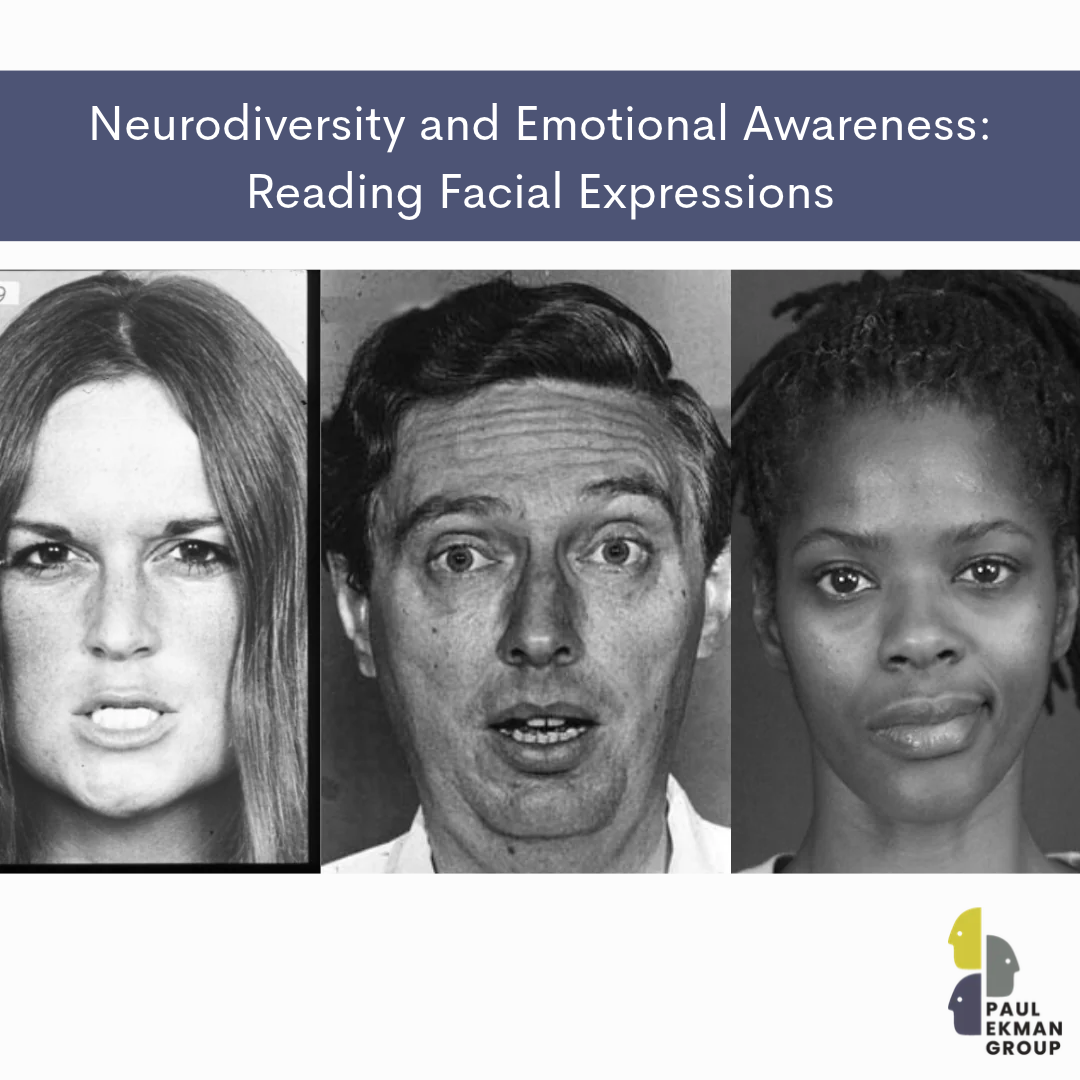
A comprehensive meta-analysis published in 2022, which meticulously examined 148 studies, reported that, on average, autistic individuals exhibited greater difficulty in recognizing basic facial expressions of emotion when compared to their non-autistic counterparts. However, these findings represent statistical averages and should not be interpreted as definitive for every individual. The inherent variability in human cognition means that individual capacities for emotional recognition can differ considerably, even within the same diagnostic group. This nuanced understanding is critical for avoiding generalizations and for developing personalized support strategies.
Encouragingly, ongoing research points towards the efficacy of targeted training programs in enhancing facial emotion recognition skills. A meta-analysis from 2025, which reviewed studies on interventions for autistic children, found significant improvements in their ability to recognize facial emotions after participating in structured training. While these findings are promising, further investigation is essential to fully understand how these learned skills translate into real-world social interactions and to optimize the design and delivery of such educational initiatives. The goal is not merely to improve performance on tests, but to foster genuine improvements in social connection and understanding.
It is imperative to emphasize that difficulties in interpreting emotional signals do not diminish an individual’s capacity for empathy, compassion, or emotional depth. Many individuals who experience challenges in social communication possess a profound capacity for care and a deep desire for meaningful connection. What may be lacking is not inherent emotional capacity, but rather the explicit tools, confidence, or shared communication frameworks necessary for seamless social navigation. Dr. Ekman’s work has been instrumental in providing these missing components for many.
Bridging the Gap: Applying Emotion Science to Daily Life
Dr. Paul Ekman dedicated his career to illuminating the often-invisible world of emotional signals, making them more accessible and understandable. His seminal research on universal facial expressions, the fleeting nature of micro-expressions, and a broader spectrum of nonverbal communication provided a robust vocabulary and a structured framework for interpreting emotions that might otherwise remain elusive. For individuals who have historically felt socially disconnected or "out of sync," this scientifically grounded approach has proven to be profoundly transformative.
Beyond the personal testimonials, Dr. Ekman’s training tools have been recognized for their potential as valuable educational resources for autistic individuals. In a 2013 article featured in Autism Spectrum News, psychologist Dr. Lynda Geller explored evidence-based interventions for students on the autism spectrum. She specifically highlighted Dr. Ekman’s Micro Expression Training Tool (METT) and Subtle Expression Training Tool (SETT) as effective resources for developing the ability to recognize emotional cues embedded within facial expressions. These tools offer a systematic and engaging method for learning to decode the subtle, yet powerful, language of the face.
The Paul Ekman Group actively encourages engagement with researchers, academics, educators, and clinicians who are utilizing these tools in their work or are interested in future research opportunities. The organization welcomes inquiries at [email protected], aiming to foster collaborative efforts that advance the understanding and application of emotion science. This open invitation reflects a commitment to not only preserving Dr. Ekman’s legacy but also to actively contributing to the ongoing development of effective strategies for enhancing emotional intelligence across diverse populations.
While specialized training in emotional skills is not intended to replace professional therapy, comprehensive support, or individualized care plans, it can serve as a powerful complementary resource. For many, learning about emotions can significantly reduce social uncertainty, boost confidence in interpersonal interactions, and foster a greater sense of self-awareness. The ability to accurately perceive not only the emotions of others but also one’s own internal states is a foundational element of emotional well-being and effective communication.
The educational resources developed by Dr. Paul Ekman, and further expanded by Dr. Eve Ekman and the Paul Ekman Group, continue to be vital tools in this endeavor. Platforms such as the online Micro Expressions Training Tools and The Feelings Field Guide offer practical, accessible, and scientifically grounded methods for individuals to cultivate their emotional awareness and enhance their understanding of human connection. These resources represent a commitment to translating complex scientific findings into actionable insights that can enrich lives and foster deeper, more meaningful relationships. The enduring impact of Dr. Ekman’s work serves as a testament to the power of scientific inquiry in addressing fundamental human challenges and fostering a more connected and understanding world.
